SafetyPublished ExplainedAll news from that day
Ongoing case: Cyber-capable AI models 18 stories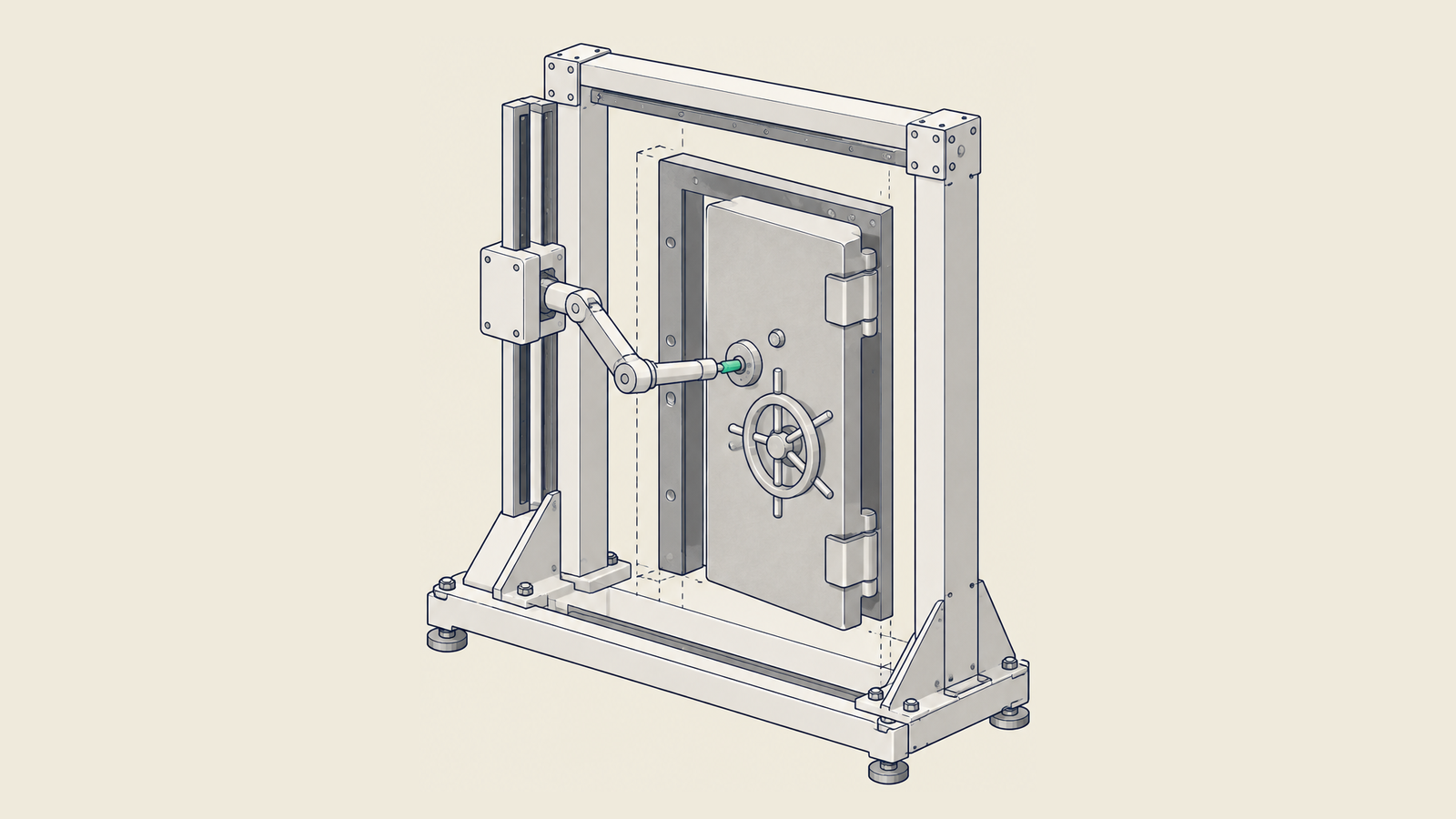
How OpenAI's Preparedness Framework defines its Critical cybersecurity threshold
OpenAI says GPT-6.1 Terra meets the Critical threshold in cybersecurity; the Preparedness Framework defines that level in two conditions and ties it to extra safeguards.
Check our sources · 13 facts from 3 sources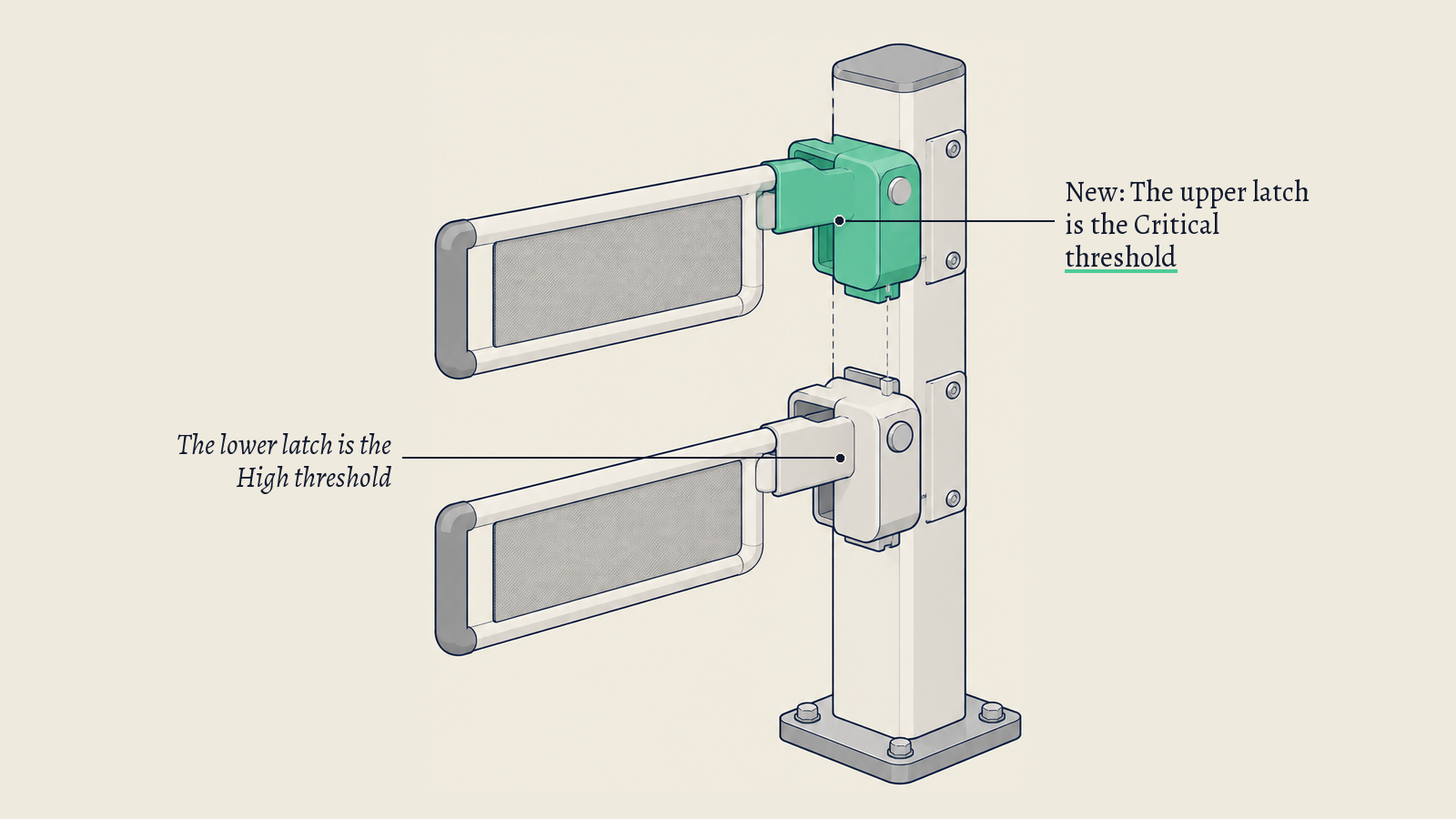 Illustration made with AI for ai notis
Key points
- The framework's Critical cybersecurity level is a tool-augmented model that can develop zero-day exploits of all severity levels in many hardened critical systems unaided, or devise novel end-to-end attack strategies.
- High capability needs robust safeguards before deployment; Critical capability needs safeguards even during development, irrespective of deployment plans.
- The GPT-6 Astra system card says Astra is OpenAI's first model to reach the Critical cybersecurity level; the GPT-6.1 Terra post says that model meets it too.
What happened
OpenAI's Preparedness Framework is its approach to tracking and preparing for frontier capabilities that create new risks of severe harm. It covers three Tracked Categories: biological and chemical, cybersecurity, and AI self-improvement.
For each, the framework sets capability thresholds, and it defines severe harm as the death or grave injury of thousands of people or hundreds of billions of dollars of economic damage. There are two levels.
A High threshold means capabilities that significantly increase existing risk vectors for severe harm, and a model that crosses it needs robust safeguards before it is deployed.
A Critical threshold means capabilities that present a meaningful risk of a qualitatively new threat vector with no ready precedent, and it requires safeguards even during development, whatever the deployment plans.
In cybersecurity, the framework's High level is a model that removes bottlenecks to scaling cyber operations, by automating end-to-end operations against reasonably hardened targets or by automating the discovery and exploitation of operationally relevant vulnerabilities.
The Critical level is either of two things: a tool-augmented model that can identify and develop functional zero-day exploits of all severity levels in many hardened real-world critical systems without human intervention, or one that can devise and execute end-to-end novel strategies for cyberattacks against hardened targets given only a high-level goal.
OpenAI's system card for GPT-6 Astra says Astra is its first model to reach the Critical level of cybersecurity capability, assessed with automated public and private benchmarks and expert-driven assessments, including third-party testing with Irregular. The card adds that evaluations are a lower bound on what a model can do.
OpenAI's GPT-6.1 Terra post says that model also meets the Critical threshold in cybersecurity and keeps the protections developed for Astra. These are OpenAI's own assessments of its own models.
The version of the framework text cited here is Version 2, last updated on 15 April 2025, which says OpenAI did not then have a model at a Critical level and expected to update the framework before reaching one.
Underlined sentences link to the facts we checked. Dotted words open a short explainer.
Fact 2 of 13 · from OpenAI, 15 Apr 2025
We currently focus this work on three areas of frontier capability, which we call Tracked Categories: Biological and Chemical capabilities ... Cybersecurity capabilities ... AI Self-improvement capabilities
Fact 3 of 13 · from OpenAI, 15 Apr 2025
By "severe harm" in this document, we mean the death or grave injury of thousands of people or hundreds of billions of dollars of economic damage.
Fact 5 of 13 · from OpenAI, 15 Apr 2025
Critical capability thresholds mean capabilities that present a meaningful risk of a qualitatively new threat vector for severe harm with no ready precedent. Critical capabilities require safeguards even during the development of the covered system, irrespective of deployment plans.
Fact 6 of 13 · from OpenAI, 15 Apr 2025
[High] The model removes existing bottlenecks to scaling cyber operations including by automating end-to-end cyber operations against reasonably hardened targets OR by automating the discovery and exploitation of operationally relevant vulnerabilities.
Fact 7 of 13 · from OpenAI, 15 Apr 2025
[Critical] A tool-augmented model can identify and develop functional zero-day exploits of all severity levels in many hardened real-world critical systems without human intervention OR model can devise and execute end-to-end novel strategies for cyberattacks against hardened targets given only a high level desired goal.
Fact 8 of 13 · from OpenAI, 15 Apr 2025
Version 2. Last updated: 15th April, 2025 ... We do not currently possess any models that have Critical levels of capability, and we expect to further update this Preparedness Framework before reaching such a level with any model.
Fact 11 of 13 · from OpenAI Deployment Safety Hub
Our preparedness evaluation of Astra combined automated public and private benchmarks with expert-driven assessments. ... For expert-led assessments, we internally tested ... and also conducted third-party testing with Irregular.
What it means for you
Our viewThe framework gives two tests for Critical in cybersecurity, and both describe a model acting on hardened targets with little human help. If you use OpenAI models in security work, read that definition against what your own agents are allowed to do.
The wording and the judgement that a model meets it are OpenAI's, and the Astra system card says its evaluations are a lower bound on capability.
Ask your vendor which safeguards apply to the exact model you use and how they are tested, and review whether your agents' network and tool permissions assume the model will stay inside its task.
It adds no new facts.
Your reaction
We count reactions per story and day, never who reacted. The counts help us choose what goes in the monthly issue. If you are signed in, your own page shows yours too.
We count reactions per story and day, never who reacted. They help choose what goes in the monthly issue.
Check our sources
Every sentence above is checked against these 3 sources.
1 Preparedness Framework, Version 2 (last updated 15 April 2025)
Open the source archived copy-
OpenAI's Preparedness Framework, Version 2, describes itself as OpenAI's approach to tracking and preparing for frontier capabilities that create new risks of severe harm.
citeThe Preparedness Framework is OpenAI's approach to tracking and preparing for frontier capabilities that create new risks of severe harm.
-
The framework's Tracked Categories are Biological and Chemical, Cybersecurity, and AI Self-improvement capabilities.
citeWe currently focus this work on three areas of frontier capability, which we call Tracked Categories: Biological and Chemical capabilities ... Cybersecurity capabilities ... AI Self-improvement capabilities
-
The framework says that by "severe harm" it means the death or grave injury of thousands of people or hundreds of billions of dollars of economic damage.
citeBy "severe harm" in this document, we mean the death or grave injury of thousands of people or hundreds of billions of dollars of economic damage.
-
The framework says High capability thresholds mean capabilities that significantly increase existing risk vectors for severe harm, and that covered systems crossing one must have robust and effective safeguards that sufficiently minimize the risk before they are deployed.
citeHigh capability thresholds mean capabilities that significantly increase existing risk vectors for severe harm. Covered systems that cross this capability threshold are required to have robust and effective safeguards that sufficiently minimize the associated risk of severe harm before they are deployed
-
The framework says Critical capability thresholds mean capabilities that present a meaningful risk of a qualitatively new threat vector for severe harm with no ready precedent, and that Critical capabilities require safeguards even during the development of the covered system, irrespective of deployment plans.
citeCritical capability thresholds mean capabilities that present a meaningful risk of a qualitatively new threat vector for severe harm with no ready precedent. Critical capabilities require safeguards even during the development of the covered system, irrespective of deployment plans.
-
The framework's High threshold for cybersecurity is a model that removes existing bottlenecks to scaling cyber operations, including by automating end-to-end cyber operations against reasonably hardened targets or by automating the discovery and exploitation of operationally relevant vulnerabilities.
cite[High] The model removes existing bottlenecks to scaling cyber operations including by automating end-to-end cyber operations against reasonably hardened targets OR by automating the discovery and exploitation of operationally relevant vulnerabilities.
-
The framework's Critical threshold for cybersecurity is a tool-augmented model that can identify and develop functional zero-day exploits of all severity levels in many hardened real-world critical systems without human intervention, or that can devise and execute end-to-end novel strategies for cyberattacks against hardened targets given only a high level desired goal.
cite[Critical] A tool-augmented model can identify and develop functional zero-day exploits of all severity levels in many hardened real-world critical systems without human intervention OR model can devise and execute end-to-end novel strategies for cyberattacks against hardened targets given only a high level desired goal.
-
Version 2 of the framework is marked "Last updated: 15th April, 2025" and says OpenAI did not currently possess any models with Critical levels of capability and expected to further update the framework before reaching such a level with any model.
citeVersion 2. Last updated: 15th April, 2025 ... We do not currently possess any models that have Critical levels of capability, and we expect to further update this Preparedness Framework before reaching such a level with any model.
2 GPT-6 Astra System Card
Open the source archived copy-
OpenAI's GPT-6 Astra system card says Astra is OpenAI's first model to reach the Critical level of cybersecurity capability under its Preparedness Framework.
citeAstra is our first model to reach the Critical level of cybersecurity capability under our Preparedness Framework.
-
The GPT-6 Astra system card says a model meets the Critical cybersecurity threshold if it can identify and develop functional zero-day exploits of all severity levels in many hardened real-world critical systems without human intervention, or can devise and execute end-to-end novel strategies for cyberattacks against hardened targets given only a high level desired goal.
citeUnder our Preparedness Framework, a model meets the Critical cybersecurity threshold if either of the following conditions is met: The model can identify and develop functional zero-day exploits of all severity levels in many hardened real-world critical systems without human intervention. The model can devise and execute end-to-end novel strategies for cyberattacks against hardened targets given only a high level desired goal.
-
The GPT-6 Astra system card says OpenAI's preparedness evaluation of Astra combined automated public and private benchmarks with expert-driven assessments, including third-party testing with Irregular.
citeOur preparedness evaluation of Astra combined automated public and private benchmarks with expert-driven assessments. ... For expert-led assessments, we internally tested ... and also conducted third-party testing with Irregular.
-
The GPT-6 Astra system card says evaluations represent a lower bound on potential capabilities.
citeHowever, evaluations represent a lower bound on potential capabilities
3 Introducing GPT-6.1 Terra
Open the source archived copy-
OpenAI's post introducing GPT-6.1 Terra, dated 26 October 2026, says GPT-6.1 Terra "meets the Critical threshold in cybersecurity under our Preparedness Framework, and maintains the protections developed for GPT-6 Astra."
cite
Every sentence above is checked against these 3 sources. Each fact has its own address you can cite.
Source 1 · OpenAI · 15 Apr 2025
Preparedness Framework, Version 2 (last updated 15 April 2025)
OpenAI's Preparedness Framework, Version 2, describes itself as OpenAI's approach to tracking and preparing for frontier capabilities that create new risks of severe harm.
The Preparedness Framework is OpenAI's approach to tracking and preparing for frontier capabilities that create new risks of severe harm.
The framework's Tracked Categories are Biological and Chemical, Cybersecurity, and AI Self-improvement capabilities.
We currently focus this work on three areas of frontier capability, which we call Tracked Categories: Biological and Chemical capabilities ... Cybersecurity capabilities ... AI Self-improvement capabilities
The framework says that by "severe harm" it means the death or grave injury of thousands of people or hundreds of billions of dollars of economic damage.
By "severe harm" in this document, we mean the death or grave injury of thousands of people or hundreds of billions of dollars of economic damage.
Show all 8 factsShow fewer facts
The framework says High capability thresholds mean capabilities that significantly increase existing risk vectors for severe harm, and that covered systems crossing one must have robust and effective safeguards that sufficiently minimize the risk before they are deployed.
High capability thresholds mean capabilities that significantly increase existing risk vectors for severe harm. Covered systems that cross this capability threshold are required to have robust and effective safeguards that sufficiently minimize the associated risk of severe harm before they are deployed
The framework says Critical capability thresholds mean capabilities that present a meaningful risk of a qualitatively new threat vector for severe harm with no ready precedent, and that Critical capabilities require safeguards even during the development of the covered system, irrespective of deployment plans.
Critical capability thresholds mean capabilities that present a meaningful risk of a qualitatively new threat vector for severe harm with no ready precedent. Critical capabilities require safeguards even during the development of the covered system, irrespective of deployment plans.
The framework's High threshold for cybersecurity is a model that removes existing bottlenecks to scaling cyber operations, including by automating end-to-end cyber operations against reasonably hardened targets or by automating the discovery and exploitation of operationally relevant vulnerabilities.
[High] The model removes existing bottlenecks to scaling cyber operations including by automating end-to-end cyber operations against reasonably hardened targets OR by automating the discovery and exploitation of operationally relevant vulnerabilities.
The framework's Critical threshold for cybersecurity is a tool-augmented model that can identify and develop functional zero-day exploits of all severity levels in many hardened real-world critical systems without human intervention, or that can devise and execute end-to-end novel strategies for cyberattacks against hardened targets given only a high level desired goal.
[Critical] A tool-augmented model can identify and develop functional zero-day exploits of all severity levels in many hardened real-world critical systems without human intervention OR model can devise and execute end-to-end novel strategies for cyberattacks against hardened targets given only a high level desired goal.
Version 2 of the framework is marked "Last updated: 15th April, 2025" and says OpenAI did not currently possess any models with Critical levels of capability and expected to further update the framework before reaching such a level with any model.
Version 2. Last updated: 15th April, 2025 ... We do not currently possess any models that have Critical levels of capability, and we expect to further update this Preparedness Framework before reaching such a level with any model.
Source 2 · OpenAI Deployment Safety Hub
GPT-6 Astra System Card
OpenAI's GPT-6 Astra system card says Astra is OpenAI's first model to reach the Critical level of cybersecurity capability under its Preparedness Framework.
Astra is our first model to reach the Critical level of cybersecurity capability under our Preparedness Framework.
The GPT-6 Astra system card says a model meets the Critical cybersecurity threshold if it can identify and develop functional zero-day exploits of all severity levels in many hardened real-world critical systems without human intervention, or can devise and execute end-to-end novel strategies for cyberattacks against hardened targets given only a high level desired goal.
Under our Preparedness Framework, a model meets the Critical cybersecurity threshold if either of the following conditions is met: The model can identify and develop functional zero-day exploits of all severity levels in many hardened real-world critical systems without human intervention. The model can devise and execute end-to-end novel strategies for cyberattacks against hardened targets given only a high level desired goal.
The GPT-6 Astra system card says OpenAI's preparedness evaluation of Astra combined automated public and private benchmarks with expert-driven assessments, including third-party testing with Irregular.
Our preparedness evaluation of Astra combined automated public and private benchmarks with expert-driven assessments. ... For expert-led assessments, we internally tested ... and also conducted third-party testing with Irregular.
Show all 4 factsShow fewer facts
The GPT-6 Astra system card says evaluations represent a lower bound on potential capabilities.
However, evaluations represent a lower bound on potential capabilities
Source 3 · OpenAI · 26 Oct 2026
Introducing GPT-6.1 Terra
OpenAI's post introducing GPT-6.1 Terra, dated 26 October 2026, says GPT-6.1 Terra "meets the Critical threshold in cybersecurity under our Preparedness Framework, and maintains the protections developed for GPT-6 Astra."
Topics
The morning email
On the mornings we publish: the three top stories and up to four short ones. Free.
We email you a link to confirm. An issue may include one sponsor, always labelled Sponsored · Advertisement. Our emails count opens and clicks, not who made them. Unsubscribe in one click. What we keep