Ongoing case
Watermarks on AI-made content
The story so far
Google put SynthID on generated audio, OpenAI said it will watermark ChatGPT and Codex text in the EU, and Google opened its SynthID Detector to everyone.
Explainers set out how watermarks work and what the EU marking duty asks; Anthropic's help page lists its Claude models as carrying a text watermark.
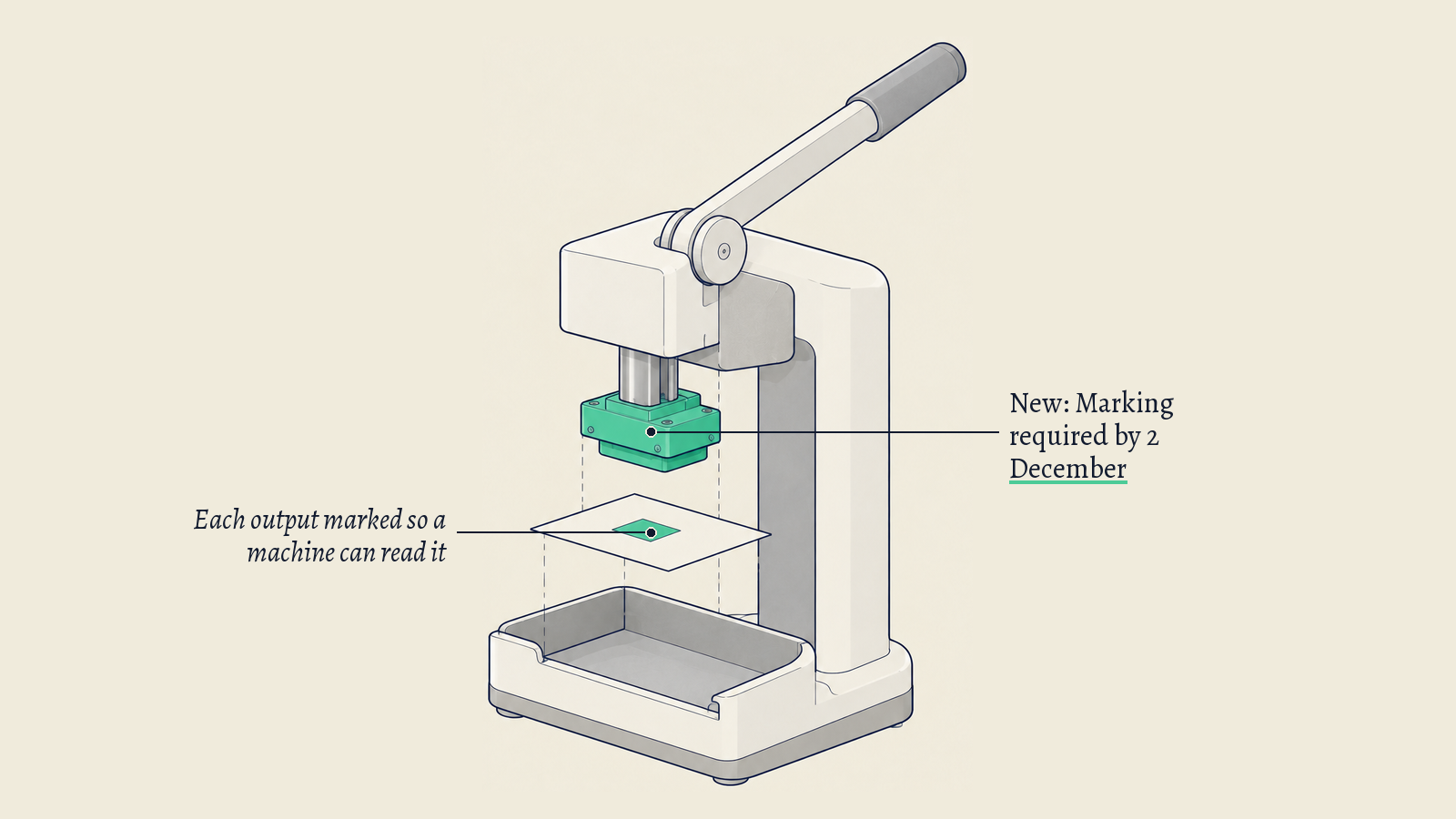
The Commission's Article 50 FAQ gives providers of systems already on the EU market until 2 December 2026 to mark outputs, and an explainer sets out Article 50's four duties.
This summary only repeats what the stories below say.
The timeline · 8 stories
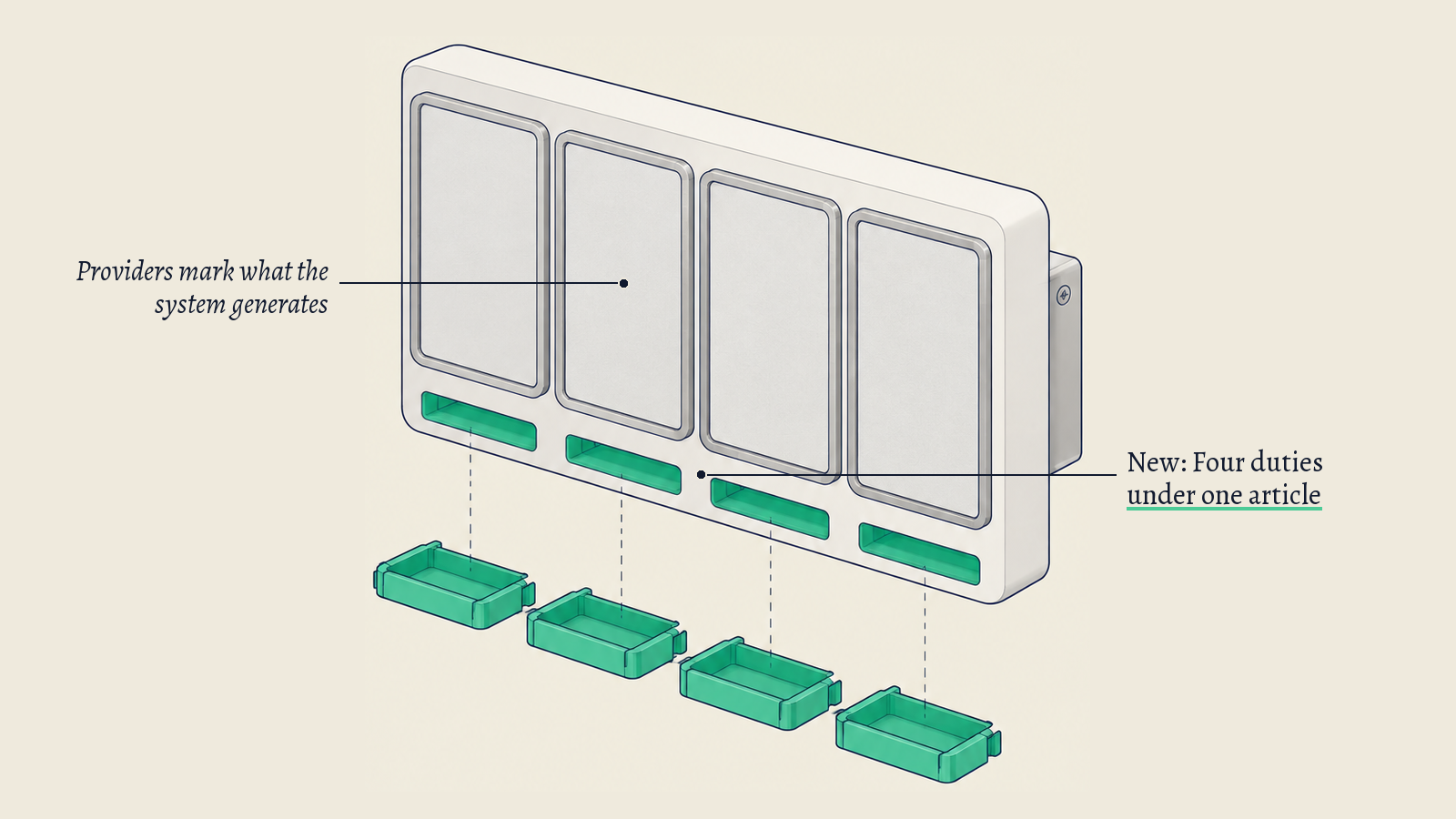
Newest firstFrom the beginning- 16 Nov Laws and rulings EU AI Act Article 50 sets four duties for AI providers and deployers Rules and courtsLaws and rulings Existing generative AI systems in the EU must mark output by 2 December
- 2 Nov Laws and rulings Anthropic's help page lists 16 Claude models back to Opus 4.5 as carrying its text watermark
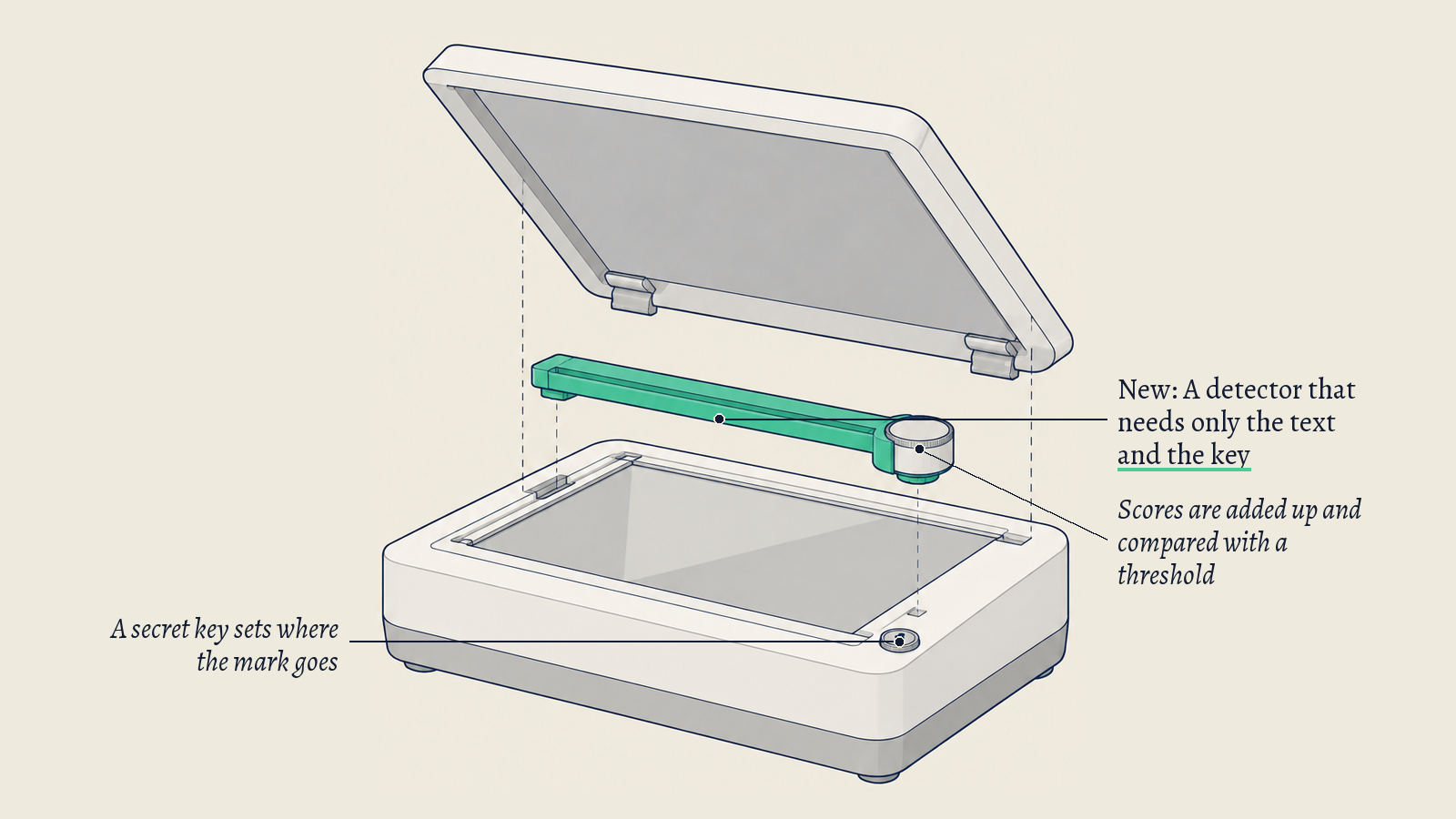
- 15 Oct Research How text watermarks work and what EU Article 50 requires
- 8 Oct Safety and security Google opens its SynthID Detector to everyone, in English, for images, video and audio
- 6 Oct Laws and rulings OpenAI will watermark ChatGPT and Codex text in the EU
- 3 Oct Safety and security How SynthID watermarks AI content and what limits it
- 28 Sep Our first storyModels and releases Google says Gemini 3.8 Flash TTS and Flash-Lite TTS are rolling out from September 23, 2026 in the Gemini API.
It began before we started covering it.