LawsPublished ExplainedAll news from that day
What fair use is, and the four factors a US court weighs
Fair use is the US doctrine that lets some copying go unlicensed; the Copyright Office says courts decide it case by case, and it is examining AI training.
Check our sources · 12 facts from 3 sources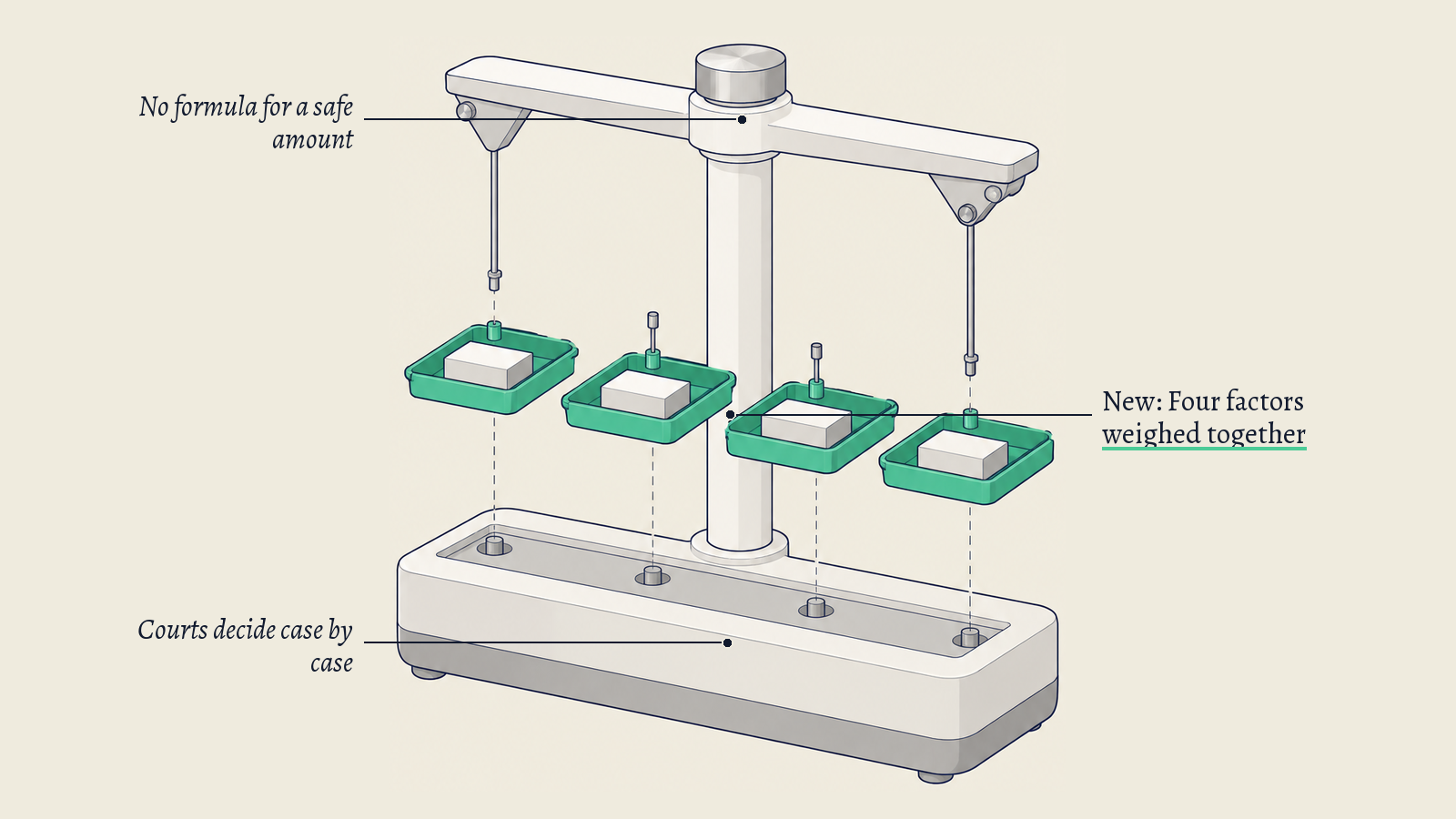 Illustration made with AI for ai notis
Key points
- Section 107 lists four factors: purpose and character of the use, nature of the work, amount used, and effect on the work's potential market or value.
- The Copyright Office says courts decide fair use claims case by case, that the outcome depends on a fact-specific inquiry, and that other factors may also be considered.
- The Office says there is no formula giving a predetermined percentage or amount of a work that may be used without permission.
What happened
Fair use is a legal doctrine in US copyright law. It permits the unlicensed use of copyright-protected works in certain circumstances.
Section 107 of Title 17 lists purposes such as criticism, comment, news reporting, teaching, scholarship and research, and the Copyright Office describes them as examples of activities that may qualify.
Section 107 says that in deciding whether a use in any particular case is a fair use, the factors to be considered include four.
The four are the purpose and character of the use, including whether it is commercial; the nature of the copyrighted work; the amount and substantiality of the portion used compared with the whole work; and the effect of the use on the potential market for or value of the work.
The Copyright Office says there is no formula to ensure that a predetermined percentage or amount of a work may be used without permission. It says courts decide fair use claims case by case and that the outcome depends on a fact-specific inquiry. Other factors may also be considered, depending on the circumstances.
The Office is also examining the use of copyrighted materials in AI training and released a pre-publication Part 3 report on generative AI training on 9 May 2025.
Underlined sentences link to the facts we checked. Dotted words open a short explainer.
Fact 11 of 12 · from U.S. Copyright Office
In determining whether the use made of a work in any particular case is a fair use the factors to be considered shall include—
What it means for you
Our viewIf your team feeds third-party text, images or code into AI work, a rule of thumb about how much is safe has no support: the Copyright Office says there is no such formula and courts decide on the facts.
The four factors are the questions a court asks: why the use is made and whether it is commercial, what kind of work it is, how much is used, and what the use does to the market for the original. The Office is also examining AI training and released a pre-publication Part 3 report on 9 May 2025.
For a specific use, ask counsel, since the Office says its Index is not legal advice.
It adds no new facts.
Your reaction
We count reactions per story and day, never who reacted. The counts help us choose what goes in the monthly issue. If you are signed in, your own page shows yours too.
We count reactions per story and day, never who reacted. They help choose what goes in the monthly issue.
Check our sources
Every sentence above is checked against these 3 sources.
1 U.S. Copyright Office Fair Use Index
Open the source archived copy-
The Copyright Office Fair Use Index describes fair use as a legal doctrine that promotes freedom of expression by permitting the unlicensed use of copyright-protected works in certain circumstances.
citeFair use is a legal doctrine that promotes freedom of expression by permitting the unlicensed use of copyright-protected works in certain circumstances.
-
The Fair Use Index says Section 107 identifies certain types of uses, such as criticism, comment, news reporting, teaching, scholarship and research.
citeSection 107 of the Copyright Act provides the statutory framework for determining whether something is a fair use and identifies certain types of uses—such as criticism, comment, news reporting, teaching, scholarship, and research—as examples of activities that may qualify as fair use.
-
The Fair Use Index says other factors may also be considered by a court in weighing a fair use question, depending on the circumstances.
citeIn addition to the above, other factors may also be considered by a court in weighing a fair use question, depending upon the circumstances.
-
The Fair Use Index says courts evaluate fair use claims on a case-by-case basis and that the outcome of any given case depends on a fact-specific inquiry.
citeCourts evaluate fair use claims on a case-by-case basis, and the outcome of any given case depends on a fact-specific inquiry.
-
The Fair Use Index says there is no formula to ensure that a predetermined percentage or amount of a work can be used safely.
citeThis means that there is no formula to ensure that a predetermined percentage or amount of a work—or specific number of words, lines, pages, copies—may be used without permission.
-
The Fair Use Index says it is not a substitute for legal advice.
citeAlthough the Fair Use Index should prove helpful in understanding what courts have to date considered to be fair or not fair, it is not a substitute for legal advice.
-
The Fair Use Index says Section 107 calls for consideration of four factors in evaluating a question of fair use, and describes the listed types of uses as examples of activities that may qualify.
citeSection 107 of the Copyright Act provides the statutory framework for determining whether something is a fair use and identifies certain types of uses—such as criticism, comment, news reporting, teaching, scholarship, and research—as examples of activities that may qualify as fair use. Section 107 calls for consideration of the following four factors in evaluating a question of fair use:
2 Title 17, chapter 1: Section 107, limitations on exclusive rights: fair use
Open the source archived copy-
Section 107 of Title 17 provides that fair use for purposes such as criticism, comment, news reporting, teaching, scholarship or research is not an infringement of copyright.
citethe fair use of a copyrighted work, including such use by reproduction in copies or phonorecords or by any other means specified by that section, for purposes such as criticism, comment, news reporting, teaching (including multiple copies for classroom use), scholarship, or research, is not an infringement of copyright.
-
Section 107 lists four factors: the purpose and character of the use, including whether it is of a commercial nature or for nonprofit educational purposes; the nature of the copyrighted work; the amount and substantiality of the portion used in relation to the work as a whole; and the effect of the use upon the potential market for or value of the work.
citethe factors to be considered shall include— (1) the purpose and character of the use, including whether such use is of a commercial nature or is for nonprofit educational purposes; (2) the nature of the copyrighted work; (3) the amount and substantiality of the portion used in relation to the copyrighted work as a whole; and (4) the effect of the use upon the potential market for or value of the copyrighted work.
-
Section 107 says the fact that a work is unpublished does not itself bar a finding of fair use, if the finding is made after considering all four factors.
citeThe fact that a work is unpublished shall not itself bar a finding of fair use if such finding is made upon consideration of all the above factors.
-
Section 107 says that in determining whether the use made of a work in any particular case is a fair use, the factors to be considered shall include the four it lists.
citeIn determining whether the use made of a work in any particular case is a fair use the factors to be considered shall include—
3 Copyright and Artificial Intelligence
Open the source archived copy-
The Copyright Office says it has been examining the use of copyrighted materials in AI training, and released a pre-publication version of Part 3, Generative AI Training, on 9 May 2025.
cite
Every sentence above is checked against these 3 sources. Each fact has its own address you can cite.
Source 1 · U.S. Copyright Office
U.S. Copyright Office Fair Use Index
The Copyright Office Fair Use Index describes fair use as a legal doctrine that promotes freedom of expression by permitting the unlicensed use of copyright-protected works in certain circumstances.
Fair use is a legal doctrine that promotes freedom of expression by permitting the unlicensed use of copyright-protected works in certain circumstances.
The Fair Use Index says Section 107 identifies certain types of uses, such as criticism, comment, news reporting, teaching, scholarship and research.
Section 107 of the Copyright Act provides the statutory framework for determining whether something is a fair use and identifies certain types of uses—such as criticism, comment, news reporting, teaching, scholarship, and research—as examples of activities that may qualify as fair use.
The Fair Use Index says other factors may also be considered by a court in weighing a fair use question, depending on the circumstances.
In addition to the above, other factors may also be considered by a court in weighing a fair use question, depending upon the circumstances.
Show all 7 factsShow fewer facts
The Fair Use Index says courts evaluate fair use claims on a case-by-case basis and that the outcome of any given case depends on a fact-specific inquiry.
Courts evaluate fair use claims on a case-by-case basis, and the outcome of any given case depends on a fact-specific inquiry.
The Fair Use Index says there is no formula to ensure that a predetermined percentage or amount of a work can be used safely.
This means that there is no formula to ensure that a predetermined percentage or amount of a work—or specific number of words, lines, pages, copies—may be used without permission.
The Fair Use Index says it is not a substitute for legal advice.
Although the Fair Use Index should prove helpful in understanding what courts have to date considered to be fair or not fair, it is not a substitute for legal advice.
The Fair Use Index says Section 107 calls for consideration of four factors in evaluating a question of fair use, and describes the listed types of uses as examples of activities that may qualify.
Section 107 of the Copyright Act provides the statutory framework for determining whether something is a fair use and identifies certain types of uses—such as criticism, comment, news reporting, teaching, scholarship, and research—as examples of activities that may qualify as fair use. Section 107 calls for consideration of the following four factors in evaluating a question of fair use:
Source 2 · U.S. Copyright Office
Title 17, chapter 1: Section 107, limitations on exclusive rights: fair use
Section 107 of Title 17 provides that fair use for purposes such as criticism, comment, news reporting, teaching, scholarship or research is not an infringement of copyright.
the fair use of a copyrighted work, including such use by reproduction in copies or phonorecords or by any other means specified by that section, for purposes such as criticism, comment, news reporting, teaching (including multiple copies for classroom use), scholarship, or research, is not an infringement of copyright.
Section 107 lists four factors: the purpose and character of the use, including whether it is of a commercial nature or for nonprofit educational purposes; the nature of the copyrighted work; the amount and substantiality of the portion used in relation to the work as a whole; and the effect of the use upon the potential market for or value of the work.
the factors to be considered shall include— (1) the purpose and character of the use, including whether such use is of a commercial nature or is for nonprofit educational purposes; (2) the nature of the copyrighted work; (3) the amount and substantiality of the portion used in relation to the copyrighted work as a whole; and (4) the effect of the use upon the potential market for or value of the copyrighted work.
Section 107 says the fact that a work is unpublished does not itself bar a finding of fair use, if the finding is made after considering all four factors.
The fact that a work is unpublished shall not itself bar a finding of fair use if such finding is made upon consideration of all the above factors.
Show all 4 factsShow fewer facts
Section 107 says that in determining whether the use made of a work in any particular case is a fair use, the factors to be considered shall include the four it lists.
In determining whether the use made of a work in any particular case is a fair use the factors to be considered shall include—
Source 3 · U.S. Copyright Office
Copyright and Artificial Intelligence
The Copyright Office says it has been examining the use of copyrighted materials in AI training, and released a pre-publication version of Part 3, Generative AI Training, on 9 May 2025.
Topics
The morning email
On the mornings we publish: the three top stories and up to four short ones. Free.
We email you a link to confirm. An issue may include one sponsor, always labelled Sponsored · Advertisement. Our emails count opens and clicks, not who made them. Unsubscribe in one click. What we keep