Policy2 Oct 2026Lead storyThat day's edition
Judge dismisses Penske Media’s antitrust suit over Google AI Overviews
Judge Amit Mehta of the US District Court for the District of Columbia granted Google’s motion to dismiss Penske Media’s amended complaint in an opinion dated 30 September 2026.
Check our sources · 1 source, 6 claims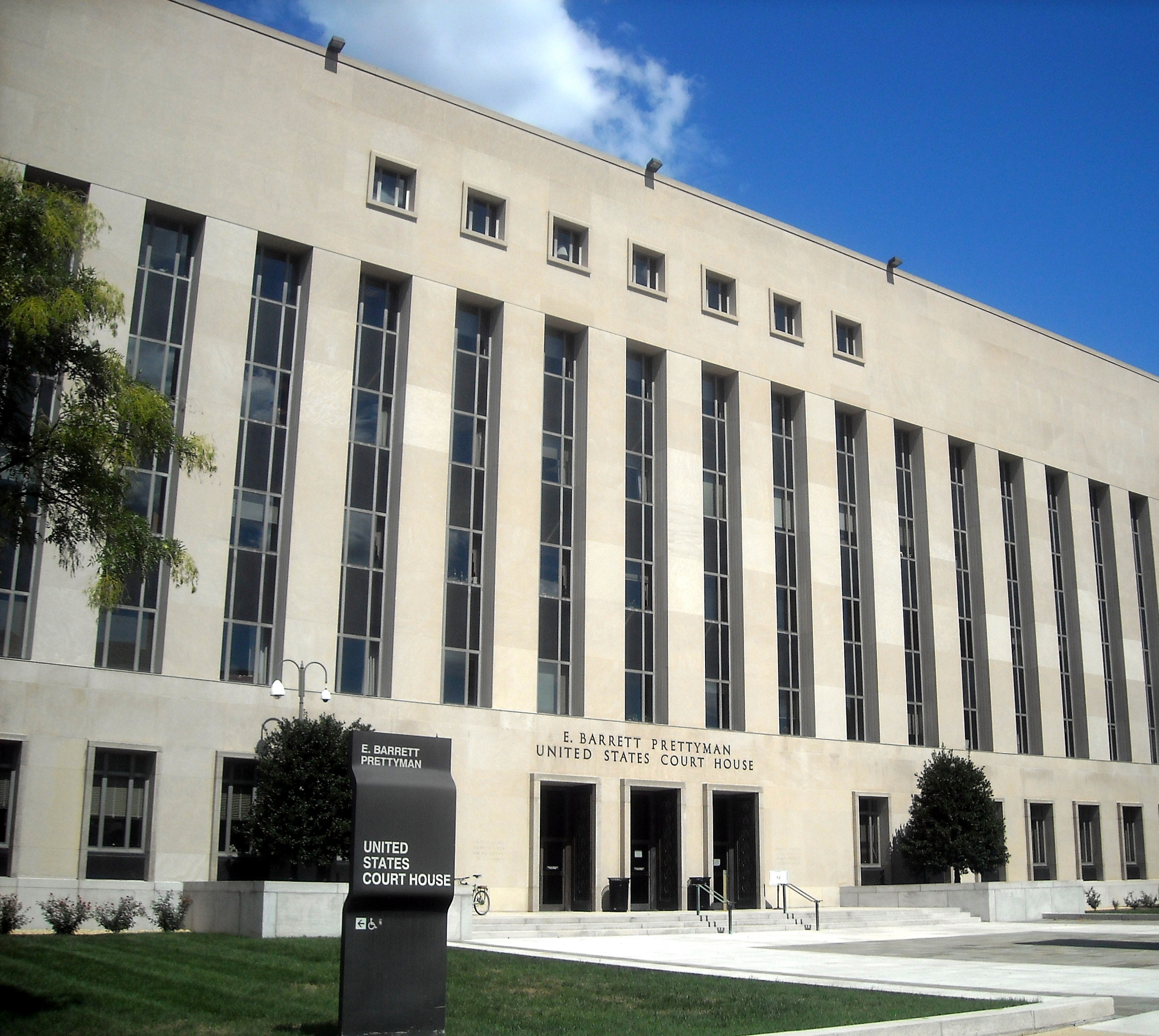 AgnosticPreachersKid / E. Barrett Prettyman Federal Courthouse, DC / Public domain, cropped
Key points
- The court granted Google’s motion to dismiss the Penske Media plaintiffs’ amended complaint, in a memorandum opinion dated 30 September 2026 that also covers Chegg v. Google.
- The plaintiffs alleged Google used its search monopoly to coerce publishers into supplying content it republishes, and that it unlawfully ties AI Overviews to its general search product.
- The court declined to exercise supplemental jurisdiction over the unjust enrichment claims and dismissed them. The opinion says a final, appealable order accompanies it.
What happened
Judge Amit P. Mehta of the US District Court for the District of Columbia dated a memorandum opinion 30 September 2026 covering Chegg v. Google and Penske Media Corporation v. Google.
The court granted Google’s motion to dismiss the Penske Media plaintiffs’ amended complaint.
The plaintiffs alleged Google leveraged monopoly power in general search to coerce publishers to supply content that Google republishes to compete with them.
The Penske Media plaintiffs also brought an unlawful tying claim, alleging that Google unlawfully ties AI Overviews to its general search product.
The court declined to exercise supplemental jurisdiction over the unjust enrichment claims and dismissed them.
The opinion says a final, appealable order accompanies it.
What it means for you
Our viewThis is a ruling on Google’s motion to dismiss, and the opinion says an appealable order accompanies it, so Penske Media can still appeal. The claims we have checked do not set out how the court treated the tying allegation, so read the opinion itself before drawing conclusions about AI Overviews.
If you license content to AI search products, or plan to, ask your counsel to read the opinion’s treatment of the coercion and tying allegations, and watch for any notice of appeal.
This part is our reading of the facts above. It adds no fact of its own.
Your reaction
One press adds one. We count a number for each notice and day, never who pressed it. If you are signed in to My notis, your own page counts yours too.
Check our sources
1 source, 6 claims. We opened the source and checked every sentence above against it.
1 Memorandum Opinion, Chegg v. Google and Penske Media v. Google (D.D.C.)
Open the source-
Judge Amit P. Mehta of the US District Court for the District of Columbia dated a memorandum opinion 30 September 2026 covering Chegg v. Google and Penske Media Corporation v. Google.
CHEGG, INC., Plaintiffs, v. GOOGLE LLC, et al. ... PENSKE MEDIA CORPORATION, et al., Plaintiffs, v. GOOGLE LLC, et al. ... MEMORANDUM OPINION ... Dated: September 30, 2026 Amit P. Mehta United States District Judge
-
The court granted Google’s motion to dismiss the Penske Media plaintiffs’ amended complaint.
Defendants' Motion to Dismiss the PMC Plaintiffs' Amended Complaint is also granted. PMC Docket, ECF No. 25.
-
The plaintiffs alleged Google leveraged monopoly power in general search to coerce publishers to supply content that Google republishes to compete with them.
Plaintiffs assert that Google has leveraged monopoly power in the general search services market to coerce them and other online publishers to supply cost-free content to Google. Google then republishes that content to its users to compete with those same publishers
-
The Penske Media plaintiffs also brought an unlawful tying claim, alleging that Google unlawfully ties AI Overviews to its general search product.
Finally, only the PMC Plaintiffs assert an unlawful tying claim in Count V of their Amended Complaint. ... They maintain that Google unlawfully ties AI Overviews to its general search product in violation of Section 2.
-
The court declined to exercise supplemental jurisdiction over the unjust enrichment claims and dismissed them.
the court declines to exercise supplemental jurisdiction over Plaintiffs' unjust enrichment claims. Accordingly, the court will dismiss Chegg's Count VI and the PMC Plaintiffs' Count VII.
-
The opinion says a final, appealable order accompanies it.
A final, appealable order accompanies this Memorandum Opinion.
Nothing appears on this site that we have not opened and linked.