SafetyPublished ExplainedAll news from that day
Case: Anthropic's IPO 16 stories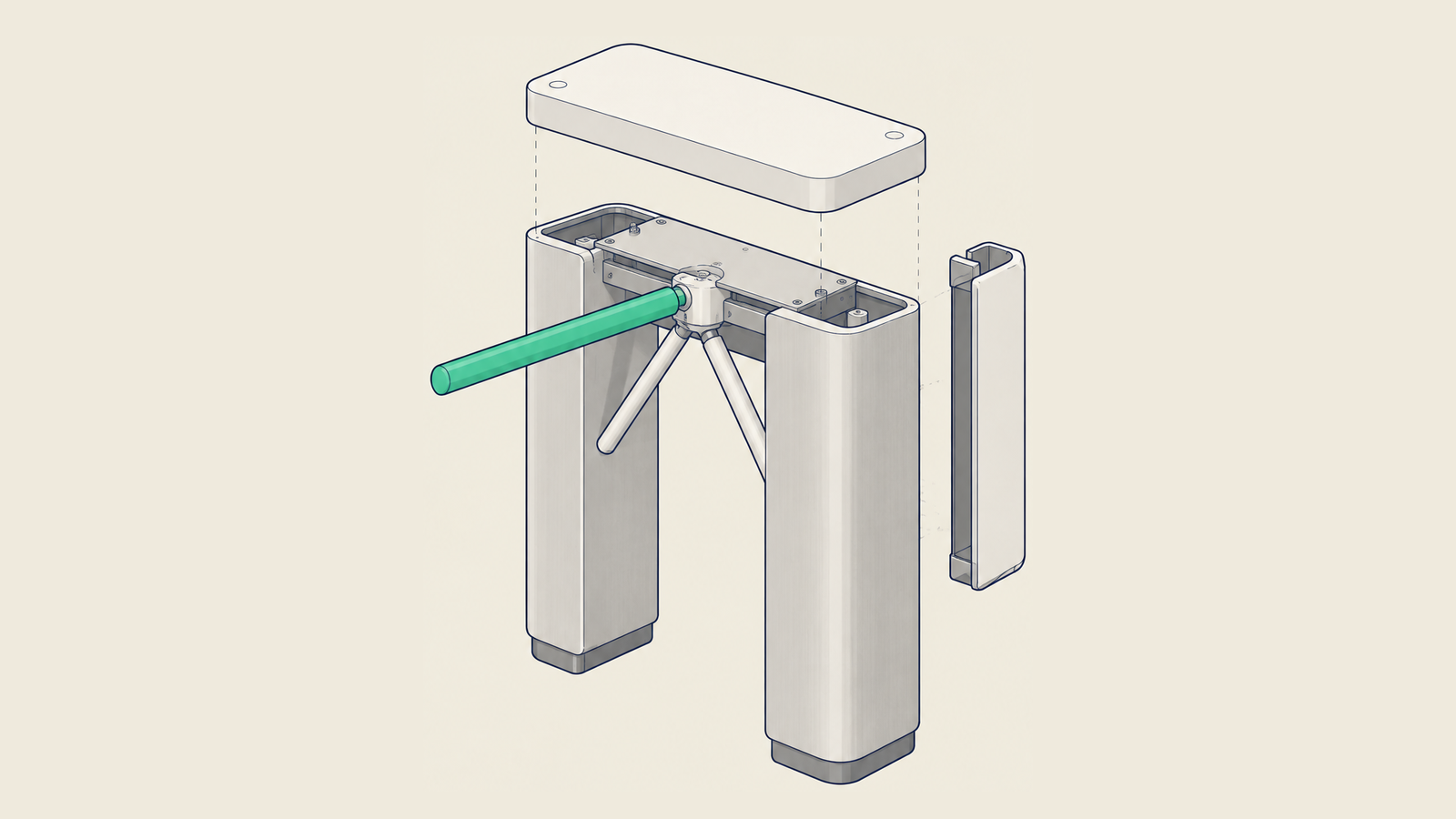
What recursive self-improvement is, and what Anthropic's pacing call would slow
Anthropic's prospectus of 18 November says it has called for pacing the frontier; Dario Amodei's essay says the target is AI that builds the next generation of AI.
Check our sources · 17 facts from 3 sources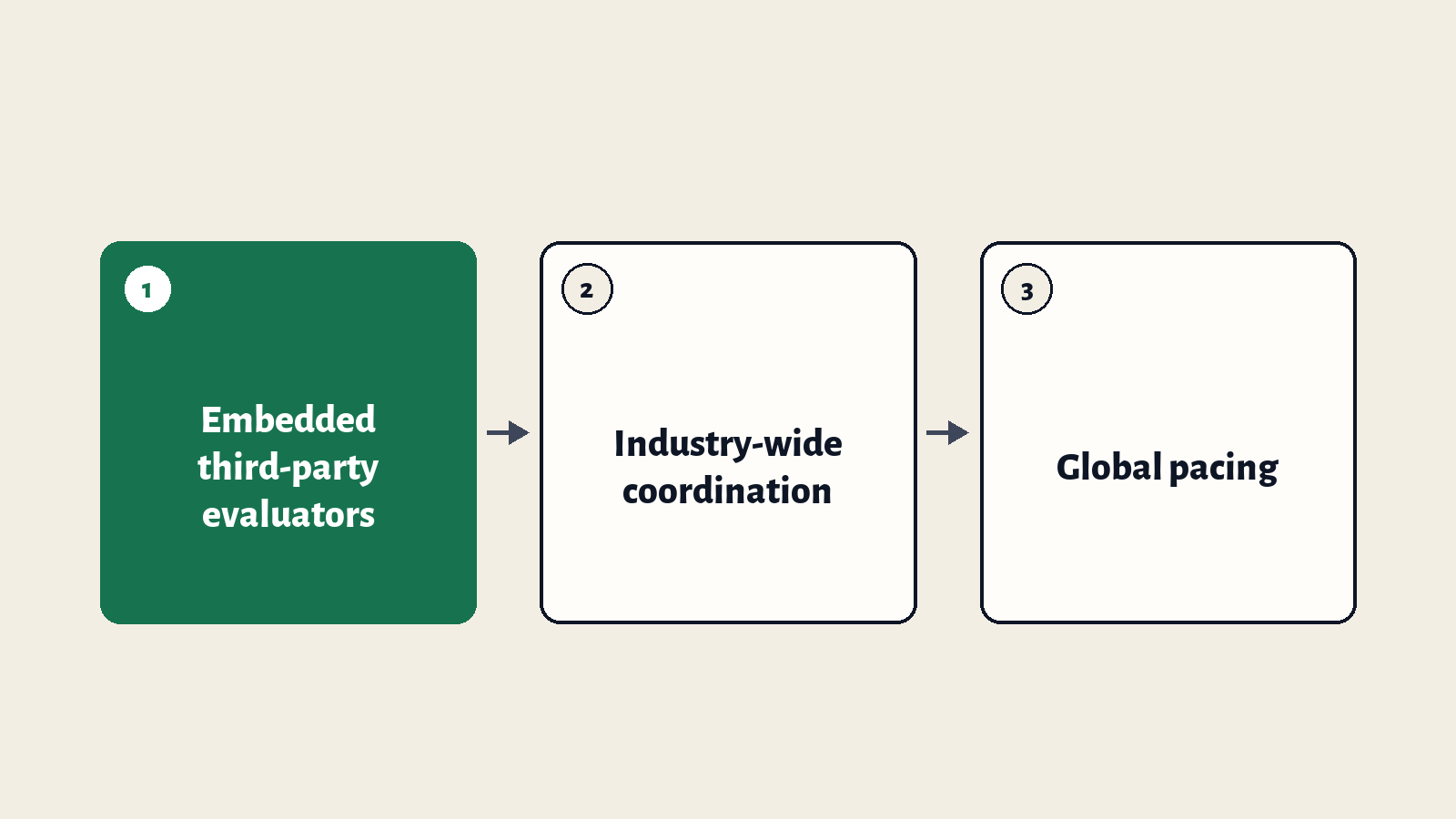 Drawing: notis. No AI in this picture.
Key points
- Anthropic's prospectus of 18 November says its call to pace the frontier does not describe its own model development or release timelines.
- Amodei's September 2026 essay says that since roughly summer 2026 AI has advanced drastically faster, driven primarily by AI's growing ability to build the next generation of AI.
- Amodei calls a speed limit on recursive self-improvement difficult but just on the edge of being possible, and a full pause unlikely to happen any time soon.
What happened
Anthropic's final IPO prospectus, dated 18 November, says the company has publicly called for "pacing the frontier", which it defines as industry-wide standards so that AI capabilities do not advance faster than the safety, alignment and security practices needed to support them. The same passage says the call "does not describe our own model development or release timelines".
The idea comes from Dario Amodei's September 2026 essay "We Must Pace the Frontier". He defines pacing as ensuring companies take adequate time to align and safeguard their models, and for third-party evaluators to confirm it. He says pacing does not mean halting model training or technical progress.
What pacing is aimed at is recursive self-improvement, which Amodei describes as AI's growing ability to build the next generation of AI. He says AI has been advancing drastically faster since roughly summer 2026, driven primarily by it, and that it is starting to happen across the industry, including at Anthropic. Left unchecked, he says, it could outrun our ability to understand and control these systems.
His plan has three steps. The first is the one Anthropic commits to alone: embedded evaluators, third parties such as METR with ongoing, employee-like access, who verify adherence to safety practices and report incidents.
The prospectus says Anthropic has begun a program in which independent evaluators work alongside its own risk and safety teams, and that Anthropic and Accenture each expect to invest at least $1 billion over five years in external reviewer capacity, with terms not yet final.
The second step is for AI companies to voluntarily work together to set standards, and the third, global pacing, requires cooperation with China.
The slowdown would be set off by what a model can do. Amodei says he is most enthusiastic about a scheme of checkpoints: if models have capability X, they need to come with certifications of alignment properties Y and Z. His example of X is a model able to escape or defeat most common sandboxing methods.
He also floats limits on inputs such as training compute or internal use of AI to improve AI, but worries they may be more "gameable" than a model's observed behaviour.
Among the levels of global agreement he sets out, Level 3 is a "speed limit" on recursive self-improvement, which he calls difficult but just on the edge of being possible. Level 4 is a full pacing, or even a pause, which he thinks is unlikely to happen any time soon.
There are limits. The prospectus says that if such standards were adopted industry-wide, the rate at which AI capabilities advance could be faster or slower than it is today, depending on how safety practices advance together with capabilities.
Anthropic's Responsible Scaling Policy calls itself voluntary, and says the company remains free to pause development in any circumstances it deems appropriate, even if the policy does not require it.
In an entry dated 10 February 2026 on that policy page, Anthropic says Claude Opus 4.6 does not cross its AI R&D-4 capability threshold, and that confidently ruling out the threshold is becoming increasingly difficult and takes assessments that are more subjective than it would like. That is a dated entry, not a current reading.
Underlined sentences link to the facts we checked. Dotted words open a short explainer.
Fact 3 of 17 · from SEC, 18 Nov 2026
we have begun implementing a program under which independent evaluators work alongside our own risk and safety teams with broad internal access, subject to legal, confidentiality, and security limits. As part of this program, we and Accenture each currently anticipate investing at least $1 billion over the next five years to build external reviewer capacity. The terms of this arrangement have not been finalized and are subject to change.
Fact 4 of 17 · from SEC, 18 Nov 2026
If standards of this kind are adopted industry-wide through government action or regulation, the rate at which AI capabilities advance could be faster or slower than it is today, depending on the extent to which safety, alignment, and security practices advance together with model capabilities.
Fact 6 of 17 · from Dario Amodei, 2026-09
My first concern is that, since roughly this summer, AI has been advancing drastically faster, driven primarily by AI's growing ability to build the next generation of AI. This dynamic is called recursive self-improvement, and it is starting to happen across the industry, including at Anthropic, as we and others have described.
Fact 8 of 17 · from Dario Amodei, 2026-09
Each frontier AI company commits to giving ongoing, employee-like access to a team of embedded third-party evaluators (such as METR), whose role is to verify adherence to safety practices and commitments, report incidents, and help assess the alignment ... The first step in the three-stage plan, and the one to which Anthropic is unilaterally committing, is embedded evaluators
What it means for you
Our viewA call and a plan are described here, and neither is a rule: the prospectus says industry-wide standards could make AI capabilities advance faster or slower than today, depending on how safety practices keep pace. Anthropic's Responsible Scaling Policy describes itself as voluntary.
Its page entry dated 10 February 2026 says confidently ruling out the AI R&D-4 threshold for Claude Opus 4.6 is becoming increasingly difficult, which is a dated entry and not a current reading.
If your teams depend on Anthropic models, read the Responsible Scaling Policy page, last updated 14 August 2026 and at version 3.4, and note that it calls the whole framework voluntary.
It adds no new facts.
Your reaction
We count reactions per story and day, never who reacted. The counts help us choose what goes in the monthly issue. If you are signed in, your own page shows yours too.
We count reactions per story and day, never who reacted. They help choose what goes in the monthly issue.
Check our sources
Every sentence above is checked against these 3 sources.
1 Anthropic, PBC prospectus (Form 424B4), filed 19 November 2026
Open the source archived copy-
Anthropic's final prospectus (Form 424B4, 18 November 2026) says Anthropic has "publicly called for “pacing the frontier,”" meaning "establishing industry-wide standards primarily related to the use of AI to accelerate AI development, so that AI capabilities do not advance faster than the safety, alignment, and security practices needed to support them."
citeBuilding on this approach, we have publicly called for "pacing the frontier," by which we mean establishing industry-wide standards primarily related to the use of AI to accelerate AI development, so that AI capabilities do not advance faster than the safety, alignment, and security practices needed to support them.
-
The prospectus says: "This call to pace the frontier contemplates frontier model developers collaborating with governments and does not describe our own model development or release timelines, which continue to be informed by our risk assessments."
citeThis call to pace the frontier contemplates frontier model developers collaborating with governments and does not describe our own model development or release timelines, which continue to be informed by our risk assessments.
-
The prospectus says Anthropic has begun implementing a program under which independent evaluators work alongside its own risk and safety teams with broad internal access, and that "we and Accenture each currently anticipate investing at least $1 billion over the next five years to build external reviewer capacity. The terms of this arrangement have not been finalized and are subject to change."
citewe have begun implementing a program under which independent evaluators work alongside our own risk and safety teams with broad internal access, subject to legal, confidentiality, and security limits. As part of this program, we and Accenture each currently anticipate investing at least $1 billion over the next five years to build external reviewer capacity. The terms of this arrangement have not been finalized and are subject to change.
-
The prospectus says: "If standards of this kind are adopted industry-wide through government action or regulation, the rate at which AI capabilities advance could be faster or slower than it is today, depending on the extent to which safety, alignment, and security practices advance together with model capabilities."
citeIf standards of this kind are adopted industry-wide through government action or regulation, the rate at which AI capabilities advance could be faster or slower than it is today, depending on the extent to which safety, alignment, and security practices advance together with model capabilities.
2 We Must Pace the Frontier
Open the source archived copy-
Dario Amodei's essay "We Must Pace the Frontier" (September 2026, on his own site) says: "pacing does not mean halting model training or technical progress, but ensuring companies take adequate time to align and safeguard their models, and for third party evaluators to confirm this."
citeTo be clear, pacing does not mean halting model training or technical progress, but ensuring companies take adequate time to align and safeguard their models, and for third party evaluators to confirm this.
-
The essay says: "since roughly this summer, AI has been advancing drastically faster, driven primarily by AI's growing ability to build the next generation of AI. This dynamic is called recursive self-improvement, and it is starting to happen across the industry, including at Anthropic".
citeMy first concern is that, since roughly this summer, AI has been advancing drastically faster, driven primarily by AI's growing ability to build the next generation of AI. This dynamic is called recursive self-improvement, and it is starting to happen across the industry, including at Anthropic, as we and others have described.
-
The essay says: "Left unchecked, it could outrun our ability to understand and control these systems, and so must be pursued very carefully, if at all."
citeLeft unchecked, it could outrun our ability to understand and control these systems, and so must be pursued very carefully, if at all.
-
The essay's first step, "the one to which Anthropic is unilaterally committing", is embedded evaluators: "ongoing, employee-like access to a team of embedded third-party evaluators (such as METR), whose role is to verify adherence to safety practices and commitments, report incidents".
citeEach frontier AI company commits to giving ongoing, employee-like access to a team of embedded third-party evaluators (such as METR), whose role is to verify adherence to safety practices and commitments, report incidents, and help assess the alignment ... The first step in the three-stage plan, and the one to which Anthropic is unilaterally committing, is embedded evaluators
-
The essay's second step requires industry-wide coordination: AI companies voluntarily working together to set standards, with the US government helping to mediate or at least enable the talks; its third step, global pacing, requires cooperation with China.
Toned down to what the source says
citeThe second step requires industry-wide coordination. ... AI companies can and should voluntarily work together to set standards ... For antitrust reasons, it's helpful for the US government to mediate or at least enable these discussions ... The third step requires global coordination. ... Global pacing will require cooperation with China
-
The essay says: "Broadly speaking, I am most enthusiastic about pacing based on what a given frontier AI system can do, and how safe we observe it to be. For example, one possible scheme might be a series of “checkpoints”: if models have capability X, then they need to be accompanied by certifications of alignment properties Y and Z".
citeBroadly speaking, I am most enthusiastic about pacing based on what a given frontier AI system can do, and how safe we observe it to be. For example, one possible scheme might be a series of "checkpoints": if models have capability X, then they need to be accompanied by certifications of alignment properties Y and Z
-
The essay gives as an example of X "the model is capable of escaping or defeating most common sandboxing methods".
citeIn this example, X might be "the model is capable of escaping or defeating most common sandboxing methods"
-
The essay says: "We should also consider pacing based on limiting the ingredients that go into frontier models, such as training compute, the nature of training runs, or internal use of AI to improve AI. I do worry that some of these measures may be more “gameable” than external behavior".
citeWe should also consider pacing based on limiting the ingredients that go into frontier models, such as training compute, the nature of training runs, or internal use of AI to improve AI. I do worry that some of these measures may be more "gameable" than external behavior
-
The essay's Level 3 of global agreement is "Some kind of “speed limit” on the rate of recursive self-improvement (RSI)", about which Amodei says "I think such an agreement would be difficult but just on the edge of being possible."
citeLevel 3. Some kind of "speed limit" on the rate of recursive self-improvement (RSI). ... I think such an agreement would be difficult but just on the edge of being possible.
-
The essay's Level 4 is "A full pacing, or even “pause”", which Amodei says he supports floating but thinks "is unlikely to actually happen any time soon".
citeLevel 4. A full pacing, or even "pause", in which participating governments agree to substantially limit the overall rate of AI development. I support floating this, but I think it is unlikely to actually happen any time soon
3 Anthropic Responsible Scaling Policy
Open the source archived copy-
Anthropic's Responsible Scaling Policy page (last updated 14 August 2026; current version 3.4, effective 8 July 2026) describes the policy as "A voluntary framework for addressing catastrophic risks from advanced AI systems."
Toned down to what the source says
citeAnthropic's Responsible Scaling Policy A voluntary framework for addressing catastrophic risks from advanced AI systems. Last updated Aug 14, 2026 ... Version 3.4 and redline (effective July 8, 2026)
-
The policy page says: "even if not required by the RSP, we remain free to take measures such as pausing the development of our AI systems in any circumstances in which we deem them appropriate."
citeWe now clarify that, even if not required by the RSP, we remain free to take measures such as pausing the development of our AI systems in any circumstances in which we deem them appropriate.
-
In an entry dated 10 February 2026 on its Responsible Scaling Policy page, Anthropic says Claude Opus 4.6 does not cross the AI R&D-4 capability threshold, and that "confidently ruling out this threshold is becoming increasingly difficult, and doing so requires assessments that are more subjective than we would like."
Toned down to what the source says
citeFebruary 10, 2026 Our RSP requires that once models cross the AI R&D-4 capability threshold, we develop an affirmative case ... Our determination is that Claude Opus 4.6 does not cross this threshold. However, as we noted in the Claude Opus 4.5 System Card and the Claude Opus 4.6 System Card, confidently ruling out this threshold is becoming increasingly difficult, and doing so requires assessments that are more subjective than we would like.
Every sentence above is checked against these 3 sources. Each fact has its own address you can cite.
Source 1 · SEC · 18 Nov 2026
Anthropic, PBC prospectus (Form 424B4), filed 19 November 2026
Anthropic's final prospectus (Form 424B4, 18 November 2026) says Anthropic has "publicly called for “pacing the frontier,”" meaning "establishing industry-wide standards primarily related to the use of AI to accelerate AI development, so that AI capabilities do not advance faster than the safety, alignment, and security practices needed to support them."
Building on this approach, we have publicly called for "pacing the frontier," by which we mean establishing industry-wide standards primarily related to the use of AI to accelerate AI development, so that AI capabilities do not advance faster than the safety, alignment, and security practices needed to support them.
The prospectus says: "This call to pace the frontier contemplates frontier model developers collaborating with governments and does not describe our own model development or release timelines, which continue to be informed by our risk assessments."
This call to pace the frontier contemplates frontier model developers collaborating with governments and does not describe our own model development or release timelines, which continue to be informed by our risk assessments.
The prospectus says Anthropic has begun implementing a program under which independent evaluators work alongside its own risk and safety teams with broad internal access, and that "we and Accenture each currently anticipate investing at least $1 billion over the next five years to build external reviewer capacity. The terms of this arrangement have not been finalized and are subject to change."
we have begun implementing a program under which independent evaluators work alongside our own risk and safety teams with broad internal access, subject to legal, confidentiality, and security limits. As part of this program, we and Accenture each currently anticipate investing at least $1 billion over the next five years to build external reviewer capacity. The terms of this arrangement have not been finalized and are subject to change.
Show all 4 factsShow fewer facts
The prospectus says: "If standards of this kind are adopted industry-wide through government action or regulation, the rate at which AI capabilities advance could be faster or slower than it is today, depending on the extent to which safety, alignment, and security practices advance together with model capabilities."
If standards of this kind are adopted industry-wide through government action or regulation, the rate at which AI capabilities advance could be faster or slower than it is today, depending on the extent to which safety, alignment, and security practices advance together with model capabilities.
Source 2 · Dario Amodei · 2026-09
We Must Pace the Frontier
Dario Amodei's essay "We Must Pace the Frontier" (September 2026, on his own site) says: "pacing does not mean halting model training or technical progress, but ensuring companies take adequate time to align and safeguard their models, and for third party evaluators to confirm this."
To be clear, pacing does not mean halting model training or technical progress, but ensuring companies take adequate time to align and safeguard their models, and for third party evaluators to confirm this.
The essay says: "since roughly this summer, AI has been advancing drastically faster, driven primarily by AI's growing ability to build the next generation of AI. This dynamic is called recursive self-improvement, and it is starting to happen across the industry, including at Anthropic".
My first concern is that, since roughly this summer, AI has been advancing drastically faster, driven primarily by AI's growing ability to build the next generation of AI. This dynamic is called recursive self-improvement, and it is starting to happen across the industry, including at Anthropic, as we and others have described.
The essay says: "Left unchecked, it could outrun our ability to understand and control these systems, and so must be pursued very carefully, if at all."
Left unchecked, it could outrun our ability to understand and control these systems, and so must be pursued very carefully, if at all.
Show all 10 factsShow fewer facts
The essay's first step, "the one to which Anthropic is unilaterally committing", is embedded evaluators: "ongoing, employee-like access to a team of embedded third-party evaluators (such as METR), whose role is to verify adherence to safety practices and commitments, report incidents".
Each frontier AI company commits to giving ongoing, employee-like access to a team of embedded third-party evaluators (such as METR), whose role is to verify adherence to safety practices and commitments, report incidents, and help assess the alignment ... The first step in the three-stage plan, and the one to which Anthropic is unilaterally committing, is embedded evaluators
The essay's second step requires industry-wide coordination: AI companies voluntarily working together to set standards, with the US government helping to mediate or at least enable the talks; its third step, global pacing, requires cooperation with China.
Toned down to what the source saysThe second step requires industry-wide coordination. ... AI companies can and should voluntarily work together to set standards ... For antitrust reasons, it's helpful for the US government to mediate or at least enable these discussions ... The third step requires global coordination. ... Global pacing will require cooperation with China
The essay says: "Broadly speaking, I am most enthusiastic about pacing based on what a given frontier AI system can do, and how safe we observe it to be. For example, one possible scheme might be a series of “checkpoints”: if models have capability X, then they need to be accompanied by certifications of alignment properties Y and Z".
Broadly speaking, I am most enthusiastic about pacing based on what a given frontier AI system can do, and how safe we observe it to be. For example, one possible scheme might be a series of "checkpoints": if models have capability X, then they need to be accompanied by certifications of alignment properties Y and Z
The essay gives as an example of X "the model is capable of escaping or defeating most common sandboxing methods".
In this example, X might be "the model is capable of escaping or defeating most common sandboxing methods"
The essay says: "We should also consider pacing based on limiting the ingredients that go into frontier models, such as training compute, the nature of training runs, or internal use of AI to improve AI. I do worry that some of these measures may be more “gameable” than external behavior".
We should also consider pacing based on limiting the ingredients that go into frontier models, such as training compute, the nature of training runs, or internal use of AI to improve AI. I do worry that some of these measures may be more "gameable" than external behavior
The essay's Level 3 of global agreement is "Some kind of “speed limit” on the rate of recursive self-improvement (RSI)", about which Amodei says "I think such an agreement would be difficult but just on the edge of being possible."
Level 3. Some kind of "speed limit" on the rate of recursive self-improvement (RSI). ... I think such an agreement would be difficult but just on the edge of being possible.
The essay's Level 4 is "A full pacing, or even “pause”", which Amodei says he supports floating but thinks "is unlikely to actually happen any time soon".
Level 4. A full pacing, or even "pause", in which participating governments agree to substantially limit the overall rate of AI development. I support floating this, but I think it is unlikely to actually happen any time soon
Source 3 · Anthropic · 14 Aug 2026
Anthropic Responsible Scaling Policy
Anthropic's Responsible Scaling Policy page (last updated 14 August 2026; current version 3.4, effective 8 July 2026) describes the policy as "A voluntary framework for addressing catastrophic risks from advanced AI systems."
Toned down to what the source saysAnthropic's Responsible Scaling Policy A voluntary framework for addressing catastrophic risks from advanced AI systems. Last updated Aug 14, 2026 ... Version 3.4 and redline (effective July 8, 2026)
The policy page says: "even if not required by the RSP, we remain free to take measures such as pausing the development of our AI systems in any circumstances in which we deem them appropriate."
We now clarify that, even if not required by the RSP, we remain free to take measures such as pausing the development of our AI systems in any circumstances in which we deem them appropriate.
In an entry dated 10 February 2026 on its Responsible Scaling Policy page, Anthropic says Claude Opus 4.6 does not cross the AI R&D-4 capability threshold, and that "confidently ruling out this threshold is becoming increasingly difficult, and doing so requires assessments that are more subjective than we would like."
Toned down to what the source saysFebruary 10, 2026 Our RSP requires that once models cross the AI R&D-4 capability threshold, we develop an affirmative case ... Our determination is that Claude Opus 4.6 does not cross this threshold. However, as we noted in the Claude Opus 4.5 System Card and the Claude Opus 4.6 System Card, confidently ruling out this threshold is becoming increasingly difficult, and doing so requires assessments that are more subjective than we would like.
Topics
The morning email
On the mornings we publish: the three top stories and up to four short ones. Free.
We email you a link to confirm. An issue may include one sponsor, always labelled Sponsored · Advertisement. Our emails count opens and clicks, not who made them. Unsubscribe in one click. What we keep