ComputePublished Top storyAll news from that day
Ongoing case: What the AI buildout costs and needs 4 storiesSemiAnalysis's Patel: a trillion in AI capex needs $250 billion of revenue a year
On the Big Technology Podcast, published 9 October, Dylan Patel of SemiAnalysis said AI-related capex, supply chain included, will be about $2 trillion next year, and set out his payback arithmetic.
Check our sources · 9 facts from 1 source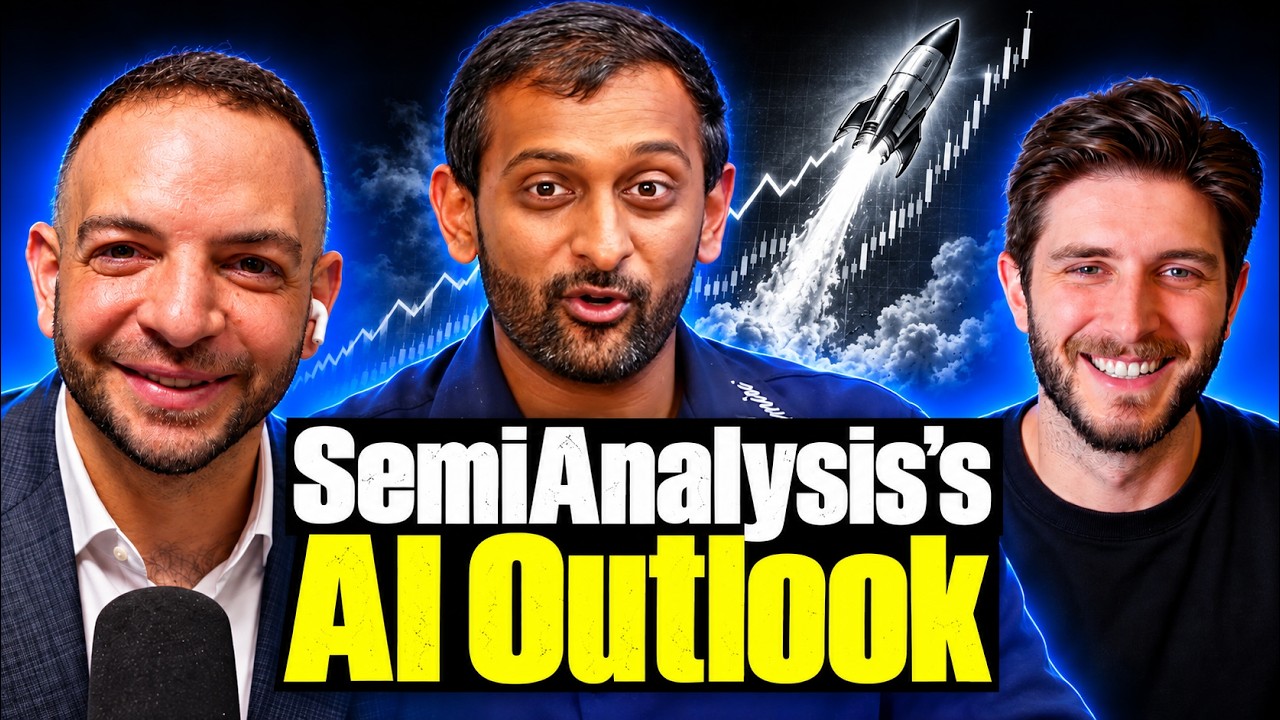 Video: Alex Kantrowitz on YouTube
Key points
- Patel says next year's AI-related capex, supply chain included, will be on the order of $2 trillion, which he puts at five or 6% of US GDP (01:58).
- By his straight-line arithmetic over six years, a trillion dollars of capex needs about $1.5 trillion of revenue, or $250 billion a year (09:55).
- He says Anthropic is now profitable on revenue minus compute cost, training and inference combined, and OpenAI within two or three quarters, an estimate from SemiAnalysis's model (12:07).
What happened
Dylan Patel, founder and chief executive of SemiAnalysis, spoke with Alex Kantrowitz and SemiAnalysis's Jordan Nanos on the Big Technology Podcast, published on 9 October 2026. Asked about a chart that compared the AI buildout with railroads as a share of GDP, Patel said capex across the US next year will be on the order of $2 trillion, which he put at five or 6% of GDP.
On what revenue the spending needs, Patel said these assets are depreciated over six years on an accounting basis, and that on a straight line a trillion dollars of capex needs about $1.5 trillion of revenue over those six years, or $250 billion a year.
He said he expects AI revenue to be much higher by 2031, and that if it is only $3 trillion then, "we'll have big problems". He also said Anthropic is now profitable on revenue minus compute cost, training and inference combined, and that OpenAI gets there within two or three quarters, based on SemiAnalysis's model.
Nanos said SemiAnalysis tracks $588 billion of off-balance-sheet backstops that Nvidia is supporting.
What it means for you
Our viewThese are one analyst's estimates given in conversation. The profitability of two labs rests on SemiAnalysis's own model, and the straight line is one of two cases he gave. Patel says he expects AI revenue to be much higher by 2031, and that if it is only $3 trillion then, there will be big problems.
For a buyer, the point is that the labs you rely on are spending against a payback that needs revenue to keep growing. If you sign a multi-year commitment with an AI vendor, ask what happens to your price and your service terms if its revenue grows more slowly than planned.
It adds no new facts.
Your reaction
We count reactions per story and day, never who reacted. The counts help us choose what goes in the monthly issue. If you are signed in, your own page shows yours too.
We count reactions per story and day, never who reacted. They help choose what goes in the monthly issue.
Check our sources
Every sentence above is checked against this source.
1 Can AI Keep Growing Exponentially? Let's Ask SemiAnalysis, With Dylan Patel and Jordan Nanos
Open the source archived copy-
Alex Kantrowitz's Big Technology Podcast published an interview with Dylan Patel and Jordan Nanos of SemiAnalysis on YouTube on 9 October 2026, titled "Can AI Keep Growing Exponentially? Let's Ask SemiAnalysis".
citeWatch page title: Can AI Keep Growing Exponentially? Let's Ask SemiAnalysis - With Dylan Patel and Jordan Nanos; channel Alex Kantrowitz; publishDate 2026-10-09T11:00:07-07:00. (00:08) Welcome to Big Technology Podcast
-
The video's description says Dylan Patel is founder and CEO of SemiAnalysis and Jordan Nanos is a member of its technical staff.
citeDylan Patel is founder and CEO of SemiAnalysis, Jordan Nanos is a member of its technical staff.
-
Asked by the host about a chart comparing the AI buildout with earlier buildouts as a share of GDP, Dylan Patel said "next year um capex across the US will be on the order of $2 trillion", including "not just data centers and chips but also all the rest of the supply chain that people are investing in" (01:58 to 02:10).
Toned down to what the source says
cite(01:58) if you look at like next year um capex across the US will be on the order of $2 trillion uh include not just data centers and chips but also all the rest of the supply chain that people are investing in. Um so you're close to $2 trillion of capex.
-
Dylan Patel said that, with US GDP "close to 30 30 and some change trillion", the AI capex puts the share of GDP at "five or 6%" (02:15 to 02:22).
cite(02:15) GDP is like close to 30 30 and some change trillion. So you're at like you know five or 6% right not not 3% or 2%.
-
Dylan Patel said "These infrastructure investments are six years on an accounting basis at least depreciable assets" (09:44).
cite(09:44) These infrastructure investments are six years on an accounting basis at least depreciable assets although there's quite a bit of evidence that they're actually going to last longer than that
-
Dylan Patel said that if he spends "a trillion dollars today on you know AI data center and GPUs" (09:55) and assumes a straight line, "over the 6 years I need to call it 1.5 trillion of revenue so $250 billion of revenue a year for that trillion dollars of capex", or else a sloped payback (10:09 to 10:25).
Toned down to what the source says
cite(09:55) So if I spend a trillion dollars today on you know AI data center and GPUs ... (10:09) either I could assume it's a straight line right so then over the 6 years I need to call it 1.5 trillion of revenue so $250 billion of revenue a year for that trillion dollars of capex or it's going to be something sloped
-
Asked about estimates of the revenue needed to pay off the investment, Dylan Patel said he thinks "revenue will be much higher than that uh by 2031" (09:32), and that "if AI revenue is only $3 trillion in 2031, then yeah, we'll have big problems" (11:07).
Toned down to what the source says
cite(09:24) I think everyone's numbers for revenue requirements are quite low um given the pace of where this buildout is going to go. I think I think it's going to go like I think revenue will be much higher than that uh by 2031 ... (11:04) yeah, I mean if if AI revenue is only $3 trillion in 2031, then yeah, we'll have big problems.
-
Dylan Patel spoke of "entropic", the automatic captions' rendering of Anthropic, as "now you know profitable in terms of um compute cost minus revenue or revenue minus compute cost", training and inference combined, and said OpenAI gets there "within the next couple quarters uh maybe two or three quarters", "based on at least what like we expect in the tokconomics model" (12:07 to 12:27).
cite(12:07) we've seen entropic is now you know profitable in terms of um compute cost minus revenue or revenue minus compute cost. um both training and inference combined um and OpenAI gets there you know within the next couple quarters uh maybe two or three quarters um so based on at least what like we expect in the tokconomics model
-
Jordan Nanos said SemiAnalysis has "tracking of $588 billion of offbalance sheet backs stops that Nvidia is supporting right now", the automatic captions' rendering of off-balance-sheet backstops (35:43 to 35:48).
cite(35:40) And uh the number that we have is that currently we've got tracking of $588 billion of offbalance sheet backs stops that Nvidia is supporting right now
Every sentence above is checked against this source. Each fact has its own address you can cite.
Source 1 · Alex Kantrowitz (Big Technology) · 9 Oct 2026
Can AI Keep Growing Exponentially? Let's Ask SemiAnalysis, With Dylan Patel and Jordan Nanos
Alex Kantrowitz's Big Technology Podcast published an interview with Dylan Patel and Jordan Nanos of SemiAnalysis on YouTube on 9 October 2026, titled "Can AI Keep Growing Exponentially? Let's Ask SemiAnalysis".
Watch page title: Can AI Keep Growing Exponentially? Let's Ask SemiAnalysis - With Dylan Patel and Jordan Nanos; channel Alex Kantrowitz; publishDate 2026-10-09T11:00:07-07:00. (00:08) Welcome to Big Technology Podcast
The video's description says Dylan Patel is founder and CEO of SemiAnalysis and Jordan Nanos is a member of its technical staff.
Dylan Patel is founder and CEO of SemiAnalysis, Jordan Nanos is a member of its technical staff.
Asked by the host about a chart comparing the AI buildout with earlier buildouts as a share of GDP, Dylan Patel said "next year um capex across the US will be on the order of $2 trillion", including "not just data centers and chips but also all the rest of the supply chain that people are investing in" (01:58 to 02:10).
Toned down to what the source says(01:58) if you look at like next year um capex across the US will be on the order of $2 trillion uh include not just data centers and chips but also all the rest of the supply chain that people are investing in. Um so you're close to $2 trillion of capex.
Show all 9 factsShow fewer facts
Dylan Patel said that, with US GDP "close to 30 30 and some change trillion", the AI capex puts the share of GDP at "five or 6%" (02:15 to 02:22).
(02:15) GDP is like close to 30 30 and some change trillion. So you're at like you know five or 6% right not not 3% or 2%.
Dylan Patel said "These infrastructure investments are six years on an accounting basis at least depreciable assets" (09:44).
(09:44) These infrastructure investments are six years on an accounting basis at least depreciable assets although there's quite a bit of evidence that they're actually going to last longer than that
Dylan Patel said that if he spends "a trillion dollars today on you know AI data center and GPUs" (09:55) and assumes a straight line, "over the 6 years I need to call it 1.5 trillion of revenue so $250 billion of revenue a year for that trillion dollars of capex", or else a sloped payback (10:09 to 10:25).
Toned down to what the source says(09:55) So if I spend a trillion dollars today on you know AI data center and GPUs ... (10:09) either I could assume it's a straight line right so then over the 6 years I need to call it 1.5 trillion of revenue so $250 billion of revenue a year for that trillion dollars of capex or it's going to be something sloped
Asked about estimates of the revenue needed to pay off the investment, Dylan Patel said he thinks "revenue will be much higher than that uh by 2031" (09:32), and that "if AI revenue is only $3 trillion in 2031, then yeah, we'll have big problems" (11:07).
Toned down to what the source says(09:24) I think everyone's numbers for revenue requirements are quite low um given the pace of where this buildout is going to go. I think I think it's going to go like I think revenue will be much higher than that uh by 2031 ... (11:04) yeah, I mean if if AI revenue is only $3 trillion in 2031, then yeah, we'll have big problems.
Dylan Patel spoke of "entropic", the automatic captions' rendering of Anthropic, as "now you know profitable in terms of um compute cost minus revenue or revenue minus compute cost", training and inference combined, and said OpenAI gets there "within the next couple quarters uh maybe two or three quarters", "based on at least what like we expect in the tokconomics model" (12:07 to 12:27).
(12:07) we've seen entropic is now you know profitable in terms of um compute cost minus revenue or revenue minus compute cost. um both training and inference combined um and OpenAI gets there you know within the next couple quarters uh maybe two or three quarters um so based on at least what like we expect in the tokconomics model
Jordan Nanos said SemiAnalysis has "tracking of $588 billion of offbalance sheet backs stops that Nvidia is supporting right now", the automatic captions' rendering of off-balance-sheet backstops (35:43 to 35:48).
(35:40) And uh the number that we have is that currently we've got tracking of $588 billion of offbalance sheet backs stops that Nvidia is supporting right now
Topics
The morning email
On the mornings we publish: the three top stories and up to four short ones. Free.
We email you a link to confirm. An issue may include one sponsor, always labelled Sponsored · Advertisement. Our emails count opens and clicks, not who made them. Unsubscribe in one click. What we keep