ResearchPublished Top storyAll news from that day
AI could match the best human AI researchers around 2028, Dwarkesh Patel estimates
In a solo video published on 13 November, the Dwarkesh Podcast host puts at least a 25% chance on a date after 2032; these are his own estimates, not findings.
Check our sources · 11 facts from 3 sources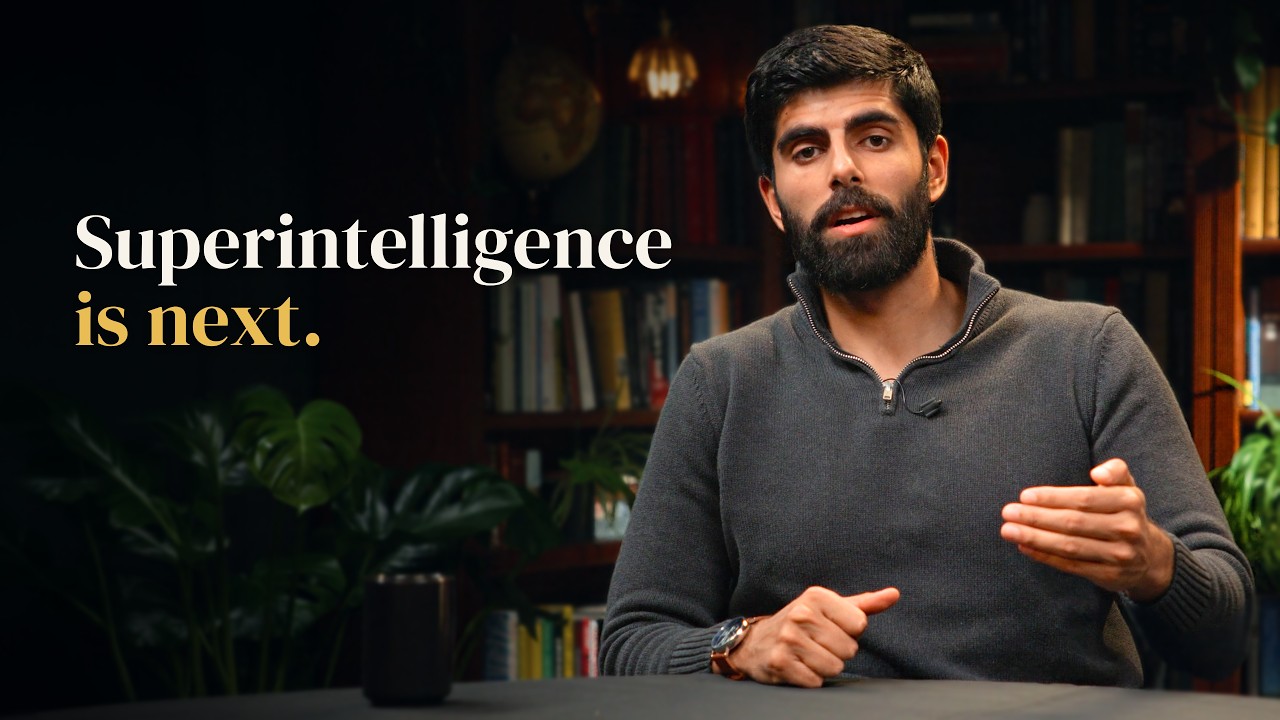 Video: Dwarkesh Patel on YouTube
Key points
- Patel's median year for automated researchers to match the very best human AI researchers is 2028, assuming labs do not slow down or get slowed by a government (8:18).
- He puts at least a 25% chance on it not happening until after 2032 (10:03).
- At the early end, he says it is "possibly only a couple months away" (0:22), a view he did not hold a couple of months ago (0:47).
What happened
Dwarkesh Patel says AI that is as good as the best humans at AI research is "only a couple years away and possibly only a couple months away". He says that automating that research will compress so much progress into a single year that AI as good as the best human experts in every field could follow "by 2030 and plausibly as early as next year".
Patel, who hosts the Dwarkesh Podcast, made the argument in a solo video titled "Recursive self-improvement has started", published on his YouTube channel on 13 November 2026. The quotes below are from the video's automatic captions.
His median guess is later and more cautious than the headline. "If I had to pick my median year for when automated researchers will be as good as the very best human AI researchers at doing AI research, I'd guess 2028", he says, and he adds that this assumes the AI labs do not slow themselves down and are not slowed by a government (8:18).
He also puts a number on the other side. "I guess that there's at least a 25% chance that it doesn't happen until after 2032" (10:03).
Patel presents all of this as his own judgement, formed over the last three months, and says he did not believe it himself a couple of months ago.
The video narrates a written essay Patel published on his own site the same day, "The avalanche that hit math is coming for AI development"; the essay gives the same 2028 median and a 25% chance of a date after 2032.
Underlined sentences link to the facts we checked. Dotted words open a short explainer.
Fact 3 of 11 · from Dwarkesh Patel (YouTube), 13 Nov 2026
(08:18) If I had to pick my median year for when automated researchers will be as good as the very best human AI researchers at doing AI research, I'd guess 2028.
Fact 5 of 11 · from Dwarkesh Patel (YouTube), 13 Nov 2026
(10:03) and I guess that there's at least a 25% chance that it doesn't happen until after 2032.
What it means for you
Our viewTreat this as one informed person's forecast. Patel presents it as his own judgement, formed over the last three months, and his 2028 median depends on the labs not slowing themselves down and not being slowed by a government.
His 25% chance of a date after 2032 shows how wide his own range is, and "a couple of months" is its early edge, not his central estimate. The video gives his argument, not a measurement.
If you set multi-year plans that assume a pace for AI research automation, write down where your assumptions sit against his 2028 median and his later tail, and revisit them when labs report results.
It adds no new facts.
Your reaction
We count reactions per story and day, never who reacted. The counts help us choose what goes in the monthly issue. If you are signed in, your own page shows yours too.
We count reactions per story and day, never who reacted. They help choose what goes in the monthly issue.
Check our sources
Every sentence above is checked against these 3 sources.
1 Recursive self-improvement has started (Dwarkesh Patel, YouTube, published 13 Nov 2026)
Open the source archived copy-
Dwarkesh Patel says in the video: "we're only a couple years away and possibly only a couple months away from AI's that are as good as the best humans" at AI research (0:22).
cite(00:21) And I've come to [music] the view that we're only a couple years away and possibly only a couple months away from AI's that are as good as the best humans [music] at AI research.
-
Patel says automating AI research will compress so much progress into a single year that "by 2030 and plausibly as early as next year, we'll have AI's that are at least as good" as the best human experts in every field (0:38).
cite(00:29) And I've also come to believe that automating AI research will compress [music] so much progress into a single year that soon thereafter. So [music] by 2030 and plausibly as early as next year, we'll have AI's that are at least as good [music] as the best human experts in every field.
-
Patel says: "If I had to pick my median year for when automated researchers will be as good as the very best human AI researchers at doing AI research, I'd guess 2028" (8:18).
cite(08:18) If I had to pick my median year for when automated researchers will be as good as the very best human AI researchers at doing AI research, I'd guess 2028.
-
Patel says his 2028 median assumes "the AI labs go full steam ahead and don't slow themselves down intentionally or aren't slowed down by a government" (8:28).
cite(08:28) that's assuming that the AI labs go full steam ahead and don't slow themselves down intentionally or aren't slowed down by a government.
-
Patel says: "I guess that there's at least a 25% chance that it doesn't happen until after 2032" (10:03).
cite(10:03) and I guess that there's at least a 25% chance that it doesn't happen until after 2032.
-
Patel says that over the last three months he has updated his views a ton on how far away superintelligence is (0:06), and that his claim is one he "didn't believe even a couple months ago" (0:47).
cite(00:06) But over the last three months, I've updated my views a ton. (00:47) I know this is a wild claim and it's one that I myself didn't believe even a couple months ago.
-
The video "Recursive self-improvement has started" was published on the Dwarkesh Patel YouTube channel on 2026-11-13, according to its watch page; the transcript read is YouTube's automatic captions, in which Patel is the only speaker.
citeWatch page: "title":"Recursive self-improvement has started", "ownerChannelName":"Dwarkesh Patel", "publishDate":"2026-11-13T10:37:05-08:00". The automatic captions (1293 segments) carry one voice throughout, in the first person.
2 About - Dwarkesh Podcast
Open the source archived copy-
Dwarkesh Patel's own About page says: "I'm the host of Dwarkesh Podcast."
cite
3 The avalanche that hit math is coming for AI development
Open the source archived copy-
Dwarkesh Patel published a written essay on his own site on November 13, 2026, titled "The avalanche that hit math is coming for AI development", which says "You can watch or listen to me narrate this essay on YouTube, Spotify, and Apple Podcasts."
citeThe avalanche that hit math is coming for AI development ... Nov 13, 2026 ... You can watch or listen to me narrate this essay on YouTube, Spotify, and Apple Podcasts.
-
In the essay Patel writes: "If I had to pick my median year for when automated researchers will be as good as the very best human AI researchers (and assuming the labs don't intentionally slow down), I'd guess 2028."
Toned down to what the source says
citeIf I had to pick my median year for when automated researchers will be as good as the very best human AI researchers (and assuming the labs don't intentionally slow down), I'd guess 2028.
-
In the essay Patel writes: "I'd guess there's a 25% chance that it doesn't happen until after 2032."
citeI'd guess there's a 25% chance that it doesn't happen until after 2032.
Every sentence above is checked against these 3 sources. Each fact has its own address you can cite.
Source 1 · Dwarkesh Patel (YouTube) · 13 Nov 2026
Recursive self-improvement has started (Dwarkesh Patel, YouTube, published 13 Nov 2026)
Dwarkesh Patel says in the video: "we're only a couple years away and possibly only a couple months away from AI's that are as good as the best humans" at AI research (0:22).
(00:21) And I've come to [music] the view that we're only a couple years away and possibly only a couple months away from AI's that are as good as the best humans [music] at AI research.
Patel says automating AI research will compress so much progress into a single year that "by 2030 and plausibly as early as next year, we'll have AI's that are at least as good" as the best human experts in every field (0:38).
(00:29) And I've also come to believe that automating AI research will compress [music] so much progress into a single year that soon thereafter. So [music] by 2030 and plausibly as early as next year, we'll have AI's that are at least as good [music] as the best human experts in every field.
Patel says: "If I had to pick my median year for when automated researchers will be as good as the very best human AI researchers at doing AI research, I'd guess 2028" (8:18).
(08:18) If I had to pick my median year for when automated researchers will be as good as the very best human AI researchers at doing AI research, I'd guess 2028.
Show all 7 factsShow fewer facts
Patel says his 2028 median assumes "the AI labs go full steam ahead and don't slow themselves down intentionally or aren't slowed down by a government" (8:28).
(08:28) that's assuming that the AI labs go full steam ahead and don't slow themselves down intentionally or aren't slowed down by a government.
Patel says: "I guess that there's at least a 25% chance that it doesn't happen until after 2032" (10:03).
(10:03) and I guess that there's at least a 25% chance that it doesn't happen until after 2032.
Patel says that over the last three months he has updated his views a ton on how far away superintelligence is (0:06), and that his claim is one he "didn't believe even a couple months ago" (0:47).
(00:06) But over the last three months, I've updated my views a ton. (00:47) I know this is a wild claim and it's one that I myself didn't believe even a couple months ago.
The video "Recursive self-improvement has started" was published on the Dwarkesh Patel YouTube channel on 2026-11-13, according to its watch page; the transcript read is YouTube's automatic captions, in which Patel is the only speaker.
Watch page: "title":"Recursive self-improvement has started", "ownerChannelName":"Dwarkesh Patel", "publishDate":"2026-11-13T10:37:05-08:00". The automatic captions (1293 segments) carry one voice throughout, in the first person.
Source 2 · Dwarkesh Patel
About - Dwarkesh Podcast
Source 3 · Dwarkesh Podcast (Dwarkesh Patel) · 13 Nov 2026
The avalanche that hit math is coming for AI development
Dwarkesh Patel published a written essay on his own site on November 13, 2026, titled "The avalanche that hit math is coming for AI development", which says "You can watch or listen to me narrate this essay on YouTube, Spotify, and Apple Podcasts."
The avalanche that hit math is coming for AI development ... Nov 13, 2026 ... You can watch or listen to me narrate this essay on YouTube, Spotify, and Apple Podcasts.
In the essay Patel writes: "If I had to pick my median year for when automated researchers will be as good as the very best human AI researchers (and assuming the labs don't intentionally slow down), I'd guess 2028."
Toned down to what the source saysIf I had to pick my median year for when automated researchers will be as good as the very best human AI researchers (and assuming the labs don't intentionally slow down), I'd guess 2028.
In the essay Patel writes: "I'd guess there's a 25% chance that it doesn't happen until after 2032."
I'd guess there's a 25% chance that it doesn't happen until after 2032.
Topics
The morning email
On the mornings we publish: the three top stories and up to four short ones. Free.
We email you a link to confirm. An issue may include one sponsor, always labelled Sponsored · Advertisement. Our emails count opens and clicks, not who made them. Unsubscribe in one click. What we keep