

Anthropic's OSS Scanner writes vulnerability reports without human review
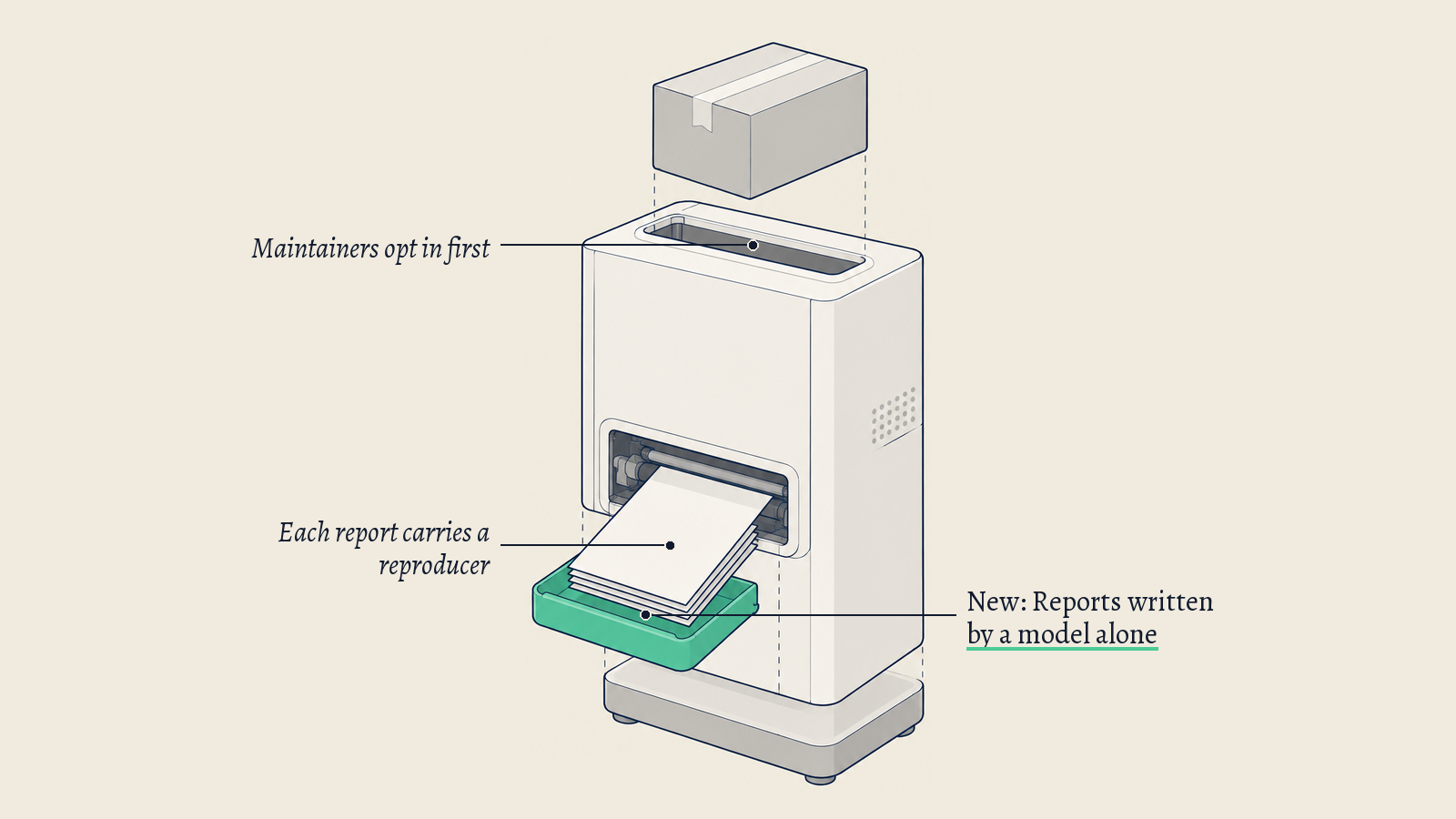 Illustration made with AI for ai notis
Anthropic launched OSS Scanner on 8 October, an opt-in service for open-source maintainers, and says its reports are fully model-generated, without human review or triage.
- Anthropic says each report includes a self-contained reproducer and an explanation, plus a bisection and a candidate patch where possible, and that the outputs are fully model-generated.
- Anthropic says expert penetration testers reviewed 97 critical and high-severity findings across 48 projects, and 85 of them met the bar for its coordinated vulnerability disclosure process.
- Anthropic's disclosure dashboard, which counts findings from all Claude models, lists 6,157 reported to maintainers as of 2 October; 4,824 were reported direct by Anthropic and may contain false positives.
Anthropic launched OSS Scanner on 8 October 2026 as an opt-in vulnerability-finding service for open-source software. Core maintainers of eligible projects enrol by submitting a pull request to Anthropic's GitHub repository. Anthropic's post says the scanner's outputs are fully model-generated, without human review or triage. Each report includes a self-contained reproducer and an explanation of the vulnerability, with a bisection and a candidate patch where available. Anthropic reports that expert penetration testers reviewed 97 critical and high-severity findings across 48 projects, and that 85 of them met the bar for its coordinated vulnerability disclosure process. Anthropic's disclosure dashboard, which counts findings from all Claude models rather than OSS Scanner alone, shows as of 2 October 2026 6,157 findings reported to maintainers, of which 4,824 were reported direct to maintainers by Anthropic and, the dashboard says, may contain false positives. The same dashboard shows 516 patched upstream. The dashboard also shows 29,439 candidate vulnerabilities, of which 6,123 were reviewed by external security firms.
What it means for you Our view
Anthropic says the scanner's reports are written by a model and not reviewed by a person. For a maintainer, a report is therefore a lead to check, even though Anthropic's testers found that 85 of 97 sampled critical and high-severity findings met its disclosure bar. The dashboard figures cover Claude models in general, so they do not show how OSS Scanner itself performs. If you maintain an open-source project, read the enrolment steps before opting in and decide who will triage incoming reports. If you depend on open-source packages, ask your suppliers how they handle machine-written reports.