- AWS is releasing monthly project spend limits to a limited number of customers; at the limit it pauses the project and keeps data, deleting it after 90 days without action.
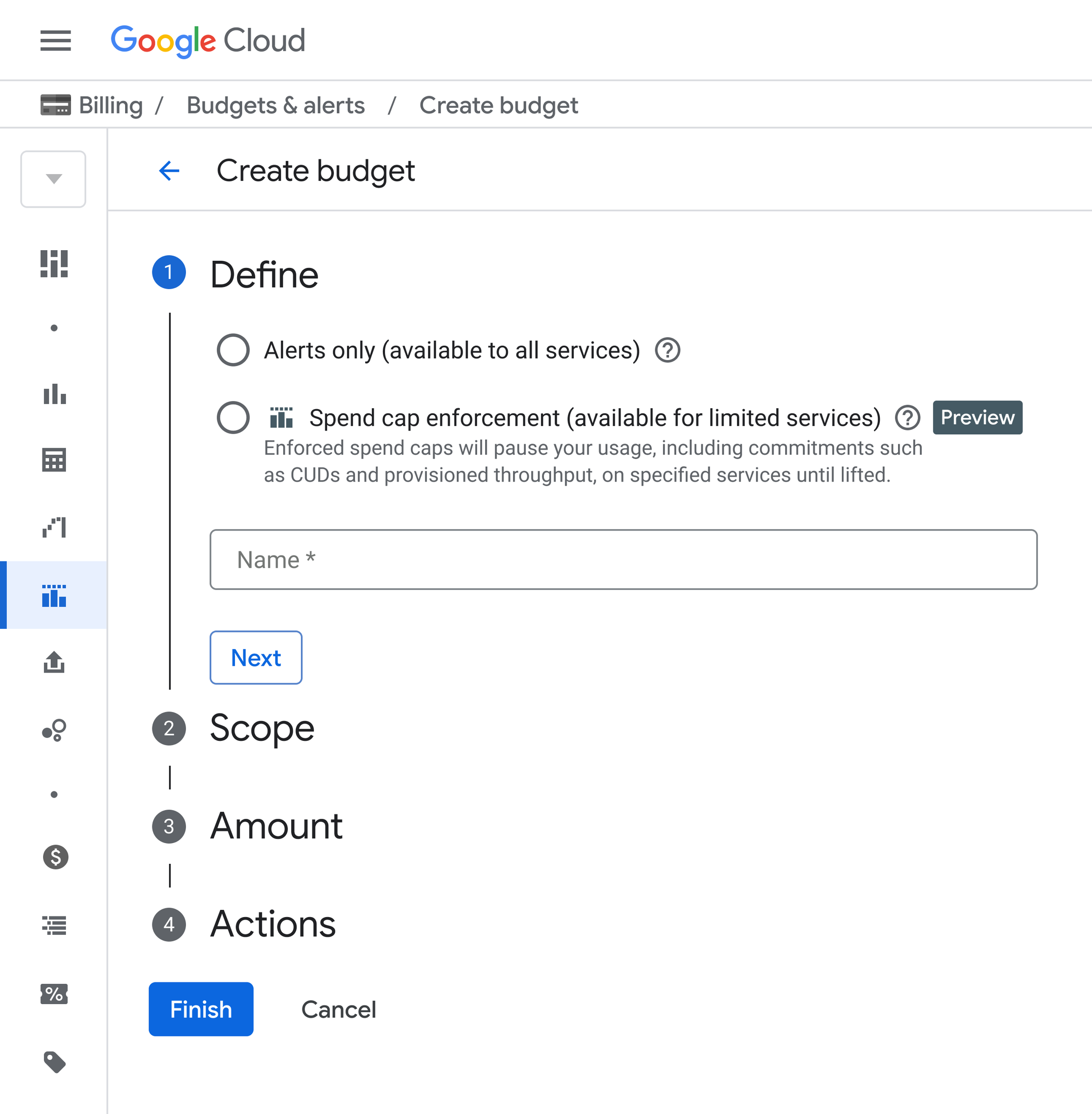
- Google Cloud's Spend Caps, introduced 29 July and in public preview, apply to a single project and service and cover Gemini API, Agent Platform, Cloud Run and Cloud Run Functions.
- Google says caps on AI services trigger within minutes and are non-destructive, but fixed commitment fees such as Committed Use Discounts or Provisioned Throughput keep billing at their flat rate.
AWS and Google Cloud each describe a monthly limit that stops usage when it is reached, but neither is generally available: AWS says it is releasing its experience to a limited number of customers, and Google's spend caps are in public preview. On 16 September 2026 AWS said builders can set a monthly spend limit for a project, and that if the project's usage reaches the limit, "your project is paused for that month". AWS's documentation describes a spend limit as "the most you'll pay per month for a project", set per project, so some projects can have one and others none, up to 10 projects. The minimum is "the greater of $20 or a conservative estimate of your likely spend", and limits exclude credits and apply to pre-tax charges. AWS notifies you when costs reach 50%, 75% and 90% of the limit, or are on track to exceed it within 10 days. Three optional controls act earlier: about 7 days before the limit new resources stop launching, about 5 days before it idle resources are paused, and about 4 days before it the highest-cost active resources are paused, drawn from EC2, RDS, Lambda, Bedrock and SageMaker. When the limit is reached, "AWS pauses your project and stops all resources. Your data is preserved.", and raising the limit reactivates it; if nothing is done within 90 days, AWS permanently deletes the project's data. A spend limit needs a Paid Plan. On 29 July 2026 Google Cloud introduced Spend Caps on Budgets, which set a monthly cap on a specific service within a project and, once reached, restrict further cost-incurring usage for that service. Google says caps for AI services trigger within minutes of the threshold, are non-destructive, and that fixed commitment fees such as Committed Use Discounts or Provisioned Throughput keep billing at their flat rate. In Google's public preview a cap applies to a single project and service for a fixed monthly timeframe, covers Gemini API, Agent Platform, Cloud Run and Cloud Run Functions, and stays in place until someone lifts it in the Budgets UI with one click.
What it means for you Our view
Neither control is generally available, so test them on a non-critical project before relying on them. AWS caps a whole project and pauses it, with optional early controls about 7, 5 and 4 days before the limit; Google caps one service in one project and says it deletes nothing. Google's fixed commitment fees keep billing, and AWS limits exclude credits and apply to pre-tax charges. AWS deletes a paused project's data after 90 days without action, so a cap needs someone who answers its alerts. If you run AI workloads on either cloud, check whether you can join the AWS release or the Google preview, and list which charges a cap would not cover.
TAGSAmazonGoogleSpend caps