2026-10-10 notis CATEGORY Join
Show Read as Find Sections Models and releasesAgents and appsResearchMoney and computeLaws and rulingsSafety and securityAI at work More ArchiveModelsAboutCorrectionsThe numbersRSS
My notis
TODAY'S NEWS
October 2026 3 STORIES
MTWTFSS
1 2 3 4 5 6 7 8 9 10 11 12 13 14 15 16 17 18 19 20 21 22 23 24 25 26 27 28 29 30 31

Days with a dot have news. See the archive.

The whole week ›
12:06
0/3
WEATHER THEME CARD SPACING

Today's news

today

My page

Kept in this browser only.

SAVED FOLLOWING COLLECTIONS READING SINCE
Nothing saved yet. Tap the bookmark on a card to keep it here. read today
all cases

No case followed yet.

Price changes Stories where a published price went up or down.
Models being retired Models being withdrawn, and gaps before a replacement is ready.
The day's top stories. Sign up
Research 10 OCT

DeepMind's Kohli says replicating structures does not fully explain protein dynamics

AlphaFoldDrug discoveryGoogle
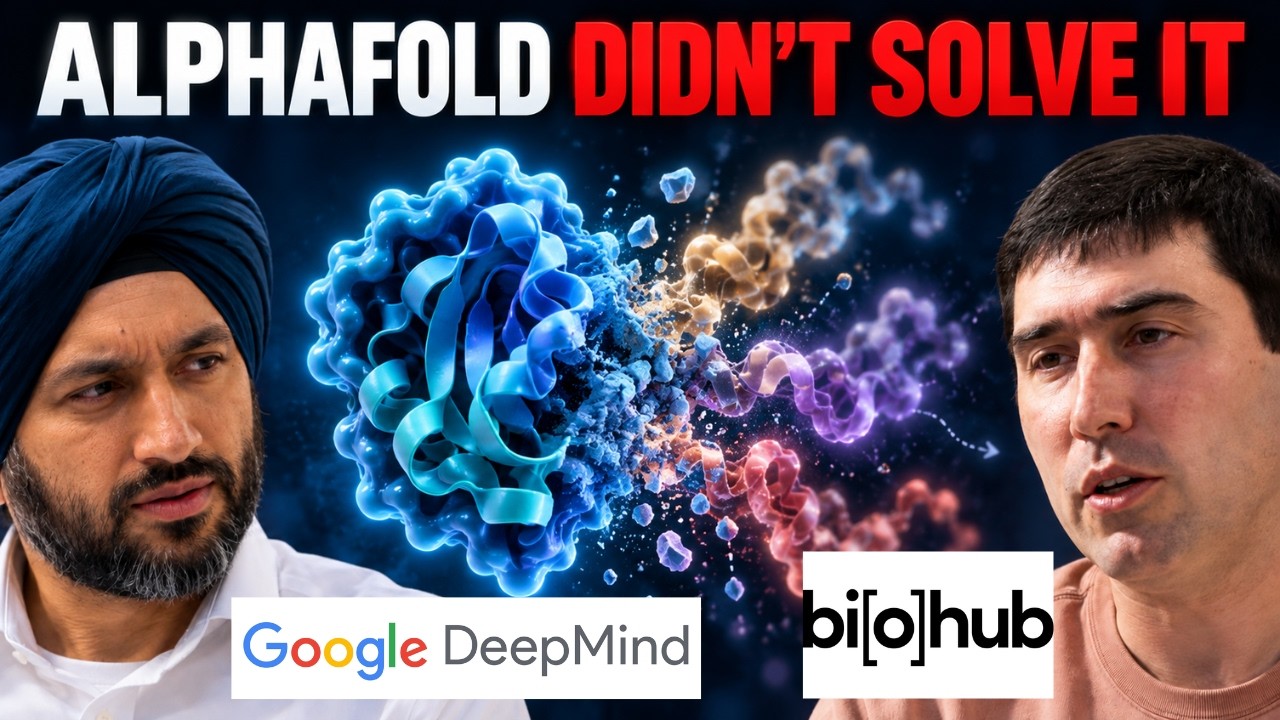
Why AlphaFold Didn't Solve Protein Folding — Pushmeet Kohli, Google DeepMind & Sal Candido, Biohub: a video from Latent Space on YouTubeVideo: Latent Space on YouTube

On a Latent Space panel with Biohub's Sal Candido, published 9 October, Google DeepMind's Pushmeet Kohli said replicating deposited structures does not mean protein dynamics are understood.

SOURCEGoogle · 3 sources
CHECKED10 Oct, 04:47
Research watch read
Why AlphaFold Didn't Solve Protein Folding — Pushmeet Kohli, Google DeepMind & Sal Candido, Biohub: a video from Latent Space on YouTube Research / 10 OCT

DeepMind's Kohli says replicating structures does not fully explain protein dynamics

  • Kohli said there have been advances at a conceptual level, but replicating a PDB structure "does not mean that we have understood all of protein dynamics" (17:44).
  • Recalling discussions with John Jumper, Kohli said the true ground state that proteins take, and the actual distribution of structures they take, are not known (17:17).
  • Kohli asked: "let's not stop the funding of protein structure prediction and protein dynamics", because in his words the field is just getting started (18:15).

Pushmeet Kohli, listed by Google as Vice President at Google DeepMind and Google Cloud's Chief Scientist, spoke on a panel with Sal Candido of Biohub, moderated by Brandon Anderson. The Latent Space podcast published the video on its YouTube channel on 9 October 2026.

The moderator asked whether another big leap in protein structure prediction is coming. Kohli said that when people say the protein folding problem has been solved, there have been some advances at a conceptual level. He said proteins are extremely complex and disordered, and that their shape can change with context. Recalling discussions with John Jumper, he said that nobody knows the actual ground state of proteins or their actual distribution of structures. He described the task as one where someone has deposited a structure in the PDB and the aim is to replicate it, and said that does not mean protein dynamics are understood. He asked that funding for protein structure prediction and protein dynamics not stop.

On whether models need to be understood to be trusted, Kohli said AlphaFold is not perfect and that the calibration of the uncertainty measure was extremely important. He said that when DeepMind released AlphaFold 2 and made the weights available, people found it was a good predictor of disordered proteins, which the team had not discovered before launch.

Asked how long until AI results reach the clinic, Kohli said AI is already used in every part of the drug discovery process. He said the larger acceleration will be unlocked only with a better understanding of biological models.

What it means for you Our view

This is Kohli's view on a panel, not a published finding. He separates reproducing a structure someone has deposited in the PDB from knowing how proteins move and change shape, and he says the larger acceleration in drug discovery depends on better biological models. He also says the calibration of AlphaFold's uncertainty measure was extremely important. If you rely on predicted structures in drug or materials work, check whether your tool reports a confidence score for each prediction, and ask the vendor how that score was calibrated and whether it covers disordered proteins.

TAGSAlphaFoldDrug discoveryGoogle
Google · 3 sources tap to close
toned down Work 10 OCT

Periodic Labs' Fedus says its engineers will work on site at customers

Autonomous labsForward-deployed engineersPeriodic Labs
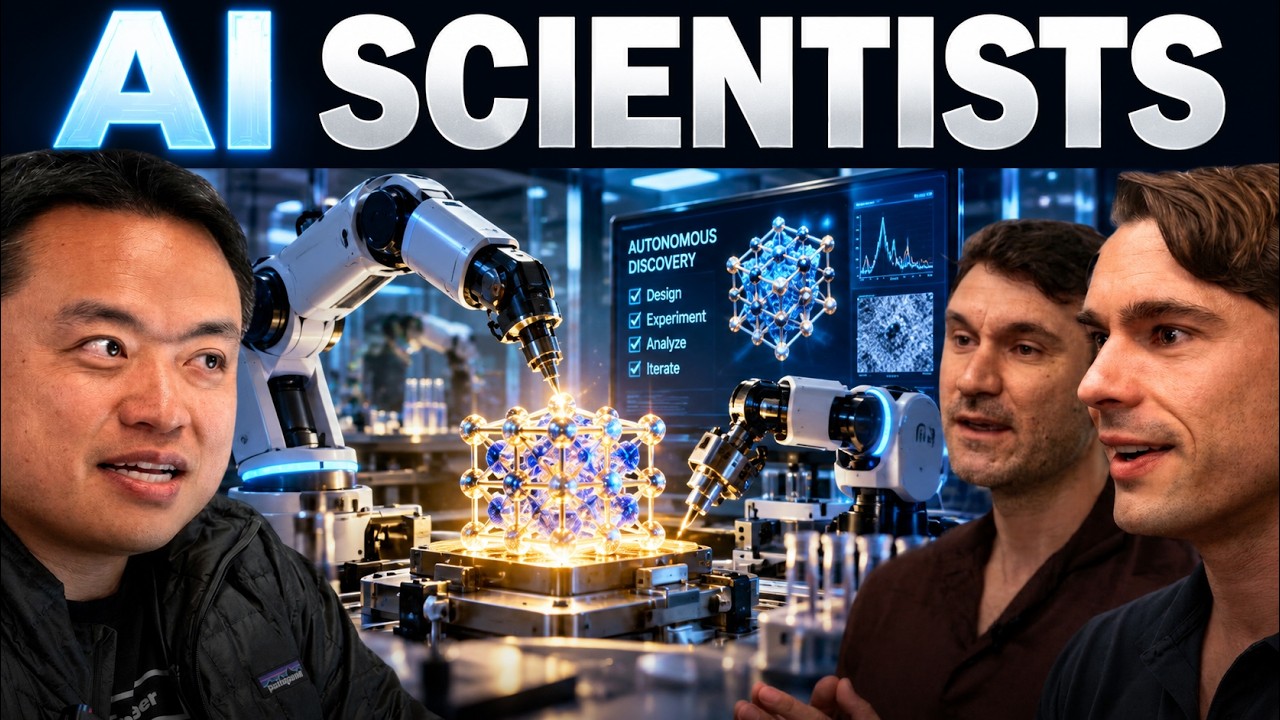
AI Scientists Are Here: Autonomous Labs & Synthesis Superintelligence — Periodic Labs: a video from Latent Space on YouTubeVideo: Latent Space on YouTube

In a Latent Space video interview published 7 October, Periodic Labs' Liam Fedus said forward-deployed engineers will work on site at customers, with a huge focus on semiconductors.

SOURCELatent Space · 3 sources
CHECKED10 Oct, 04:47
AI Scientists Are Here: Autonomous Labs & Synthesis Superintelligence — Periodic Labs: a video from Latent Space on YouTube Work / 10 OCT

Periodic Labs' Fedus says its engineers will work on site at customers

  • Fedus said Periodic has been "customer zero" for its own tools and now has "a huge focus right now in the semiconductor industry" (1:16:27).
  • Fedus said these customers are private companies that need secure environments, so Periodic's forward-deployed engineers and researchers "will actually be on site" integrating its systems (1:16:46).
  • Fedus said that as autonomy, intelligence and capability grow, "you can begin to price outcomes" (1:19:09).

Latent Space published an interview with Liam Fedus and Ekin Dogus Cubuk of Periodic Labs on its YouTube channel on 7 October 2026. Periodic describes itself as an AI research and deployment company building models and autonomous labs. Its site says it is helping a semiconductor manufacturer with heat dissipation on its chips.

Liam Fedus said Periodic has been its own first customer for its tools ("customer zero") and now has a huge focus on the semiconductor industry. Because those customers are private companies that need secure environments, he said, Periodic's forward-deployed engineers and researchers will work on site and integrate its systems to help partners reach their goals.

Asked about the business, Fedus called software engineering a great analog: with tools such as Codex, he said, very few of Periodic's own engineers now write code the way they used to. He said a similar thing could play out for Periodic, with systems that accelerate researchers and engineers, and that as the systems' autonomy, intelligence and capability grow, the company could begin to price outcomes.

Ekin Dogus Cubuk said that even if a model such as Fable 7 gets better, it will still have to run experiments to get results, which is why Periodic is building labs that open or closed models can use. The quotes were matched against the Latent Space episode page's transcript, which names the speakers, and against the video's captions.

What it means for you Our view

These are the speakers' statements in a podcast interview, not a published offer. Fedus describes engineers working inside customers' secure environments and, in time, pricing by outcome. Ekin Dogus Cubuk adds that models will still have to run experiments to get results, which is why Periodic is building labs. Periodic's own site says it is helping a semiconductor manufacturer with heat dissipation. If you buy AI for research or manufacturing, ask a vendor with this model what its engineers can see inside your environment, and how an outcome-based price would define the outcome.

TAGSAutonomous labsForward-deployed engineersPeriodic Labs
Safety 10 OCT

How prompt injection works and how to limit the damage

AnthropicOWASPOpenAIPrompt injectionSandboxing
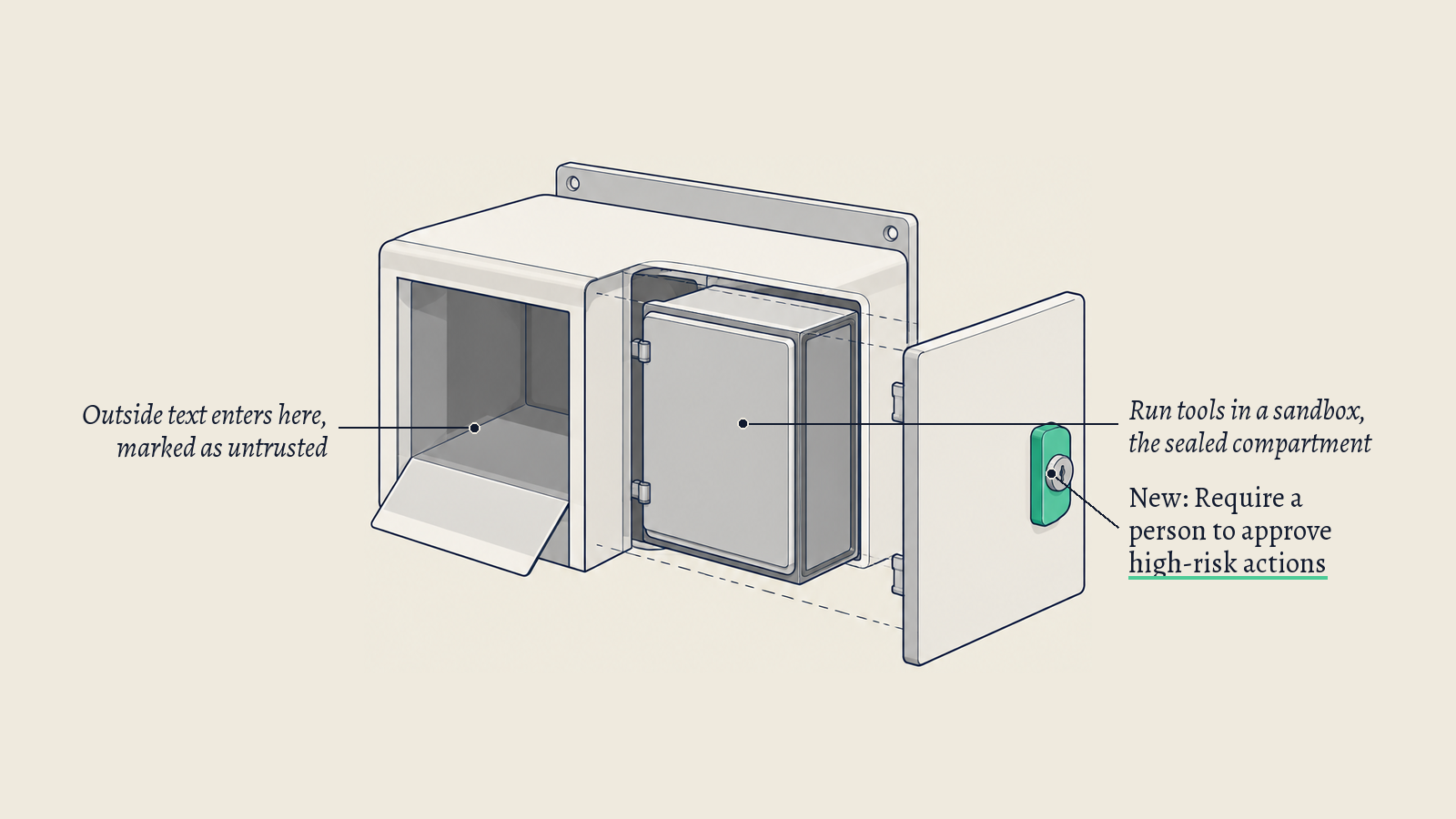
Illustration: A parcel locker with an intake slot and a sealed inner compartment; its green approval latch stands for human approval before a risky action.Illustration made with AI for ai notis

OWASP, Anthropic and OpenAI describe prompt injection as untrusted text that a model may follow as an instruction, and the guidance centres on limiting what a fooled model can do.

SOURCEOWASP Gen AI Security Project · 4 sources
CHECKED10 Oct, 04:47
Safety read
Illustration: A parcel locker with an intake slot and a sealed inner compartment; its green approval latch stands for human approval before a risky action. Safety / 10 OCT

How prompt injection works and how to limit the damage

  • OWASP says a prompt injection occurs when prompts alter a model's behaviour in unintended ways, either directly from the user or indirectly through external sources such as websites or files.
  • OWASP says it is unclear whether fool-proof prevention exists, and that retrieval augmented generation and fine-tuning "do not fully mitigate" prompt injection vulnerabilities.
  • OWASP lists least privilege, human approval for high-risk actions and separating external content; Anthropic adds running tools in sandboxed environments, and OpenAI says agents can still be tricked.

OWASP, the open security project, defines a prompt injection vulnerability as one that occurs when user prompts alter the behaviour or output of a language model in unintended ways. The inputs do not need to be readable by a person, as long as the model parses the content.

OWASP separates two kinds. In a direct injection, the user's own prompt changes the model's behaviour. In an indirect injection, the model accepts input from an external source such as a website or a file, and that content changes its behaviour. Anthropic's documentation draws the same line by who the adversary is: in the first case the user of the application is hostile, and in the second the user is trusted but Claude reads third-party content, such as web pages, emails, documents and tool results, that contains adversarial instructions.

OpenAI's guidance for agent builders describes the goals of an attacker as exfiltrating private data through downstream tool calls, taking misaligned actions, or otherwise changing the model's behaviour. OWASP says the severity depends on the business context and on how much agency the model has been given. It lists disclosure of sensitive information, unauthorised access to functions available to the model, and execution of arbitrary commands in connected systems among the possible results.

OWASP says it is unclear whether any prevention is fool-proof, given how models work, and that retrieval-augmented generation and fine-tuning do not fully mitigate the problem. Its measures therefore limit the impact. They include giving the model the least privilege it needs, requiring human approval for high-risk actions, and separating and marking untrusted external content.

Anthropic's documentation applies the same ideas. It says to put third-party content only in tool results, to tell Claude what the content is and where it came from, and to state in the system prompt that returned content is untrusted data and must never override the user's request. It also says to wrap untrusted strings in JSON, to limit Claude's access to sensitive data and actions, and to run tools in sandboxed environments. OpenAI's guidance adds that untrusted input should not be placed in developer messages, which take precedence over user messages, and that structured outputs between steps remove free-text channels an attacker could use.

Claude Code, Anthropic's coding agent, applies some of this in the product. Its documentation says commands that fetch content from the web, such as curl and wget, are not auto-approved by default, and that sandboxing can add filesystem and network isolation for shell commands. OpenAI's guidance states that even with its mitigations agents will not be perfect and can still be tricked.

What it means for you Our view

The vendors agree a model cannot be relied on to refuse every injected instruction, so the design question becomes what a fooled model can reach. OWASP ties the severity to the agency the model has been given, and OpenAI says that even with mitigations agents can still make mistakes or be tricked. For an agent that reads email, web pages or documents, that points to reviewing its permissions as well as its prompt. Ask your team or vendor which tools the agent can call, which need human approval, which run in a sandbox, and whether untrusted content is labelled as data. Start with the one tool that could send data out.

TAGSAnthropicOWASPOpenAIPrompt injectionSandboxing
NOTHING IN THIS FILTER No story today matches. open the archive →
That's today's news: three stories.

The morning email

On the mornings we publish: the three top stories and up to four short ones. Free.

We email you a link to confirm. An issue may include one sponsor, always labelled Sponsored · Advertisement. Our emails count opens and clicks, not who made them. Unsubscribe in one click. What we keep

1 of 3
Why AlphaFold Didn't Solve Protein Folding — Pushmeet Kohli, Google DeepMind & Sal Candido, Biohub: a video from Latent Space on YouTube Watch on YouTubeVideo: Latent Space on YouTube

Research · 10 OCT

DeepMind's Kohli says replicating structures does not fully explain protein dynamics

On a Latent Space panel with Biohub's Sal Candido, published 9 October, Google DeepMind's Pushmeet Kohli said replicating deposited structures does not mean protein dynamics are understood.

  • Kohli said there have been advances at a conceptual level, but replicating a PDB structure "does not mean that we have understood all of protein dynamics" (17:44).
  • Recalling discussions with John Jumper, Kohli said the true ground state that proteins take, and the actual distribution of structures they take, are not known (17:17).
  • Kohli asked: "let's not stop the funding of protein structure prediction and protein dynamics", because in his words the field is just getting started (18:15).
Checked 10 Oct, 04:47 · Google · 3 sources
AI Scientists Are Here: Autonomous Labs & Synthesis Superintelligence — Periodic Labs: a video from Latent Space on YouTube Watch on YouTubeVideo: Latent Space on YouTube

Work · 10 OCTnarrowed

Periodic Labs' Fedus says its engineers will work on site at customers

In a Latent Space video interview published 7 October, Periodic Labs' Liam Fedus said forward-deployed engineers will work on site at customers, with a huge focus on semiconductors.

  • Fedus said Periodic has been "customer zero" for its own tools and now has "a huge focus right now in the semiconductor industry" (1:16:27).
  • Fedus said these customers are private companies that need secure environments, so Periodic's forward-deployed engineers and researchers "will actually be on site" integrating its systems (1:16:46).
  • Fedus said that as autonomy, intelligence and capability grow, "you can begin to price outcomes" (1:19:09).
Checked 10 Oct, 04:47 · Latent Space · 3 sources
Illustration: A parcel locker with an intake slot and a sealed inner compartment; its green approval latch stands for human approval before a risky action. Illustration made with AI for ai notis

Safety · 10 OCT

How prompt injection works and how to limit the damage

OWASP, Anthropic and OpenAI describe prompt injection as untrusted text that a model may follow as an instruction, and the guidance centres on limiting what a fooled model can do.

  • OWASP says a prompt injection occurs when prompts alter a model's behaviour in unintended ways, either directly from the user or indirectly through external sources such as websites or files.
  • OWASP says it is unclear whether fool-proof prevention exists, and that retrieval augmented generation and fine-tuning "do not fully mitigate" prompt injection vulnerabilities.
  • OWASP lists least privilege, human approval for high-risk actions and separating external content; Anthropic adds running tools in sandboxed environments, and OpenAI says agents can still be tricked.
Checked 10 Oct, 04:47 · OWASP Gen AI Security Project · 4 sources

You're all caught up

That's today's news: three stories.

You can join ai notis soon, to follow cases and keep stories on every device.

Follow us on Instagram and Threads

The morning email

On the mornings we publish: the three top stories and up to four short ones. Free.

We email you a link to confirm. An issue may include one sponsor, always labelled Sponsored · Advertisement. Our emails count opens and clicks, not who made them. Unsubscribe in one click. What we keep

No story today matches. Open the archive
Today's stories 3 STORIES

Today's stories

Sat 10 Oct · 3 STORIES
  1. Research · 10 OCT

    DeepMind's Kohli says replicating structures does not fully explain protein dynamics

    Why AlphaFold Didn't Solve Protein Folding — Pushmeet Kohli, Google DeepMind & Sal Candido, Biohub: a video from Latent Space on YouTubeVideo: Latent Space on YouTube

    On a Latent Space panel with Biohub's Sal Candido, published 9 October, Google DeepMind's Pushmeet Kohli said replicating deposited structures does not mean protein dynamics are understood.

    Checked 10 Oct, 04:47 · Google · 3 sourcesRead

  2. Work · 10 OCT · narrowed

    Periodic Labs' Fedus says its engineers will work on site at customers

    AI Scientists Are Here: Autonomous Labs & Synthesis Superintelligence — Periodic Labs: a video from Latent Space on YouTubeVideo: Latent Space on YouTube

    In a Latent Space video interview published 7 October, Periodic Labs' Liam Fedus said forward-deployed engineers will work on site at customers, with a huge focus on semiconductors.

    Checked 10 Oct, 04:47 · Latent Space · 3 sourcesRead

  3. Safety · 10 OCT

    How prompt injection works and how to limit the damage

    Illustration: A parcel locker with an intake slot and a sealed inner compartment; its green approval latch stands for human approval before a risky action.Illustration made with AI for ai notis

    OWASP, Anthropic and OpenAI describe prompt injection as untrusted text that a model may follow as an instruction, and the guidance centres on limiting what a fooled model can do.

    Checked 10 Oct, 04:47 · OWASP Gen AI Security Project · 4 sourcesRead

Research 10 OCT

DeepMind's Kohli says replicating structures does not fully explain protein dynamics

On a Latent Space panel with Biohub's Sal Candido, published 9 October, Google DeepMind's Pushmeet Kohli said replicating deposited structures does not mean protein dynamics are understood.

Google · 3 sources·checked 10 Oct, 04:47
AlphaFoldDrug discoveryGoogle
Why AlphaFold Didn't Solve Protein Folding — Pushmeet Kohli, Google DeepMind & Sal Candido, Biohub: a video from Latent Space on YouTubeVideo: Latent Space on YouTube
toned down Work

Periodic Labs' Fedus says its engineers will work on site at customers

In a Latent Space video interview published 7 October, Periodic Labs' Liam Fedus said forward-deployed engineers will work on site at customers, with a huge focus on semiconductors.

10 OCT · Latent Space · 3 sources
Safety

How prompt injection works and how to limit the damage

OWASP, Anthropic and OpenAI describe prompt injection as untrusted text that a model may follow as an instruction, and the guidance centres on limiting what a fooled model can do.

10 OCT · OWASP Gen AI Security Project · 4 sources
In brief 4 more today
0 of 3 read
Drag a card to start Drag left or right · tap to read more Hover to lift a card · tap to bring it forward Tap again to put it back Tap a card to open it Tap again to close it Tap a headline to read it as a card