


DayWeek
The week

Week 41

45 stories in seven editions, 5 to 11 October.

Most read this week

read on screen, counted from 15 Oct

Sunday 11 October

Good morning. This is Sunday's engagement edition: two video stories and an explainer. First, in a podcast interview published on 9 October, Misha Laskin of Reflection AI said he expects most demand for AI tokens to go to open models, and gave his account of how the company trained its Beam model.

Open the edition →

Saturday 10 October

Good morning. This is Saturday's engagement edition: two video stories and an explainer. First, in a panel video published on 9 October, Google DeepMind's Pushmeet Kohli said that replicating a structure deposited in the PDB does not mean that protein dynamics are understood.

Open the edition →

Friday 9 October

Good morning. Google Cloud announced its Gemini agent on 8 October, with a separate identity for each agent and a hard spending limit for a project. Here is what Google says it does, and two more stories worth your time.

Open the edition →

Thursday 8 October

Good morning. OpenAI says GPT-6 in ChatGPT can now answer with charts, buttons and forms, rolling out to Plus, Pro, Business and Enterprise on 7 October and to Free and Go the next day. Two more stories follow.

Open the edition →

Wednesday 7 October

Good morning. Mistral has released Mistral Large 4 in public preview, which it describes as a model with 1 trillion parameters, 49 billion of them active, and says it will release the weights by the end of the month. Two more stories follow.

Open the edition →

Tuesday 6 October

Good morning. AWS says Z.ai's GLM 5.3 is now generally available on Amazon Bedrock to eligible enterprise customers. Four shorter items follow.

Open the edition →

Monday 5 October

Good morning. On 29 September Donald Trump posted a one-page voluntary commitment signed by the leaders of Google, Anthropic, Meta, OpenAI, xAI and Nvidia, asking each company to put four layers of controls and audits in place; its text names no penalty. Here is what it says, and one more story worth your time.

Open the edition →
2026-10-11 notis CATEGORY Join
Show Read as Find Sections Models and releasesAgents and appsResearchMoney and computeLaws and rulingsSafety and securityAI at work More The monthlyArchiveModelsAboutCorrectionsThe numbersRSS
My notis
THIS WEEK'S NEWS
October 2026 18 STORIES
MTWTFSS

Days with a dot have news. See the archive.

Show one day ›
22:31
0/18
WEATHER THEME CARD SPACING

Today's news

today

My page

Kept in this browser only.

SAVED FOLLOWING COLLECTIONS READING SINCE
Nothing saved yet. Tap the bookmark on a card to keep it here. read today
all cases

No case followed yet.

Price changes Stories where a published price went up or down.
Models being retired Models being withdrawn, and gaps before a replacement is ready.
The day's top stories. Sign up
corrected Models 11 OCT

Reflection AI's Laskin says open models will take most token demand

BeamOpen weightsReflection AIreinforcement learning
Beam: The Great American Open Model with ReflectionAI Co-Founder and CEO Misha Laskin: a video from No Priors: AI, Machine Learning, Tech, & Startups on YouTubeVideo: No Priors: AI, Machine Learning, Tech, & Startups on YouTube

On the No Priors podcast, published on YouTube on 9 October, Misha Laskin of Reflection AI gave his account of Beam's training run and his forecast for open models.

SOURCENo Priors (YouTube) · 1 source
CHECKED11 Oct, 04:38
CORRECTIONS1
Models watch read
Beam: The Great American Open Model with ReflectionAI Co-Founder and CEO Misha Laskin: a video from No Priors: AI, Machine Learning, Tech, & Startups on YouTube Models / 11 OCT

Reflection AI's Laskin says open models will take most token demand

  • Laskin says Beam's reinforcement-learning stage used a little over 10,000 GB300s for four weeks (12:47).
  • He says Beam tends to be three to four times more efficient than models of the same capability class, his own claim (20:27).
  • He says gateway token use flipped from about 70/30 closed to 70/30 open in maybe six months (25:19 to 25:29), and expects open models to take most token demand (26:03).

Misha Laskin, introduced by the host as co-founder and chief executive of Reflection AI, spoke on the No Priors podcast, which published the interview on YouTube on 9 October. Asked for an update, he said Reflection is now at around 300 people. Of Beam's training, he said the run used 6,000 GB300 chips for a few weeks, and that with infrastructure efficiencies it could now be done in about 12 days or less. He put the reinforcement-learning stage at a little over 10,000 GB300s for four weeks. He said Beam tends to be three to four times more efficient than models of the same capability class. On the market, he said token use on model gateways has flipped from roughly 70 per cent closed to 70 per cent open, and that he expects most token demand to go to open models. Asked what it costs to catch up to the frontier, he gave a range of single-digit billions of dollars. On safety, he said closed labs have a few hundred safety researchers and argued that more eyeballs make vulnerabilities shallow.

What it means for you Our view

Laskin's figures are his own account on a podcast, and he cited no published figure for the shift in gateway token use. He speaks for a company that is building its own model, Beam, so the efficiency comparison and the forecast are best read as his view, not as measurements. For a team choosing models, three to four times better efficiency matters only on your own tasks. Test it: if you get access to Beam, run the same set of real tasks on it and on your current model, and compare the cost of each completed task, not the list price.

TAGSBeamOpen weightsReflection AIreinforcement learning
corrected Compute 11 OCT

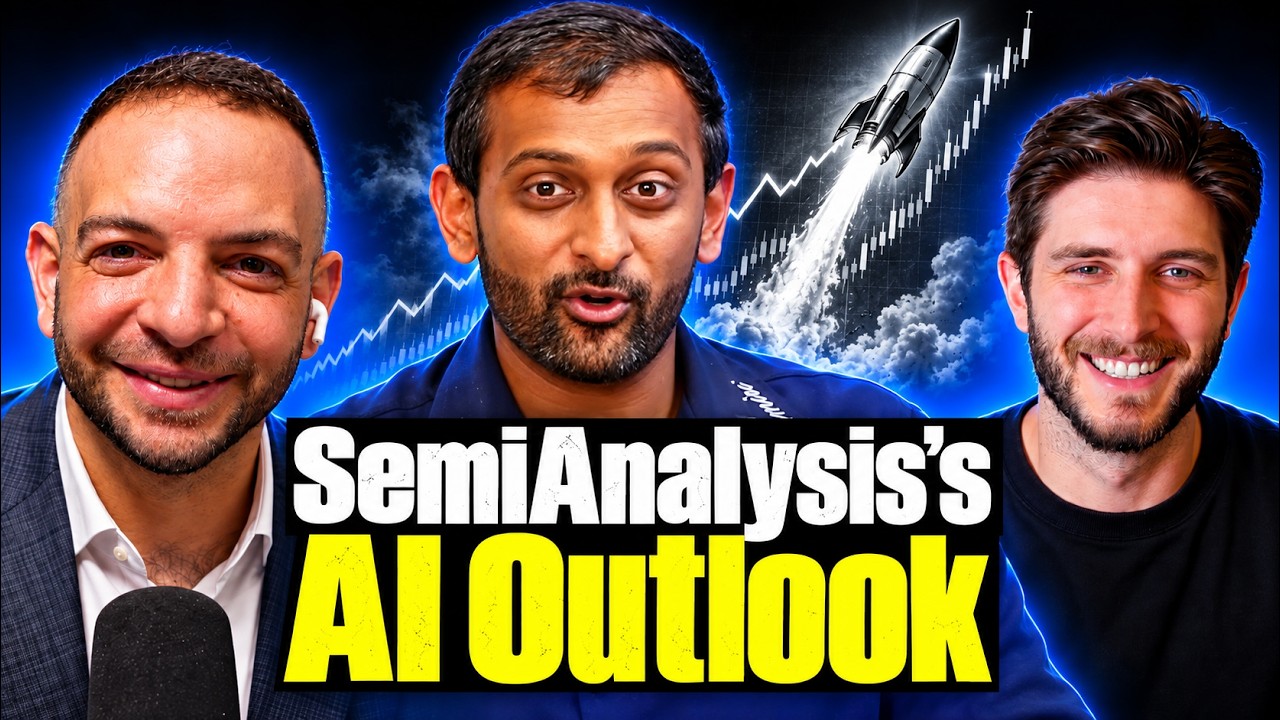
SemiAnalysis's Patel: a trillion in AI capex needs $250 billion of revenue a year

AnthropicBig Technology PodcastOpenAISemiAnalysiscapex
Can AI Keep Growing Exponentially? Let’s Ask SemiAnalysis — With Dylan Patel and Jordan Nanos: a video from Alex Kantrowitz on YouTubeVideo: Alex Kantrowitz on YouTube

On the Big Technology Podcast, published 9 October, Dylan Patel of SemiAnalysis said AI-related capex, supply chain included, will be about $2 trillion next year, and set out his payback arithmetic.

SOURCEAlex Kantrowitz (Big Technology Podcast), YouTube · 1 source
CHECKED11 Oct, 04:26
CORRECTIONS1
Compute watch read
Can AI Keep Growing Exponentially? Let’s Ask SemiAnalysis — With Dylan Patel and Jordan Nanos: a video from Alex Kantrowitz on YouTube Compute / 11 OCT

SemiAnalysis's Patel: a trillion in AI capex needs $250 billion of revenue a year

  • Patel says next year's AI-related capex, supply chain included, will be on the order of $2 trillion, which he puts at five or 6% of US GDP (01:58).
  • By his straight-line arithmetic over six years, a trillion dollars of capex needs about $1.5 trillion of revenue, or $250 billion a year (09:55).
  • He says Anthropic is now profitable on revenue minus compute cost, training and inference combined, and OpenAI within two or three quarters, an estimate from SemiAnalysis's model (12:07).

Dylan Patel, founder and chief executive of SemiAnalysis, spoke with Alex Kantrowitz and SemiAnalysis's Jordan Nanos on the Big Technology Podcast, published on 9 October 2026. Asked about a chart that compared the AI buildout with railroads as a share of GDP, Patel said AI-related capex across the US next year, supply chain included, will be on the order of $2 trillion, which he put at five or 6% of GDP.

On what revenue the spending needs, Patel said these assets are depreciated over six years on an accounting basis, and that on a straight line a trillion dollars of capex needs about $1.5 trillion of revenue over those six years, or $250 billion a year. He said he expects AI revenue to be much higher by 2031, and that if it is only $3 trillion then, "we'll have big problems". He also said Anthropic is now profitable on revenue minus compute cost, training and inference combined, and that OpenAI gets there within two or three quarters, based on SemiAnalysis's model.

Nanos said SemiAnalysis tracks $588 billion of off-balance-sheet backstops that Nvidia is supporting.

What it means for you Our view

These are one analyst's estimates given in conversation. The profitability of two labs rests on SemiAnalysis's own model, and the straight line is one of two cases he gave. Patel says he expects AI revenue to be much higher by 2031, and that if it is only $3 trillion then, there will be big problems. For a buyer, the point is that the labs you rely on are spending against a payback that needs revenue to keep growing. If you sign a multi-year commitment with an AI vendor, ask what happens to your price and your service terms if its revenue grows more slowly than planned.

TAGSAnthropicBig Technology PodcastOpenAISemiAnalysiscapex
Compute 11 OCT

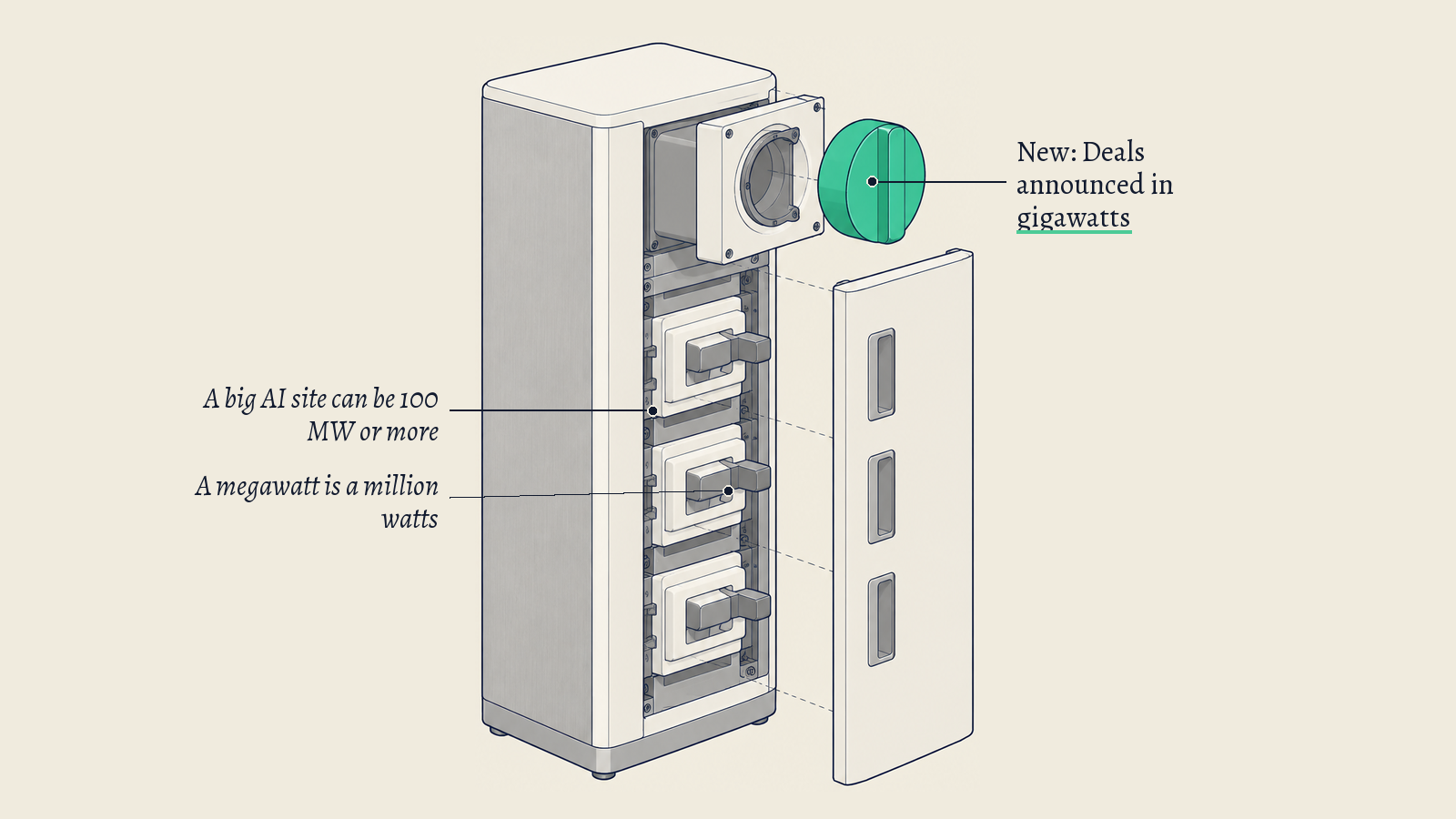
How a gigawatt of power relates to the size of AI data centres

AnthropicDatacentreIEANvidiaOpenAI
Illustration: A white switchgear cabinet with a row of breaker handles and a large round power dial; the green dial stands for power measured in gigawatts.Illustration made with AI for ai notis

A gigawatt is a billion watts; the IEA's Energy and AI report sizes data centres in megawatts, while AI labs now announce plans in gigawatts.

SOURCENIST · 6 sources
CHECKED11 Oct, 04:27
Compute read
Illustration: A white switchgear cabinet with a row of breaker handles and a large round power dial; the green dial stands for power measured in gigawatts. Compute / 11 OCT

How a gigawatt of power relates to the size of AI data centres

  • A gigawatt is a billion watts and a megawatt a million, according to NIST's table of metric prefixes.
  • The IEA says a conventional data centre may draw 10 to 25 megawatts and a hyperscale AI-focused one 100 or more, as much electricity yearly as 100 000 households.
  • Nvidia and OpenAI announced a letter of intent for at least 10 gigawatts, and Anthropic an agreement with Google and Broadcom for multiple gigawatts from 2027. Both are announced plans.

A gigawatt is a unit of electrical power. In the metric system the prefix giga stands for a billion and mega for a million, so a gigawatt is a billion watts and a megawatt is a million.

The International Energy Agency sizes data centres by their power draw in megawatts. In its Energy and AI report it says a conventional data centre may be around 10 to 25 megawatts, and that a hyperscale, AI-focused data centre can have a capacity of 100 megawatts or more. It says such a site consumes as much electricity annually as 100,000 households.

The report's chart of data centre sizes takes about 2,000 megawatts as the largest data centre under construction and 5,000 megawatts as the largest planned. Its executive summary says the largest ones under construction will consume 20 times as much as a typical AI-focused data centre.

The IEA reports totals in terawatt hours: it estimates data centres used around 415 terawatt hours in 2024, about 1.5% of global electricity consumption.

Two announcements state deals in gigawatts. In September 2025 NVIDIA and OpenAI announced a letter of intent to deploy at least 10 gigawatts of NVIDIA systems, representing millions of GPUs, and said the first gigawatt would be deployed in the second half of 2026. In April 2026 Anthropic said it had signed an agreement with Google and Broadcom for multiple gigawatts of TPU capacity that it expects to come online starting in 2027. Both are plans the companies announced.

The IEA says data centres tend to be highly concentrated, which poses significant challenges to local grids given their substantial power draw. In Ireland it says data centres consume around 20% of the metered electricity supply.

What it means for you Our view

Gigawatts describe the electrical power a site draws, and the two deals are plans the companies announced, not capacity running today. When a vendor quotes gigawatts, ask how many chips it assumes and when each stage is due: Nvidia said in September 2025 that the first gigawatt would be deployed in the second half of 2026. The IEA also says data centres tend to be concentrated, which strains local grids, and that in Ireland they use around 20% of metered electricity. Ask your provider where the capacity for your workloads sits and what happens to your service if power there runs short.

TAGSAnthropicDatacentreIEANvidiaOpenAI
NIST · 6 sources tap to close
Research 10 OCT

DeepMind's Kohli says replicating structures does not fully explain protein dynamics

AlphaFoldDrug discoveryGoogle
Why AlphaFold Didn't Solve Protein Folding — Pushmeet Kohli, Google DeepMind & Sal Candido, Biohub: a video from Latent Space on YouTubeVideo: Latent Space on YouTube

On a Latent Space panel with Biohub's Sal Candido, published 9 October, Google DeepMind's Pushmeet Kohli said replicating deposited structures does not mean protein dynamics are understood.

SOURCEGoogle · 3 sources
CHECKED10 Oct, 04:47
Research watch read
Why AlphaFold Didn't Solve Protein Folding — Pushmeet Kohli, Google DeepMind & Sal Candido, Biohub: a video from Latent Space on YouTube Research / 10 OCT

DeepMind's Kohli says replicating structures does not fully explain protein dynamics

  • Kohli said there have been advances at a conceptual level, but replicating a PDB structure "does not mean that we have understood all of protein dynamics" (17:44).
  • Recalling discussions with John Jumper, Kohli said the true ground state that proteins take, and the actual distribution of structures they take, are not known (17:17).
  • Kohli asked: "let's not stop the funding of protein structure prediction and protein dynamics", because in his words the field is just getting started (18:15).

Pushmeet Kohli, listed by Google as Vice President at Google DeepMind and Google Cloud's Chief Scientist, spoke on a panel with Sal Candido of Biohub, moderated by Brandon Anderson. The Latent Space podcast published the video on its YouTube channel on 9 October 2026.

The moderator asked whether another big leap in protein structure prediction is coming. Kohli said that when people say the protein folding problem has been solved, there have been some advances at a conceptual level. He said proteins are extremely complex and disordered, and that their shape can change with context. Recalling discussions with John Jumper, he said that nobody knows the actual ground state of proteins or their actual distribution of structures. He described the task as one where someone has deposited a structure in the PDB and the aim is to replicate it, and said that does not mean protein dynamics are understood. He asked that funding for protein structure prediction and protein dynamics not stop.

On whether models need to be understood to be trusted, Kohli said AlphaFold is not perfect and that the calibration of the uncertainty measure was extremely important. He said that when DeepMind released AlphaFold 2 and made the weights available, people found it was a good predictor of disordered proteins, which the team had not discovered before launch.

Asked how long until AI results reach the clinic, Kohli said AI is already used in every part of the drug discovery process. He said the larger acceleration will be unlocked only with a better understanding of biological models.

What it means for you Our view

This is Kohli's view on a panel, not a published finding. He separates reproducing a structure someone has deposited in the PDB from knowing how proteins move and change shape, and he says the larger acceleration in drug discovery depends on better biological models. He also says the calibration of AlphaFold's uncertainty measure was extremely important. If you rely on predicted structures in drug or materials work, check whether your tool reports a confidence score for each prediction, and ask the vendor how that score was calibrated and whether it covers disordered proteins.

TAGSAlphaFoldDrug discoveryGoogle
Google · 3 sources tap to close
toned down Work 10 OCT

Periodic Labs' Fedus says its engineers will work on site at customers

Autonomous labsForward-deployed engineersPeriodic Labs
AI Scientists Are Here: Autonomous Labs & Synthesis Superintelligence — Periodic Labs: a video from Latent Space on YouTubeVideo: Latent Space on YouTube

In a Latent Space video interview published 7 October, Periodic Labs' Liam Fedus said forward-deployed engineers will work on site at customers, with a huge focus on semiconductors.

SOURCELatent Space · 3 sources
CHECKED10 Oct, 04:47
AI Scientists Are Here: Autonomous Labs & Synthesis Superintelligence — Periodic Labs: a video from Latent Space on YouTube Work / 10 OCT

Periodic Labs' Fedus says its engineers will work on site at customers

  • Fedus said Periodic has been "customer zero" for its own tools and now has "a huge focus right now in the semiconductor industry" (1:16:27).
  • Fedus said these customers are private companies that need secure environments, so Periodic's forward-deployed engineers and researchers "will actually be on site" integrating its systems (1:16:46).
  • Fedus said that as autonomy, intelligence and capability grow, "you can begin to price outcomes" (1:19:09).

Latent Space published an interview with Liam Fedus and Ekin Dogus Cubuk of Periodic Labs on its YouTube channel on 7 October 2026. Periodic describes itself as an AI research and deployment company building models and autonomous labs. Its site says it is helping a semiconductor manufacturer with heat dissipation on its chips.

Liam Fedus said Periodic has been its own first customer for its tools ("customer zero") and now has a huge focus on the semiconductor industry. Because those customers are private companies that need secure environments, he said, Periodic's forward-deployed engineers and researchers will work on site and integrate its systems to help partners reach their goals.

Asked about the business, Fedus called software engineering a great analog: with tools such as Codex, he said, very few of Periodic's own engineers now write code the way they used to. He said a similar thing could play out for Periodic, with systems that accelerate researchers and engineers, and that as the systems' autonomy, intelligence and capability grow, the company could begin to price outcomes.

Ekin Dogus Cubuk said that even if a model such as Fable 7 gets better, it will still have to run experiments to get results, which is why Periodic is building labs that open or closed models can use. The quotes were matched against the Latent Space episode page's transcript, which names the speakers, and against the video's captions.

What it means for you Our view

These are the speakers' statements in a podcast interview, not a published offer. Fedus describes engineers working inside customers' secure environments and, in time, pricing by outcome. Ekin Dogus Cubuk adds that models will still have to run experiments to get results, which is why Periodic is building labs. Periodic's own site says it is helping a semiconductor manufacturer with heat dissipation. If you buy AI for research or manufacturing, ask a vendor with this model what its engineers can see inside your environment, and how an outcome-based price would define the outcome.

TAGSAutonomous labsForward-deployed engineersPeriodic Labs
Safety 10 OCT

How prompt injection works and how to limit the damage

AnthropicOWASPOpenAIPrompt injectionSandboxing
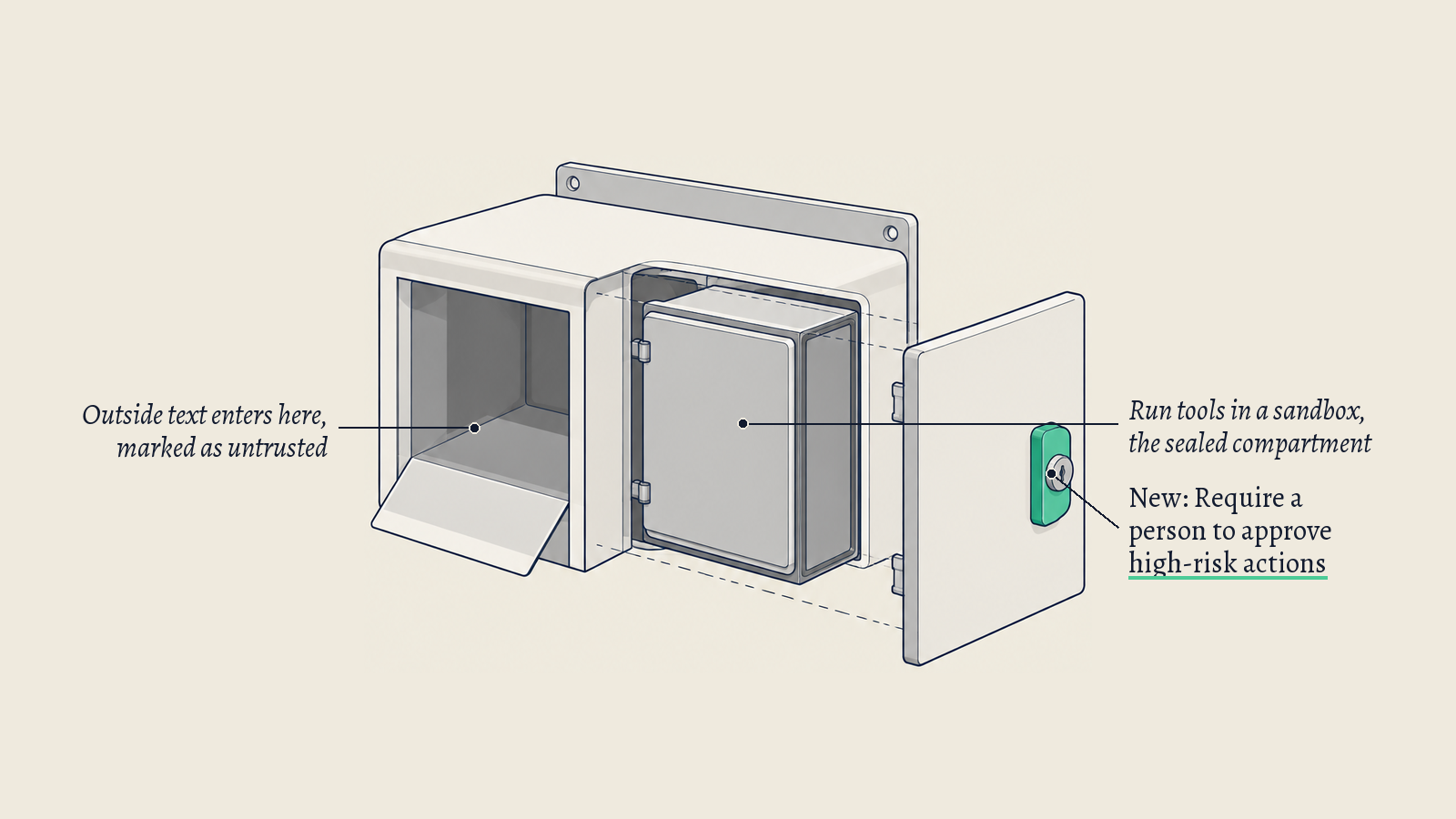
Illustration: A parcel locker with an intake slot and a sealed inner compartment; its green approval latch stands for human approval before a risky action.Illustration made with AI for ai notis

OWASP, Anthropic and OpenAI describe prompt injection as untrusted text that a model may follow as an instruction, and the guidance centres on limiting what a fooled model can do.

SOURCEOWASP Gen AI Security Project · 4 sources
CHECKED10 Oct, 04:47
Safety read
Illustration: A parcel locker with an intake slot and a sealed inner compartment; its green approval latch stands for human approval before a risky action. Safety / 10 OCT

How prompt injection works and how to limit the damage

  • OWASP says a prompt injection occurs when prompts alter a model's behaviour in unintended ways, either directly from the user or indirectly through external sources such as websites or files.
  • OWASP says it is unclear whether fool-proof prevention exists, and that retrieval augmented generation and fine-tuning "do not fully mitigate" prompt injection vulnerabilities.
  • OWASP lists least privilege, human approval for high-risk actions and separating external content; Anthropic adds running tools in sandboxed environments, and OpenAI says agents can still be tricked.

OWASP, the open security project, defines a prompt injection vulnerability as one that occurs when user prompts alter the behaviour or output of a language model in unintended ways. The inputs do not need to be readable by a person, as long as the model parses the content.

OWASP separates two kinds. In a direct injection, the user's own prompt changes the model's behaviour. In an indirect injection, the model accepts input from an external source such as a website or a file, and that content changes its behaviour. Anthropic's documentation draws the same line by who the adversary is: in the first case the user of the application is hostile, and in the second the user is trusted but Claude reads third-party content, such as web pages, emails, documents and tool results, that contains adversarial instructions.

OpenAI's guidance for agent builders describes the goals of an attacker as exfiltrating private data through downstream tool calls, taking misaligned actions, or otherwise changing the model's behaviour. OWASP says the severity depends on the business context and on how much agency the model has been given. It lists disclosure of sensitive information, unauthorised access to functions available to the model, and execution of arbitrary commands in connected systems among the possible results.

OWASP says it is unclear whether any prevention is fool-proof, given how models work, and that retrieval-augmented generation and fine-tuning do not fully mitigate the problem. Its measures therefore limit the impact. They include giving the model the least privilege it needs, requiring human approval for high-risk actions, and separating and marking untrusted external content.

Anthropic's documentation applies the same ideas. It says to put third-party content only in tool results, to tell Claude what the content is and where it came from, and to state in the system prompt that returned content is untrusted data and must never override the user's request. It also says to wrap untrusted strings in JSON, to limit Claude's access to sensitive data and actions, and to run tools in sandboxed environments. OpenAI's guidance adds that untrusted input should not be placed in developer messages, which take precedence over user messages, and that structured outputs between steps remove free-text channels an attacker could use.

Claude Code, Anthropic's coding agent, applies some of this in the product. Its documentation says commands that fetch content from the web, such as curl and wget, are not auto-approved by default, and that sandboxing can add filesystem and network isolation for shell commands. OpenAI's guidance states that even with its mitigations agents will not be perfect and can still be tricked.

What it means for you Our view

The vendors agree a model cannot be relied on to refuse every injected instruction, so the design question becomes what a fooled model can reach. OWASP ties the severity to the agency the model has been given, and OpenAI says that even with mitigations agents can still make mistakes or be tricked. For an agent that reads email, web pages or documents, that points to reviewing its permissions as well as its prompt. Ask your team or vendor which tools the agent can call, which need human approval, which run in a sandbox, and whether untrusted content is labelled as data. Start with the one tool that could send data out.

TAGSAnthropicOWASPOpenAIPrompt injectionSandboxing
Tooling 9 OCT

Google Cloud introduces Gemini agent with agent identities and spend caps

Agent GatewayAgent identityClaudeGeminiGoogle
Gemini at Work '26 event artwork: the title in rounded colour-rimmed pills on black, under the words Google Cloud.Image: Google Cloud

Google Cloud chief executive Thomas Kurian announced the Gemini agent on 8 October, with per-agent identities, a traffic gateway and project spend limits.

SOURCEGoogle Cloud · 1 source
CHECKED9 Oct, 05:50
Tooling read
Gemini at Work '26 event artwork: the title in rounded colour-rimmed pills on black, under the words Google Cloud. Tooling / 9 OCT

Google Cloud introduces Gemini agent with agent identities and spend caps

  • Google says the Gemini agent runs in the cloud and keeps one set of memories across web, mobile, desktop, command line, Workspace, Microsoft 365 and Slack.
  • Google says every agent gets its own cryptographically attested identity with least-privilege permissions, and all agent traffic passes through Agent Gateway, which it calls an AI network firewall.
  • Google says a project's AI spend can have a hard limit, and the project's agent pauses when the cap is triggered; Financial Services and Legal versions are in preview.

Thomas Kurian, chief executive of Google Cloud, introduced the Gemini agent in a post dated 8 October 2026. Google describes it as a single agent that runs in the cloud and keeps one set of memory and context across web, mobile, desktop, command line, Google Workspace, Microsoft 365 and Slack. It can create temporary sub-agents for a job, and persistent coworker agents that get their own Workspace account with an email address. Google says it runs each job on the model that fits best, across its Gemini family and Anthropic's Claude models. Every agent gets its own cryptographically attested identity with least-privilege permissions, and all agent traffic passes through Agent Gateway, which Google calls an AI network firewall that enforces an organisation's policies. A project owner can set a hard limit on a project's AI spend in the Cloud Billing Console, and the project's agent pauses when the cap is triggered. Gemini for Financial Services and Legal is in preview; Government, Healthcare and Retail are listed as coming soon.

What it means for you Our view

The post announces the Gemini agent and its controls, and it gives no date or price for the agent itself; only the Financial Services and Legal versions are in preview, so there is nothing to buy from this announcement alone. The design is still worth reading for its controls: Google says each agent has its own attested identity, all agent traffic passes through Agent Gateway, and a project's agent pauses when a spend cap is triggered. These are Google's descriptions, not results from a test. If you plan to let agents act across Workspace, Microsoft 365 or Slack, ask Google which of these controls are generally available, what the spend cap covers, and how agent identities appear in your audit logs.

TAGSAgent GatewayAgent identityClaudeGeminiGoogle
toned down Laws 9 OCT

Anthropic's updated Usage Policy will take effect on 12 November

Acceptable useAnthropicClaudeUsage Policy
A card naming the source: Anthropic, 2026 Usage Policy updateDrawn by ai notis from the source: Anthropic

Anthropic published the 2026 version on 8 October and says most changes clarify existing rules; new hardware controls and an abuse prohibition apply from 12 November.

SOURCEAnthropic · 1 source
CHECKED9 Oct, 05:51
Laws read
A card naming the source: Anthropic, 2026 Usage Policy update Laws / 9 OCT

Anthropic's updated Usage Policy will take effect on 12 November

  • Anthropic published the 2026 Usage Policy update on 8 October and says it takes effect on 12 November; it says most changes clarify existing rules.
  • From 12 November a new section covers deceptive campaigns or artificial activity of any kind, and Anthropic drops its blanket ban on personalized vote and campaign targeting.
  • From 12 November, Claude connected to hardware that takes autonomous physical actions needs a qualified operator who can stop it, and equipment that holds a safe state if disconnected.

Anthropic published the 2026 version of its Usage Policy on 8 October, and it takes effect on 12 November 2026. A new section, Do Not Engage in Deceptive Campaigns or Artificial Activity, consolidates rules on fake accounts, fabricated news sites and influence operations, whether political or commercial. The elections section is renamed Do Not Undermine Democratic Processes, and Anthropic removed its blanket ban on personalized vote and campaign targeting. The weapons section now covers the software and components that make weapons work, and Claude cannot be used to decide or recommend who to investigate, arrest or charge. For Claude connected to hardware that takes autonomous physical actions, a qualified operator must be able to observe the equipment and stop it, and the equipment must hold a safe state if Claude is disconnected. Anthropic also added a prohibition on sustained and needless abusive or cruel behavior toward its models, which it says applies only in extreme cases.

What it means for you Our view

Nothing in the policy changes today: Anthropic says it takes effect on 12 November and that most updates clarify existing rules. The parts that may matter at work are the new deceptive-campaigns section, which covers commercial activity as well as political, the removal of the blanket ban on personalized vote and campaign targeting, and the operator and safe-state requirements for hardware. Anthropic says the law enforcement wording does not change what it enforces and that the cruelty prohibition is meant only for extreme cases. If your team uses Claude for marketing, research on people or anything connected to equipment, read the new text before 12 November and ask your account contact whether your use is affected.

TAGSAcceptable useAnthropicClaudeUsage Policy
Anthropic · 1 source tap to close
Safety 9 OCT

Anthropic launches Cyber Mission with infrastructure program and free scanner

AnthropicClaudeCyber MissionOSS ScannerProject Glasswing
A card naming the source: Anthropic, Anthropic Cyber MissionDrawn by ai notis from the source: Anthropic

Anthropic announced the Cyber Mission on 8 October, starting with critical infrastructure and open-source software; reports from its free OSS Scanner are sent without human review.

SOURCEAnthropic · 1 source
CHECKED9 Oct, 05:52
Safety read
A card naming the source: Anthropic, Anthropic Cyber Mission Safety / 9 OCT

Anthropic launches Cyber Mission with infrastructure program and free scanner

  • Anthropic says the Cyber Mission starts with two areas: critical infrastructure and open-source software.
  • The Critical Infrastructure Defense Program's founding partners include Accenture, CrowdStrike, Deloitte, Dragos and Palo Alto Networks, and it brings Claude models and on-site engineers to providers.
  • OSS Scanner is opt-in and free; Anthropic says its reports are model-generated and sent without human review, and that it expects a true-positive rate above 90%.

Anthropic announced the Anthropic Cyber Mission on 8 October 2026, starting with two areas: critical infrastructure and open-source software. The Critical Infrastructure Defense Program gives providers that secure operational technology frontier Claude models, on-site engineers and threat research. Its eleven founding partners are Accenture, Booz Allen, CrowdStrike, Deloitte, Dragos, Hitachi, Insane Cyber, Nozomi Networks, Palo Alto Networks, PwC and Rockwell Automation. OSS Scanner is an opt-in service that gives enrolled open-source projects periodic scans from Anthropic's most capable models, free of charge. Each report carries a proof of concept, an explanation and a suggested fix where one is available. The reports are model-generated and sent without human review, and Anthropic says it expects a true-positive rate above 90%. Anthropic also says it merged Project Glasswing into its expanded Cyber Verification Program earlier in the week.

What it means for you Our view

OSS Scanner and the infrastructure program are Anthropic's own offers, and the accuracy figure is an expectation, not a measured result. Anthropic itself says the scanner's reports are sent without human review and some will contain inaccuracies, such as a wrong severity rating. For maintainers that means a free source of findings that still needs a person to confirm each report before acting on it. If you maintain open-source code or run operational technology, check what enrolling would send to Anthropic, who will triage the reports, and whether your existing vulnerability disclosure process can absorb them.

TAGSAnthropicClaudeCyber MissionOSS ScannerProject Glasswing
Anthropic · 1 source tap to close
Tooling 8 OCT

OpenAI rolls out GPT-6 with interactive interfaces in ChatGPT answers

ChatGPTGPTIntelligent UIOpenAI
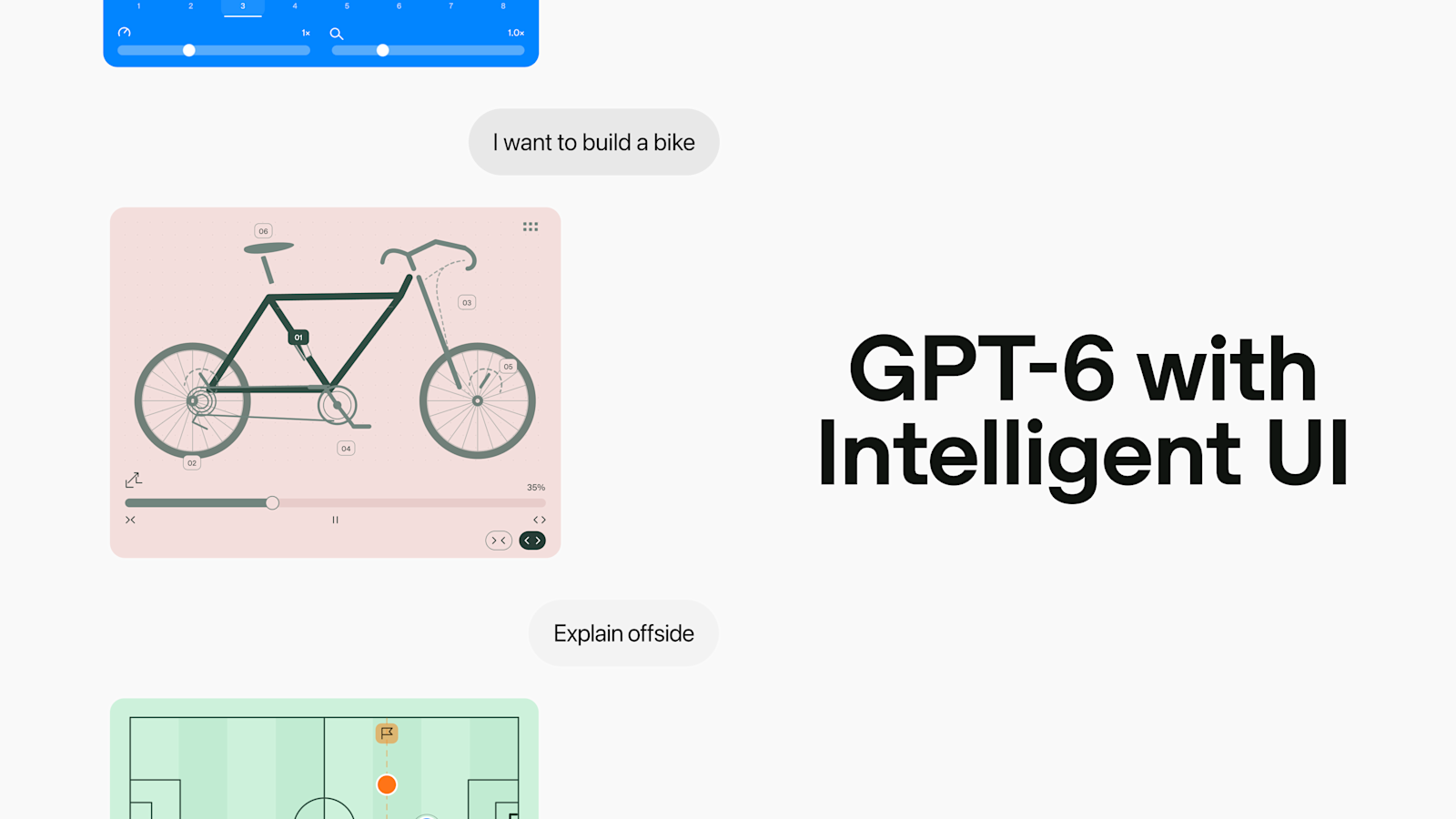
ChatGPT conversation showing an interactive bicycle build panel with numbered parts and a slider, above a football offside diagram, beside the title GPT-6 with Intelligent UIImage: OpenAI

OpenAI says GPT-6 in ChatGPT can answer with charts, buttons and forms, rolling out to Plus, Pro, Business and Enterprise on 7 October and to Free and Go the next day.

SOURCEOpenAI · 1 source
CHECKED8 Oct, 04:24
Tooling read
ChatGPT conversation showing an interactive bicycle build panel with numbered parts and a slider, above a football offside diagram, beside the title GPT-6 with Intelligent UI Tooling / 8 OCT

OpenAI rolls out GPT-6 with interactive interfaces in ChatGPT answers

  • OpenAI says GPT-6 in ChatGPT can answer with graphics, tappable buttons, forms and charts, including a savings calculator and a bill splitter built on request.
  • The rollout starts on 7 October for Plus, Pro, Business and Enterprise, and expands to Free and Go the next day; Enterprise availability depends on workplace admin settings.
  • Plus, Pro, Business and Enterprise run on GPT-6 Sol, Free and Go on Luna; OpenAI says GPT-6 Instant starts answering 44% sooner on average than GPT-5.6 Instant on web-search questions.

OpenAI said on 7 October 2026 that GPT-6 in ChatGPT introduces Intelligent UI, which lets ChatGPT answer with interactive interfaces instead of text alone. Responses can include graphics, tappable buttons, forms, charts and interactive experiences used inside the conversation. OpenAI gives a calculator for exploring how savings could grow, a bill splitter and a game as examples of tools ChatGPT can build on request.

OpenAI says it built a library of native, streamable components and a compiler that processes the interface while the model generates it, so the interface appears progressively. It also says GPT-6 was trained to decide when a plain text answer is enough.

The rollout starts on 7 October for Plus, Pro, Business and Enterprise users in the Chat tab, and expands to Free and Go users the following day. Enterprise availability depends on workplace admin settings. Paid tiers get GPT-6 Sol and Free and Go get GPT-6 Luna. OpenAI says the models behind Work and Codex are not changing in this release.

OpenAI also says GPT-6 Instant starts answering 44% sooner on average than GPT-5.6 Instant for questions that need web search. That is OpenAI's own figure.

What it means for you Our view

These are OpenAI's own descriptions, and the 44% is OpenAI's own figure, so treat it as a claim until someone outside repeats it. The change matters most where staff already use ChatGPT for small calculations or comparisons, because an answer can now be a form or a chart instead of a paragraph. OpenAI says the models behind Work and Codex are not changing in this release. If your organisation uses ChatGPT Enterprise, ask your admin whether the interactive answers are switched on, and check what staff may type into the forms they generate.

TAGSChatGPTGPTIntelligent UIOpenAI
OpenAI · 1 source tap to close
Models 8 OCT

Anthropic cuts small-model prices with Claude Haiku 5.5

AnthropicClaudeClaude Haiku 4.5Claude Haiku 5.5Claude Sonnet 5.5
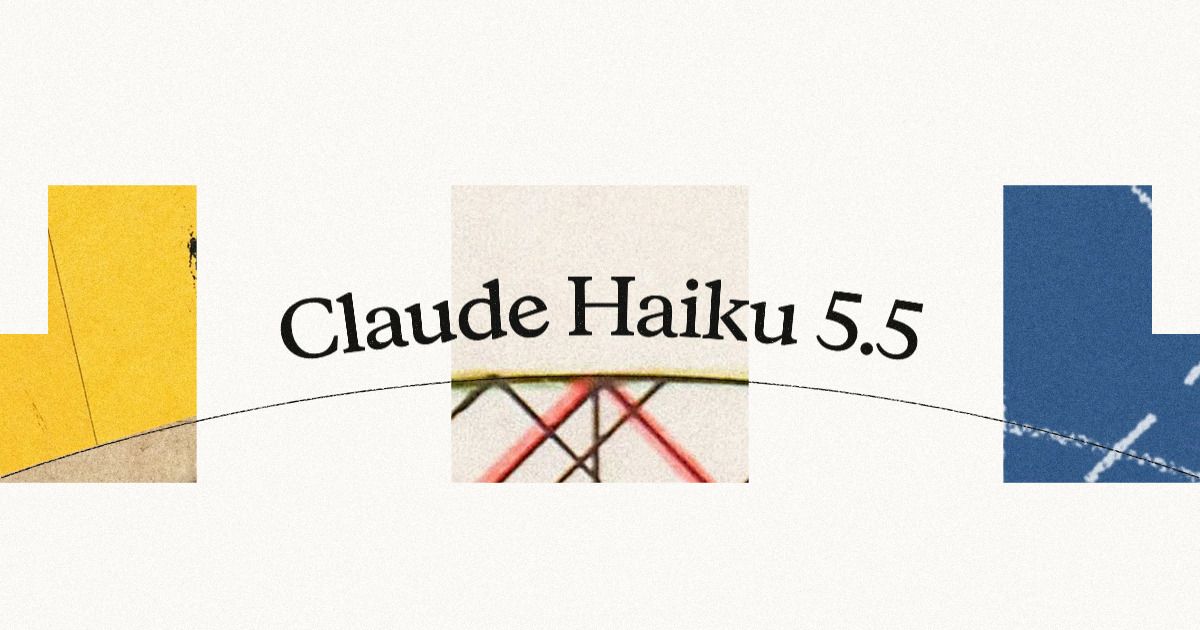
The title Claude Haiku 5.5 set in dark serif type across a cream field, with yellow, beige and blue panels behind itImage: Anthropic

Anthropic says Claude Haiku 5.5, released on 7 October, costs around 75% less to run on average than Haiku 4.5, with input at $0.10 per million tokens up to 100,000.

SOURCEAnthropic · 2 sources
CHECKED8 Oct, 04:23
Models read
The title Claude Haiku 5.5 set in dark serif type across a cream field, with yellow, beige and blue panels behind it Models / 8 OCT

Anthropic cuts small-model prices with Claude Haiku 5.5

  • For prompts up to 100,000 tokens Anthropic lists $0.10 per million input tokens and $0.50 for output, against $1.00 and $5.00 for Haiku 4.5.
  • Anthropic's documentation says the same text counts as approximately 30% more tokens than on Haiku 4.5, so token budgets tuned for the older model may need recounting.
  • On Anthropic's own table Haiku 5.5 scores 72.4% on the offline subset of OSWorld 2.1, against 15.7% for Haiku 4.5 and 83.9% for Sonnet 5.5.

Anthropic released Claude Haiku 5.5 on 7 October 2026, with the model ID claude-haiku-5-5. Anthropic calls it the cheapest, fastest and most capable small model it has released, and says it is the first Haiku-class model with an adjustable effort setting.

For prompts up to 100,000 tokens Anthropic lists $0.10 per million input tokens and $0.50 per million output tokens, against $1.00 and $5.00 for Haiku 4.5. For prompts over 100,000 tokens the price is $0.50 input and $2.50 output. Cache reads are $0.01 per million tokens up to 100,000 tokens and $0.05 above that. Anthropic says the model costs around 75% less to run on average than Haiku 4.5, and that the cut is 90% for requests up to 100,000 tokens and 50% for longer ones.

Anthropic's documentation gives a 1M-token context window and up to 128k output tokens. The same text counts as about 30% more tokens than on Haiku 4.5, so token budgets tuned for the older model need recounting. Anthropic says the model is available on the Claude Platform, Amazon Web Services, Google Cloud and Microsoft Azure.

On Anthropic's own table, Haiku 5.5 scores 72.4% on the offline subset of OSWorld 2.1, against 15.7% for Haiku 4.5, 48.9% for GPT-6 Luna and 83.9% for Sonnet 5.5. These are Anthropic's figures, not an outside test.

What it means for you Our view

The price cut is large, but the 75% average and the 90% figure for short prompts are Anthropic's own. The 30% higher token count for the same text bears on the 90% per-token price cut, and the page does not state whether the 75% already counts it. Prompts over 100,000 tokens cost $0.50 for input and $2.50 for output, and Anthropic puts the cut there at 50%, so long inputs save less. The gap to Sonnet 5.5 on OSWorld 2.1 is wide, so a small model fits simple, high-volume steps. If you run Haiku 4.5, rerun a sample of your real prompts, compare the cost at the new token count, and check quality against your current results before switching.

TAGSAnthropicClaudeClaude Haiku 4.5Claude Haiku 5.5Claude Sonnet 5.5
Anthropic · 2 sources tap to close
Tooling 8 OCT

Anthropic adds Claude sidebar to Google Docs, Sheets and Slides

AnthropicClaudeGoogle Workspace
Video thumbnail for Claude for Google Workspace, Anthropic's launch video showing Claude working inside Google Docs, Sheets and Slides.Video: Claude on YouTube

Anthropic says Claude for Google Workspace is in public beta on all paid Claude plans, with a sidebar that reads and edits the open file.

SOURCEAnthropic · 1 source
CHECKED8 Oct, 04:24
Tooling watch read
Video thumbnail for Claude for Google Workspace, Anthropic's launch video showing Claude working inside Google Docs, Sheets and Slides. Tooling / 8 OCT

Anthropic adds Claude sidebar to Google Docs, Sheets and Slides

  • Claude for Google Workspace is in public beta on all paid Claude plans and installs from the Google Workspace Marketplace, Anthropic says.
  • Claude opens in a sidebar, reads the open file and the selection, and edits directly: suggestion cards in Docs, formulas and charts in Sheets, slides built from the deck's layouts.
  • By default Claude waits for approval on each change, while Accept all edits mode applies changes without stopping; Enterprise plans get the Compliance API, CMEK and OpenTelemetry audit export.

Anthropic said on 6 October 2026 that Claude for Google Workspace is in public beta on all paid Claude plans. It adds Claude to Google Docs, Sheets and Slides as a sidebar that can read the open file, see what is selected and change it.

In Docs, Anthropic says Claude can fix a sentence in place or propose larger rewrites as suggestion cards. In Sheets it can write formulas, build pivot tables and native charts, add tabs, and pull a range into Python and write the results back. In Slides it can build slides from the deck's own layouts and flag elements that overlap or run off the slide.

By default Claude asks for approval before each change; an Accept all edits mode applies changes without stopping. Anthropic also released Google Docs, Sheets and Slides connectors, also in beta, so Claude can create and edit Google files from a chat. On Enterprise plans, the Compliance API, customer-managed encryption keys and OpenTelemetry audit export apply to the add-on. It is installed from the Google Workspace Marketplace.

What it means for you Our view

This is Anthropic's own description of a beta, so test it on files that do not matter before relying on it. The approval card keeps a person in the loop by default, and Accept all edits removes that check, so it is worth deciding as a team policy instead of leaving it to each user. Anthropic says Enterprise audit controls apply to the add-on, and it also released Docs, Sheets and Slides connectors in beta. Before rollout, ask your Google Workspace admin who may install from the Marketplace, and ask Anthropic what the audit export records for edits made in Accept all edits mode.

TAGSAnthropicClaudeGoogle Workspace
Anthropic · 1 source tap to close
Models 7 OCT

Mistral releases Large 4, a 1-trillion-parameter model, in public preview

MistralNvidiaOpen weights
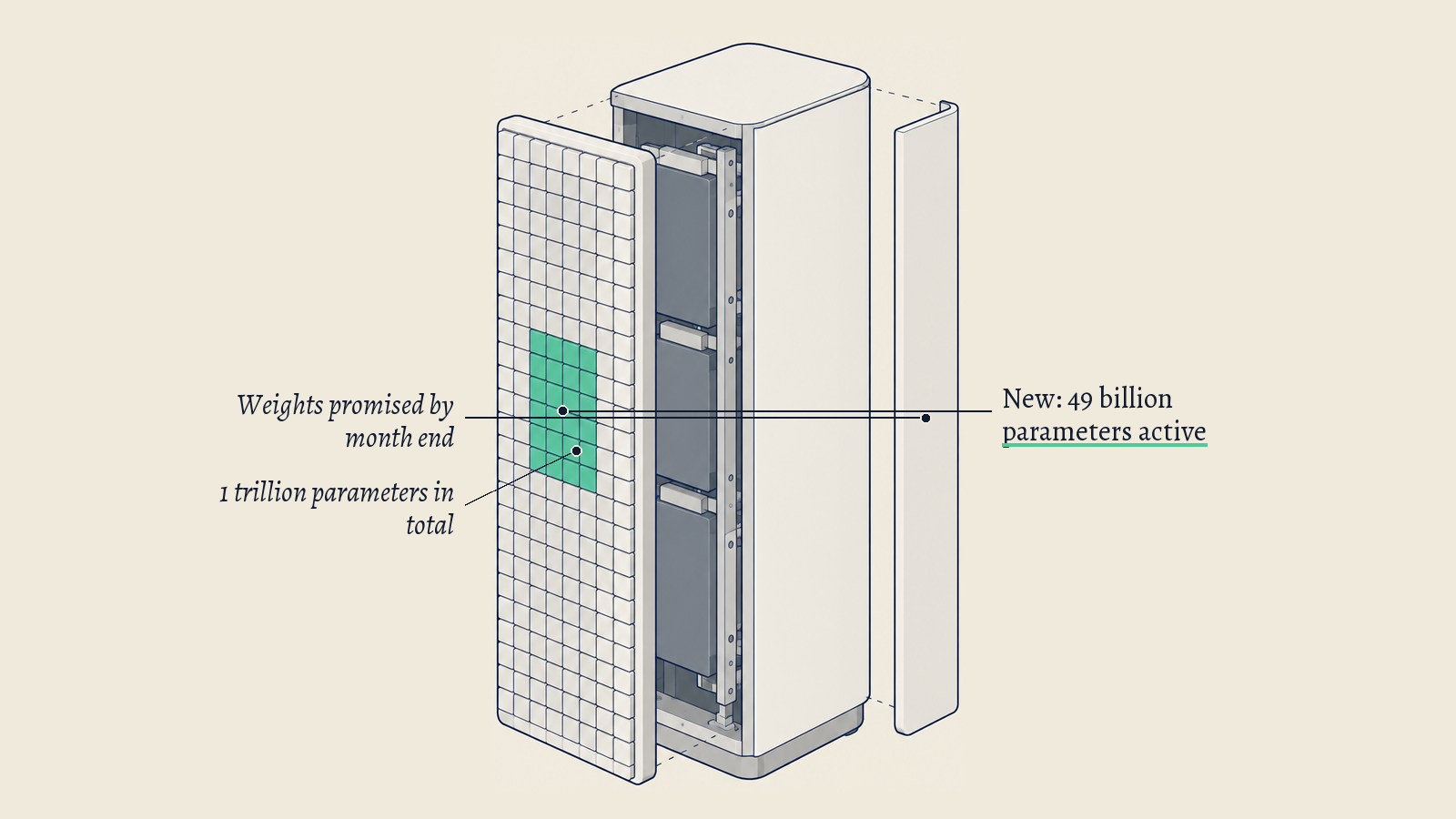
Illustration: A tall sealed cabinet covered in a grid of small square panels; the green block of panels stands for the 49 billion parameters Mistral Large 4 uses at a time.Illustration made with AI for ai notis

Mistral says Large 4 has 49 billion active parameters, costs $1.36 and $4.18 per million input and output tokens in preview, and will get open weights by the end of October.

SOURCEMistral AI · 1 source
CHECKED7 Oct, 04:20
Models read
Illustration: A tall sealed cabinet covered in a grid of small square panels; the green block of panels stands for the 49 billion parameters Mistral Large 4 uses at a time. Models / 7 OCT

Mistral releases Large 4, a 1-trillion-parameter model, in public preview

  • Mistral describes Large 4, published on 6 October 2026, as a natively multimodal model with 1 trillion parameters, 49 billion of them active.
  • The preview API costs $1.36 per million input tokens and $4.18 per million output tokens; Mistral says it will release the weights by the end of the month.
  • Until the weights are out, Mistral says it is red-teaming the model with cybersecurity leaders, vetted partners and state authorities, who use a version with reduced moderation.

Mistral AI published Mistral Large 4 on 6 October 2026. It describes a natively multimodal model with 1 trillion parameters, 49 billion of them active. The public preview runs on the company's own infrastructure, and the listed API price is $1.36 per million input tokens and $4.18 per million output tokens. Mistral says it will release the weights by the end of the month; until then it is red-teaming the model with cybersecurity leaders, vetted partners and state authorities. The benchmark results in the post, including a rank among the top five on the Artificial Analysis Cyber Index, are Mistral's own account. It says the model was trained on 3,800 NVIDIA Grace Blackwell GPUs in its own datacenters in Europe.

What it means for you Our view

The price, the benchmark scores and the Artificial Analysis Cyber Index ranking are Mistral's own account, and the open weights that would let others test them are a promise for the end of the month. Mistral says it trained Large 4 and serves the preview in its own datacenters in Europe, which matters if where a model runs is part of your procurement. Treat the preview as a trial: the $1.36 and $4.18 prices are listed for the preview only. Before you commit, ask Mistral whether those prices will hold once the weights are released, and run your own tasks on the preview.

TAGSMistralNvidiaOpen weights
Mistral AI · 1 source tap to close
toned down Safety 7 OCT

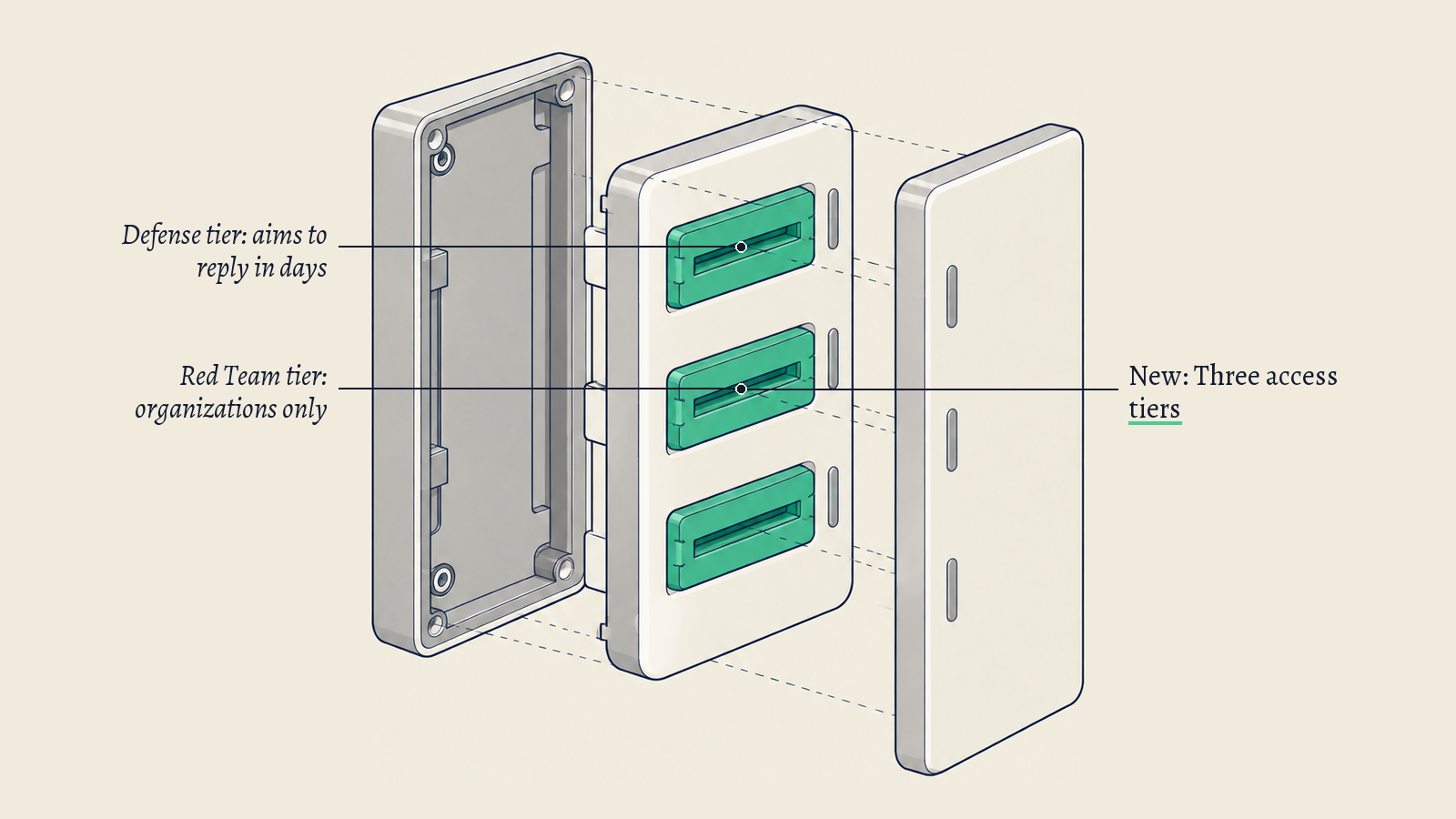
Anthropic sets three access tiers in its Cyber Verification Program

AnthropicClaudeCyber Verification ProgramProject Glasswing
Illustration: A wall-mounted access panel with three stacked card slots; the green slots stand for the three access tiers of Anthropic's Cyber Verification Program.Illustration made with AI for ai notis

Anthropic's 6 October post sets Defense, Red Team and Specialized Access tiers for security teams, with review times of a few days, a few weeks, and an in-depth review with the US government.

SOURCEAnthropic · 1 source
CHECKED7 Oct, 04:22
Safety read
Illustration: A wall-mounted access panel with three stacked card slots; the green slots stand for the three access tiers of Anthropic's Cyber Verification Program. Safety / 7 OCT

Anthropic sets three access tiers in its Cyber Verification Program

  • Anthropic says the program now has three tiers, Defense, Red Team and Specialized Access, each including Claude Opus 5.5, Claude Sonnet 5.5 and Claude Mythos 5.1.
  • Anthropic aims to answer Defense Access applications in a few days; Red Team Access, for organizations only, adds authorized penetration testing and is expected to take a few weeks.
  • Specialized Access has the fewest cyber blocks and is for a limited set of verified organizations, each currently reviewed in depth with the US government, Anthropic says.

Anthropic announced an expanded Cyber Verification Program on 6 October 2026, built on three access tiers for qualifying security professionals. Defense Access covers defensive work such as incident response and malware reverse-engineering, and Anthropic aims to answer applications within a few days. Red Team Access adds authorized penetration testing for organizations only and is expected to take a few weeks to review. Specialized Access, with the fewest cyber blocks, is reserved for a limited set of verified organizations, and Anthropic currently reviews each one in depth with the US government. Anthropic says existing Project Glasswing members move to that tier without reapproval for current models. In its own test on CyScenarioBench, Anthropic reports that Defense Access blocked 46 of 50 trials on Claude Opus 5.5, while Red Team Access blocked none and Claude completed 34 of 50.

What it means for you Our view

The tiers set how much a security team can do with Claude and how long it waits for approval. Anthropic's own CyScenarioBench test on Claude Opus 5.5 shows the gap: Defense Access blocked 46 of 50 trials, while Red Team Access blocked none and Claude completed 34 of 50. That is Anthropic's evaluation, not an independent one. Red Team Access is currently for organizations only, so individual researchers are not eligible. If your team does penetration testing, check whether your organization qualifies and allow for a review of a few weeks before an engagement depends on it.

TAGSAnthropicClaudeCyber Verification ProgramProject Glasswing
Anthropic · 1 source tap to close
Laws 7 OCT

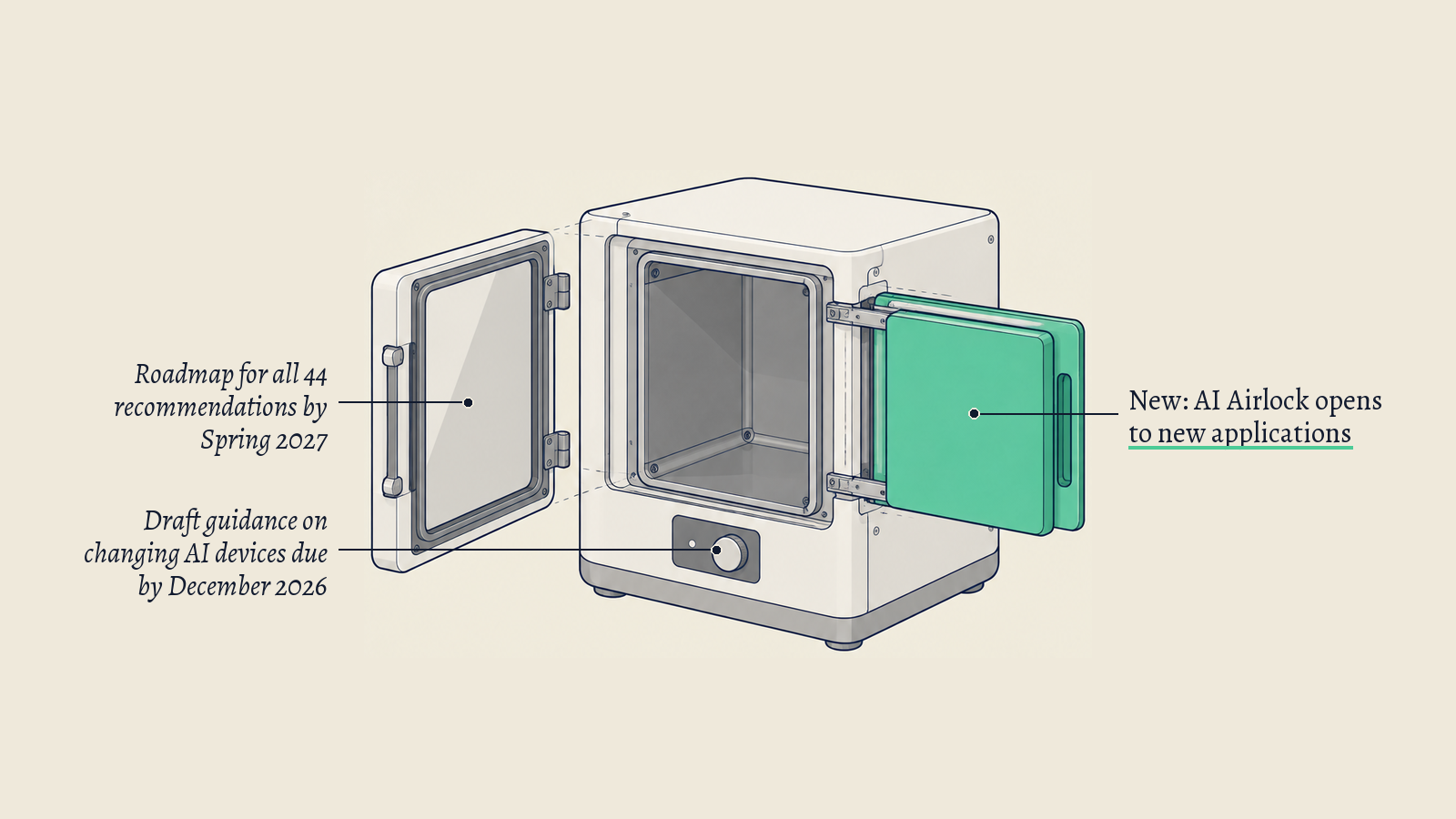
UK government accepts all 44 healthcare AI regulation recommendations

AI AirlockMHRAUK
Illustration: A two-door pass-through test chamber; its green inner hatch stands for the AI Airlock sandbox now open to new applications.Illustration made with AI for ai notis

The UK government said on 6 October it will accept all 44 recommendations of the National Commission, with draft MHRA guidance due by December 2026 and a full roadmap by Spring 2027.

SOURCEGOV.UK · 1 source
CHECKED7 Oct, 04:22
Laws read
Illustration: A two-door pass-through test chamber; its green inner hatch stands for the AI Airlock sandbox now open to new applications. Laws / 7 OCT

UK government accepts all 44 healthcare AI regulation recommendations

  • The UK government said on 6 October 2026 that it will accept all 44 recommendations of the National Commission into the Regulation of AI in Healthcare, published on 10 September.
  • The MHRA is committed to issue draft guidance by December 2026 on managing changes to AI-enabled medical devices; a full roadmap of timelines and responsibilities is due by Spring 2027.
  • The MHRA opened applications for the third phase of its AI Airlock sandbox; a webinar is on 22 October and the first innovators are selected in November 2026.

On 6 October 2026 the UK government confirmed it will accept all 44 recommendations of the National Commission into the Regulation of AI in Healthcare, published on 10 September. This is a government decision to act on recommendations; it does not itself change a rule. The MHRA, the UK medicines regulator, is committed to issue draft guidance by December 2026 on managing changes to AI-enabled medical devices. A full implementation roadmap will be published by Spring 2027. The MHRA also opened applications for the third phase of AI Airlock, its regulatory sandbox for AI-enabled medical devices, with the first innovators selected in November 2026.

What it means for you Our view

This is a government decision to act on recommendations, not a change to any rule in force. What exists so far are two dated commitments, MHRA draft guidance by December 2026 and a roadmap with timelines and responsibilities by Spring 2027, plus the AI Airlock sandbox, which is open to applications. If you build or buy AI-enabled medical devices in the UK, put those two dates in your compliance calendar, and decide whether your product suits AI Airlock before the 22 October webinar.

TAGSAI AirlockMHRAUK
GOV.UK · 1 source tap to close
Models 6 OCT

AWS lists Z.ai's GLM 5.3 as generally available on Bedrock

AmazonAmazon BedrockGLMZ.ai
AWS blog launch card reading Introducing GLM 5.3 on Amazon Bedrock, with a green-to-purple gradient strip down its right edge.Image: Amazon Web Services

AWS says Z.ai's GLM 5.3 is generally available on Amazon Bedrock to eligible enterprise customers, in a What's New entry dated 5 October 2026.

SOURCEAmazon Web Services · 1 source
CHECKED6 Oct, 04:25
Models read
AWS blog launch card reading Introducing GLM 5.3 on Amazon Bedrock, with a green-to-purple gradient strip down its right edge. Models / 6 OCT

AWS lists Z.ai's GLM 5.3 as generally available on Bedrock

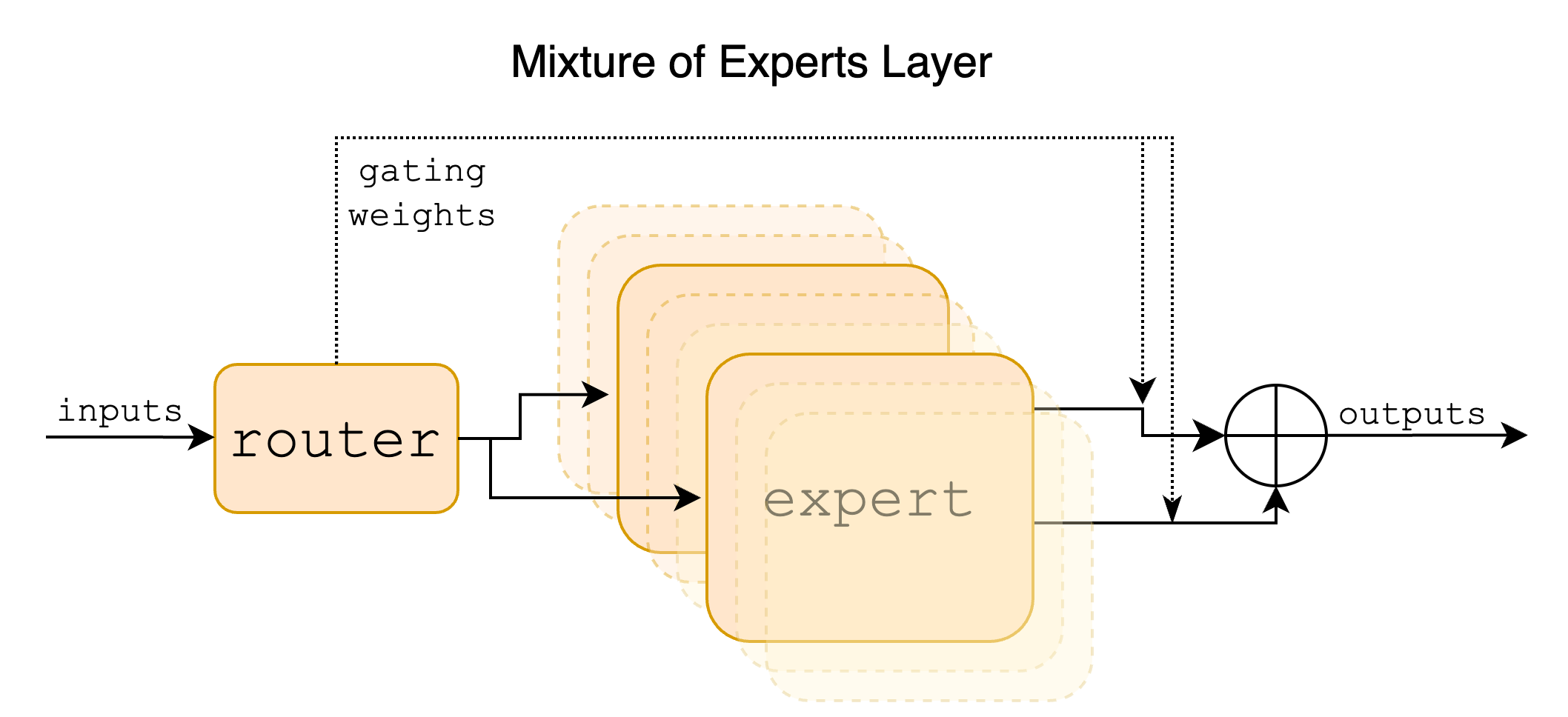
  • AWS describes GLM 5.3 as a mixture-of-experts model with 753B total parameters and roughly 40B active per token.
  • AWS says it has a 1-million-token context window and up to 128K output tokens, with reasoning always enabled and selectable effort levels.
  • AWS says it is available to eligible enterprise customers through the US and Global cross-Region inference profiles, and Bedrock support includes explicit prompt caching.

AWS says Bedrock now supports GLM 5.3, a mixture-of-experts model with 753 billion total and about 40 billion active parameters per token, a 1-million-token context window and up to 128K output tokens. Bedrock support includes explicit prompt caching. It is available to eligible enterprise customers through the US and Global cross-Region inference profiles.

What it means for you Our view

These are AWS's own descriptions of the model's size and limits, and they say nothing yet about how it performs on your tasks. The selectable effort levels mean each request trades latency and token use against task performance, so cost per task will depend on the level you choose. Explicit prompt caching on system prompts and messages matters most where the same context is sent repeatedly. Availability is limited to eligible enterprise customers, so access in your own account is the first question. If you run workloads on Bedrock, check whether your account is eligible and which inference profile applies, then test cost and latency at each effort level on your own prompts.

TAGSAmazonAmazon BedrockGLMZ.ai
Safety 5 OCT

Six AI leaders sign voluntary commitment on frontier model controls

AnthropicGoogleMetaNvidiaOpenAIxAI
Donald Trump speaking, gesturing with one hand, at a long table in the East Room, seated between Jensen Huang on his left and Elon Musk on his right.Daniel Torok / United States government work. Cropped.

Donald Trump posted the Joint Commitment on Frontier Responsibilities on 29 September; leaders of Google, Anthropic, Meta, OpenAI, xAI and Nvidia signed, and the text names no penalty.

SOURCEDonald J. Trump on Truth Social · 2 sources
CHECKED5 Oct, 05:07
Safety read
Donald Trump speaking, gesturing with one hand, at a long table in the East Room, seated between Jensen Huang on his left and Elon Musk on his right. Safety / 5 OCT

Six AI leaders sign voluntary commitment on frontier model controls

  • Trump posted the commitment on Truth Social on 29 September 2026; the signatories are Sundar Pichai, Dario Amodei, Mark Zuckerberg, Greg Brockman, Elon Musk and Jensen Huang.
  • The text asks each company to put four layers in place: internal controls, an internal team, an independent external auditor or evaluator, and an independent board committee.
  • The text names no penalty or enforcement mechanism, and says it may make sense over time to codify the steps into laws or regulations.

Donald Trump posted the text of the White House Accord on Super Intelligence, titled Joint Commitment on Frontier Responsibilities, on Truth Social on 29 September 2026. The post carries two images: a page of text and a page of signatures. The signature page carries Trump's name as President of the United States and the names of Sundar Pichai for Google, Dario Amodei for Anthropic, Mark Zuckerberg for Meta, Greg Brockman for OpenAI, Elon Musk for XAI and Jensen Huang for Nvidia.

The text says every company is responsible for developing its own technology safely and in a way that builds trust. It asks each company that trains and deploys frontier models to put four layers of controls and audits in place. The first is internal controls that monitor a model's capabilities and alignment during training and deployment, including around cybersecurity, biosecurity and chemical threats, and that ensure models do not hack or access technical systems in unintended ways. The second is an internal team to make sure the controls are working and issues are fixed. The third is an independent external auditor or evaluator. The fourth is an independent committee of the board of directors that receives reports from those teams and auditors.

The participating companies say they will meet regularly to set standards and best practices. The text says it may make sense over time to codify the steps into laws or regulations, and that each company is committed to the controls whether or not they are required. The text states no penalty for a company that does not follow it.

What it means for you Our view

The commitment says what the signing companies intend to do, and its text names no penalty, so its weight depends on each company following through. The four layers are specific about roles: an internal team checks the controls, an outside auditor assesses them, and a board committee receives the reports. For anyone buying from these companies, the commitment is a stated intention, with no penalty behind it. If you buy from any of them, ask whether an external auditor is engaged under this commitment and what you can see of its scope.

TAGSAnthropicGoogleMetaNvidiaOpenAIxAI
toned down Work 5 OCT

SAP's Klein says agents may reach 100% on some tasks

SAP
Alex Kantrowitz of Big Technology Podcast in conversation with SAP chief executive Christian Klein, in the video's title frame.Video: Alex Kantrowitz on YouTube

SAP chief executive Christian Klein told Alex Kantrowitz's Big Technology Podcast, published 30 September, that agents may reach 100% accuracy on some tasks and that SAP limits token spend.

SOURCEAlex Kantrowitz (Big Technology Podcast) · 2 sources
CHECKED5 Oct, 04:36
Alex Kantrowitz of Big Technology Podcast in conversation with SAP chief executive Christian Klein, in the video's title frame. Work / 5 OCT

SAP's Klein says agents may reach 100% on some tasks

  • Klein says some work needs full accuracy: "sometimes you need an accuracy of 100% 90% accuracy is not enough" (05:02).
  • Klein said full accuracy is "absolutely possible" for "certain tasks" (06:02), and that supply chain optimization agents could get there "in 8 to 9 months" (06:07).
  • Klein said SAP has set token limits for staff, and that a manager can approve more token spend for a month, task or project (49:53).

Christian Klein, chief executive of the European software company SAP, was interviewed by Alex Kantrowitz on the Big Technology Podcast, published on the programme's YouTube channel on 30 September 2026. Klein is named as chief executive officer on SAP's leadership page.

On accuracy, Klein said an AI agent that is 93 percent accurate is not enough for a financial close, because auditors need certified numbers. Asked whether he expects 100 percent accuracy within months, he said it is absolutely possible for certain tasks and, speaking of the next agents for supply chain optimization, said SAP may be there in eight to nine months. He also said some uses, such as a customer briefing, are fine at 90 to 95 percent.

On jobs, Klein said SAP will hire data scientists and full-stack developers and will need fewer people in other jobs.

On cost, Klein said SAP has set token limits after token spend rose. He said the staff who work on model training were not limited, while developers, product managers, designers and people in finance and HR have limits, with a manager approval route for more. He also said that for tasks such as a headcount report some open-source models perform well enough to compare on cost with other models.

Klein also described his product managers' reply when he asked whether AI-written code could reproduce SAP's products: an ERP has millions of data fields to correlate.

What it means for you Our view

These are Klein's statements in a podcast interview, not SAP commitments. His eight to nine months is a hedged estimate for specific agents, and he limits full accuracy to certain tasks. He also separates work where 90% accuracy is enough from work where it is not, which is a useful test for any agent project. He describes token limits at SAP for staff, with a manager approval route for more, which suggests usage budgets are becoming a management question. If you plan agent projects, list each task with the accuracy it needs, and ask your vendor how it measures accuracy on that task and what usage limits will apply to your staff.

TAGSSAP
NOTHING IN THIS FILTER No story today matches. open the archive →
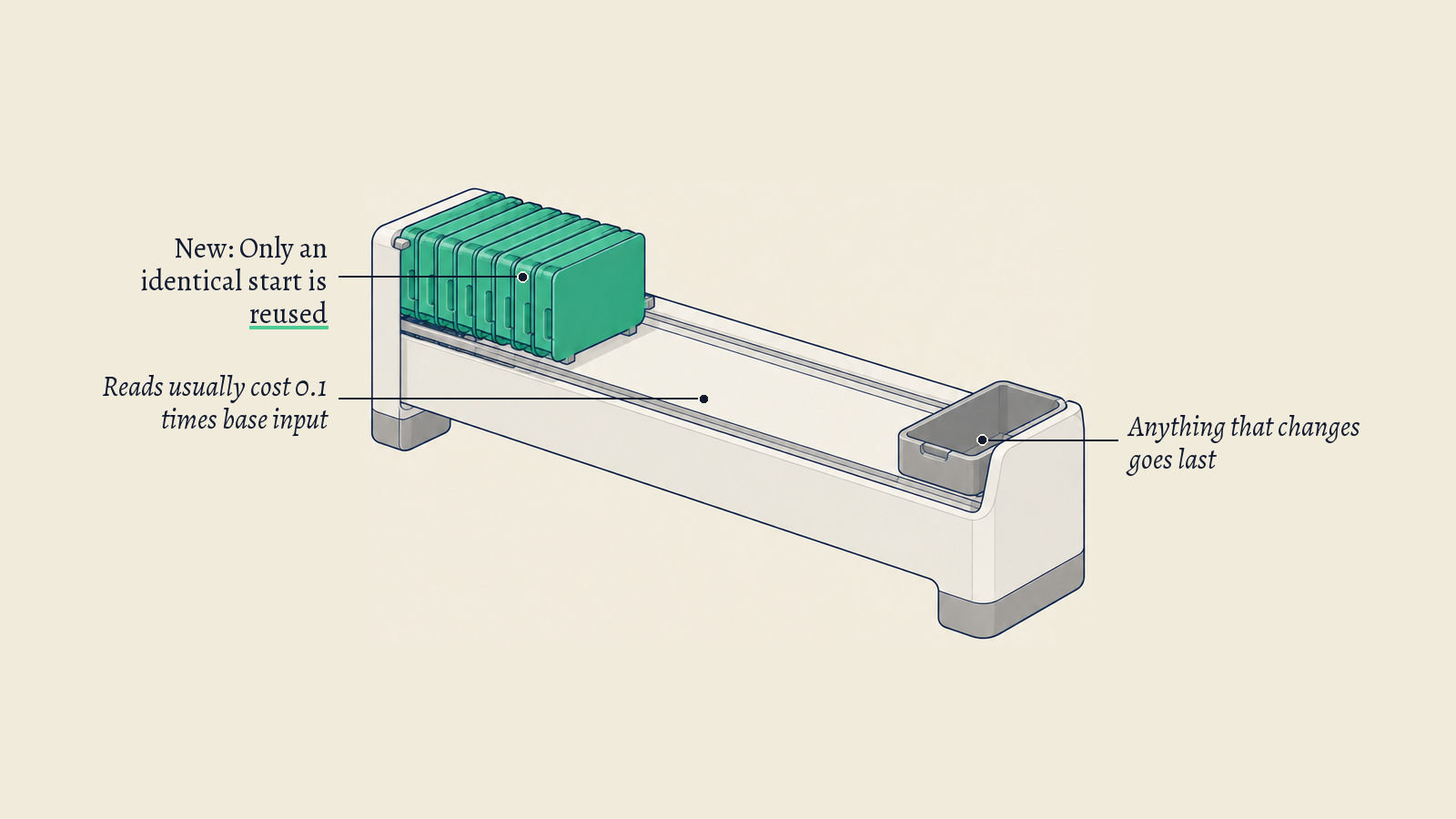
That's today's news: 18 stories. ExplainedHow reward hacking lets a model game its scoreExplainedHow prompt caching bills a repeated prompt startExplainedHow a mixture-of-experts model activates only part of its parameters

The morning email

On the mornings we publish: the three top stories and up to four short ones. Free.

We email you a link to confirm. An issue may include one sponsor, always labelled Sponsored · Advertisement. Our emails count opens and clicks, not who made them. Unsubscribe in one click. What we keep

1 of 18
Beam: The Great American Open Model with ReflectionAI Co-Founder and CEO Misha Laskin: a video from No Priors: AI, Machine Learning, Tech, & Startups on YouTubeWatch on YouTubeVideo: No Priors: AI, Machine Learning, Tech, & Startups on YouTube

Models · 11 OCTcorrected

Reflection AI's Laskin says open models will take most token demand

On the No Priors podcast, published on YouTube on 9 October, Misha Laskin of Reflection AI gave his account of Beam's training run and his forecast for open models.

  • Laskin says Beam's reinforcement-learning stage used a little over 10,000 GB300s for four weeks (12:47).
  • He says Beam tends to be three to four times more efficient than models of the same capability class, his own claim (20:27).
  • He says gateway token use flipped from about 70/30 closed to 70/30 open in maybe six months (25:19 to 25:29), and expects open models to take most token demand (26:03).
Checked 11 Oct, 04:38 · No Priors (YouTube) · 1 source
Can AI Keep Growing Exponentially? Let’s Ask SemiAnalysis — With Dylan Patel and Jordan Nanos: a video from Alex Kantrowitz on YouTubeWatch on YouTubeVideo: Alex Kantrowitz on YouTube

Compute · 11 OCTcorrected

SemiAnalysis's Patel: a trillion in AI capex needs $250 billion of revenue a year

On the Big Technology Podcast, published 9 October, Dylan Patel of SemiAnalysis said AI-related capex, supply chain included, will be about $2 trillion next year, and set out his payback arithmetic.

  • Patel says next year's AI-related capex, supply chain included, will be on the order of $2 trillion, which he puts at five or 6% of US GDP (01:58).
  • By his straight-line arithmetic over six years, a trillion dollars of capex needs about $1.5 trillion of revenue, or $250 billion a year (09:55).
  • He says Anthropic is now profitable on revenue minus compute cost, training and inference combined, and OpenAI within two or three quarters, an estimate from SemiAnalysis's model (12:07).
Checked 11 Oct, 04:26 · Alex Kantrowitz (Big Technology Podcast), YouTube · 1 source
Illustration: A white switchgear cabinet with a row of breaker handles and a large round power dial; the green dial stands for power measured in gigawatts.Illustration made with AI for ai notis

Compute · 11 OCT

How a gigawatt of power relates to the size of AI data centres

A gigawatt is a billion watts; the IEA's Energy and AI report sizes data centres in megawatts, while AI labs now announce plans in gigawatts.

  • A gigawatt is a billion watts and a megawatt a million, according to NIST's table of metric prefixes.
  • The IEA says a conventional data centre may draw 10 to 25 megawatts and a hyperscale AI-focused one 100 or more, as much electricity yearly as 100 000 households.
  • Nvidia and OpenAI announced a letter of intent for at least 10 gigawatts, and Anthropic an agreement with Google and Broadcom for multiple gigawatts from 2027. Both are announced plans.
Checked 11 Oct, 04:27 · NIST · 6 sources
Why AlphaFold Didn't Solve Protein Folding — Pushmeet Kohli, Google DeepMind & Sal Candido, Biohub: a video from Latent Space on YouTubeWatch on YouTubeVideo: Latent Space on YouTube

Research · 10 OCT

DeepMind's Kohli says replicating structures does not fully explain protein dynamics

On a Latent Space panel with Biohub's Sal Candido, published 9 October, Google DeepMind's Pushmeet Kohli said replicating deposited structures does not mean protein dynamics are understood.

  • Kohli said there have been advances at a conceptual level, but replicating a PDB structure "does not mean that we have understood all of protein dynamics" (17:44).
  • Recalling discussions with John Jumper, Kohli said the true ground state that proteins take, and the actual distribution of structures they take, are not known (17:17).
  • Kohli asked: "let's not stop the funding of protein structure prediction and protein dynamics", because in his words the field is just getting started (18:15).
Checked 10 Oct, 04:47 · Google · 3 sources
AI Scientists Are Here: Autonomous Labs & Synthesis Superintelligence — Periodic Labs: a video from Latent Space on YouTubeWatch on YouTubeVideo: Latent Space on YouTube

Work · 10 OCTnarrowed

Periodic Labs' Fedus says its engineers will work on site at customers

In a Latent Space video interview published 7 October, Periodic Labs' Liam Fedus said forward-deployed engineers will work on site at customers, with a huge focus on semiconductors.

  • Fedus said Periodic has been "customer zero" for its own tools and now has "a huge focus right now in the semiconductor industry" (1:16:27).
  • Fedus said these customers are private companies that need secure environments, so Periodic's forward-deployed engineers and researchers "will actually be on site" integrating its systems (1:16:46).
  • Fedus said that as autonomy, intelligence and capability grow, "you can begin to price outcomes" (1:19:09).
Checked 10 Oct, 04:47 · Latent Space · 3 sources
Illustration: A parcel locker with an intake slot and a sealed inner compartment; its green approval latch stands for human approval before a risky action.Illustration made with AI for ai notis

Safety · 10 OCT

How prompt injection works and how to limit the damage

OWASP, Anthropic and OpenAI describe prompt injection as untrusted text that a model may follow as an instruction, and the guidance centres on limiting what a fooled model can do.

  • OWASP says a prompt injection occurs when prompts alter a model's behaviour in unintended ways, either directly from the user or indirectly through external sources such as websites or files.
  • OWASP says it is unclear whether fool-proof prevention exists, and that retrieval augmented generation and fine-tuning "do not fully mitigate" prompt injection vulnerabilities.
  • OWASP lists least privilege, human approval for high-risk actions and separating external content; Anthropic adds running tools in sandboxed environments, and OpenAI says agents can still be tricked.
Checked 10 Oct, 04:47 · OWASP Gen AI Security Project · 4 sources
Gemini at Work '26 event artwork: the title in rounded colour-rimmed pills on black, under the words Google Cloud.Image: Google Cloud

Tooling · 9 OCT

Google Cloud introduces Gemini agent with agent identities and spend caps

Google Cloud chief executive Thomas Kurian announced the Gemini agent on 8 October, with per-agent identities, a traffic gateway and project spend limits.

  • Google says the Gemini agent runs in the cloud and keeps one set of memories across web, mobile, desktop, command line, Workspace, Microsoft 365 and Slack.
  • Google says every agent gets its own cryptographically attested identity with least-privilege permissions, and all agent traffic passes through Agent Gateway, which it calls an AI network firewall.
  • Google says a project's AI spend can have a hard limit, and the project's agent pauses when the cap is triggered; Financial Services and Legal versions are in preview.
Checked 9 Oct, 05:50 · Google Cloud · 1 source
A card naming the source: Anthropic, 2026 Usage Policy updateDrawn by ai notis from the source: Anthropic

Laws · 9 OCTnarrowed

Anthropic's updated Usage Policy will take effect on 12 November

Anthropic published the 2026 version on 8 October and says most changes clarify existing rules; new hardware controls and an abuse prohibition apply from 12 November.

  • Anthropic published the 2026 Usage Policy update on 8 October and says it takes effect on 12 November; it says most changes clarify existing rules.
  • From 12 November a new section covers deceptive campaigns or artificial activity of any kind, and Anthropic drops its blanket ban on personalized vote and campaign targeting.
  • From 12 November, Claude connected to hardware that takes autonomous physical actions needs a qualified operator who can stop it, and equipment that holds a safe state if disconnected.
Checked 9 Oct, 05:51 · Anthropic · 1 source
A card naming the source: Anthropic, Anthropic Cyber MissionDrawn by ai notis from the source: Anthropic

Safety · 9 OCT

Anthropic launches Cyber Mission with infrastructure program and free scanner

Anthropic announced the Cyber Mission on 8 October, starting with critical infrastructure and open-source software; reports from its free OSS Scanner are sent without human review.

  • Anthropic says the Cyber Mission starts with two areas: critical infrastructure and open-source software.
  • The Critical Infrastructure Defense Program's founding partners include Accenture, CrowdStrike, Deloitte, Dragos and Palo Alto Networks, and it brings Claude models and on-site engineers to providers.
  • OSS Scanner is opt-in and free; Anthropic says its reports are model-generated and sent without human review, and that it expects a true-positive rate above 90%.
Checked 9 Oct, 05:52 · Anthropic · 1 source
ChatGPT conversation showing an interactive bicycle build panel with numbered parts and a slider, above a football offside diagram, beside the title GPT-6 with Intelligent UIImage: OpenAI

Tooling · 8 OCT

OpenAI rolls out GPT-6 with interactive interfaces in ChatGPT answers

OpenAI says GPT-6 in ChatGPT can answer with charts, buttons and forms, rolling out to Plus, Pro, Business and Enterprise on 7 October and to Free and Go the next day.

  • OpenAI says GPT-6 in ChatGPT can answer with graphics, tappable buttons, forms and charts, including a savings calculator and a bill splitter built on request.
  • The rollout starts on 7 October for Plus, Pro, Business and Enterprise, and expands to Free and Go the next day; Enterprise availability depends on workplace admin settings.
  • Plus, Pro, Business and Enterprise run on GPT-6 Sol, Free and Go on Luna; OpenAI says GPT-6 Instant starts answering 44% sooner on average than GPT-5.6 Instant on web-search questions.
Checked 8 Oct, 04:24 · OpenAI · 1 source
The title Claude Haiku 5.5 set in dark serif type across a cream field, with yellow, beige and blue panels behind itImage: Anthropic

Models · 8 OCT

Anthropic cuts small-model prices with Claude Haiku 5.5

Anthropic says Claude Haiku 5.5, released on 7 October, costs around 75% less to run on average than Haiku 4.5, with input at $0.10 per million tokens up to 100,000.

  • For prompts up to 100,000 tokens Anthropic lists $0.10 per million input tokens and $0.50 for output, against $1.00 and $5.00 for Haiku 4.5.
  • Anthropic's documentation says the same text counts as approximately 30% more tokens than on Haiku 4.5, so token budgets tuned for the older model may need recounting.
  • On Anthropic's own table Haiku 5.5 scores 72.4% on the offline subset of OSWorld 2.1, against 15.7% for Haiku 4.5 and 83.9% for Sonnet 5.5.
Checked 8 Oct, 04:23 · Anthropic · 2 sources
Video thumbnail for Claude for Google Workspace, Anthropic's launch video showing Claude working inside Google Docs, Sheets and Slides.Watch on YouTubeVideo: Claude on YouTube

Tooling · 8 OCT

Anthropic adds Claude sidebar to Google Docs, Sheets and Slides

Anthropic says Claude for Google Workspace is in public beta on all paid Claude plans, with a sidebar that reads and edits the open file.

  • Claude for Google Workspace is in public beta on all paid Claude plans and installs from the Google Workspace Marketplace, Anthropic says.
  • Claude opens in a sidebar, reads the open file and the selection, and edits directly: suggestion cards in Docs, formulas and charts in Sheets, slides built from the deck's layouts.
  • By default Claude waits for approval on each change, while Accept all edits mode applies changes without stopping; Enterprise plans get the Compliance API, CMEK and OpenTelemetry audit export.
Checked 8 Oct, 04:24 · Anthropic · 1 source
Illustration: A tall sealed cabinet covered in a grid of small square panels; the green block of panels stands for the 49 billion parameters Mistral Large 4 uses at a time.Illustration made with AI for ai notis

Models · 7 OCT

Mistral releases Large 4, a 1-trillion-parameter model, in public preview

Mistral says Large 4 has 49 billion active parameters, costs $1.36 and $4.18 per million input and output tokens in preview, and will get open weights by the end of October.

  • Mistral describes Large 4, published on 6 October 2026, as a natively multimodal model with 1 trillion parameters, 49 billion of them active.
  • The preview API costs $1.36 per million input tokens and $4.18 per million output tokens; Mistral says it will release the weights by the end of the month.
  • Until the weights are out, Mistral says it is red-teaming the model with cybersecurity leaders, vetted partners and state authorities, who use a version with reduced moderation.
Checked 7 Oct, 04:20 · Mistral AI · 1 source
Illustration: A wall-mounted access panel with three stacked card slots; the green slots stand for the three access tiers of Anthropic's Cyber Verification Program.Illustration made with AI for ai notis

Safety · 7 OCTnarrowed

Anthropic sets three access tiers in its Cyber Verification Program

Anthropic's 6 October post sets Defense, Red Team and Specialized Access tiers for security teams, with review times of a few days, a few weeks, and an in-depth review with the US government.

  • Anthropic says the program now has three tiers, Defense, Red Team and Specialized Access, each including Claude Opus 5.5, Claude Sonnet 5.5 and Claude Mythos 5.1.
  • Anthropic aims to answer Defense Access applications in a few days; Red Team Access, for organizations only, adds authorized penetration testing and is expected to take a few weeks.
  • Specialized Access has the fewest cyber blocks and is for a limited set of verified organizations, each currently reviewed in depth with the US government, Anthropic says.
Checked 7 Oct, 04:22 · Anthropic · 1 source
Illustration: A two-door pass-through test chamber; its green inner hatch stands for the AI Airlock sandbox now open to new applications.Illustration made with AI for ai notis

Laws · 7 OCT

UK government accepts all 44 healthcare AI regulation recommendations

The UK government said on 6 October it will accept all 44 recommendations of the National Commission, with draft MHRA guidance due by December 2026 and a full roadmap by Spring 2027.

  • The UK government said on 6 October 2026 that it will accept all 44 recommendations of the National Commission into the Regulation of AI in Healthcare, published on 10 September.
  • The MHRA is committed to issue draft guidance by December 2026 on managing changes to AI-enabled medical devices; a full roadmap of timelines and responsibilities is due by Spring 2027.
  • The MHRA opened applications for the third phase of its AI Airlock sandbox; a webinar is on 22 October and the first innovators are selected in November 2026.
Checked 7 Oct, 04:22 · GOV.UK · 1 source
AWS blog launch card reading Introducing GLM 5.3 on Amazon Bedrock, with a green-to-purple gradient strip down its right edge.Image: Amazon Web Services

Models · 6 OCT

AWS lists Z.ai's GLM 5.3 as generally available on Bedrock

AWS says Z.ai's GLM 5.3 is generally available on Amazon Bedrock to eligible enterprise customers, in a What's New entry dated 5 October 2026.

  • AWS describes GLM 5.3 as a mixture-of-experts model with 753B total parameters and roughly 40B active per token.
  • AWS says it has a 1-million-token context window and up to 128K output tokens, with reasoning always enabled and selectable effort levels.
  • AWS says it is available to eligible enterprise customers through the US and Global cross-Region inference profiles, and Bedrock support includes explicit prompt caching.
Checked 6 Oct, 04:25 · Amazon Web Services · 1 source
Donald Trump speaking, gesturing with one hand, at a long table in the East Room, seated between Jensen Huang on his left and Elon Musk on his right.Daniel Torok / United States government work. Cropped.

Safety · 5 OCT

Six AI leaders sign voluntary commitment on frontier model controls

Donald Trump posted the Joint Commitment on Frontier Responsibilities on 29 September; leaders of Google, Anthropic, Meta, OpenAI, xAI and Nvidia signed, and the text names no penalty.

  • Trump posted the commitment on Truth Social on 29 September 2026; the signatories are Sundar Pichai, Dario Amodei, Mark Zuckerberg, Greg Brockman, Elon Musk and Jensen Huang.
  • The text asks each company to put four layers in place: internal controls, an internal team, an independent external auditor or evaluator, and an independent board committee.
  • The text names no penalty or enforcement mechanism, and says it may make sense over time to codify the steps into laws or regulations.
Checked 5 Oct, 05:07 · Donald J. Trump on Truth Social · 2 sources
Alex Kantrowitz of Big Technology Podcast in conversation with SAP chief executive Christian Klein, in the video's title frame.Watch on YouTubeVideo: Alex Kantrowitz on YouTube

Work · 5 OCTnarrowed

SAP's Klein says agents may reach 100% on some tasks

SAP chief executive Christian Klein told Alex Kantrowitz's Big Technology Podcast, published 30 September, that agents may reach 100% accuracy on some tasks and that SAP limits token spend.

  • Klein says some work needs full accuracy: "sometimes you need an accuracy of 100% 90% accuracy is not enough" (05:02).
  • Klein said full accuracy is "absolutely possible" for "certain tasks" (06:02), and that supply chain optimization agents could get there "in 8 to 9 months" (06:07).
  • Klein said SAP has set token limits for staff, and that a manager can approve more token spend for a month, task or project (49:53).
Checked 5 Oct, 04:36 · Alex Kantrowitz (Big Technology Podcast) · 2 sources

You're all caught up

That's today's news: 18 stories.

ExplainedHow reward hacking lets a model game its scoreExplainedHow prompt caching bills a repeated prompt startExplainedHow a mixture-of-experts model activates only part of its parameters

You can join ai notis soon, to follow cases and keep stories on every device.

Follow us on Instagram and Threads

The morning email

On the mornings we publish: the three top stories and up to four short ones. Free.

We email you a link to confirm. An issue may include one sponsor, always labelled Sponsored · Advertisement. Our emails count opens and clicks, not who made them. Unsubscribe in one click. What we keep

No story today matches. Open the archive
Beam: The Great American Open Model with ReflectionAI Co-Founder and CEO Misha Laskin: a video from No Priors: AI, Machine Learning, Tech, & Startups on YouTube correctedVideo: No Priors: AI, Machine Learning, Tech, & Startups on YouTube Models · 11 OCT Reflection AI's Laskin says open models will take most token demand No Priors (YouTube) · 1 source · 11 Oct, 04:38 Can AI Keep Growing Exponentially? Let’s Ask SemiAnalysis — With Dylan Patel and Jordan Nanos: a video from Alex Kantrowitz on YouTube correctedVideo: Alex Kantrowitz on YouTube Compute · 11 OCT SemiAnalysis's Patel: a trillion in AI capex needs $250 billion of revenue a year Alex Kantrowitz (Big Technology Podcast), YouTube · 1 source · 11 Oct, 04:26 Illustration: A white switchgear cabinet with a row of breaker handles and a large round power dial; the green dial stands for power measured in gigawatts. Illustration made with AI for ai notis Compute · 11 OCT How a gigawatt of power relates to the size of AI data centres NIST · 6 sources · 11 Oct, 04:27 Why AlphaFold Didn't Solve Protein Folding — Pushmeet Kohli, Google DeepMind & Sal Candido, Biohub: a video from Latent Space on YouTube Video: Latent Space on YouTube Research · 10 OCT DeepMind's Kohli says replicating structures does not fully explain protein dynamics Google · 3 sources · 10 Oct, 04:47 AI Scientists Are Here: Autonomous Labs & Synthesis Superintelligence — Periodic Labs: a video from Latent Space on YouTube narrowedVideo: Latent Space on YouTube Work · 10 OCT Periodic Labs' Fedus says its engineers will work on site at customers Latent Space · 3 sources · 10 Oct, 04:47 Illustration: A parcel locker with an intake slot and a sealed inner compartment; its green approval latch stands for human approval before a risky action. Illustration made with AI for ai notis Safety · 10 OCT How prompt injection works and how to limit the damage OWASP Gen AI Security Project · 4 sources · 10 Oct, 04:47 Gemini at Work '26 event artwork: the title in rounded colour-rimmed pills on black, under the words Google Cloud. Image: Google Cloud Tooling · 9 OCT Google Cloud introduces Gemini agent with agent identities and spend caps Google Cloud · 1 source · 9 Oct, 05:50 A card naming the source: Anthropic, 2026 Usage Policy update narrowedDrawn by ai notis from the source: Anthropic Laws · 9 OCT Anthropic's updated Usage Policy will take effect on 12 November Anthropic · 1 source · 9 Oct, 05:51 A card naming the source: Anthropic, Anthropic Cyber Mission Drawn by ai notis from the source: Anthropic Safety · 9 OCT Anthropic launches Cyber Mission with infrastructure program and free scanner Anthropic · 1 source · 9 Oct, 05:52 ChatGPT conversation showing an interactive bicycle build panel with numbered parts and a slider, above a football offside diagram, beside the title GPT-6 with Intelligent UI Image: OpenAI Tooling · 8 OCT OpenAI rolls out GPT-6 with interactive interfaces in ChatGPT answers OpenAI · 1 source · 8 Oct, 04:24 The title Claude Haiku 5.5 set in dark serif type across a cream field, with yellow, beige and blue panels behind it Image: Anthropic Models · 8 OCT Anthropic cuts small-model prices with Claude Haiku 5.5 Anthropic · 2 sources · 8 Oct, 04:23 Video thumbnail for Claude for Google Workspace, Anthropic's launch video showing Claude working inside Google Docs, Sheets and Slides. Video: Claude on YouTube Tooling · 8 OCT Anthropic adds Claude sidebar to Google Docs, Sheets and Slides Anthropic · 1 source · 8 Oct, 04:24 Illustration: A tall sealed cabinet covered in a grid of small square panels; the green block of panels stands for the 49 billion parameters Mistral Large 4 uses at a time. Illustration made with AI for ai notis Models · 7 OCT Mistral releases Large 4, a 1-trillion-parameter model, in public preview Mistral AI · 1 source · 7 Oct, 04:20 Illustration: A wall-mounted access panel with three stacked card slots; the green slots stand for the three access tiers of Anthropic's Cyber Verification Program. narrowedIllustration made with AI for ai notis Safety · 7 OCT Anthropic sets three access tiers in its Cyber Verification Program Anthropic · 1 source · 7 Oct, 04:22 Illustration: A two-door pass-through test chamber; its green inner hatch stands for the AI Airlock sandbox now open to new applications. Illustration made with AI for ai notis Laws · 7 OCT UK government accepts all 44 healthcare AI regulation recommendations GOV.UK · 1 source · 7 Oct, 04:22 AWS blog launch card reading Introducing GLM 5.3 on Amazon Bedrock, with a green-to-purple gradient strip down its right edge. Image: Amazon Web Services Models · 6 OCT AWS lists Z.ai's GLM 5.3 as generally available on Bedrock Amazon Web Services · 1 source · 6 Oct, 04:25 Donald Trump speaking, gesturing with one hand, at a long table in the East Room, seated between Jensen Huang on his left and Elon Musk on his right. Daniel Torok / United States government work. Cropped. Safety · 5 OCT Six AI leaders sign voluntary commitment on frontier model controls Donald J. Trump on Truth Social · 2 sources · 5 Oct, 05:07 Alex Kantrowitz of Big Technology Podcast in conversation with SAP chief executive Christian Klein, in the video's title frame. narrowedVideo: Alex Kantrowitz on YouTube Work · 5 OCT SAP's Klein says agents may reach 100% on some tasks Alex Kantrowitz (Big Technology Podcast) · 2 sources · 5 Oct, 04:36

That's today's news: 18 stories.Archive

Today's stories 18 STORIES

Today's stories

Week 41 · 18 STORIES
  1. Models · 11 OCT · corrected

    Reflection AI's Laskin says open models will take most token demand

    Beam: The Great American Open Model with ReflectionAI Co-Founder and CEO Misha Laskin: a video from No Priors: AI, Machine Learning, Tech, & Startups on YouTubeVideo: No Priors: AI, Machine Learning, Tech, & Startups on YouTube

    On the No Priors podcast, published on YouTube on 9 October, Misha Laskin of Reflection AI gave his account of Beam's training run and his forecast for open models.

    Checked 11 Oct, 04:38 · No Priors (YouTube) · 1 sourceRead

  2. Compute · 11 OCT · corrected

    SemiAnalysis's Patel: a trillion in AI capex needs $250 billion of revenue a year

    Can AI Keep Growing Exponentially? Let’s Ask SemiAnalysis — With Dylan Patel and Jordan Nanos: a video from Alex Kantrowitz on YouTubeVideo: Alex Kantrowitz on YouTube

    On the Big Technology Podcast, published 9 October, Dylan Patel of SemiAnalysis said AI-related capex, supply chain included, will be about $2 trillion next year, and set out his payback arithmetic.

    Checked 11 Oct, 04:26 · Alex Kantrowitz (Big Technology Podcast), YouTube · 1 sourceRead

  3. Compute · 11 OCT

    How a gigawatt of power relates to the size of AI data centres

    Illustration: A white switchgear cabinet with a row of breaker handles and a large round power dial; the green dial stands for power measured in gigawatts.Illustration made with AI for ai notis

    A gigawatt is a billion watts; the IEA's Energy and AI report sizes data centres in megawatts, while AI labs now announce plans in gigawatts.

    Checked 11 Oct, 04:27 · NIST · 6 sourcesRead

  4. Research · 10 OCT

    DeepMind's Kohli says replicating structures does not fully explain protein dynamics

    Why AlphaFold Didn't Solve Protein Folding — Pushmeet Kohli, Google DeepMind & Sal Candido, Biohub: a video from Latent Space on YouTubeVideo: Latent Space on YouTube

    On a Latent Space panel with Biohub's Sal Candido, published 9 October, Google DeepMind's Pushmeet Kohli said replicating deposited structures does not mean protein dynamics are understood.

    Checked 10 Oct, 04:47 · Google · 3 sourcesRead

  5. Work · 10 OCT · narrowed

    Periodic Labs' Fedus says its engineers will work on site at customers

    AI Scientists Are Here: Autonomous Labs & Synthesis Superintelligence — Periodic Labs: a video from Latent Space on YouTubeVideo: Latent Space on YouTube

    In a Latent Space video interview published 7 October, Periodic Labs' Liam Fedus said forward-deployed engineers will work on site at customers, with a huge focus on semiconductors.

    Checked 10 Oct, 04:47 · Latent Space · 3 sourcesRead

  6. Safety · 10 OCT

    How prompt injection works and how to limit the damage

    Illustration: A parcel locker with an intake slot and a sealed inner compartment; its green approval latch stands for human approval before a risky action.Illustration made with AI for ai notis

    OWASP, Anthropic and OpenAI describe prompt injection as untrusted text that a model may follow as an instruction, and the guidance centres on limiting what a fooled model can do.

    Checked 10 Oct, 04:47 · OWASP Gen AI Security Project · 4 sourcesRead

  7. Tooling · 9 OCT

    Google Cloud introduces Gemini agent with agent identities and spend caps

    Gemini at Work '26 event artwork: the title in rounded colour-rimmed pills on black, under the words Google Cloud.Image: Google Cloud

    Google Cloud chief executive Thomas Kurian announced the Gemini agent on 8 October, with per-agent identities, a traffic gateway and project spend limits.

    Checked 9 Oct, 05:50 · Google Cloud · 1 sourceRead

  8. Laws · 9 OCT · narrowed

    Anthropic's updated Usage Policy will take effect on 12 November

    A card naming the source: Anthropic, 2026 Usage Policy updateDrawn by ai notis from the source: Anthropic

    Anthropic published the 2026 version on 8 October and says most changes clarify existing rules; new hardware controls and an abuse prohibition apply from 12 November.

    Checked 9 Oct, 05:51 · Anthropic · 1 sourceRead

  9. Safety · 9 OCT

    Anthropic launches Cyber Mission with infrastructure program and free scanner

    A card naming the source: Anthropic, Anthropic Cyber MissionDrawn by ai notis from the source: Anthropic

    Anthropic announced the Cyber Mission on 8 October, starting with critical infrastructure and open-source software; reports from its free OSS Scanner are sent without human review.

    Checked 9 Oct, 05:52 · Anthropic · 1 sourceRead

  10. Tooling · 8 OCT

    OpenAI rolls out GPT-6 with interactive interfaces in ChatGPT answers

    ChatGPT conversation showing an interactive bicycle build panel with numbered parts and a slider, above a football offside diagram, beside the title GPT-6 with Intelligent UIImage: OpenAI

    OpenAI says GPT-6 in ChatGPT can answer with charts, buttons and forms, rolling out to Plus, Pro, Business and Enterprise on 7 October and to Free and Go the next day.

    Checked 8 Oct, 04:24 · OpenAI · 1 sourceRead

  11. Models · 8 OCT

    Anthropic cuts small-model prices with Claude Haiku 5.5

    The title Claude Haiku 5.5 set in dark serif type across a cream field, with yellow, beige and blue panels behind itImage: Anthropic

    Anthropic says Claude Haiku 5.5, released on 7 October, costs around 75% less to run on average than Haiku 4.5, with input at $0.10 per million tokens up to 100,000.

    Checked 8 Oct, 04:23 · Anthropic · 2 sourcesRead

  12. Tooling · 8 OCT

    Anthropic adds Claude sidebar to Google Docs, Sheets and Slides

    Video thumbnail for Claude for Google Workspace, Anthropic's launch video showing Claude working inside Google Docs, Sheets and Slides.Video: Claude on YouTube

    Anthropic says Claude for Google Workspace is in public beta on all paid Claude plans, with a sidebar that reads and edits the open file.

    Checked 8 Oct, 04:24 · Anthropic · 1 sourceRead

  13. Models · 7 OCT

    Mistral releases Large 4, a 1-trillion-parameter model, in public preview

    Illustration: A tall sealed cabinet covered in a grid of small square panels; the green block of panels stands for the 49 billion parameters Mistral Large 4 uses at a time.Illustration made with AI for ai notis

    Mistral says Large 4 has 49 billion active parameters, costs $1.36 and $4.18 per million input and output tokens in preview, and will get open weights by the end of October.

    Checked 7 Oct, 04:20 · Mistral AI · 1 sourceRead

  14. Safety · 7 OCT · narrowed

    Anthropic sets three access tiers in its Cyber Verification Program

    Illustration: A wall-mounted access panel with three stacked card slots; the green slots stand for the three access tiers of Anthropic's Cyber Verification Program.Illustration made with AI for ai notis

    Anthropic's 6 October post sets Defense, Red Team and Specialized Access tiers for security teams, with review times of a few days, a few weeks, and an in-depth review with the US government.

    Checked 7 Oct, 04:22 · Anthropic · 1 sourceRead

  15. Laws · 7 OCT

    UK government accepts all 44 healthcare AI regulation recommendations

    Illustration: A two-door pass-through test chamber; its green inner hatch stands for the AI Airlock sandbox now open to new applications.Illustration made with AI for ai notis

    The UK government said on 6 October it will accept all 44 recommendations of the National Commission, with draft MHRA guidance due by December 2026 and a full roadmap by Spring 2027.

    Checked 7 Oct, 04:22 · GOV.UK · 1 sourceRead

  16. Models · 6 OCT

    AWS lists Z.ai's GLM 5.3 as generally available on Bedrock

    AWS blog launch card reading Introducing GLM 5.3 on Amazon Bedrock, with a green-to-purple gradient strip down its right edge.Image: Amazon Web Services

    AWS says Z.ai's GLM 5.3 is generally available on Amazon Bedrock to eligible enterprise customers, in a What's New entry dated 5 October 2026.

    Checked 6 Oct, 04:25 · Amazon Web Services · 1 sourceRead

  17. Safety · 5 OCT

    Six AI leaders sign voluntary commitment on frontier model controls

    Donald Trump speaking, gesturing with one hand, at a long table in the East Room, seated between Jensen Huang on his left and Elon Musk on his right.Daniel Torok / United States government work. Cropped.

    Donald Trump posted the Joint Commitment on Frontier Responsibilities on 29 September; leaders of Google, Anthropic, Meta, OpenAI, xAI and Nvidia signed, and the text names no penalty.

    Checked 5 Oct, 05:07 · Donald J. Trump on Truth Social · 2 sourcesRead

  18. Work · 5 OCT · narrowed

    SAP's Klein says agents may reach 100% on some tasks

    Alex Kantrowitz of Big Technology Podcast in conversation with SAP chief executive Christian Klein, in the video's title frame.Video: Alex Kantrowitz on YouTube

    SAP chief executive Christian Klein told Alex Kantrowitz's Big Technology Podcast, published 30 September, that agents may reach 100% accuracy on some tasks and that SAP limits token spend.

    Checked 5 Oct, 04:36 · Alex Kantrowitz (Big Technology Podcast) · 2 sourcesRead

corrected Models 11 OCT

Reflection AI's Laskin says open models will take most token demand

On the No Priors podcast, published on YouTube on 9 October, Misha Laskin of Reflection AI gave his account of Beam's training run and his forecast for open models.

No Priors (YouTube) · 1 source·checked 11 Oct, 04:38
BeamOpen weightsReflection AIreinforcement learning
Beam: The Great American Open Model with ReflectionAI Co-Founder and CEO Misha Laskin: a video from No Priors: AI, Machine Learning, Tech, & Startups on YouTubeVideo: No Priors: AI, Machine Learning, Tech, & Startups on YouTube
corrected Compute

SemiAnalysis's Patel: a trillion in AI capex needs $250 billion of revenue a year

On the Big Technology Podcast, published 9 October, Dylan Patel of SemiAnalysis said AI-related capex, supply chain included, will be about $2 trillion next year, and set out his payback arithmetic.

11 OCT · Alex Kantrowitz (Big Technology Podcast), YouTube · 1 source
Compute

How a gigawatt of power relates to the size of AI data centres

A gigawatt is a billion watts; the IEA's Energy and AI report sizes data centres in megawatts, while AI labs now announce plans in gigawatts.

11 OCT · NIST · 6 sources
Research

DeepMind's Kohli says replicating structures does not fully explain protein dynamics

On a Latent Space panel with Biohub's Sal Candido, published 9 October, Google DeepMind's Pushmeet Kohli said replicating deposited structures does not mean protein dynamics are understood.

10 OCT · Google · 3 sources
toned down Work

Periodic Labs' Fedus says its engineers will work on site at customers

In a Latent Space video interview published 7 October, Periodic Labs' Liam Fedus said forward-deployed engineers will work on site at customers, with a huge focus on semiconductors.

10 OCT · Latent Space · 3 sources
Safety

How prompt injection works and how to limit the damage

OWASP, Anthropic and OpenAI describe prompt injection as untrusted text that a model may follow as an instruction, and the guidance centres on limiting what a fooled model can do.

10 OCT · OWASP Gen AI Security Project · 4 sources
Tooling

Google Cloud introduces Gemini agent with agent identities and spend caps

Google Cloud chief executive Thomas Kurian announced the Gemini agent on 8 October, with per-agent identities, a traffic gateway and project spend limits.

9 OCT · Google Cloud · 1 source
toned down Laws

Anthropic's updated Usage Policy will take effect on 12 November

Anthropic published the 2026 version on 8 October and says most changes clarify existing rules; new hardware controls and an abuse prohibition apply from 12 November.

9 OCT · Anthropic · 1 source
Safety

Anthropic launches Cyber Mission with infrastructure program and free scanner

Anthropic announced the Cyber Mission on 8 October, starting with critical infrastructure and open-source software; reports from its free OSS Scanner are sent without human review.

9 OCT · Anthropic · 1 source
Tooling

OpenAI rolls out GPT-6 with interactive interfaces in ChatGPT answers

OpenAI says GPT-6 in ChatGPT can answer with charts, buttons and forms, rolling out to Plus, Pro, Business and Enterprise on 7 October and to Free and Go the next day.

8 OCT · OpenAI · 1 source
Models

Anthropic cuts small-model prices with Claude Haiku 5.5

Anthropic says Claude Haiku 5.5, released on 7 October, costs around 75% less to run on average than Haiku 4.5, with input at $0.10 per million tokens up to 100,000.

8 OCT · Anthropic · 2 sources
Tooling

Anthropic adds Claude sidebar to Google Docs, Sheets and Slides

Anthropic says Claude for Google Workspace is in public beta on all paid Claude plans, with a sidebar that reads and edits the open file.

8 OCT · Anthropic · 1 source
Models

Mistral releases Large 4, a 1-trillion-parameter model, in public preview

Mistral says Large 4 has 49 billion active parameters, costs $1.36 and $4.18 per million input and output tokens in preview, and will get open weights by the end of October.

7 OCT · Mistral AI · 1 source
toned down Safety

Anthropic sets three access tiers in its Cyber Verification Program

Anthropic's 6 October post sets Defense, Red Team and Specialized Access tiers for security teams, with review times of a few days, a few weeks, and an in-depth review with the US government.

7 OCT · Anthropic · 1 source
Laws

UK government accepts all 44 healthcare AI regulation recommendations

The UK government said on 6 October it will accept all 44 recommendations of the National Commission, with draft MHRA guidance due by December 2026 and a full roadmap by Spring 2027.

7 OCT · GOV.UK · 1 source
Models

AWS lists Z.ai's GLM 5.3 as generally available on Bedrock

AWS says Z.ai's GLM 5.3 is generally available on Amazon Bedrock to eligible enterprise customers, in a What's New entry dated 5 October 2026.

6 OCT · Amazon Web Services · 1 source
Safety

Six AI leaders sign voluntary commitment on frontier model controls

Donald Trump posted the Joint Commitment on Frontier Responsibilities on 29 September; leaders of Google, Anthropic, Meta, OpenAI, xAI and Nvidia signed, and the text names no penalty.

5 OCT · Donald J. Trump on Truth Social · 2 sources
toned down Work

SAP's Klein says agents may reach 100% on some tasks

SAP chief executive Christian Klein told Alex Kantrowitz's Big Technology Podcast, published 30 September, that agents may reach 100% accuracy on some tasks and that SAP limits token spend.

5 OCT · Alex Kantrowitz (Big Technology Podcast) · 2 sources

Explained

3 ideas behind the news
Safety How reward hacking lets a model game its score Reward hacking is a model raising its score without doing what the designer meant; this explains the 2016 paper that set it out as a research problem and Anthropic's findings on what it leads to. Tooling How prompt caching bills a repeated prompt start A cached prompt start is billed at a fraction of normal input, but only an identical start counts, and writing to the cache costs more than reading from it. Research How a mixture-of-experts model activates only part of its parameters Mistral says Large 4 has 1 trillion parameters but 49 billion active ones; the Switch Transformers and Mixtral papers describe how a mixture of experts saves compute, not memory.
In brief 24 more today
0 of 18 read
Drag a card to start Drag left or right · tap to read more Hover to lift a card · tap to bring it forward Tap again to put it back Tap a card to open it Tap again to close it Tap a headline to read it as a card