2026-10-14 notis CATEGORY Join
Show Read as Find Sections Models and releasesAgents and appsResearchMoney and computeLaws and rulingsSafety and securityAI at work More ArchiveModelsAboutCorrectionsThe numbersRSS
My notis
TODAY'S NEWS
October 2026 3 STORIES
MTWTFSS
1 2 3 4 5 6 7 8 9 10 11 12 13 14 15 16 17 18 19 20 21 22 23 24 25 26 27 28 29 30 31

Days with a dot have news. See the archive.

The whole week ›
11:38
0/3
WEATHER THEME CARD SPACING

Today's news

today

My page

Kept in this browser only.

SAVED FOLLOWING COLLECTIONS READING SINCE
Nothing saved yet. Tap the bookmark on a card to keep it here. read today
all cases

No case followed yet.

Price changes Stories where a published price went up or down.
Models being retired Models being withdrawn, and gaps before a replacement is ready.
The day's top stories. Sign up
Models 14 OCT

Google opens Gemini 4 Argon to paid API and Ultra users

GeminiGemini APIGooglegemini-4-argon
Gemini 4 Argon launch artwork: the model's name beside a large soft white numeral 4 on a blue gradientImage: Google

On 13 October Google said paid Gemini API users and Google AI Ultra subscribers can use Gemini 4 Argon, which Google began rolling out to trusted cyber defenders on 30 September.

SOURCEGoogle · 3 sources
CHECKED14 Oct, 04:25
Models read
Gemini 4 Argon launch artwork: the model's name beside a large soft white numeral 4 on a blue gradient Models / 14 OCT

Google opens Gemini 4 Argon to paid API and Ultra users

  • Google says paid-tier Gemini API developers and Google AI Ultra subscribers can use the model. The pricing page says it is not on the Free tier or Google AI Pro.
  • On the Standard tier, the pricing page lists input at $2.00 and output at $10.00 per million tokens to 30 November 2026, then $4.00 and $20.00 from 1 December.
  • The page also lists a Batch tier at $1.00 input and $5.00 output per million tokens through 30 November 2026, and context caching at $0.10, with implicit caching only.

Google said on 13 October 2026 that developers can build with Gemini 4 Argon, which it describes as its frontier model for complex workflows across real-world software engineering, enterprise knowledge work and cybersecurity defense. The post says to start building using the paid tier of the Gemini API in Google AI Studio and Android Studio, and that Google AI Ultra subscribers can try the model in AI Studio and in Google Antigravity, its agent-first development platform. The Gemini API pricing page lists the model as gemini-4-argon and says it is not available on the Free tier or on the Google AI Pro plan.

On the Standard tier, the pricing page lists the paid-tier input price at $2.00 per million tokens through 30 November 2026 and $4.00 per million tokens from 1 December 2026. The output price, which includes thinking tokens, is listed at $10.00 per million tokens through 30 November 2026 and $20.00 per million tokens from 1 December 2026. Context caching is listed at $0.10 per million tokens through 30 November 2026 and $0.20 from 1 December 2026, with implicit caching only and no explicit caching. The page also lists a Batch tier with input at $1.00 and output at $5.00 per million tokens through 30 November 2026, rising to $2.00 and $10.00 from 1 December 2026. The pricing page describes the model as built for complex software engineering, deep mathematical and scientific problem solving, autonomous multi-step agents, and long-decode generation up to 1M tokens.

Google first announced Gemini 4 Argon on 30 September 2026, saying it was rolling out to a set of trusted cyber defenders through its Fairwind Program. In that post Google said Argon would launch at an introductory price of $2 per million input tokens and $10 per million output tokens, rising to $4 and $20 after the introductory period, with cached input tokens priced at 95% off the input token price. The 30 September post also said Google was expanding the model's output token limit to 1M tokens, up from 64K. It said Google was engaged in the U.S. government's voluntary process for pre-release model access while it gradually expanded access.

What it means for you Our view

The listed Standard tier prices rise from $2.00 to $4.00 for input and from $10.00 to $20.00 for output on 1 December 2026, so a budget built on today's rate will not hold past 30 November. Google's pricing page describes the model as built for complex software engineering and autonomous multi-step agents. It is not on the Free tier or the Google AI Pro plan, so teams on those plans have no access. Caching is implicit only, which leaves no explicit control over what is cached. If you plan to try it, price a representative workload at both the current and the 1 December rates, and check whether the Batch tier suits jobs that can wait.

TAGSGeminiGemini APIGooglegemini-4-argon
Google · 3 sources tap to close
toned down Laws 14 OCT

Anthropic asks full D.C. Circuit to rehear Pentagon supply-chain ruling

AnthropicClaudeD.C. CircuitDepartment of War
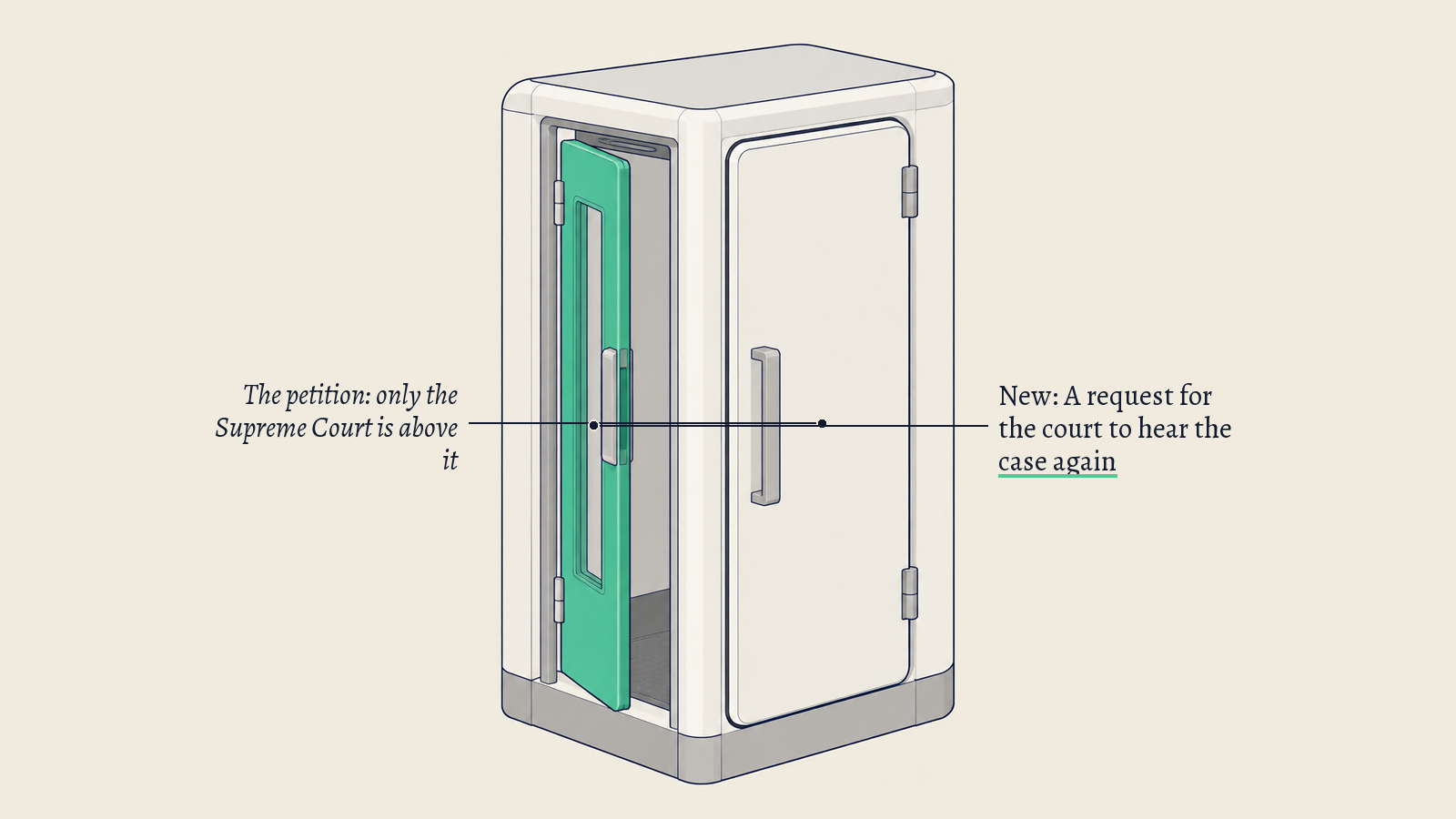
Illustration: A white two-door airlock with a shut outer door; the inner door, in green, stands slightly open, standing for the request to hear the case again.Illustration made with AI for ai notis

On 13 October Anthropic petitioned the D.C. Circuit for panel rehearing or rehearing en banc of its divided ruling of 25 September, which sided with the Department of War over its exclusion of Claude.

SOURCEUnited States Court of Appeals for the District of Columbia Circuit (filing by Anthropic's counsel) · 1 source
CHECKED14 Oct, 04:26
Laws read
Illustration: A white two-door airlock with a shut outer door; the inner door, in green, stands slightly open, standing for the request to hear the case again. Laws / 14 OCT

Anthropic asks full D.C. Circuit to rehear Pentagon supply-chain ruling

  • Anthropic filed the petition on 13 October 2026 in Nos. 26-1049 and 26-1162; its conclusion says only that the court should grant it.
  • The petition argues the majority read "otherwise manipulate" to mean "arrange, operate, or control" regardless of intent, and that the Secretary bypassed the statute's pre-designation notice and opportunity to respond.
  • The petition says the Secretary's notice of 4 March 2026 designated Anthropic under 41 U.S.C. section 4713, and a separate notice designated it under 10 U.S.C. section 3252.

Anthropic filed a petition for panel rehearing or rehearing en banc in the U.S. Court of Appeals for the D.C. Circuit on 13 October 2026, in Nos. 26-1049 (lead) and 26-1162 (consolidated), Anthropic PBC v. U.S. Department of War. The petition asks the court to rehear the case after a divided panel decided it on 25 September 2026; its conclusion says only that the court should grant the petition. In the 25 September opinion, Judge Katsas wrote for the court and Judge Henderson dissented. The opinion says the Department of War excluded Claude from its supply chain under the Federal Acquisition Supply Chain Security Act of 2018 after Anthropic refused to relax contractual prohibitions on the use of Claude for lethal autonomous warfare or domestic surveillance. The panel held that the Department had ample support for concluding that continued integration of Claude into its information systems, by the Department or its contractors, presented a statutorily covered national-security risk.

The petition argues that the majority read the statute's words "otherwise manipulate" to mean "arrange, operate, or control" regardless of subversive intent, so that the statute "turns on what Anthropic does, not why Anthropic does it." It says that reading conflicts with the Supreme Court's decision in Fischer v. United States, and that Judge Henderson's dissent read the clause as reaching intentionally subversive and deceptive acts. On process, the petition says the Secretary bypassed the statute's pre-designation notice and opportunity to respond, that the majority held the violations harmless, and that this conflicts with the Supreme Court's decision in Trump v. Cook. On due process, the petition says the D.C. Circuit's precedents require notice and an opportunity to respond before a national-security designation absent a showing of particularized need, and that the majority deferred to the Secretary's assertions of urgency. On the First Amendment, the petition says the Northern District of California found direct evidence that Anthropic's speech motivated a parallel designation, in a ruling of 27 August 2026, while the majority here discerned no evidence of retaliatory intent. The petition says fifteen amicus briefs were filed, including from trade associations, former national-security officials, 149 former judges, civil-liberties organizations and AI professionals.

According to the petition, the Secretary sent Anthropic a notice on 4 March 2026 designating it a supply-chain risk under 41 U.S.C. section 4713, and a separate notice designated it under 10 U.S.C. section 3252. It says Anthropic petitioned this court for review of the section 4713 designation on 9 March and challenged the section 3252 designation in the Northern District of California. The petition says that because this court's jurisdiction over section 4713 challenges is exclusive, the panel decision will be the last word short of Supreme Court review.

What it means for you Our view

The petition is Anthropic's account of the 25 September ruling, not the court's. The petition says the court's jurisdiction over section 4713 challenges is exclusive, so the panel decision would be the last word short of Supreme Court review. It also says the section 3252 designation is challenged separately, in the Northern District of California, so this filing does not settle both. If you supply Anthropic's models to a federal agency or a federal contractor, ask your contracts team which designation your work touches, and watch for the court's order on the petition.

TAGSAnthropicClaudeD.C. CircuitDepartment of War
Compute 14 OCT

Zuckerberg says Meta's compute risk depends on AI overall working

Cheeky PintDatacentresMetaMuse
Video thumbnail from the Cheeky Pint interview with Mark Zuckerberg, with a play badgeVideo: Cheeky Pint on YouTube

Interviewed by John on the Cheeky Pint podcast in an episode published on 12 October, Mark Zuckerberg and Alexandr Wang discussed Muse Wonder and what Meta's compute costs.

SOURCECheeky Pint (YouTube) · 4 sources
CHECKED14 Oct, 04:41
Compute watch read
Video thumbnail from the Cheeky Pint interview with Mark Zuckerberg, with a play badge Compute / 14 OCT

Zuckerberg says Meta's compute risk depends on AI overall working

  • Zuckerberg recalls telling Wang at the end of 2025 "we're going to write this check for, like, I don't know, like $100 billion, $200 billion" (53:21).
  • He says the Prometheus cluster in Ohio is scaling to "larger than a gigawatt" (49:45) and the Hyperion cluster in Louisiana to 5 gigawatts (49:53).
  • He puts operating a gigawatt for a year "on the order of $15 billion" (55:31) and the up-front capital cost at "probably, you know, $50 or $60 billion" (55:42).

Cheeky Pint published an interview with Mark Zuckerberg and Alexandr Wang on 12 October 2026, titled "Muse Wonder: Zuckerberg and Wang's $100B AI". The episode page says the two "join John for a pint to discuss the launch of Muse Wonder and the future of personal AI agents." Meta's investor relations page lists Zuckerberg as "Founder, Chairman and Chief Executive Officer", and Meta's page for Wang is titled "Alexandr Wang, Chief AI Officer".

Zuckerberg described a conversation at the end of 2025, saying "we're going to write this check for, like, I don't know, like $100 billion, $200 billion. I'm like, Alex, are you sure this is going to work?" (53:21). The episode page says the two discuss "what it really feels like to make a $100B+ CapEx commitment before knowing if the model will work."

On the compute itself, Zuckerberg said "we built this Prometheus cluster, we call it, in Ohio." and "That's scaling to larger than a gigawatt." (49:45). He said "And now we're building this Hyperion cluster in Louisiana that's going to scale to 5 gigawatts." (49:53). On cost, he said "to operate a gigawatt a year, call it on the order of $15 billion." (55:31) and "If you're talking about building the CapEx, it's probably closer to, you know, I mean, you pay for it upfront, so it's probably, you know, $50 or $60 billion." (55:42).

On the risk, Zuckerberg said "if AI works overall, plenty of other people want all our compute." (58:05) and "in order for it not to work out, it's not just that we have to fail, AI overall has to fail." (58:17).

On Muse Wonder in the Muse app, Zuckerberg said "because it's a lot bigger and it's more expensive to serve, we're going to start off primarily in paid subscriptions." (22:33). Wang said "as Mark mentioned, it is a much larger model. And so we're working through how to serve that most effectively to as many people as possible." (23:53).

What it means for you Our view

These are Zuckerberg's own loose figures in an interview, not a budget Meta has published, and he gives the first of them as "like, I don't know". His view of the risk is that the compute only goes unused if AI overall fails, because he expects others to want it. He also says Muse Wonder is bigger and more expensive to serve, so it will start primarily in paid subscriptions. If you plan around Meta's models, treat the amounts as his estimates and look for firm figures in Meta's own financial reporting, and ask what a paid-first start means for access to Muse Wonder on your plan.

TAGSCheeky PintDatacentresMetaMuse
NOTHING IN THIS FILTER No story today matches. open the archive →
That's today's news: three stories. ExplainedWhat open weights leave out that open source AI requires Voice of the weekDario Amodei wants outside testers inside frontier AI companies

The morning email

On the mornings we publish: the three top stories and up to four short ones. Free.

We email you a link to confirm. An issue may include one sponsor, always labelled Sponsored · Advertisement. Our emails count opens and clicks, not who made them. Unsubscribe in one click. What we keep

1 of 3
Gemini 4 Argon launch artwork: the model's name beside a large soft white numeral 4 on a blue gradient Image: Google

Models · 14 OCT

Google opens Gemini 4 Argon to paid API and Ultra users

On 13 October Google said paid Gemini API users and Google AI Ultra subscribers can use Gemini 4 Argon, which Google began rolling out to trusted cyber defenders on 30 September.

  • Google says paid-tier Gemini API developers and Google AI Ultra subscribers can use the model. The pricing page says it is not on the Free tier or Google AI Pro.
  • On the Standard tier, the pricing page lists input at $2.00 and output at $10.00 per million tokens to 30 November 2026, then $4.00 and $20.00 from 1 December.
  • The page also lists a Batch tier at $1.00 input and $5.00 output per million tokens through 30 November 2026, and context caching at $0.10, with implicit caching only.
Checked 14 Oct, 04:25 · Google · 3 sources
Illustration: A white two-door airlock with a shut outer door; the inner door, in green, stands slightly open, standing for the request to hear the case again. Illustration made with AI for ai notis

Laws · 14 OCTnarrowed

Anthropic asks full D.C. Circuit to rehear Pentagon supply-chain ruling

On 13 October Anthropic petitioned the D.C. Circuit for panel rehearing or rehearing en banc of its divided ruling of 25 September, which sided with the Department of War over its exclusion of Claude.

  • Anthropic filed the petition on 13 October 2026 in Nos. 26-1049 and 26-1162; its conclusion says only that the court should grant it.
  • The petition argues the majority read "otherwise manipulate" to mean "arrange, operate, or control" regardless of intent, and that the Secretary bypassed the statute's pre-designation notice and opportunity to respond.
  • The petition says the Secretary's notice of 4 March 2026 designated Anthropic under 41 U.S.C. section 4713, and a separate notice designated it under 10 U.S.C. section 3252.
Checked 14 Oct, 04:26 · United States Court of Appeals for the District of Columbia Circuit (filing by Anthropic's counsel) · 1 source
Video thumbnail from the Cheeky Pint interview with Mark Zuckerberg, with a play badge Watch on YouTubeVideo: Cheeky Pint on YouTube

Compute · 14 OCT

Zuckerberg says Meta's compute risk depends on AI overall working

Interviewed by John on the Cheeky Pint podcast in an episode published on 12 October, Mark Zuckerberg and Alexandr Wang discussed Muse Wonder and what Meta's compute costs.

  • Zuckerberg recalls telling Wang at the end of 2025 "we're going to write this check for, like, I don't know, like $100 billion, $200 billion" (53:21).
  • He says the Prometheus cluster in Ohio is scaling to "larger than a gigawatt" (49:45) and the Hyperion cluster in Louisiana to 5 gigawatts (49:53).
  • He puts operating a gigawatt for a year "on the order of $15 billion" (55:31) and the up-front capital cost at "probably, you know, $50 or $60 billion" (55:42).
Checked 14 Oct, 04:41 · Cheeky Pint (YouTube) · 4 sources

You're all caught up

That's today's news: three stories.

ExplainedWhat open weights leave out that open source AI requires Voice of the weekDario Amodei wants outside testers inside frontier AI companies

You can join ai notis soon, to follow cases and keep stories on every device.

Follow us on Instagram and Threads

The morning email

On the mornings we publish: the three top stories and up to four short ones. Free.

We email you a link to confirm. An issue may include one sponsor, always labelled Sponsored · Advertisement. Our emails count opens and clicks, not who made them. Unsubscribe in one click. What we keep

No story today matches. Open the archive
Today's stories 3 STORIES

Today's stories

Wed 14 Oct · 3 STORIES
  1. Models · 14 OCT

    Google opens Gemini 4 Argon to paid API and Ultra users

    Gemini 4 Argon launch artwork: the model's name beside a large soft white numeral 4 on a blue gradientImage: Google

    On 13 October Google said paid Gemini API users and Google AI Ultra subscribers can use Gemini 4 Argon, which Google began rolling out to trusted cyber defenders on 30 September.

    Checked 14 Oct, 04:25 · Google · 3 sourcesRead

  2. Laws · 14 OCT · narrowed

    Anthropic asks full D.C. Circuit to rehear Pentagon supply-chain ruling

    Illustration: A white two-door airlock with a shut outer door; the inner door, in green, stands slightly open, standing for the request to hear the case again.Illustration made with AI for ai notis

    On 13 October Anthropic petitioned the D.C. Circuit for panel rehearing or rehearing en banc of its divided ruling of 25 September, which sided with the Department of War over its exclusion of Claude.

    Checked 14 Oct, 04:26 · United States Court of Appeals for the District of Columbia Circuit (filing by Anthropic's counsel) · 1 sourceRead

  3. Compute · 14 OCT

    Zuckerberg says Meta's compute risk depends on AI overall working

    Video thumbnail from the Cheeky Pint interview with Mark Zuckerberg, with a play badgeVideo: Cheeky Pint on YouTube

    Interviewed by John on the Cheeky Pint podcast in an episode published on 12 October, Mark Zuckerberg and Alexandr Wang discussed Muse Wonder and what Meta's compute costs.

    Checked 14 Oct, 04:41 · Cheeky Pint (YouTube) · 4 sourcesRead

Models 14 OCT

Google opens Gemini 4 Argon to paid API and Ultra users

On 13 October Google said paid Gemini API users and Google AI Ultra subscribers can use Gemini 4 Argon, which Google began rolling out to trusted cyber defenders on 30 September.

Google · 3 sources·checked 14 Oct, 04:25
GeminiGemini APIGooglegemini-4-argon
Gemini 4 Argon launch artwork: the model's name beside a large soft white numeral 4 on a blue gradientImage: Google
toned down Laws

Anthropic asks full D.C. Circuit to rehear Pentagon supply-chain ruling

On 13 October Anthropic petitioned the D.C. Circuit for panel rehearing or rehearing en banc of its divided ruling of 25 September, which sided with the Department of War over its exclusion of Claude.

14 OCT · United States Court of Appeals for the District of Columbia Circuit (filing by Anthropic's counsel) · 1 source
Compute

Zuckerberg says Meta's compute risk depends on AI overall working

Interviewed by John on the Cheeky Pint podcast in an episode published on 12 October, Mark Zuckerberg and Alexandr Wang discussed Muse Wonder and what Meta's compute costs.

14 OCT · Cheeky Pint (YouTube) · 4 sources

Explained

One idea behind the news
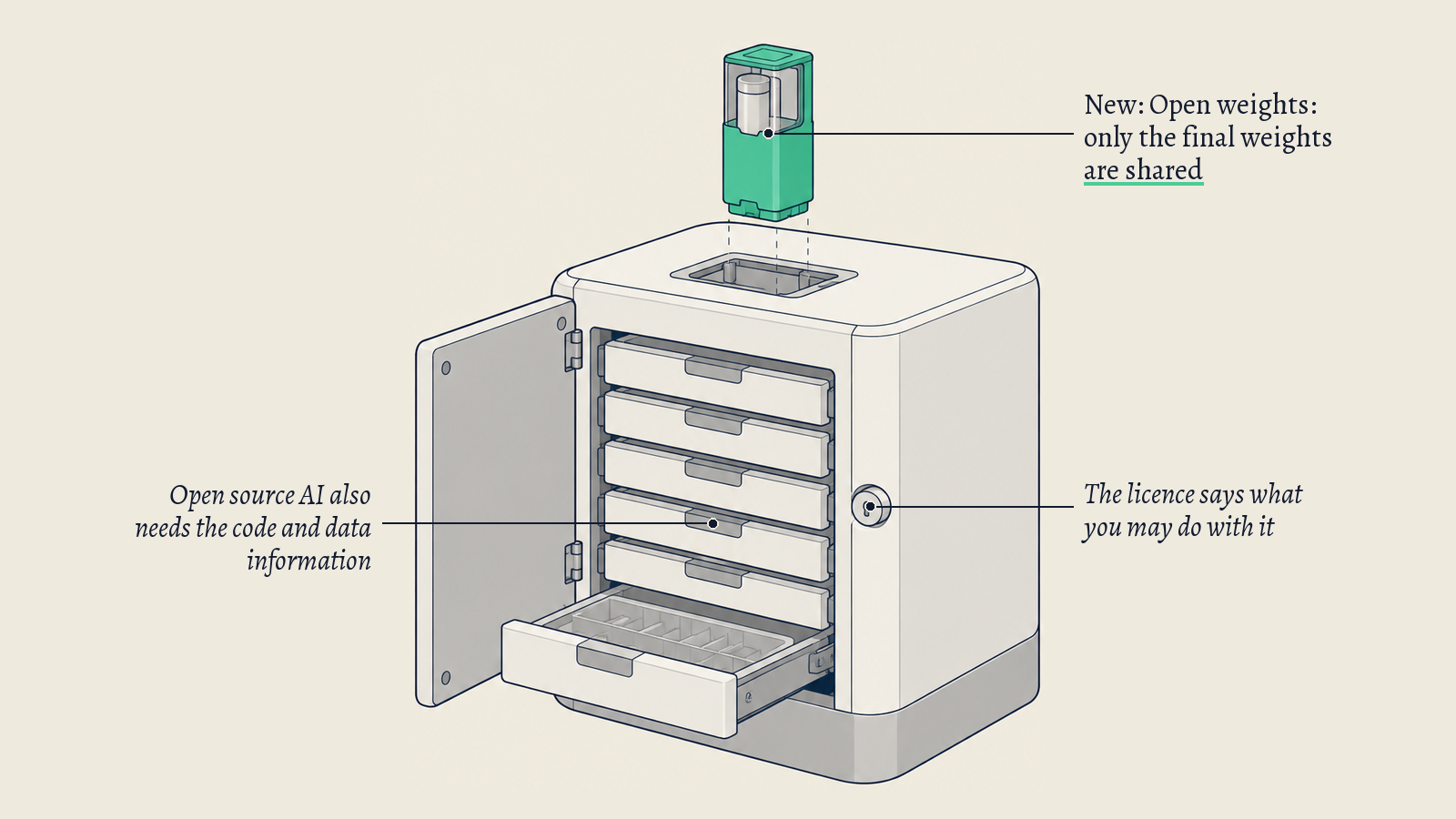
Models What open weights leave out that open source AI requires The Open Source Initiative says open weights are only final parameters, while its Open Source AI definition also requires code and data information; licences on downloadable models differ.

Voice of the week

A long read
Dario Amodei Dario Amodei wants outside testers inside frontier AI companies Who he is, what he has done and said, and what his views mean for a business that buys AI.
In brief 3 more today
0 of 3 read
Drag a card to start Drag left or right · tap to read more Hover to lift a card · tap to bring it forward Tap again to put it back Tap a card to open it Tap again to close it Tap a headline to read it as a card