2026-10-20 notis CATEGORY Join
Show Read as Find Sections Models and releasesAgents and appsResearchMoney and computeLaws and rulingsSafety and securityAI at work More ArchiveModelsAboutCorrectionsThe numbersRSS
My notis
TODAY'S NEWS
October 2026 3 STORIES
MTWTFSS
1 2 3 4 5 6 7 8 9 10 11 12 13 14 15 16 17 18 19 20 21 22 23 24 25 26 27 28 29 30 31

Days with a dot have news. See the archive.

The whole week ›
21:02
0/3
WEATHER THEME CARD SPACING

Today's news

today

My page

Kept in this browser only.

SAVED FOLLOWING COLLECTIONS READING SINCE
Nothing saved yet. Tap the bookmark on a card to keep it here. read today
all cases

No case followed yet.

Price changes Stories where a published price went up or down.
Models being retired Models being withdrawn, and gaps before a replacement is ready.
The day's top stories. Sign up
Laws 20 OCT

DHS orders DeepSeek products removed from civilian federal IT systems

DHSDeepSeekFederal procurementUS
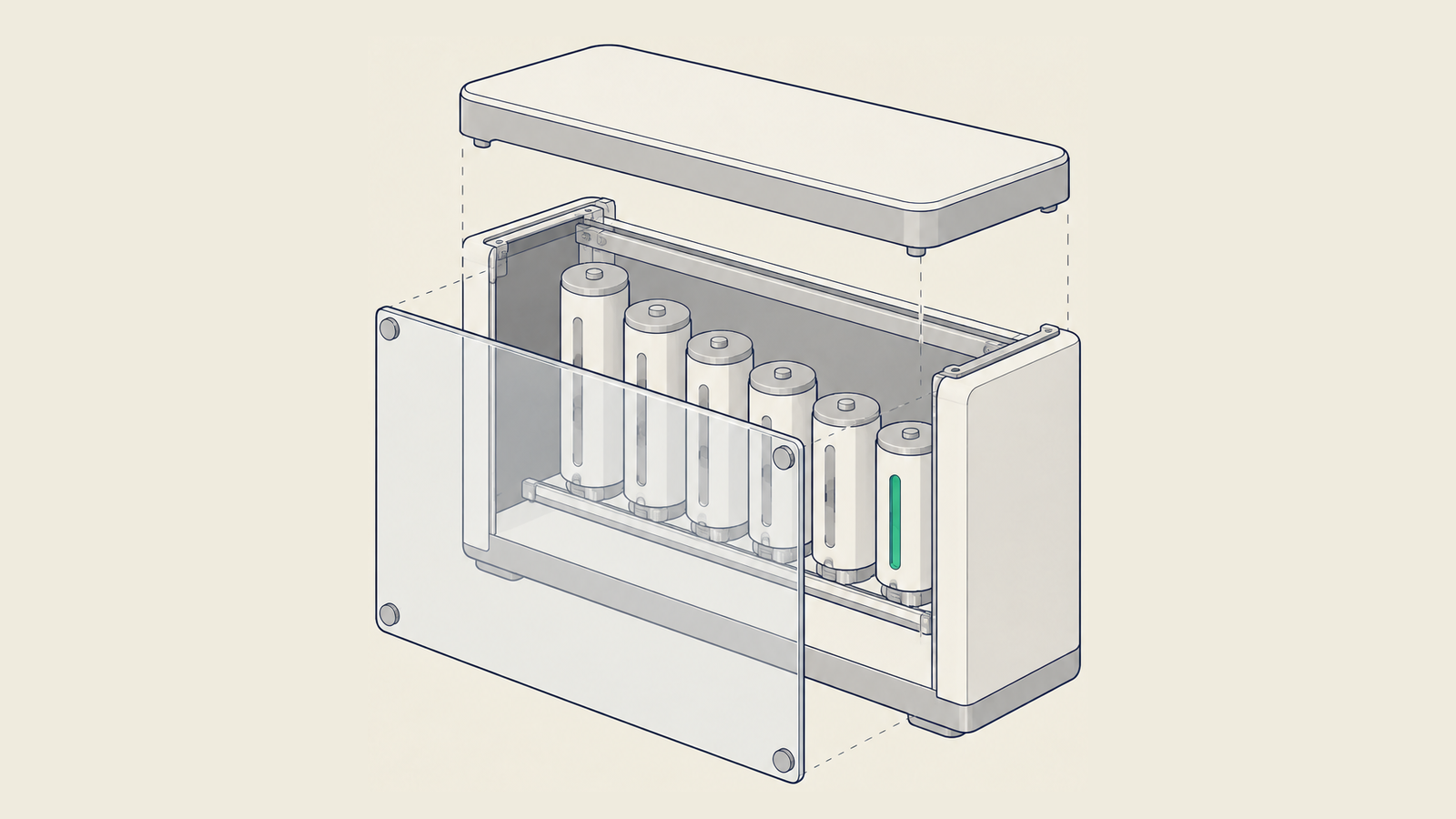
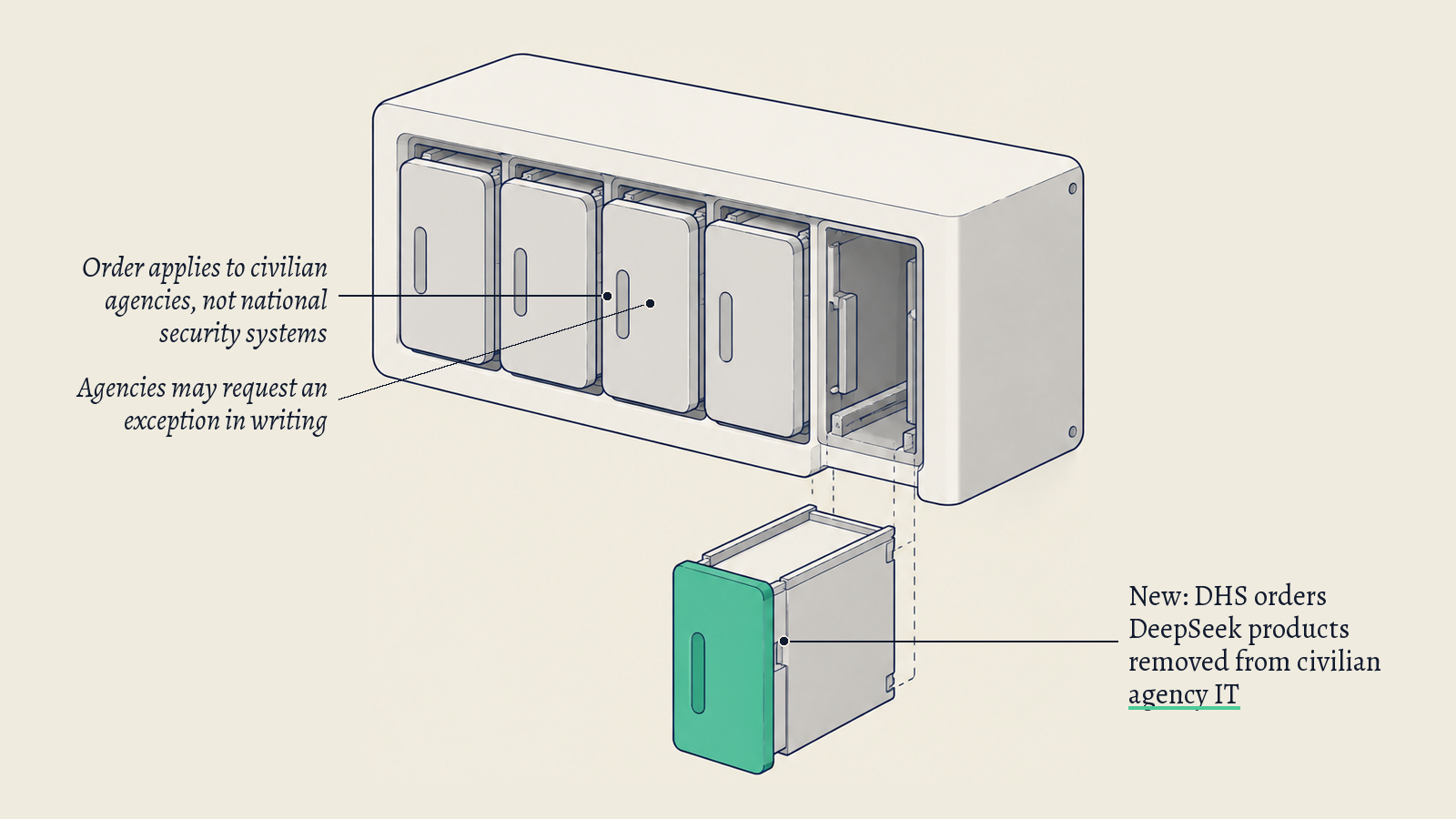
Illustration: A wall-mounted cabinet of sealed bays holding small modules; one green drawer is pulled out with its module being removed, standing for products removed from agency systems.Illustration made with AI for ai notis

A DHS order, with notice due in the Federal Register on 20 October, excludes DeepSeek from civilian federal procurement and removes it, and products built on it, from agency IT.

SOURCE1 source
CHECKED20 Oct, 04:21
Laws read
Illustration: A wall-mounted cabinet of sealed bays holding small modules; one green drawer is pulled out with its module being removed, standing for products removed from agency systems. Laws / 20 OCT

DHS orders DeepSeek products removed from civilian federal IT systems

  • DHS published a notice of an order that excludes DeepSeek, affiliated entities included, from federal civilian agency procurements and requires removal of its products from agency IT.
  • The removal also covers third-party products and services developed using DeepSeek implementations. The order applies to civilian agencies except national security systems and secure compartmented information systems.
  • Agencies must request exceptions in writing within 60 days of issuance, and the Secretary of Homeland Security will review the order within one year and annually after that.

The Department of Homeland Security published a notice in docket DHS-2026-0628 about an order from the Secretary of Homeland Security, Exclusion and Removal Order #2026-01. The notice is scheduled for the Federal Register of 20 October 2026. The order excludes products and services developed by Hangzhou DeepSeek Artificial Intelligence Co., Ltd, including affiliated entities, from federal civilian agency procurements. It also requires removal of DeepSeek and DeepSeek-affiliate products, and of third-party products and services developed using DeepSeek implementations, from civilian agency information technology. The order gives July 24, 2026 as its original release date. It applies to federal civilian executive branch agencies except for their national security systems and secure compartmented information systems. Agencies may request an exception in writing within 60 days of the order's issuance. The Secretary of Homeland Security will review the order within one year and annually after that. In its summary of risks, the order says DeepSeek's most widely used applications require presenting information to the model, which may result in the transfer of sensitive data to the PRC if used by U.S. government employees or vendors.

What it means for you Our view

This is a US federal civilian rule, so it binds agencies first, and its reach to third-party products developed using DeepSeek implementations may extend it to vendors who sell to them. DHS gives its reason: it says DeepSeek's most widely used applications require presenting information to the model, which may transfer sensitive data to the PRC if government employees or vendors use them. How far the phrase about third-party products reaches is for the order's text to settle. If you sell AI products to US federal civilian agencies, or build on DeepSeek models, ask your engineering team now whether any component uses DeepSeek, and read the order itself before an agency asks you.

TAGSDHSDeepSeekFederal procurementUS
1 source tap to close
Work 20 OCT

Cloudflare says its AI code reviews now cost 68% less

ClaudeCloudflareCode reviewOpenCodePrompt caching
Cloudflare blog artwork: a large stopwatch with a gavel, books and paper scrolls beside the title about cutting the inference bill by 68%.Image: Cloudflare

Cloudflare's engineering blog says its in-house code reviewer now costs $0.77 per review, after the team fixed prompt caching and tested models and effort settings.

SOURCECloudflare Blog · 1 source
CHECKED20 Oct, 04:21
Work read
Cloudflare blog artwork: a large stopwatch with a gavel, books and paper scrolls beside the title about cutting the inference bill by 68%. Work / 20 OCT

Cloudflare says its AI code reviews now cost 68% less

  • Cloudflare says the average review now costs $0.77, down 68% from $2.43 in its two most expensive weeks, and median review time fell from 4m 09s to 1m 32s.
  • A session's first request found a cached prefix only 14% to 26% of the time; a prompt split on 16 September gave the shared part its own cache breakpoint.
  • About 40% of the savings came from the reviewer's code and the rest from models and effort; Sonnet 5.5 was 62% cheaper than Sonnet 5 for code quality.

Cloudflare published an account of the cost of its own AI code reviewer on 19 October 2026. It says that with code quality at high effort the average review now costs $0.77, down 68% from the $2.43 it averaged over its two most expensive weeks. The median review time fell from 4m 09s to 1m 32s. About 40% of the savings came from changes to the reviewer's code and the rest from experiments with models and effort. Cloudflare found that the first request of a session found a cached prefix only 14% to 26% of the time, although every session starts with the same 11k to 21k tokens. The cause was how OpenCode v1 built its system prompt, with the only cache breakpoint placed after a block that included repository-specific details. On 16 September it split the prompt in two at a marker so the shared part got its own breakpoint. On 3 October it split its Sonnet reviewers 50/50 between Sonnet 5 and Sonnet 5.5, and Cloudflare says Sonnet 5.5 was 62% cheaper per run for code quality. Cloudflare also reports that the code quality reviewer at high effort posts 40% fewer critical and warning findings than in late August.

What it means for you Our view

The figures are Cloudflare's, measured on its own workload. The sharpest finding is about caching: the start every session shares was rarely found in the cache, because of where the only cache breakpoint sat. Cloudflare also reports 40% fewer critical and warning findings from its code quality reviewer; fewer severe findings alone does not show whether real problems are missed or noise is cut, so we do not read it as a quality gain. If you pay for AI code review, check how often the first request of a session hits your cache, and track missed defects alongside cost.

TAGSClaudeCloudflareCode reviewOpenCodePrompt caching
toned down Tooling 20 OCT

Claude Code 2.1.304 adds Quick, Standard and Deep review levels

AnthropicClaude CodeCode review
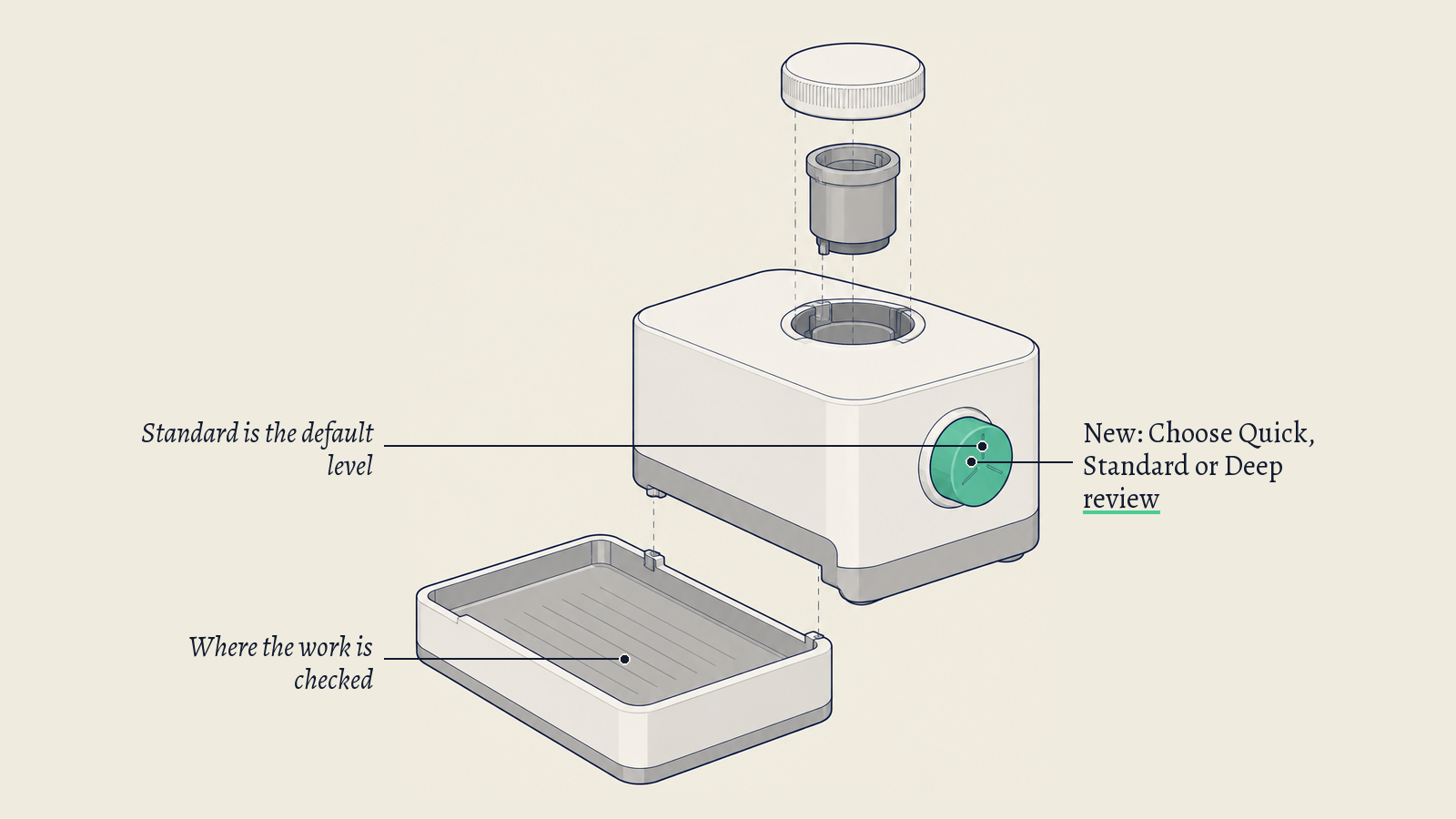
Illustration: A bench instrument with a flat tray and a green three-position rotary selector, standing for the choice of review level.Illustration made with AI for ai notis

The Claude Code changelog for 2.1.304, dated 19 October 2026, adds Code Review levels per organisation and repository, plus a warning before resuming an inactive conversation.

SOURCEAnthropic · 1 source
CHECKED20 Oct, 04:21
Tooling read
Illustration: A bench instrument with a flat tray and a green three-position rotary selector, standing for the choice of review level. Tooling / 20 OCT

Claude Code 2.1.304 adds Quick, Standard and Deep review levels

  • Owners choose Quick, Standard (the default) or Deep review for the organisation and can give individual repositories their own level.
  • A new admin option reviews every repository in a GitHub organisation, including ones added later, without selecting them one by one.
  • On Pro and Max plans, Claude Code warns when resuming an inactive conversation would use a noticeable share of the 5-hour usage limit.

Anthropic's Claude Code changelog lists version 2.1.304 on October 19, 2026. For Code Review, owners can choose a Quick, Standard or Deep review level for the organization, with Standard as the default, and can give individual repositories their own level. There is also a new admin setting to review every repository in a GitHub organization, including ones added later. On Pro and Max plans, Claude Code now warns when resuming an inactive conversation would use a noticeable share of the 5-hour usage limit. The changelog entry for this release also lists /auto-mode-setup, a guided setup that reads a project and recent sessions to teach auto mode about the environment, as now also available on Bedrock, Vertex, Foundry, Claude apps gateway and telemetry-disabled sessions.

What it means for you Our view

The changelog names the three levels and the default but, in this entry, does not say how they differ in depth or cost, so treat the levels as something to test. If you own a Code Review setup, try Deep on one repository, compare it with Standard, and think before switching on the option that covers every repository in a GitHub organisation, since it also enrols ones added later. On Pro and Max plans, read the new warning before resuming a long-idle conversation, because it appears when resuming would use a noticeable share of the 5-hour limit.

TAGSAnthropicClaude CodeCode review
Anthropic · 1 source tap to close
NOTHING IN THIS FILTER No story today matches. open the archive →
That's today's news: three stories.

The morning email

On the mornings we publish: the three top stories and up to four short ones. Free.

We email you a link to confirm. An issue may include one sponsor, always labelled Sponsored · Advertisement. Our emails count opens and clicks, not who made them. Unsubscribe in one click. What we keep

1 of 3
Illustration: A wall-mounted cabinet of sealed bays holding small modules; one green drawer is pulled out with its module being removed, standing for products removed from agency systems. Illustration made with AI for ai notis

Laws · 20 OCT

DHS orders DeepSeek products removed from civilian federal IT systems

A DHS order, with notice due in the Federal Register on 20 October, excludes DeepSeek from civilian federal procurement and removes it, and products built on it, from agency IT.

  • DHS published a notice of an order that excludes DeepSeek, affiliated entities included, from federal civilian agency procurements and requires removal of its products from agency IT.
  • The removal also covers third-party products and services developed using DeepSeek implementations. The order applies to civilian agencies except national security systems and secure compartmented information systems.
  • Agencies must request exceptions in writing within 60 days of issuance, and the Secretary of Homeland Security will review the order within one year and annually after that.
Checked 20 Oct, 04:21 · 1 source
Cloudflare blog artwork: a large stopwatch with a gavel, books and paper scrolls beside the title about cutting the inference bill by 68%. Image: Cloudflare

Work · 20 OCT

Cloudflare says its AI code reviews now cost 68% less

Cloudflare's engineering blog says its in-house code reviewer now costs $0.77 per review, after the team fixed prompt caching and tested models and effort settings.

  • Cloudflare says the average review now costs $0.77, down 68% from $2.43 in its two most expensive weeks, and median review time fell from 4m 09s to 1m 32s.
  • A session's first request found a cached prefix only 14% to 26% of the time; a prompt split on 16 September gave the shared part its own cache breakpoint.
  • About 40% of the savings came from the reviewer's code and the rest from models and effort; Sonnet 5.5 was 62% cheaper than Sonnet 5 for code quality.
Checked 20 Oct, 04:21 · Cloudflare Blog · 1 source
Illustration: A bench instrument with a flat tray and a green three-position rotary selector, standing for the choice of review level. Illustration made with AI for ai notis

Tooling · 20 OCTnarrowed

Claude Code 2.1.304 adds Quick, Standard and Deep review levels

The Claude Code changelog for 2.1.304, dated 19 October 2026, adds Code Review levels per organisation and repository, plus a warning before resuming an inactive conversation.

  • Owners choose Quick, Standard (the default) or Deep review for the organisation and can give individual repositories their own level.
  • A new admin option reviews every repository in a GitHub organisation, including ones added later, without selecting them one by one.
  • On Pro and Max plans, Claude Code warns when resuming an inactive conversation would use a noticeable share of the 5-hour usage limit.
Checked 20 Oct, 04:21 · Anthropic · 1 source

You're all caught up

That's today's news: three stories.

You can join ai notis soon, to follow cases and keep stories on every device.

Follow us on Instagram and Threads

The morning email

On the mornings we publish: the three top stories and up to four short ones. Free.

We email you a link to confirm. An issue may include one sponsor, always labelled Sponsored · Advertisement. Our emails count opens and clicks, not who made them. Unsubscribe in one click. What we keep

No story today matches. Open the archive
Today's stories 3 STORIES

Today's stories

Tue 20 Oct · 3 STORIES
  1. Laws · 20 OCT

    DHS orders DeepSeek products removed from civilian federal IT systems

    Illustration: A wall-mounted cabinet of sealed bays holding small modules; one green drawer is pulled out with its module being removed, standing for products removed from agency systems.Illustration made with AI for ai notis

    A DHS order, with notice due in the Federal Register on 20 October, excludes DeepSeek from civilian federal procurement and removes it, and products built on it, from agency IT.

    Checked 20 Oct, 04:21 · 1 sourceRead

  2. Work · 20 OCT

    Cloudflare says its AI code reviews now cost 68% less

    Cloudflare blog artwork: a large stopwatch with a gavel, books and paper scrolls beside the title about cutting the inference bill by 68%.Image: Cloudflare

    Cloudflare's engineering blog says its in-house code reviewer now costs $0.77 per review, after the team fixed prompt caching and tested models and effort settings.

    Checked 20 Oct, 04:21 · Cloudflare Blog · 1 sourceRead

  3. Tooling · 20 OCT · narrowed

    Claude Code 2.1.304 adds Quick, Standard and Deep review levels

    Illustration: A bench instrument with a flat tray and a green three-position rotary selector, standing for the choice of review level.Illustration made with AI for ai notis

    The Claude Code changelog for 2.1.304, dated 19 October 2026, adds Code Review levels per organisation and repository, plus a warning before resuming an inactive conversation.

    Checked 20 Oct, 04:21 · Anthropic · 1 sourceRead

Laws 20 OCT

DHS orders DeepSeek products removed from civilian federal IT systems

A DHS order, with notice due in the Federal Register on 20 October, excludes DeepSeek from civilian federal procurement and removes it, and products built on it, from agency IT.

1 source·checked 20 Oct, 04:21
DHSDeepSeekFederal procurementUS
Illustration: A wall-mounted cabinet of sealed bays holding small modules; one green drawer is pulled out with its module being removed, standing for products removed from agency systems.Illustration made with AI for ai notis
Work

Cloudflare says its AI code reviews now cost 68% less

Cloudflare's engineering blog says its in-house code reviewer now costs $0.77 per review, after the team fixed prompt caching and tested models and effort settings.

20 OCT · Cloudflare Blog · 1 source
toned down Tooling

Claude Code 2.1.304 adds Quick, Standard and Deep review levels

The Claude Code changelog for 2.1.304, dated 19 October 2026, adds Code Review levels per organisation and repository, plus a warning before resuming an inactive conversation.

20 OCT · Anthropic · 1 source
In brief 3 more today
0 of 3 read
Drag a card to start Drag left or right · tap to read more Hover to lift a card · tap to bring it forward Tap again to put it back Tap a card to open it Tap again to close it Tap a headline to read it as a card