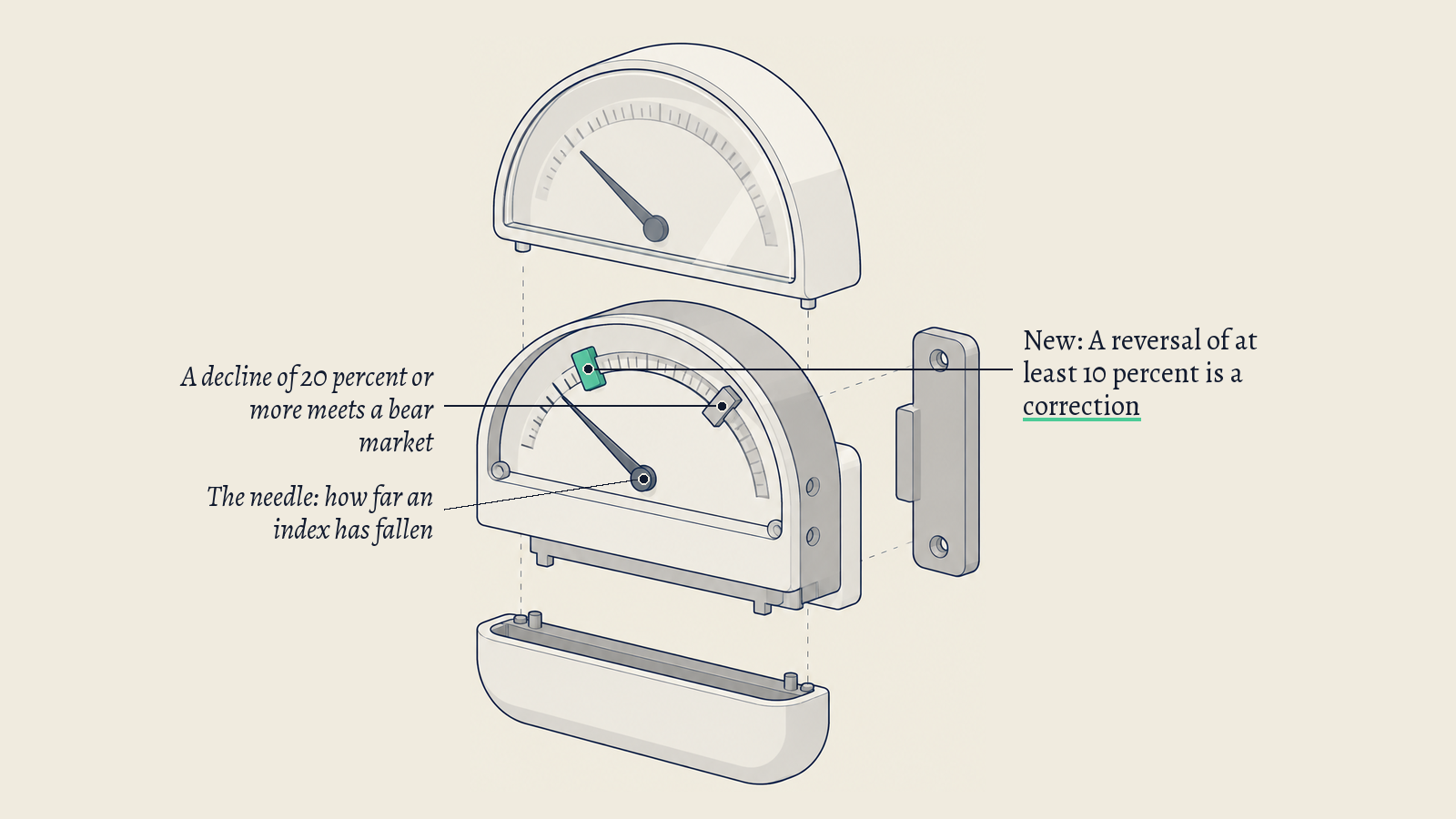
- FINRA says a correction is a reversal of at least 10 percent; a decline of 20 percent or more in a broad index generally meets a bear market's threshold.
- The Nasdaq Composite closed at 24,315.00 on 5 November, against 25,736.51 the day before, and at 24,579.42 the next day.
- The BBC's Michelle Fleury links the selling to election uncertainty over US data centres and to investors' cost questions; none of the sources opened shows which reason is right.
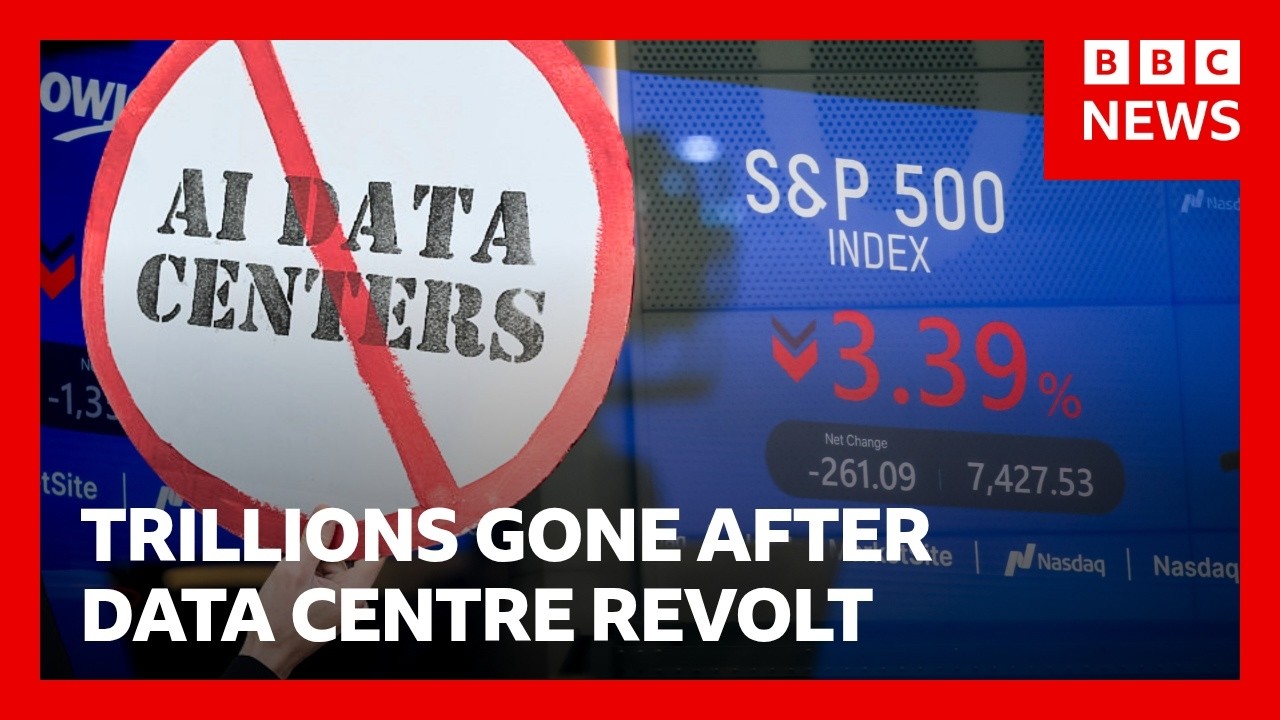
The Nasdaq Composite closed at 24,315.00 on 5 November, against 25,736.51 the day before. On 6 November it closed at 24,579.42. This page explains what a market correction is, what the numbers say, and who offers which reason.
FINRA defines a correction as a reversal of at least 10 percent in an asset or index before the earlier trend resumes. It describes a bear market as a decline of 20 percent or more in a broad market index. A CBS News anchor said on 5 November that the Nasdaq had dropped more than 5%, or more than 1,400 points, and entered correction territory.
The other indexes fell too. The Dow Jones Industrial Average closed at 51,523.06 on 5 November, against 53,356.12. The S&P 500 closed at 7,353.73, against 7,688.62. FINRA says a 7 percent fall in the S&P 500 from the previous day's close before 3:25 p.m. is a Level 1 halt that shuts trading across all stock and futures exchanges for 15 minutes.
Seoul was different. The BBC's correspondent there said a circuit breaker was triggered on the Korean market on 6 November after it fell by more than eight points. He said the chip makers Samsung Electronics and SK Hynix lost about 10% when trading opened, and that both supply the memory chips that go into AI data centres.
The first explanation is politics. BBC New York business correspondent Michelle Fleury says there was uncertainty after the US midterm elections about what the result could mean for the AI industry's ability to build data centres. The BBC's Seoul correspondent says investors there were wondering whether a Democratic majority would bring harsher rules that stop the US buildout. BBC Verify's Ben Chu says polling shows around half of US voters called data centres a crucial or major issue in the midterms. These are reporters describing investors' worries. None of them shows that the worry caused the sell-off.
The second is the cost and returns of the buildout. Fleury said that President Trump's statement of support for AI does not necessarily answer questions investors are asking about the cost and the challenges of building the infrastructure. That is her reading of what investors ask.
Two market commentators gave views on what the fall is. Jessica Inskip of stockbrokers.com says a new type of uncertainty came into the market, and that she does not expect an AI bubble burst. Bob Parker of the International Capital Market Association says it looks like a correction, not the start of a major downtrend. These are opinions about what the fall is, not proof of why it happened.
One company event fell in the same days. Qualcomm reported on 4 November that fourth-quarter revenue was $10,322 million, against $11,270 million a year earlier, and guided to $10.4 billion to $11.2 billion for the next quarter. We have no primary that shows how much of the sector's fall, if any, that explains.
What it means for you: Zoe Kleinman, the BBC's technology and AI editor, says the AI tools in use today would keep working, and that fewer data centres would slow how fast the technology improves. She says the newer, smaller rivals of the big AI firms might be hit hardest. In the sources we opened, nothing says that vendors' prices or contracts have changed.
What it means for you Our view
In the sources opened, nothing shows that AI vendors' prices or contracts have changed. Zoe Kleinman, the BBC's technology and AI editor, says the AI tools in use today would keep working, and that fewer data centres would slow how fast the technology improves, with newer, smaller rivals of the big firms possibly hit hardest. That is her view, not a finding. If your work depends on a smaller AI supplier, note its contract renewal date and check whether it has said anything about its capacity.
TAGSAI bubbleDatacentresFINRANasdaq