2026-11-03 notis CATEGORY Join
Show Read as Find Sections Models and releasesAgents and appsResearchMoney and computeLaws and rulingsSafety and securityAI at work More ArchiveModelsAboutCorrectionsThe numbersRSS
My notis
TODAY'S NEWS
November 2026 3 STORIES
MTWTFSS
1 2 3 4 5 6 7 8 9 10 11 12 13 14 15 16 17 18 19 20 21 22 23 24 25 26 27 28 29 30

Days with a dot have news. See the archive.

The whole week ›
17:30
0/3
WEATHER THEME CARD SPACING

Today's news

today

My page

Kept in this browser only.

SAVED FOLLOWING COLLECTIONS READING SINCE
Nothing saved yet. Tap the bookmark on a card to keep it here. read today
all cases

No case followed yet.

Price changes Stories where a published price went up or down.
Models being retired Models being withdrawn, and gaps before a replacement is ready.
The day's top stories. Sign up
Compute 3 NOV

Anthropic's amended S-1 reports a $567 million operating loss, blaming short-term compute

AnthropicClaudeIPOS-1compute commitments
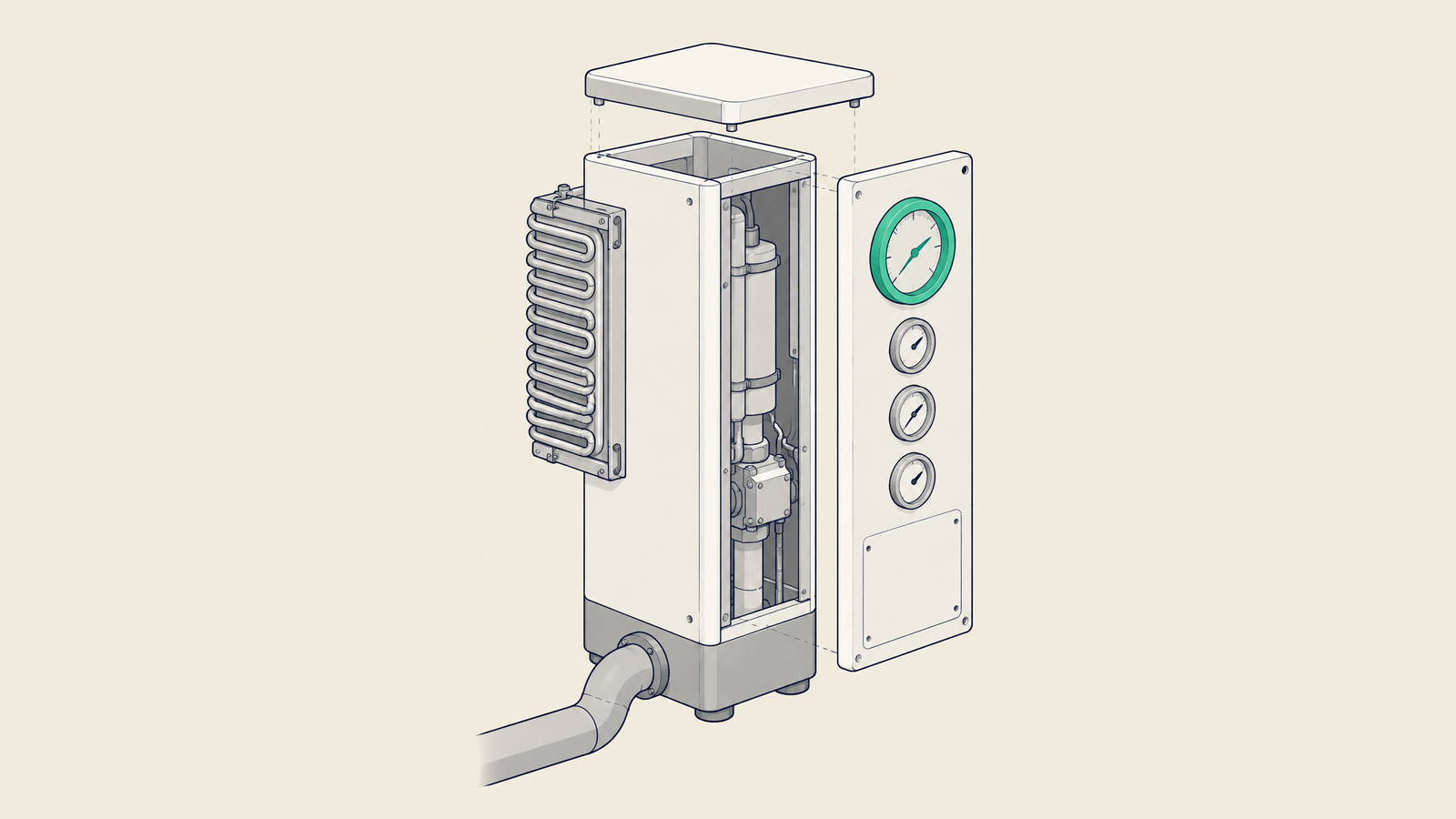
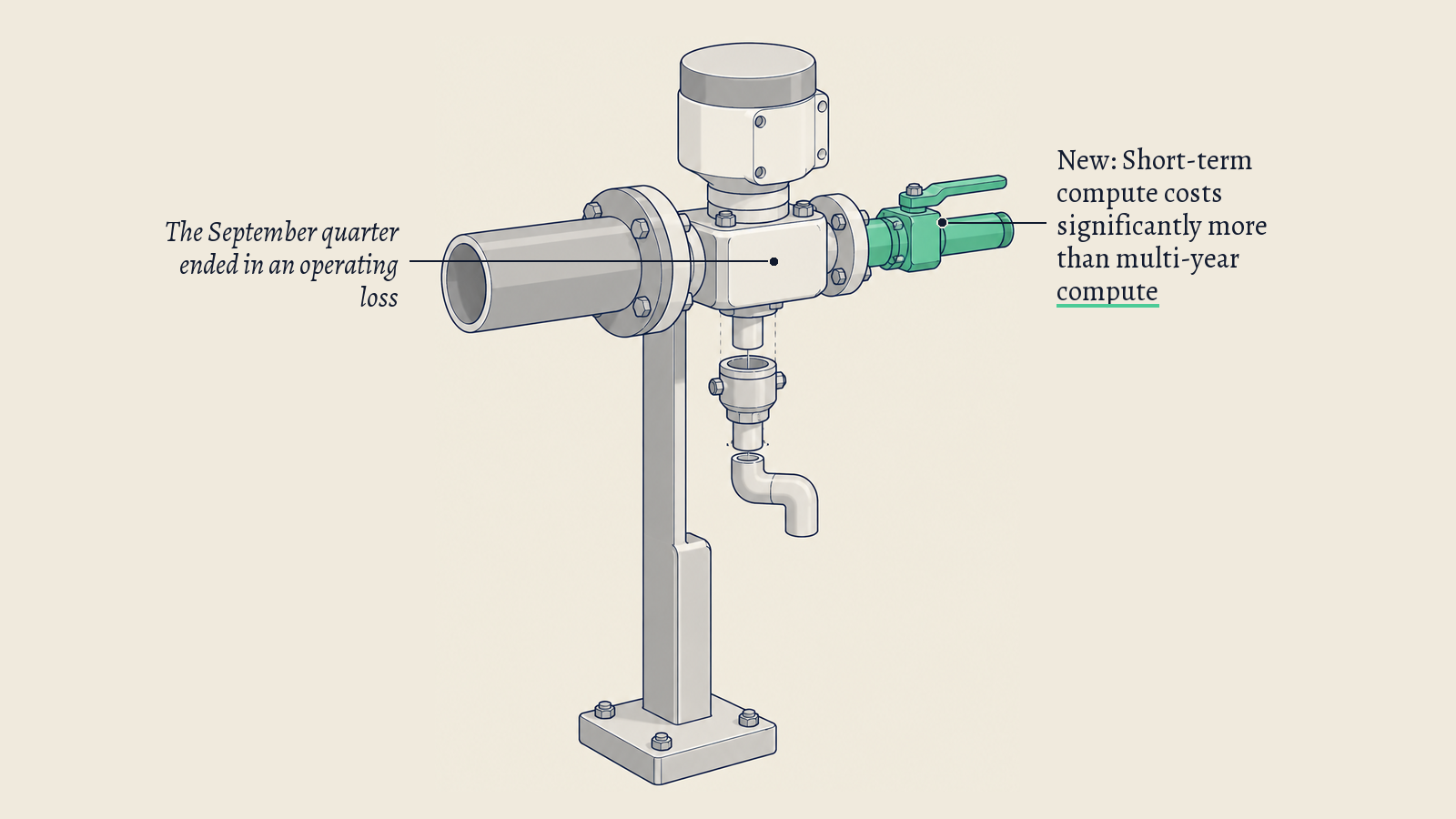
Illustration: A flow-metering station with a main supply pipe and a narrow side line; the green side line and valve stand for compute bought on short-term commitments.Illustration made with AI for ai notis

Revenue was $16,956 million against $11,555 million a quarter earlier, more than 46% higher; the filing also says over 90% of September code contributions were written by Claude.

SOURCEU.S. SEC / Anthropic, PBC · 1 source
CHECKED3 Nov, 05:26
Compute read
Illustration: A flow-metering station with a main supply pipe and a narrow side line; the green side line and valve stand for compute bought on short-term commitments. Compute / 3 NOV

Anthropic's amended S-1 reports a $567 million operating loss, blaming short-term compute

  • Anthropic's operating loss was $567 million in the September quarter, against operating income of $974 million in the June quarter.
  • The filing attributes the loss primarily to $5.0 billion of compute under short-term commitments, which costs significantly more than multi-year compute, and $2.0 billion of non-cash donation matching charges.
  • Aggregate committed spend is about $895.4 billion, substantially all for compute and infrastructure, with about $69.8 billion due in the 12 months after 30 September 2026.

Anthropic's revenue for the three months to 30 September 2026 was $16,956 million, more than 46% above the $11,555 million of the quarter before; the quarter before that had grown by more than 140%, from $4,731 million.

The figures come from Amendment No. 1 to the Form S-1 that Anthropic, PBC filed with the SEC on 2 November 2026 (registration no. 333-299633), which reports the three and nine months to 30 September 2026.

The filing says price reductions introduced with new model versions, and contractual discounts, took about $600 million off revenue between the June and September quarters. It puts the same effect at about $70 million between the September and December 2025 quarters.

Anthropic recorded an operating loss of $567 million for the September quarter, against operating income of $974 million for the June quarter. It attributes this mainly to $5.0 billion of compute bought under short-term commitments, which it says costs significantly more than comparable multi-year compute, and $2.0 billion of non-cash charges from its donation matching program. Its net loss for the quarter was $23,291 million, which includes a $21,936 million expense from changes in the fair value of convertible notes, derivative liabilities and SAFEs.

For the nine months, revenue was $33,242 million, against $2,545 million for the same months of 2025, more than 13 times as much. The nine-month operating loss was $1,260 million.

The filing says that as of and after 30 September 2026 Anthropic had purchase commitments and leases, including short-term commitments and leases not yet started, with an aggregate committed spend of about $895.4 billion, substantially all for compute and infrastructure. About $447.5 billion of it is expected before 31 December 2030 and about $69.8 billion falls due in the 12 months after 30 September 2026.

The filing also says that over 90% of contributions to Anthropic's codebase in September 2026 were written by Claude.

What it means for you Our view

For buyers of Claude this is a disclosure about the company's finances. The filing says price reductions introduced with new model versions, and contractual discounts, took about $600 million off revenue between the June and September quarters, so lower prices are part of how Anthropic's revenue moved. It also says short-term compute costs significantly more than compute under multi-year commitments, and names that as a main driver of the loss. If you depend on Claude capacity, watch whether later filings repeat that short-term compute figure.

TAGSAnthropicClaudeIPOS-1compute commitments
Work 3 NOV

OpenAI reports building Pando, its Git backend, with Codex in 10 weeks

CodexGPTGitOpenAIPando
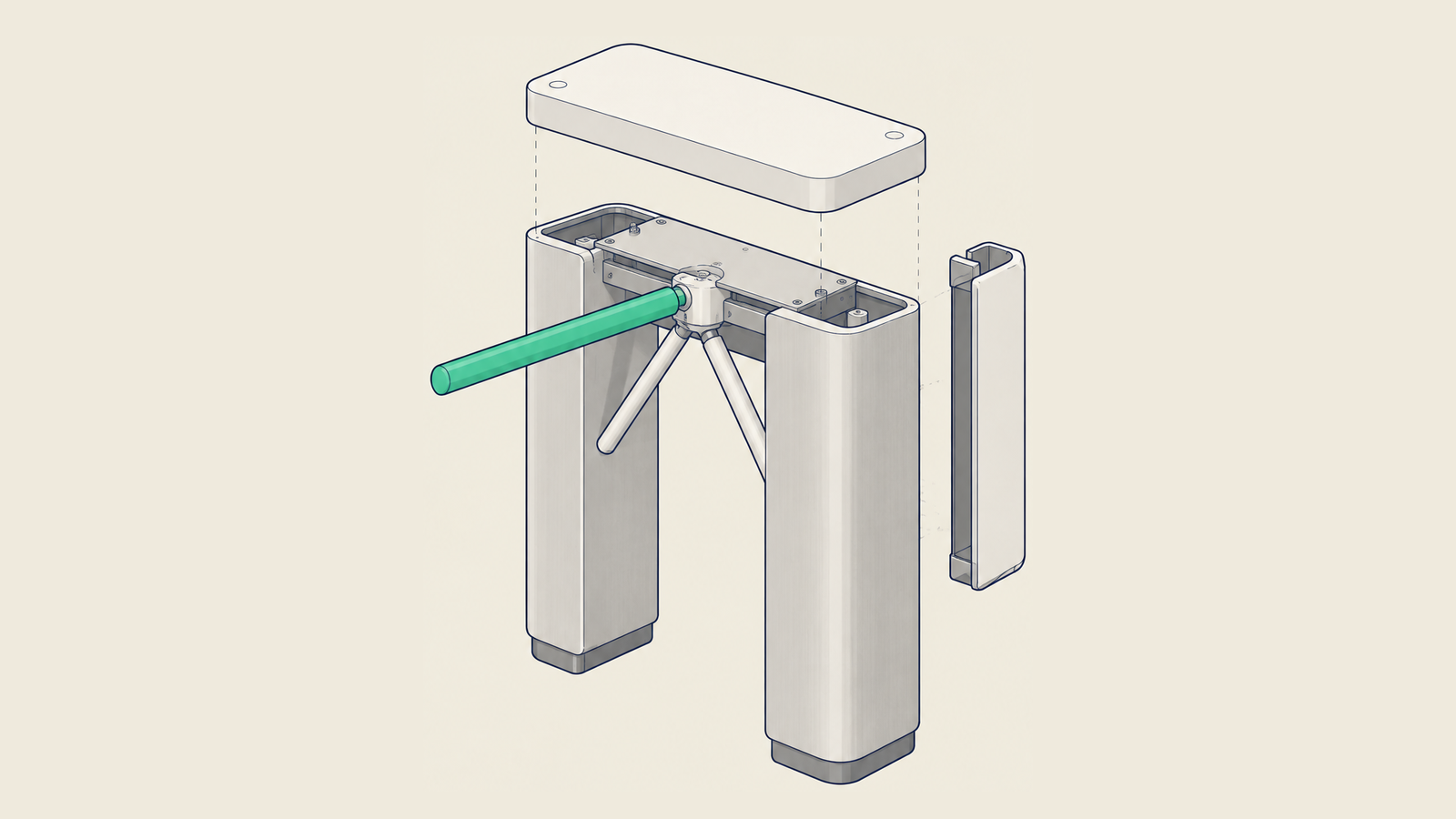
Illustration: A parcel-sorting cabinet with an intake slot, a central drum and output chutes; the green drum stands for the new backend that handles Git requests.Illustration made with AI for ai notis

OpenAI says Pando cut median push latency by nearly 5x, and that agents used GPT-6 Astra to write Lean and TLA+ formalisations that found bugs. All figures are OpenAI's own.

SOURCEOpenAI · 1 source
CHECKED3 Nov, 05:28
Work read
Illustration: A parcel-sorting cabinet with an intake slot, a central drum and output chutes; the green drum stands for the new backend that handles Git requests. Work / 3 NOV

OpenAI reports building Pando, its Git backend, with Codex in 10 weeks

  • OpenAI says Pando, its new Git backend, cut median push latency by nearly 5x in production and now delivers nearly a petabyte of Git data per day.
  • OpenAI says its monorepo systems struggled from late last year, with reliability at times below 90%, and that Codex let engineers do far more work in parallel.
  • OpenAI says one engineer designed the core, teams of agents implemented it and a handful of engineers deployed it, and that Pando began serving production traffic in April.

OpenAI replaced the backend serving its main code repository with a new system called Pando, and says it cut median push latency by nearly 5x and now delivers nearly a petabyte of Git data a day. The account is an engineering post of 2 November by OpenAI staff Aaron Friel, Taylor Blau and Ted Nyman, who are listed as Members of Technical Staff.

The authors say the old setup began to struggle around the end of last year as Codex let engineers run far more work in parallel, with slow fetches and pushes and failed merges, and reliability at times below 90%. Pando keeps the Git protocol and client, so engineers and agents did not change how they use Git, and it now powers all development in OpenAI's monorepo.

The post says Pando was built with Codex from kick-off to production in 10 weeks: one engineer designed the core, teams of agents implemented it and a handful of engineers deployed it, and it began serving production traffic in April. It names GPT-6 Astra as the model agents used to write Lean and TLA+ formalisations of the system to find and fix bugs.

Among the figures OpenAI gives for the deployment, Pando has served more than 57 terabytes of Git packs in a single hour, with more than 99% of those bytes from local disk cache, and cache hit rates on its pack delivery servers are over 99%. OpenAI says it is exploring ways to share the technology with its users.

What it means for you Our view

This is one company's account of its own repository, so the figures show what OpenAI reports, not a result others can reproduce. Pando keeps the Git protocol and client, which means engineers did not have to change how they use Git. OpenAI names GPT-6 Astra as the model agents used to write formal specifications of the system, and says that work was used to find and fix bugs. OpenAI says only that it is exploring ways to share the technology. If you run a large Git monorepo, record your own push latency and failure rates now, so you have a baseline if the technology becomes available.

TAGSCodexGPTGitOpenAIPando
OpenAI · 1 source tap to close
Safety 3 NOV

OpenAI pays up to $30,000 for critical bugs in core products like ChatGPT

CathedralCodexOpenAIbug bountysecurity
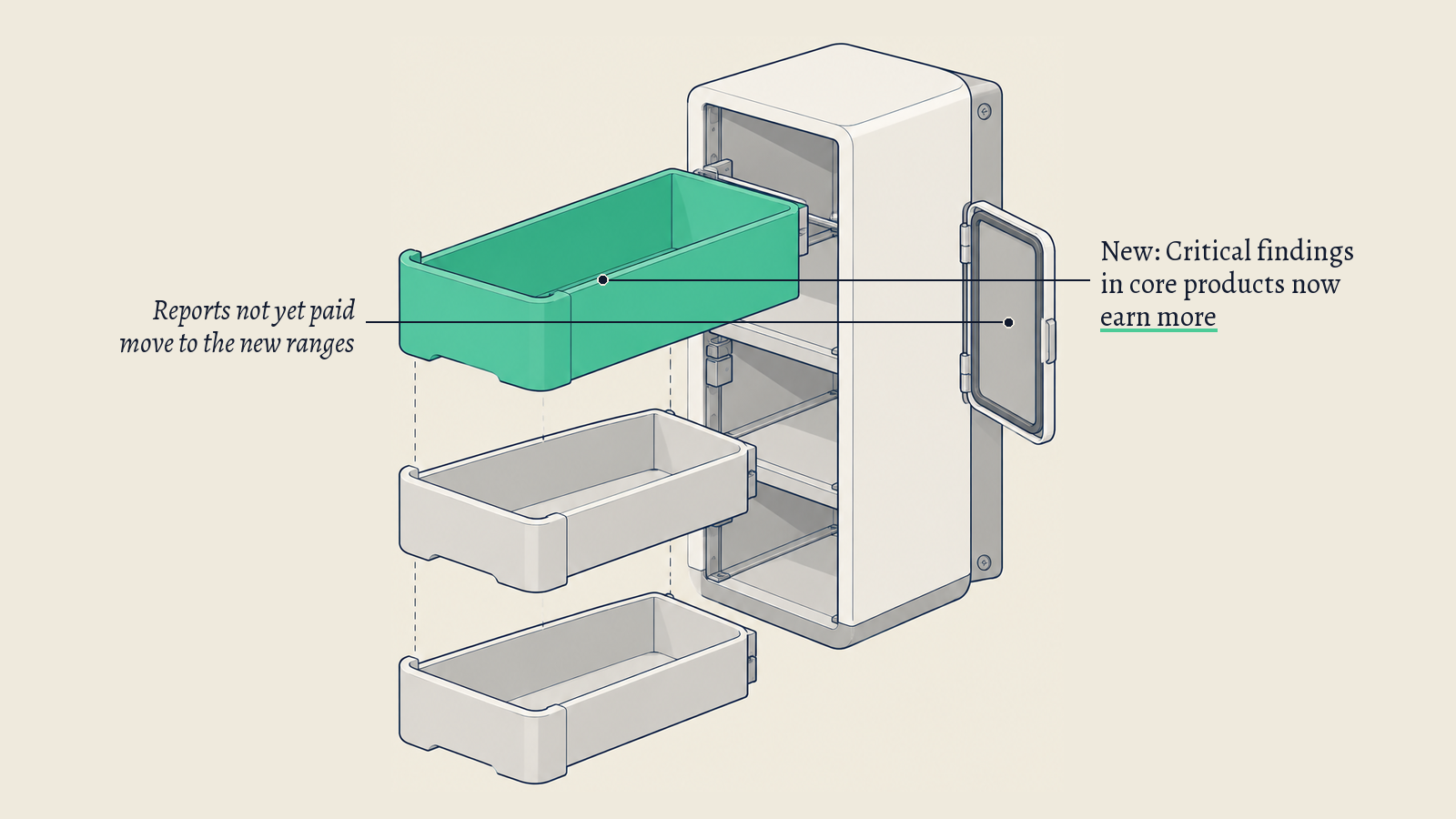
Illustration: A payout cabinet with three stacked trays; the green top tray stands for the higher reward for critical findings.Illustration made with AI for ai notis

OpenAI says Codex helped engineers in its last security sprint; for the next, with Cathedral, it names no model. Reports not yet paid move to the new reward ranges.

SOURCEOpenAI · 2 sources
CHECKED3 Nov, 05:27
Safety read
Illustration: A payout cabinet with three stacked trays; the green top tray stands for the higher reward for critical findings. Safety / 3 NOV

OpenAI pays up to $30,000 for critical bugs in core products like ChatGPT

  • OpenAI says it is more than quadrupling, on average, the midpoint of its medium, high and critical reward ranges; critical core-product findings earn up to $30,000.
  • Exceptional critical findings on those targets remain eligible for up to $100,000, and now up to $172,000 with bonuses; reports submitted but not yet awarded get the new ranges.
  • For bounties awarded in the 30 days before the announcement, OpenAI says it will pay the difference where the finding would have earned more under the new ranges.

OpenAI says it is more than quadrupling, on average, the midpoint of its reward ranges for medium, high and critical findings in its Security Bug Bounty program. A critical vulnerability in a core product such as ChatGPT, Codex or the API Platform will now earn up to $30,000, and exceptional critical findings on those targets stay eligible for up to $100,000, now up to $172,000 with bonuses, according to OpenAI's post of 2 November.

The program adds a quality bonus multiplier on the base bounty, a five-tier loyalty bonus and short-term priority campaign multipliers for newly launched features. Reports already submitted without an award get the new ranges, and bounties awarded in the 30 days before the announcement are topped up where the finding would have earned more. OpenAI's own illustrative example is a one-click account takeover in ChatGPT: a historical award of $6,500, against a new base of $30,000 and $51,577 after multipliers.

In a second post the same day, OpenAI says it is planning its next internal security sprint with the security firm Cathedral, whose researchers will use OpenAI's models alongside OpenAI's teams to test its defences. OpenAI does not name which models. It says that in its last sprint 25% of its product engineers worked on finding and fixing weaknesses, and that they used Codex to investigate findings, reproduce vulnerabilities in isolated environments and prepare patches for review.

OpenAI also says it has committed $1 billion in subsidized access over six months for frontline defenders protecting essential services and digital infrastructure. It says it is making its most capable models available to Daybreak customers. The security team will be at the PROMPT2PWN event in Oakland on 20 and 21 November.

What it means for you Our view

The change reaches back as well as forward: researchers with an open report, or an award from the last 30 days, can expect it to be re-read against the new ranges. OpenAI's own example pays $51,577 for a critical account takeover in ChatGPT, built from a $30,000 base and three multipliers, and OpenAI says all its scenarios are illustrative, so real payouts depend on how the bonuses apply. On the sprint, OpenAI names Codex for the last one and no model for the next. If you report vulnerabilities, OpenAI's security team will be at PROMPT2PWN in Oakland on 20 and 21 November, a chance to ask how the multipliers work.

TAGSCathedralCodexOpenAIbug bountysecurity
OpenAI · 2 sources tap to close
NOTHING IN THIS FILTER No story today matches. open the archive →
That's today's news: three stories. ExplainedWhat a system prompt does, and which of Anthropic's prompts are published

The morning email

On the mornings we publish: the three top stories and up to four short ones. Free.

We email you a link to confirm. An issue may include one sponsor, always labelled Sponsored · Advertisement. Our emails count opens and clicks, not who made them. Unsubscribe in one click. What we keep

1 of 3
Illustration: A flow-metering station with a main supply pipe and a narrow side line; the green side line and valve stand for compute bought on short-term commitments. Illustration made with AI for ai notis

Compute · 3 NOV

Anthropic's amended S-1 reports a $567 million operating loss, blaming short-term compute

Revenue was $16,956 million against $11,555 million a quarter earlier, more than 46% higher; the filing also says over 90% of September code contributions were written by Claude.

  • Anthropic's operating loss was $567 million in the September quarter, against operating income of $974 million in the June quarter.
  • The filing attributes the loss primarily to $5.0 billion of compute under short-term commitments, which costs significantly more than multi-year compute, and $2.0 billion of non-cash donation matching charges.
  • Aggregate committed spend is about $895.4 billion, substantially all for compute and infrastructure, with about $69.8 billion due in the 12 months after 30 September 2026.
Checked 3 Nov, 05:26 · U.S. SEC / Anthropic, PBC · 1 source
Illustration: A parcel-sorting cabinet with an intake slot, a central drum and output chutes; the green drum stands for the new backend that handles Git requests. Illustration made with AI for ai notis

Work · 3 NOV

OpenAI reports building Pando, its Git backend, with Codex in 10 weeks

OpenAI says Pando cut median push latency by nearly 5x, and that agents used GPT-6 Astra to write Lean and TLA+ formalisations that found bugs. All figures are OpenAI's own.

  • OpenAI says Pando, its new Git backend, cut median push latency by nearly 5x in production and now delivers nearly a petabyte of Git data per day.
  • OpenAI says its monorepo systems struggled from late last year, with reliability at times below 90%, and that Codex let engineers do far more work in parallel.
  • OpenAI says one engineer designed the core, teams of agents implemented it and a handful of engineers deployed it, and that Pando began serving production traffic in April.
Checked 3 Nov, 05:28 · OpenAI · 1 source
Illustration: A payout cabinet with three stacked trays; the green top tray stands for the higher reward for critical findings. Illustration made with AI for ai notis

Safety · 3 NOV

OpenAI pays up to $30,000 for critical bugs in core products like ChatGPT

OpenAI says Codex helped engineers in its last security sprint; for the next, with Cathedral, it names no model. Reports not yet paid move to the new reward ranges.

  • OpenAI says it is more than quadrupling, on average, the midpoint of its medium, high and critical reward ranges; critical core-product findings earn up to $30,000.
  • Exceptional critical findings on those targets remain eligible for up to $100,000, and now up to $172,000 with bonuses; reports submitted but not yet awarded get the new ranges.
  • For bounties awarded in the 30 days before the announcement, OpenAI says it will pay the difference where the finding would have earned more under the new ranges.
Checked 3 Nov, 05:27 · OpenAI · 2 sources

You're all caught up

That's today's news: three stories.

ExplainedWhat a system prompt does, and which of Anthropic's prompts are published

You can join ai notis soon, to follow cases and keep stories on every device.

Follow us on Instagram and Threads

The morning email

On the mornings we publish: the three top stories and up to four short ones. Free.

We email you a link to confirm. An issue may include one sponsor, always labelled Sponsored · Advertisement. Our emails count opens and clicks, not who made them. Unsubscribe in one click. What we keep

No story today matches. Open the archive
Today's stories 3 STORIES

Today's stories

Tue 3 Nov · 3 STORIES
  1. Compute · 3 NOV

    Anthropic's amended S-1 reports a $567 million operating loss, blaming short-term compute

    Illustration: A flow-metering station with a main supply pipe and a narrow side line; the green side line and valve stand for compute bought on short-term commitments.Illustration made with AI for ai notis

    Revenue was $16,956 million against $11,555 million a quarter earlier, more than 46% higher; the filing also says over 90% of September code contributions were written by Claude.

    Checked 3 Nov, 05:26 · U.S. SEC / Anthropic, PBC · 1 sourceRead

  2. Work · 3 NOV

    OpenAI reports building Pando, its Git backend, with Codex in 10 weeks

    Illustration: A parcel-sorting cabinet with an intake slot, a central drum and output chutes; the green drum stands for the new backend that handles Git requests.Illustration made with AI for ai notis

    OpenAI says Pando cut median push latency by nearly 5x, and that agents used GPT-6 Astra to write Lean and TLA+ formalisations that found bugs. All figures are OpenAI's own.

    Checked 3 Nov, 05:28 · OpenAI · 1 sourceRead

  3. Safety · 3 NOV

    OpenAI pays up to $30,000 for critical bugs in core products like ChatGPT

    Illustration: A payout cabinet with three stacked trays; the green top tray stands for the higher reward for critical findings.Illustration made with AI for ai notis

    OpenAI says Codex helped engineers in its last security sprint; for the next, with Cathedral, it names no model. Reports not yet paid move to the new reward ranges.

    Checked 3 Nov, 05:27 · OpenAI · 2 sourcesRead

Compute 3 NOV

Anthropic's amended S-1 reports a $567 million operating loss, blaming short-term compute

Revenue was $16,956 million against $11,555 million a quarter earlier, more than 46% higher; the filing also says over 90% of September code contributions were written by Claude.

U.S. SEC / Anthropic, PBC · 1 source·checked 3 Nov, 05:26
AnthropicClaudeIPOS-1compute commitments
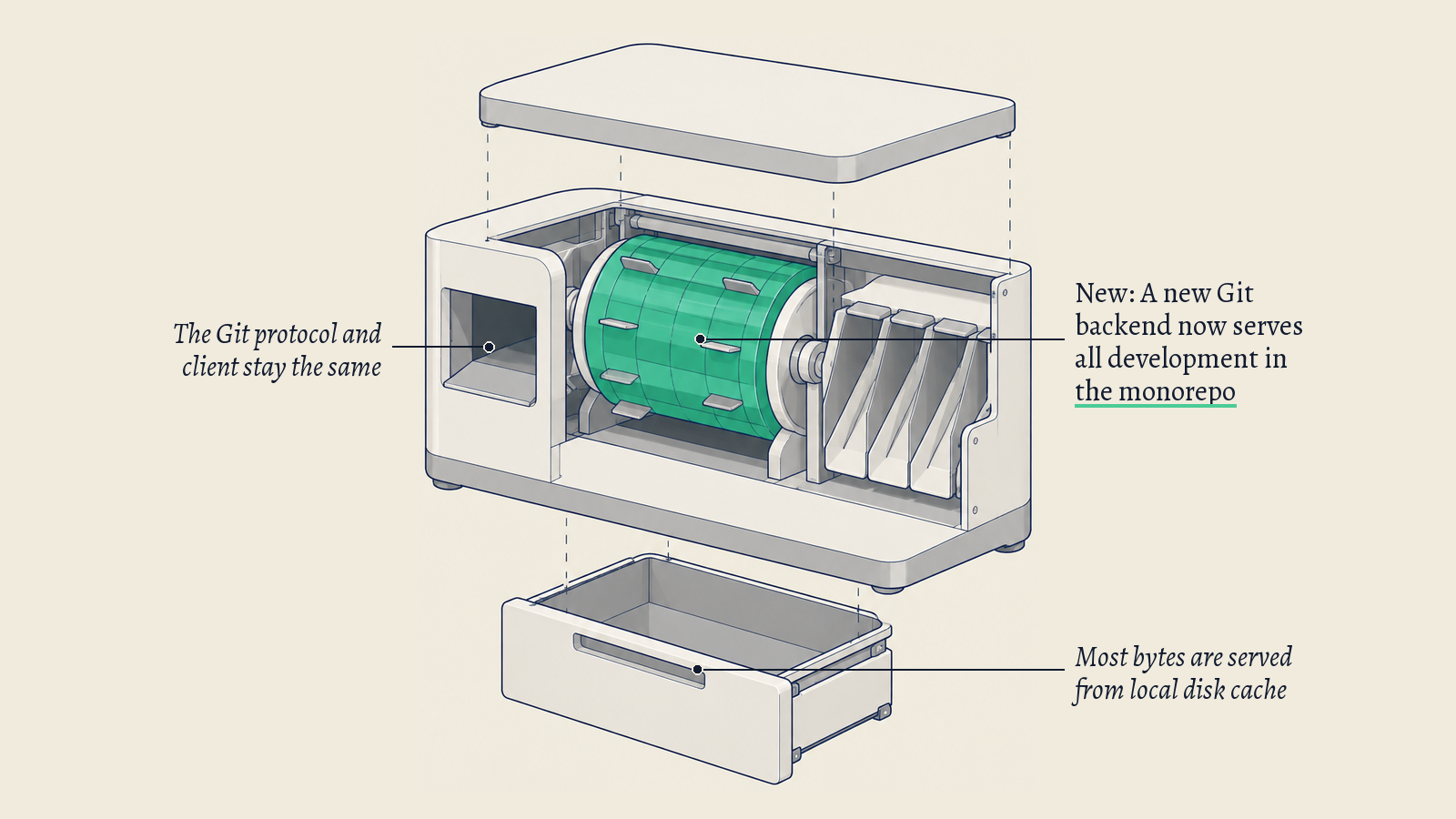
Illustration: A flow-metering station with a main supply pipe and a narrow side line; the green side line and valve stand for compute bought on short-term commitments.Illustration made with AI for ai notis
Work

OpenAI reports building Pando, its Git backend, with Codex in 10 weeks

OpenAI says Pando cut median push latency by nearly 5x, and that agents used GPT-6 Astra to write Lean and TLA+ formalisations that found bugs. All figures are OpenAI's own.

3 NOV · OpenAI · 1 source
Safety

OpenAI pays up to $30,000 for critical bugs in core products like ChatGPT

OpenAI says Codex helped engineers in its last security sprint; for the next, with Cathedral, it names no model. Reports not yet paid move to the new reward ranges.

3 NOV · OpenAI · 2 sources

Explained

One idea behind the news
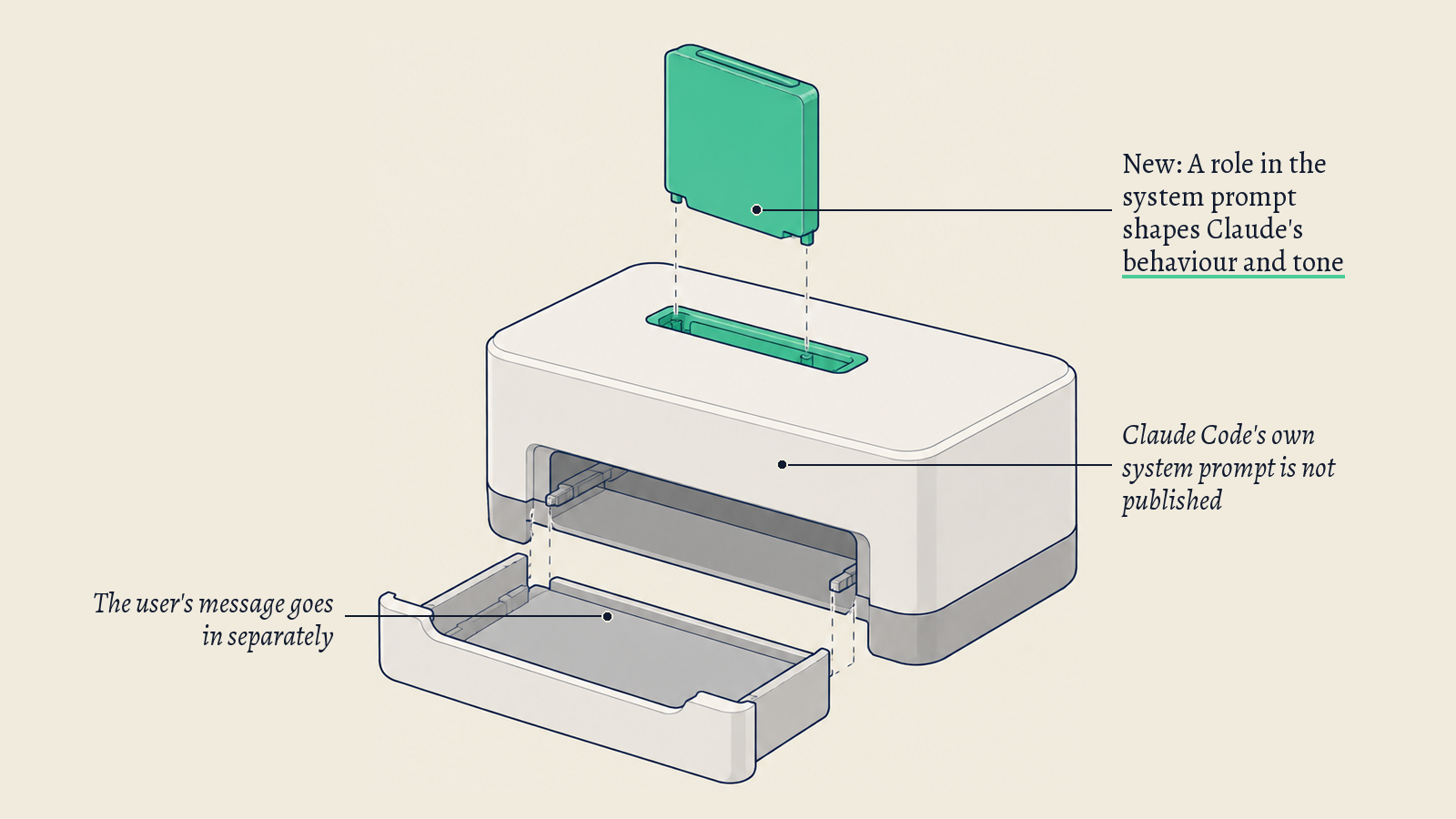
Tooling What a system prompt does, and which of Anthropic's prompts are published Anthropic publishes the system prompt for claude.ai and its mobile apps and says Claude Code's is not published; a role set in a system prompt shapes Claude's behaviour and tone.
In brief 4 more today
0 of 3 read
Drag a card to start Drag left or right · tap to read more Hover to lift a card · tap to bring it forward Tap again to put it back Tap a card to open it Tap again to close it Tap a headline to read it as a card