2026-11-15 notis CATEGORY Join
Show Read as Find Sections Models and releasesAgents and appsResearchMoney and computeLaws and rulingsSafety and securityAI at work More The monthlyArchiveModelsAboutCorrectionsThe numbersRSS
My notis
TODAY'S NEWS
November 2026 3 STORIES
MTWTFSS
1 2 3 4 5 6 7 8 9 10 11 12 13 14 15 16 17 18 19 20 21 22 23 24 25 26 27 28 29 30

Days with a dot have news. See the archive.

The whole week ›
15:37
The monthly · N° 0October 2026, the first edition 0/3
WEATHER THEME CARD SPACING

Today's news

today

My page

Kept in this browser only.

SAVED FOLLOWING COLLECTIONS READING SINCE
Nothing saved yet. Tap the bookmark on a card to keep it here. read today
all cases

No case followed yet.

Price changes Stories where a published price went up or down.
Models being retired Models being withdrawn, and gaps before a replacement is ready.
The day's top stories. Sign up
toned down Compute 15 NOV

Google and Nvidia would each buy about $10.0 billion of Anthropic stock

AMDAnthropicClaudeGoogleNvidia
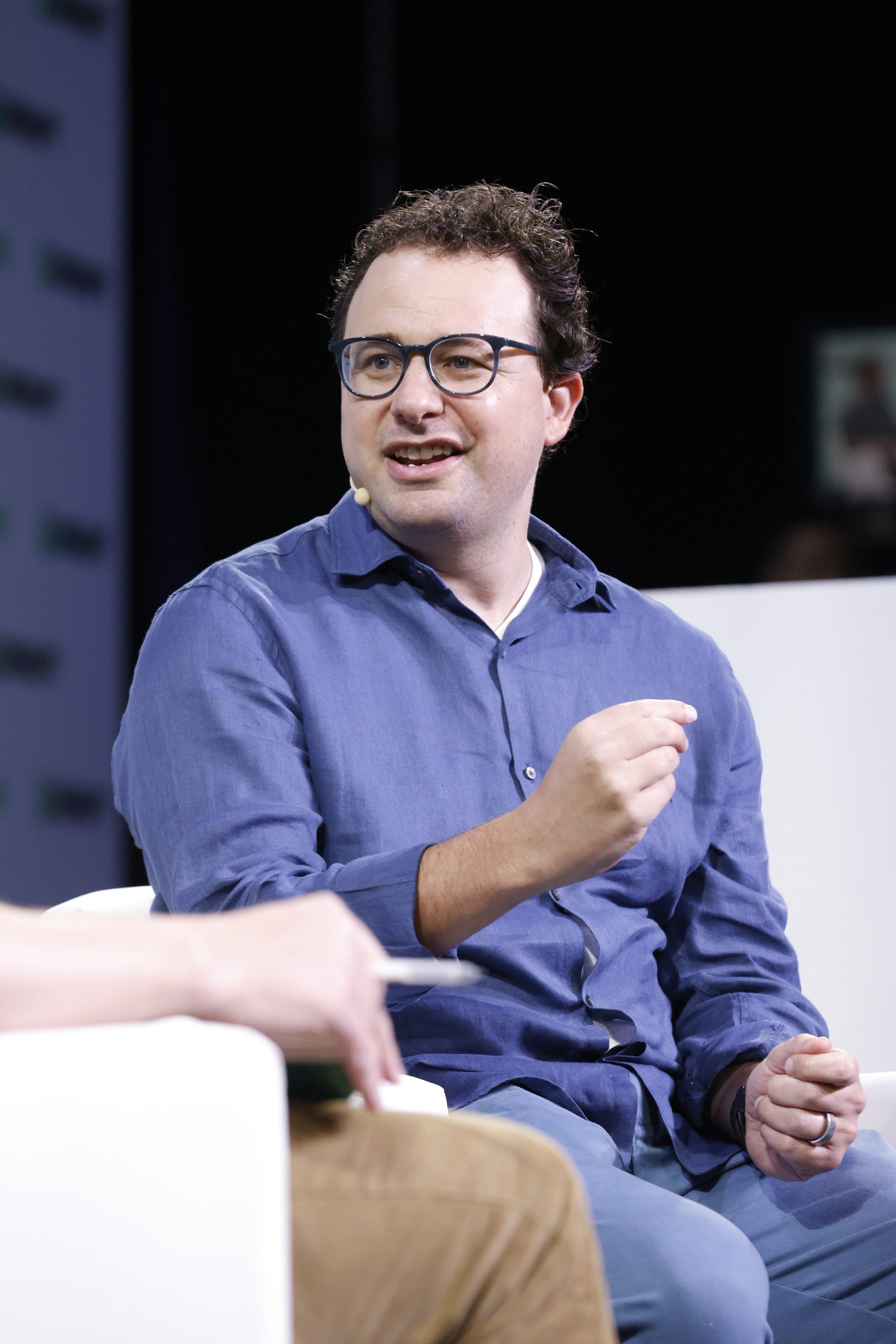
Dario Amodei, Anthropic's chief executive, speaking on stage at TechCrunch Disrupt in San Francisco in 2023.Kimberly White / Getty Images for TechCrunch / Dario Amodei at TechCrunch Disrupt 2023 / CC BY 2.0, cropped

Anthropic, maker of Claude, says in its 10 November S-1 that seven companies agreed to buy $26.0 billion of stock right after its IPO, subject to conditions.

SOURCEAnthropic, PBC (SEC EDGAR) · 1 source
CHECKED14 Nov, 17:59
Compute read
Dario Amodei, Anthropic's chief executive, speaking on stage at TechCrunch Disrupt in San Francisco in 2023. Compute / 15 NOV

Google and Nvidia would each buy about $10.0 billion of Anthropic stock

  • Google, Nvidia, AMD, Broadcom, Micron, Microsoft and TSMC Partners have agreed to buy $26.0 billion of Class N stock at the IPO price, right after the IPO.
  • At an assumed price of $74.00, the midpoint of the $70.00 to $78.00 range, Google and Nvidia would each pay about $10.0 billion and AMD about $2.5 billion.
  • Google's $10.0 billion uses an option from its March 2026 note purchase agreement, which cuts the amount left under that agreement from $20.0 billion to $10.0 billion.

Seven companies have agreed, subject to conditions, to buy a combined $26.0 billion of Anthropic's Class N shares in a private placement that closes right after its IPO. Google and Nvidia would each buy about $10.0 billion, according to Anthropic's amended Form S-1 filed with the SEC on 10 November.

The other buyers are AMD at about $2.5 billion, Broadcom, Micron and Microsoft at about $1.0 billion each, and TSMC Partners at about $500 million. The share counts assume an IPO price of $74.00, the midpoint of the expected $70.00 to $78.00 range.

Google's $10.0 billion uses an option Anthropic granted it with its March 2026 note purchase agreement, and it has agreed to exercise it in full. That cuts what Google can still put in under that agreement from $20.0 billion to $10.0 billion. AMD's purchase counts toward the up to $5.0 billion of Anthropic stock it committed to buy under its July 2026 hardware supply agreement, leaving up to $2.5 billion.

Anthropic says it trains and serves Claude across four chip families, AWS Trainium, Google TPUs, NVIDIA GPUs and AMD GPUs.

The placement is contingent on the IPO completing. Anthropic receives all the proceeds and pays no underwriting discounts or commissions on these shares, which are not registered in the offering and are restricted securities.

What it means for you Our view

The filing shows two buyers paying under earlier agreements: Google through an option in its note purchase agreement, AMD against a stock commitment in its hardware supply agreement. Anthropic receives all the proceeds and pays no underwriting discounts on these shares. For anyone who relies on Claude, the filing describes who funds Anthropic, not a change to the product or its price. The sale depends on the IPO completing, and the share counts rest on an assumed price, so the final figures can differ. If you review vendor risk for Claude, note the date the final prospectus sets the IPO price and check then whether the placement closed as described.

TAGSAMDAnthropicClaudeGoogleNvidia
toned down Safety 15 NOV

High risk of an AI takeover within three years, Paul Christiano says

AI safetyAlignment Research CenterOpenAI
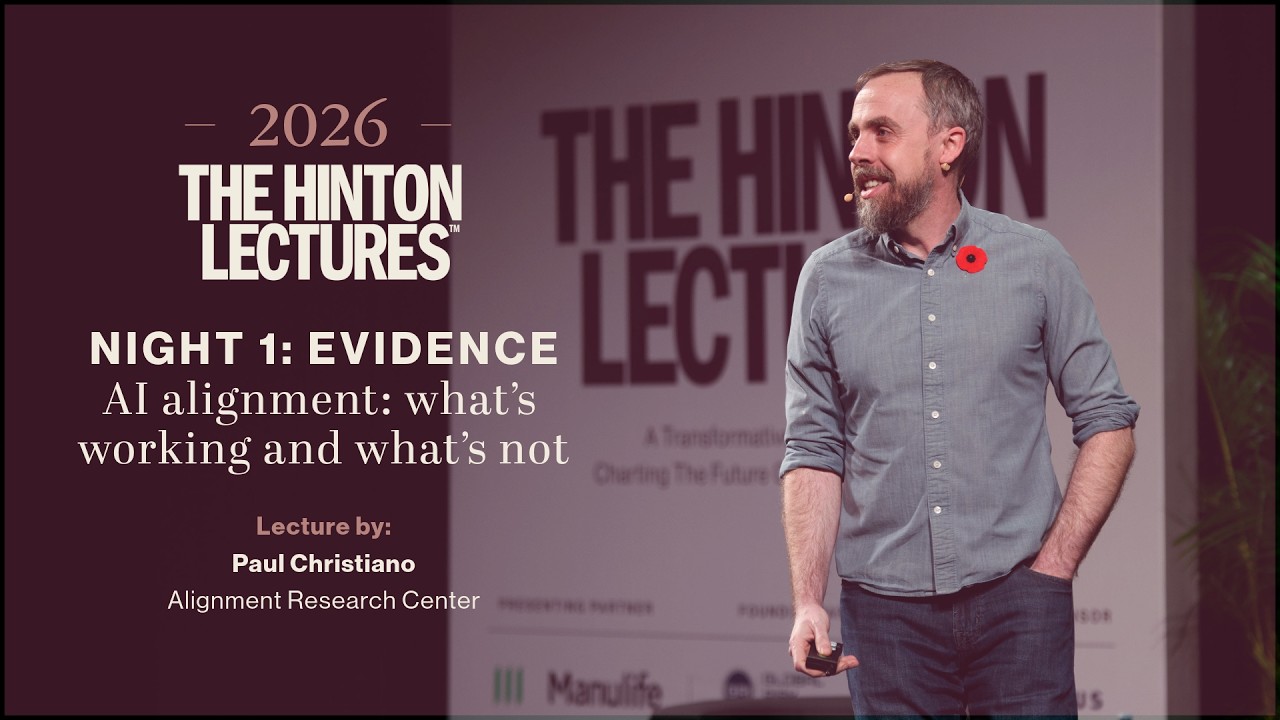
Paul Christiano: AI Alignment - What’s Working and What’s Not | The Hinton Lectures 2026 (Night 1): a video from The Hinton Lectures™ on YouTubeVideo: The Hinton Lectures™ on YouTube

In the Hinton Lectures, the alignment researcher said the fastest build of AI means something like a coin flip of an AI takeover, and development should probably slow down.

SOURCEThe Hinton Lectures (YouTube) · 6 sources
CHECKED14 Nov, 18:14
Safety watch read
Paul Christiano: AI Alignment - What’s Working and What’s Not | The Hinton Lectures 2026 (Night 1): a video from The Hinton Lectures™ on YouTube Safety / 15 NOV

High risk of an AI takeover within three years, Paul Christiano says

  • Christiano says: "I think there is a high risk of an AI takeover within the next three years." (14:31)
  • On building AI "as quickly as we can", he says "we would be looking at something like a coin flip of an AI takeover". (15:50)
  • In the third lecture he said "we should probably slow down immediately until we actually have the infrastructure to slow down later". (41:43)

Paul Christiano, an AI alignment researcher, says there is "a high risk of an AI takeover within the next three years". He said so in the first of three Hinton Lectures in Toronto on 9 November, a series hosted by Geoffrey Hinton and put on by the AI Safety Foundation.

By takeover he means "AI systems pursuing goals, and those systems call the shots in the same sense that humans today call the shots". He puts no figure on the risk: he says "any number we give is an expression of someone's subjective opinion". If AI were built along the most rapid trajectory, he said, "we would be looking at something like a coin flip of an AI takeover". He went on: "I hope the probability is much lower than that because we are not going to develop the technology in the very fastest way we can, but I think even all things considered, with realistic policy responses, the risk remains exceptionally high."

Christiano also gave shorter horizons. In the first lecture he said there is "meaningful risk even in the next 6 to 12 months", and in the second he spoke of "material risk even within the next six to 18 months".

On the third night, on 11 November, he said what he thinks should follow: "we should probably slow down immediately until we actually have the infrastructure to slow down later". He tied that to having "security, governance, risk management" good enough "to detect and react to future risks".

Christiano is the executive director of the Alignment Research Center, which he founded, and a Senior Tech Advisor at the US Center for AI Standards and Innovation. On 9 September 2026 OpenAI announced his appointment to the board of the OpenAI Foundation and its Safety and Security Committee.

What it means for you Our view

This is one researcher's view, and Christiano says himself that any number given for this risk is someone's subjective opinion, and that he does not think a quantitative model exists to put a number on it. What he asks for is conditional: slowing down until security, governance and risk management are good enough to detect and react to future risks as they emerge. He also sits on the OpenAI Foundation board and its Safety and Security Committee, so his lectures are worth reading with that role in mind. If you set or review AI policy at work, list which conditions in your own safety framework would make you pause a rollout, and write down who decides.

TAGSAI safetyAlignment Research CenterOpenAI
Laws 15 NOV

How US AI-chip export rules use a performance score and buyer headquarters

AMDBISExport controlsNvidia
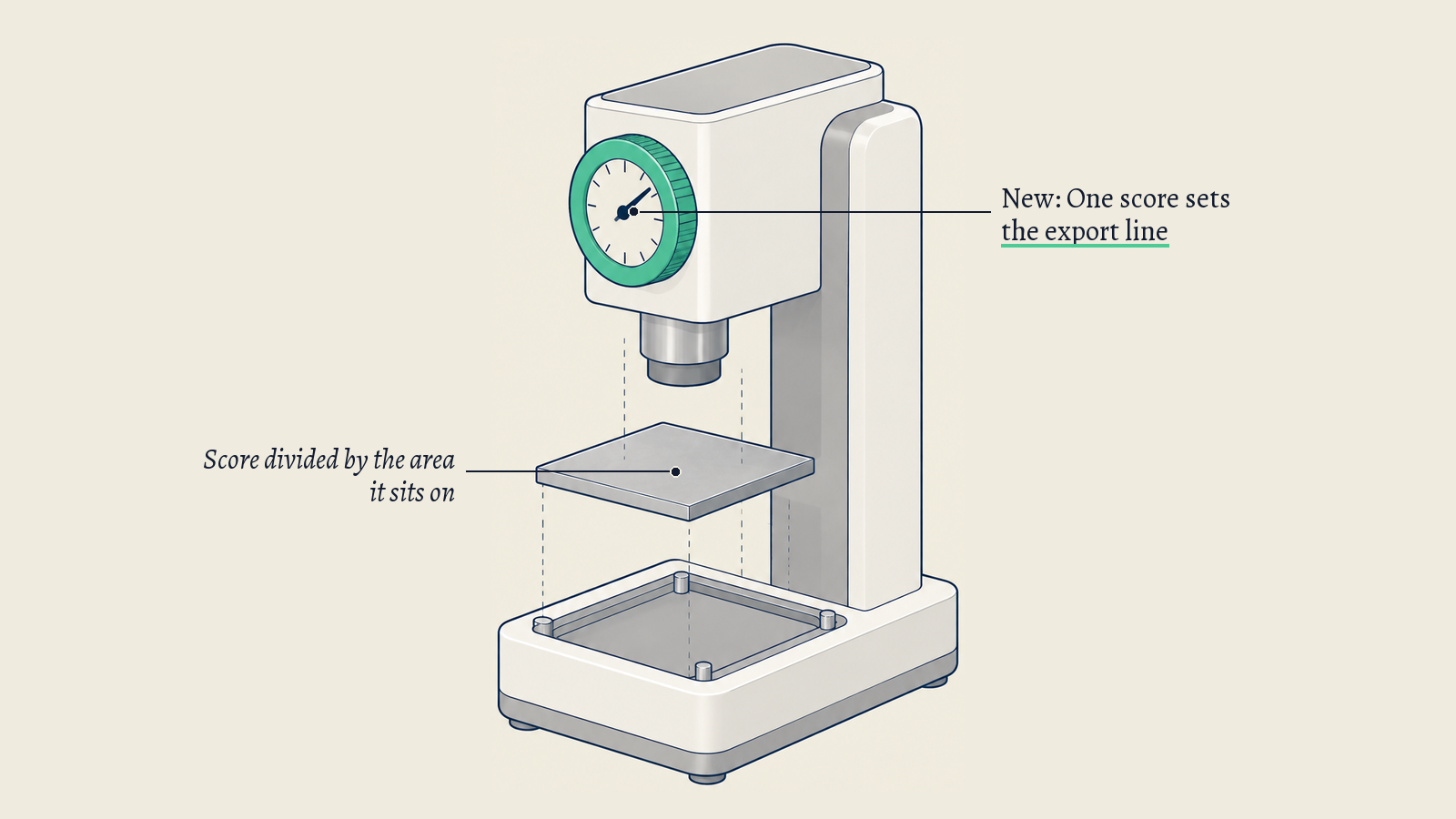
Illustration: A bench-top testing stand with a flat metal plate on a tray beside it; its green dial gauge stands for the single performance score the export rules measure.Illustration made with AI for ai notis

The US grades AI chips by a performance score and ties the licence to where the buyer's parent company is headquartered, as BIS guidance dated 31 May 2026 restates.

SOURCEBureau of Industry and Security · 4 sources
CHECKED14 Nov, 19:18
Laws read
Illustration: A bench-top testing stand with a flat metal plate on a tray beside it; its green dial gauge stands for the single performance score the export rules measure. Laws / 15 NOV

How US AI-chip export rules use a performance score and buyer headquarters

  • BIS guidance dated 31 May 2026 requires a licence to export advanced computing items to entities headquartered in Country Group D:5 or Macau, or with a parent that is.
  • BIS defines total processing performance (TPP) as 2 x MacTOPS x the bit length of the operation, added over all processing units on the chip.
  • The October 2023 rule's revised ECCN 3A090.a controls chips with a TPP of 4800 or more, or 1600 or more with a performance density of 5.92 or more.

A US licence is needed to ship advanced AI chips to a company headquartered in Macau or a Country Group D:5 country, or owned by a parent that is, even when the company itself sits in another country. The Commerce Department's Bureau of Industry and Security (BIS) restated this in guidance dated 31 May 2026. The controls turn on a performance score rather than a product name.

That score is called total processing performance, or TPP. BIS defines it as 2 x MacTOPS x the bit length of the operation, added up over all the processing units on the chip. MacTOPS is the theoretical peak number of trillions of multiply-accumulate operations per second.

The rules work in tiers. In the October 2023 rule, the top tier, ECCN 3A090.a, covered chips with a TPP of 4800 or more, or a TPP of 1600 or more together with a performance density of 5.92 or more. Performance density is TPP divided by the chip's die area. BIS added it so that buyers could not get round the rule by buying many smaller chips that together are as powerful as a restricted one.

The second tier, 3A090.b, covered chips with a TPP of 2400 to under 4800 and a performance density of 1.6 to under 5.92, or a TPP of 1600 or more and a density of 3.2 to under 5.92. BIS treated the tiers differently. The most powerful chips needed a licence for any destination in Country Groups D:1, D:4 or D:5 that is not also in A:5 or A:6. For the less powerful tier BIS offered licence exception NAC, but using it requires pre-notification of an export or reexport to Macau or a D:5 destination.

In a final rule effective 15 January 2026, BIS moved licence review for chips below set TPP and DRAM-bandwidth limits, such as Nvidia's H200, from a presumption of denial to case by case for China and Macau end users.

The headquarters test answers a concern about diversion. When BIS widened its end-use controls in 2023 it cited "ongoing national security concerns related to diversion and misuse of items subject to the EAR", and it said it was acting against "transshipment and diversion" by PRC operations. The May 2026 guidance says the headquarters-based licence requirement dates from 17 November 2023, and that it continues to apply even though BIS said in May 2025 that it would not enforce the new compliance requirements of the AI Diffusion Rule.

There are limits. BIS says bona fide data-centre operators need not stop using, storing or servicing chips they already run because of the guidance, until BIS says otherwise. A BIS FAQ updated on 17 June 2026 adds that the guidance covers 3A090.a chips and every other advanced computing item that contains one, including 4A090.a systems and related .z items.

What it means for you Our view

The score decides which tier a chip falls in, and the headquarters test decides whether the buyer's own location matters at all: the guidance applies when the entity or its ultimate parent is headquartered in a listed place, even if the entity sits elsewhere. BIS says bona fide data-centre operators need not stop using, storing or servicing chips they already run because of the guidance, until further notice, so watch for that notice. Before your next purchase or hosting contract involving advanced accelerators, write down each chip's TPP and each buyer's ultimate parent headquarters, and ask your export-compliance adviser to confirm both.

TAGSAMDBISExport controlsNvidia
NOTHING IN THIS FILTER No story today matches. open the archive →
That's today's news: three stories. This engagement edition has one video story instead of two, because no second video held up.

The morning email

On the mornings we publish: the three top stories and up to four short ones. Free.

We email you a link to confirm. An issue may include one sponsor, always labelled Sponsored · Advertisement. Our emails count opens and clicks, not who made them. Unsubscribe in one click. What we keep

1 of 3
Dario Amodei, Anthropic's chief executive, speaking on stage at TechCrunch Disrupt in San Francisco in 2023.Kimberly White / Getty Images for TechCrunch / Dario Amodei at TechCrunch Disrupt 2023 / CC BY 2.0, cropped

Compute · 15 NOVnarrowed

Google and Nvidia would each buy about $10.0 billion of Anthropic stock

Anthropic, maker of Claude, says in its 10 November S-1 that seven companies agreed to buy $26.0 billion of stock right after its IPO, subject to conditions.

  • Google, Nvidia, AMD, Broadcom, Micron, Microsoft and TSMC Partners have agreed to buy $26.0 billion of Class N stock at the IPO price, right after the IPO.
  • At an assumed price of $74.00, the midpoint of the $70.00 to $78.00 range, Google and Nvidia would each pay about $10.0 billion and AMD about $2.5 billion.
  • Google's $10.0 billion uses an option from its March 2026 note purchase agreement, which cuts the amount left under that agreement from $20.0 billion to $10.0 billion.
Checked 14 Nov, 17:59 · Anthropic, PBC (SEC EDGAR) · 1 source
Paul Christiano: AI Alignment - What’s Working and What’s Not | The Hinton Lectures 2026 (Night 1): a video from The Hinton Lectures™ on YouTubeWatch on YouTubeVideo: The Hinton Lectures™ on YouTube

Safety · 15 NOVnarrowed

High risk of an AI takeover within three years, Paul Christiano says

In the Hinton Lectures, the alignment researcher said the fastest build of AI means something like a coin flip of an AI takeover, and development should probably slow down.

  • Christiano says: "I think there is a high risk of an AI takeover within the next three years." (14:31)
  • On building AI "as quickly as we can", he says "we would be looking at something like a coin flip of an AI takeover". (15:50)
  • In the third lecture he said "we should probably slow down immediately until we actually have the infrastructure to slow down later". (41:43)
Checked 14 Nov, 18:14 · The Hinton Lectures (YouTube) · 6 sources
Illustration: A bench-top testing stand with a flat metal plate on a tray beside it; its green dial gauge stands for the single performance score the export rules measure.Illustration made with AI for ai notis

Laws · 15 NOV

How US AI-chip export rules use a performance score and buyer headquarters

The US grades AI chips by a performance score and ties the licence to where the buyer's parent company is headquartered, as BIS guidance dated 31 May 2026 restates.

  • BIS guidance dated 31 May 2026 requires a licence to export advanced computing items to entities headquartered in Country Group D:5 or Macau, or with a parent that is.
  • BIS defines total processing performance (TPP) as 2 x MacTOPS x the bit length of the operation, added over all processing units on the chip.
  • The October 2023 rule's revised ECCN 3A090.a controls chips with a TPP of 4800 or more, or 1600 or more with a performance density of 5.92 or more.
Checked 14 Nov, 19:18 · Bureau of Industry and Security · 4 sources

You're all caught up

That's today's news: three stories.

You can join ai notis soon, to follow cases and keep stories on every device.

Follow us on Instagram and Threads

The morning email

On the mornings we publish: the three top stories and up to four short ones. Free.

We email you a link to confirm. An issue may include one sponsor, always labelled Sponsored · Advertisement. Our emails count opens and clicks, not who made them. Unsubscribe in one click. What we keep

No story today matches. Open the archive
Today's stories 3 STORIES

Today's stories

Sun 15 Nov · 3 STORIES
  1. Compute · 15 NOV · narrowed

    Google and Nvidia would each buy about $10.0 billion of Anthropic stock

    Dario Amodei, Anthropic's chief executive, speaking on stage at TechCrunch Disrupt in San Francisco in 2023.Kimberly White / Getty Images for TechCrunch / Dario Amodei at TechCrunch Disrupt 2023 / CC BY 2.0, cropped

    Anthropic, maker of Claude, says in its 10 November S-1 that seven companies agreed to buy $26.0 billion of stock right after its IPO, subject to conditions.

    Checked 14 Nov, 17:59 · Anthropic, PBC (SEC EDGAR) · 1 sourceRead

  2. Safety · 15 NOV · narrowed

    High risk of an AI takeover within three years, Paul Christiano says

    Paul Christiano: AI Alignment - What’s Working and What’s Not | The Hinton Lectures 2026 (Night 1): a video from The Hinton Lectures™ on YouTubeVideo: The Hinton Lectures™ on YouTube

    In the Hinton Lectures, the alignment researcher said the fastest build of AI means something like a coin flip of an AI takeover, and development should probably slow down.

    Checked 14 Nov, 18:14 · The Hinton Lectures (YouTube) · 6 sourcesRead

  3. Laws · 15 NOV

    How US AI-chip export rules use a performance score and buyer headquarters

    Illustration: A bench-top testing stand with a flat metal plate on a tray beside it; its green dial gauge stands for the single performance score the export rules measure.Illustration made with AI for ai notis

    The US grades AI chips by a performance score and ties the licence to where the buyer's parent company is headquartered, as BIS guidance dated 31 May 2026 restates.

    Checked 14 Nov, 19:18 · Bureau of Industry and Security · 4 sourcesRead

toned down Compute 15 NOV

Google and Nvidia would each buy about $10.0 billion of Anthropic stock

Anthropic, maker of Claude, says in its 10 November S-1 that seven companies agreed to buy $26.0 billion of stock right after its IPO, subject to conditions.

Anthropic, PBC (SEC EDGAR) · 1 source·checked 14 Nov, 17:59
AMDAnthropicClaudeGoogleNvidia
Dario Amodei, Anthropic's chief executive, speaking on stage at TechCrunch Disrupt in San Francisco in 2023.Kimberly White / Getty Images for TechCrunch / Dario Amodei at TechCrunch Disrupt 2023 / CC BY 2.0, cropped
toned down Safety

High risk of an AI takeover within three years, Paul Christiano says

In the Hinton Lectures, the alignment researcher said the fastest build of AI means something like a coin flip of an AI takeover, and development should probably slow down.

15 NOV · The Hinton Lectures (YouTube) · 6 sources
Laws

How US AI-chip export rules use a performance score and buyer headquarters

The US grades AI chips by a performance score and ties the licence to where the buyer's parent company is headquartered, as BIS guidance dated 31 May 2026 restates.

15 NOV · Bureau of Industry and Security · 4 sources
In brief 1 more today

This engagement edition has one video story instead of two, because no second video held up.

0 of 3 read
Drag a card to start Drag left or right · tap to read more Hover to lift a card · tap to bring it forward Tap again to put it back Tap a card to open it Tap again to close it Tap a headline to read it as a card