2026-11-12 notis CATEGORY Join
Show Read as Find Sections Models and releasesAgents and appsResearchMoney and computeLaws and rulingsSafety and securityAI at work More The monthlyArchiveModelsAboutCorrectionsThe numbersRSS
My notis
TODAY'S NEWS
November 2026 3 STORIES
MTWTFSS
1 2 3 4 5 6 7 8 9 10 11 12 13 14 15 16 17 18 19 20 21 22 23 24 25 26 27 28 29 30

Days with a dot have news. See the archive.

The whole week ›
15:37
0/3
WEATHER THEME CARD SPACING

Today's news

today

My page

Kept in this browser only.

SAVED FOLLOWING COLLECTIONS READING SINCE
Nothing saved yet. Tap the bookmark on a card to keep it here. read today
all cases

No case followed yet.

Price changes Stories where a published price went up or down.
Models being retired Models being withdrawn, and gaps before a replacement is ready.
The day's top stories. Sign up
Safety 12 NOV

Anthropic says it met its AI R&D threshold, judged on expected future models

AnthropicIPOResponsible Scaling PolicyS-1
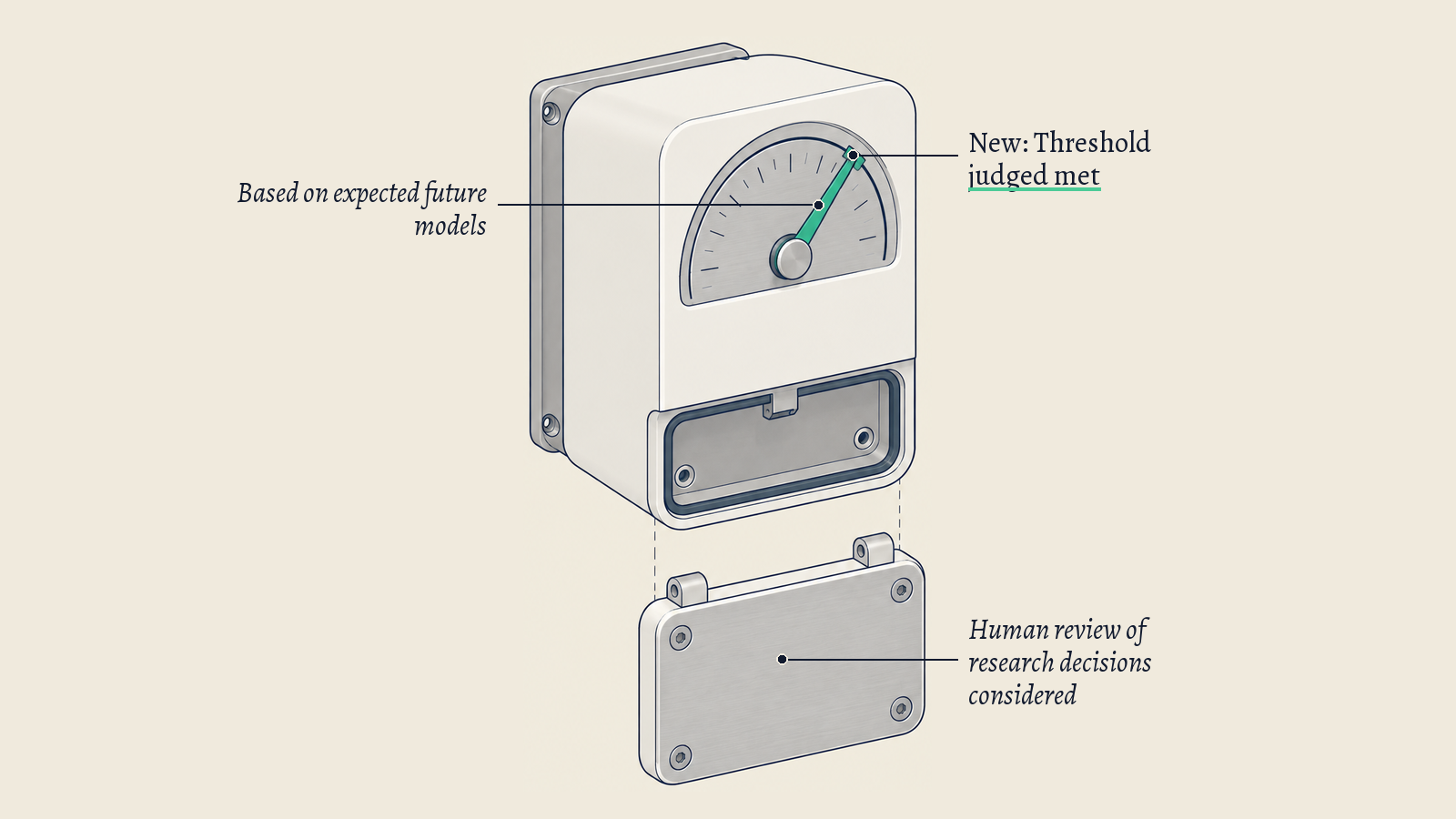
Illustration: A wall-mounted dial gauge with a curved scale and a needle; its green limit notch stands for a safety threshold Anthropic says it has met.Illustration made with AI for ai notis

Amendment No. 2, filed 10 November, drops the 2 November "may imminently meet" wording, and Anthropic says AI systems are already accelerating its own research and development.

SOURCEAnthropic, PBC (SEC EDGAR) · 4 sources
CHECKED12 Nov, 05:34
Safety read
Illustration: A wall-mounted dial gauge with a curved scale and a needle; its green limit notch stands for a safety threshold Anthropic says it has met. Safety / 12 NOV

Anthropic says it met its AI R&D threshold, judged on expected future models

  • Amendment No. 2 to Anthropic's S-1, filed 10 November, says it made the determination based on what it expects from future models and its overall rate of progress.
  • Amendment No. 1, filed 2 November, said Anthropic "may imminently meet" the definition; the 10 November text contains neither that phrase nor its statement about current models.
  • RSP v3.4 requires a full external review of significantly redacted Risk Reports covering highly capable models, and a published analysis within 30 days of a qualifying determination.

Anthropic says in its latest S-1 amendment that it determined it has met the AI research and development capability threshold in its Responsible Scaling Policy. The statement is in the risk factors of Amendment No. 2 to Form S-1, which Anthropic filed with the SEC on 10 November 2026.

The filing says the determination rests on what Anthropic expects from future models and on its overall rate of progress, "rather than on what we have observed from current models". It explains that the policy's threshold applies where Anthropic "observe[s] or expect[s]" a specified degree of accelerated progress. Anthropic adds that it continues to assess the underlying data and is evaluating what meeting the threshold implies.

The 2 November amendment was more tentative. It said Anthropic "may imminently meet" the policy's definition of "dramatically accelerated progress attributable to AI", and that it had not designated any current model as exceeding the threshold. The 10 November text contains neither of those phrases.

The filing also says Anthropic's use of AI systems "has already been accelerating" its research and development. It says it is considering changes to the policy to require human review and approval of certain decisions in its research and development as its models do more of that work.

Under version 3.4 of the policy, a model counts as "highly capable" if Anthropic concludes it crosses this threshold. A significantly redacted Risk Report that covers such a model must get a full external review. The policy also commits Anthropic to publish an analysis of an internally deployed model within 30 days of determining that it could pose automated R&D risks significantly exceeding those of models already analysed.

Whether the threshold is met is Anthropic's own determination under what the policy calls a voluntary framework. As opened on 12 November, Anthropic's policy page still lists version 3.4 of 8 July as the latest and carries no dated entry after 14 August, so we found no Anthropic statement beyond the filing.

What it means for you Our view

The filing ties the determination to what Anthropic expects from future models, so it says little about what any released model can do, and the policy is a voluntary framework that Anthropic applies to itself. The external review and the publication duty are what follow under the policy, and the policy page as opened on 12 November carries no entry about the threshold, so we cannot say when either will appear. Nothing needs changing today. If you depend on Anthropic models for sensitive work, check that page and the next S-1 amendment for the Risk Report.

TAGSAnthropicIPOResponsible Scaling PolicyS-1
toned down Models 12 NOV

Gemini 4 Carbon, which Google built for hard tasks, opens to paying developers

GeminiGoogleGoogle AI StudioGoogle Antigravity
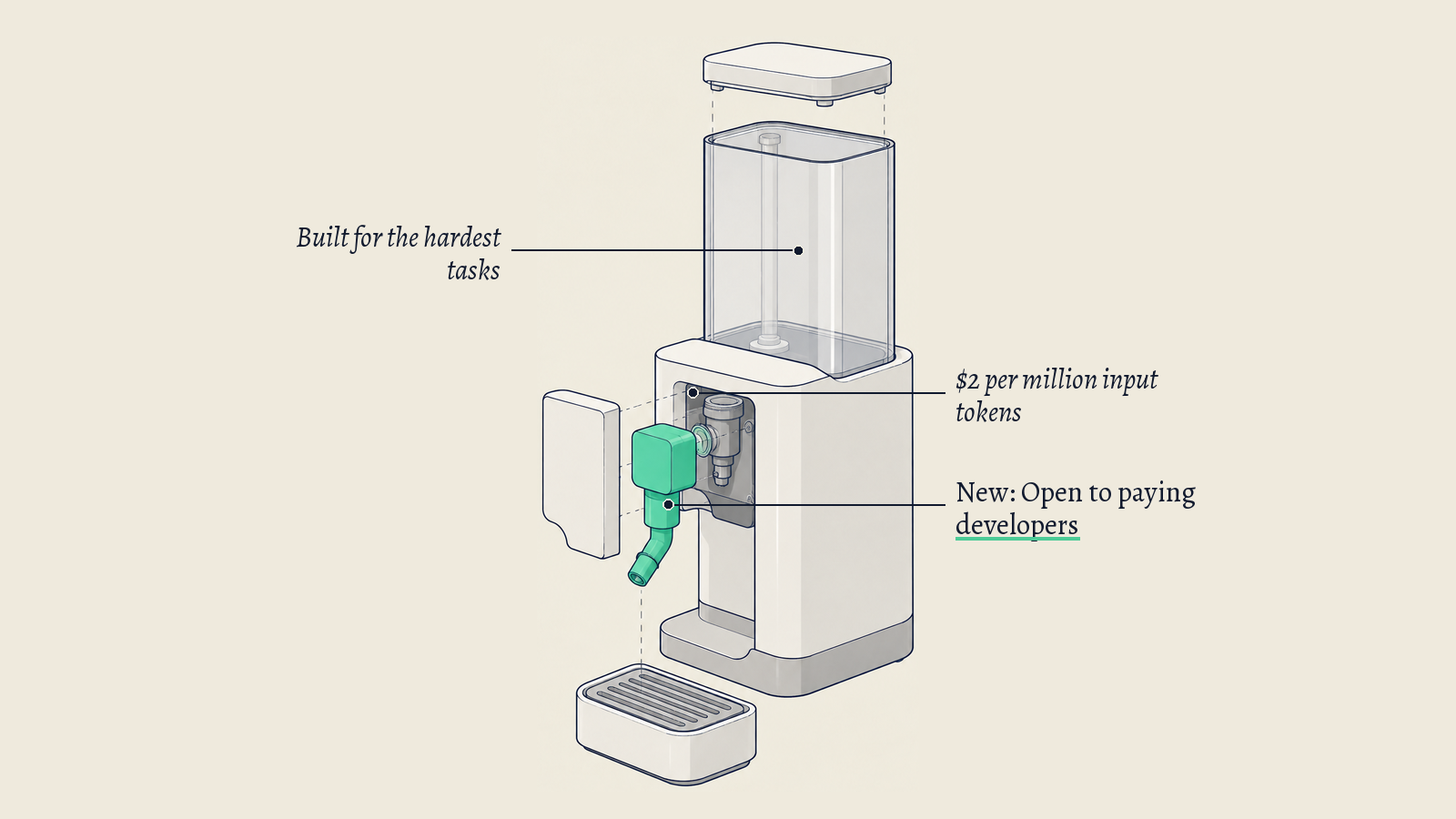
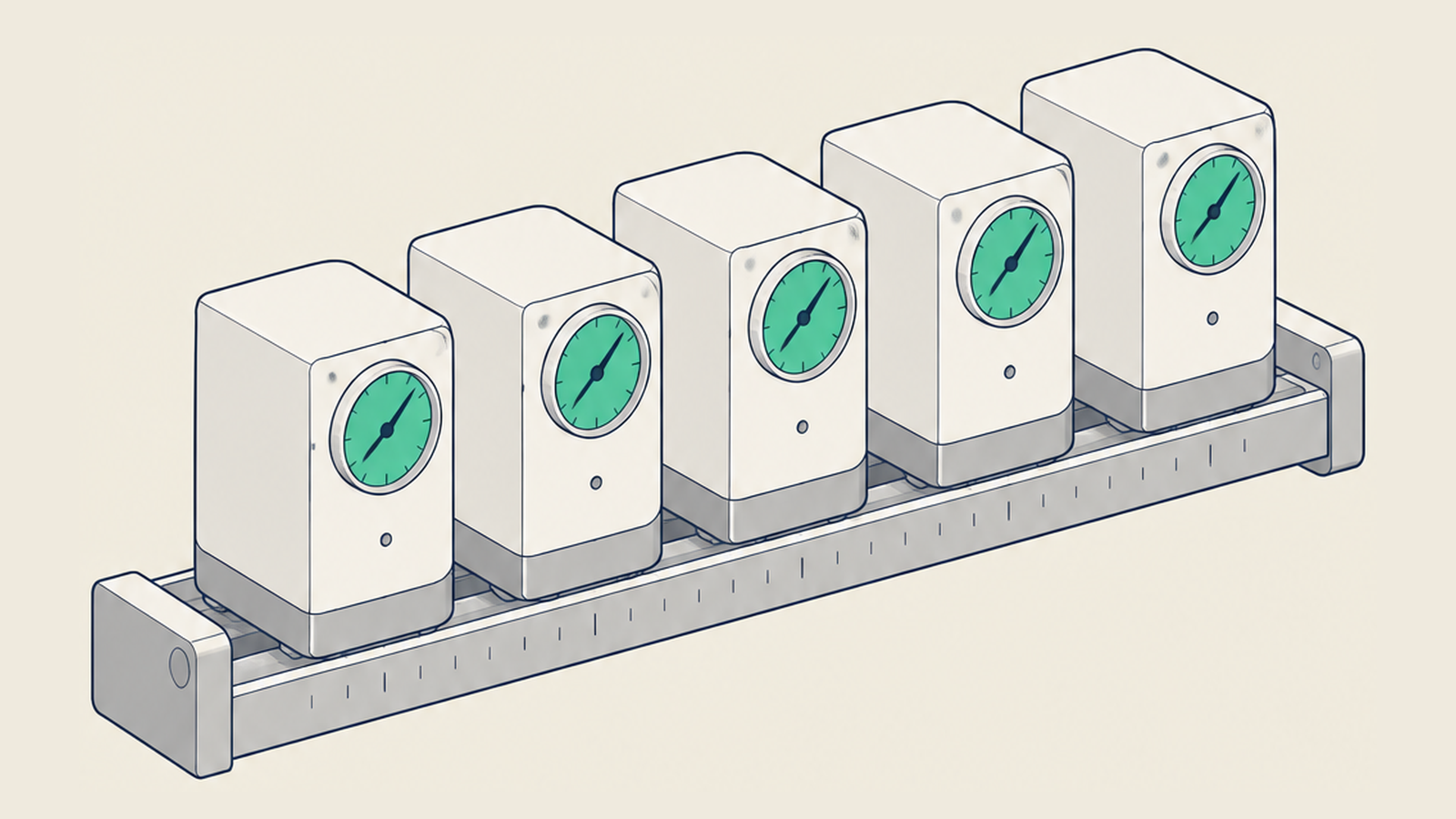
Illustration: A sealed dispensing unit with a metered tap; its green nozzle stands for Gemini 4 Carbon opening to paying developers.Illustration made with AI for ai notis

Google says Carbon ranks first on three benchmarks at more than 2X lower cost per task than the next best external model; the introductory price ends on 30 November.

SOURCEGoogle DeepMind · 1 source
CHECKED12 Nov, 05:34
Models read
Illustration: A sealed dispensing unit with a metered tap; its green nozzle stands for Gemini 4 Carbon opening to paying developers. Models / 12 NOV

Gemini 4 Carbon, which Google built for hard tasks, opens to paying developers

  • Google opened Gemini 4 Carbon on 10 November to all paying developers and enterprises through Google AI Studio and Gemini for business, two weeks after limiting it to cyber defenders.
  • The introductory price is $2 per million input tokens and $10 per million output tokens; after 30 November 2026 it is $4 and $20.
  • Google says Carbon uses more tokens than Gemini 4 Argon to explore and verify, and that Argon remains the better choice for most software engineering and knowledge work.

Google opened Gemini 4 Carbon to paying Gemini API developers and enterprises on 10 November, two weeks after it limited the model to cybersecurity defenders. Google DeepMind announced it in a post by Koray Kavukcuoglu, its SVP and Google's chief AI architect.

Google says Carbon is built for work that tests the limits of a model: complex multi-step coding and debugging, and open-ended scientific research. It says Carbon uses more tokens than Gemini 4 Argon to explore and verify, and that Argon remains the better choice for most software engineering and knowledge work.

On performance, Google says Carbon ranks first on CursorBench 4.0, Perplexity's WANDR and Zapier's AutomationBench, at more than 2 times lower cost per task than the next best external model. The rankings are Google's statement; the post names WANDR as Perplexity's and AutomationBench as Zapier's. It also says Carbon ranks second on a Multimodal Knowledge Agent benchmark it launched with Artificial Analysis, at more than 6 times lower average cost per task than the top model.

In Google's own cyberattack simulations, it says Carbon's safeguards cut the per-attempt breach rate to 0.8%, from 3.1% on Argon.

The API is open to all paying developers through Google AI Studio and to enterprises through Gemini for business. Google AI Ultra subscribers get it in Google Antigravity, the Gemini app and AI Mode in Search. Scientists can apply for free access through Antigravity for six months, and cyber defenders can apply to the Fairwind Program.

Google prices Carbon at the same introductory rate as Argon, $2 per million input tokens and $10 per million output tokens. After 30 November 2026 the price becomes $4 and $20. Google is also previewing a /swarm feature in Antigravity that turns one prompt into a coordinated team of agents.

What it means for you Our view

Google positions Carbon for the hardest coding and research tasks, and says Argon remains the better choice for most software engineering and knowledge work, so most teams will not need to switch. The cost-per-task claim is Google's own statement on three benchmarks, and a model that uses more tokens can cost more per task than its per-token price suggests. The price also rises on 30 November. Before then, run a few of your hardest tasks on both Carbon and Argon, record the tokens each uses, and cost them at the later price.

TAGSGeminiGoogleGoogle AI StudioGoogle Antigravity
toned down Models 12 NOV

Google releases Gemini Decisions API, which returns probabilities for up to 1,000 questions

GeminiGemini Decisions APIGoogle
Header artwork for the Gemini Decisions API launch post, Google's own illustration of the releaseImage: Google

The gemini-decision-1 model produces no text output, so Google charges $0.10 per million input tokens only; Google says it has the lowest calibration error in its own comparison.

SOURCEGoogle · 4 sources
CHECKED12 Nov, 05:35
Models read
Header artwork for the Gemini Decisions API launch post, Google's own illustration of the release Models / 12 NOV

Google releases Gemini Decisions API, which returns probabilities for up to 1,000 questions

  • A request takes shared input up to 262,144 tokens and up to 1,000 independent questions; a yes/no answer returns a probability from 0.01 to 0.99.
  • Google says median latency is 150-250 ms up to 16K tokens, and it is nearly 5x cheaper than Gemini 3.5 Flash-Lite with the Interactions API across the shared benchmark suite.
  • The paid tier costs $0.10 per million input tokens and $0 for output; context caching, the Batch API, and Flex or Priority inference are not supported.

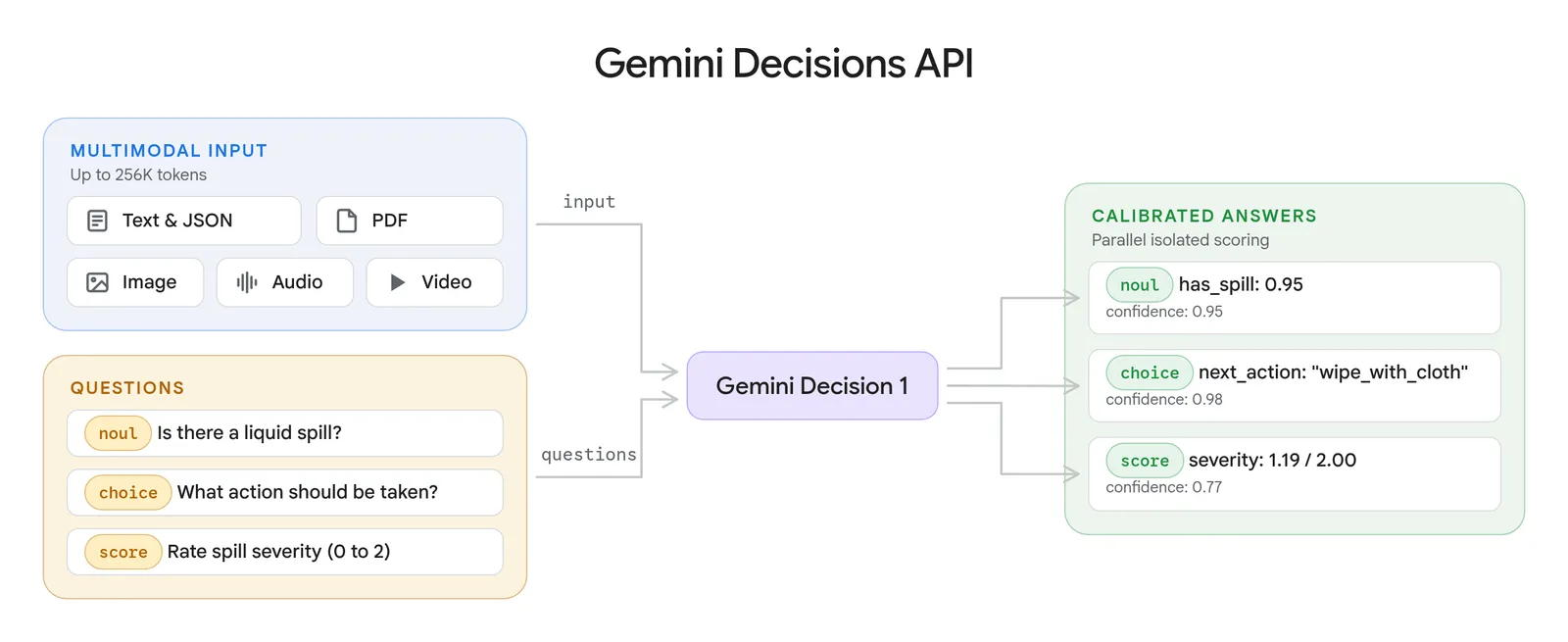
Google released the Gemini Decisions API on 11 November, an endpoint that answers yes/no, multiple-choice and rubric questions about one shared input and returns probabilities instead of text. It runs on a new model, gemini-decision-1, in the Gemini API's v1beta version. Google DeepMind's Min Choi and Felix Yu announced it in a blog post.

Google says it is meant for bounded choices such as tool selection, policy checks, model routing and context grading. One request can carry text, images, audio, video or PDFs up to 262,144 tokens and up to 1,000 independent questions. A yes/no answer comes back with a probability and a confidence score, a choice question takes 2 to 255 options, and a rubric question takes 2 to 255 ordered levels.

Google says the model leads on benchmarks spanning agent routing, reasoning, ranking and multimodal understanding, with the lowest calibration error. The post's text does not name those benchmarks, and the comparison is Google's own. It also says the model scores options without token-by-token decoding, a median of 150 to 250 milliseconds for contexts up to 16K tokens, and that it is nearly 5 times cheaper across the shared benchmark suite than Gemini 3.5 Flash-Lite with the Interactions API.

Google says one of its own products, Gemini Notebook, uses it as a router. Google says Gemini Notebook uses the API to send each query to the right model tier and thinking level, which it says serves everyday queries with up to 40% lower latency.

The paid tier costs $0.10 per million input tokens, with no charge for output because the model generates none. The shared input is billed once per request however many questions are asked, and each question adds only its own instructions and criteria. There is a free tier in Google AI Studio for prototyping.

The docs list limits: no context caching, no Batch API, and no Flex or Priority inference. They also tell developers to treat input as untrusted, because user-supplied text can argue for its own classification. Google says integrations are rolling out across OpenRouter, LangChain, Vercel, LiteLLM, Pydantic AI, Pipecat, LiveKit and OpenCode, with support for Gemini in Google Cloud coming soon.

This note continues the case on typed decision models and APIs.

What it means for you Our view

The API is built for bounded choices such as routing, policy checks and context grading, so it suits a different job from a general model. Google's latency and cost comparisons are its own, and the post's text does not name the benchmarks behind them. The docs also warn that user-supplied text can argue for its own classification, which matters when an answer gates an action. Compare the listed limits with your own request volume before you build a routing layer on it.

TAGSGeminiGemini Decisions APIGoogle
Google · 4 sources tap to close
NOTHING IN THIS FILTER No story today matches. open the archive →
That's today's news: three stories. ExplainedHow a confidence score lets code act on Gemini Decisions API answers

The morning email

On the mornings we publish: the three top stories and up to four short ones. Free.

We email you a link to confirm. An issue may include one sponsor, always labelled Sponsored · Advertisement. Our emails count opens and clicks, not who made them. Unsubscribe in one click. What we keep

1 of 3
Illustration: A wall-mounted dial gauge with a curved scale and a needle; its green limit notch stands for a safety threshold Anthropic says it has met.Illustration made with AI for ai notis

Safety · 12 NOV

Anthropic says it met its AI R&D threshold, judged on expected future models

Amendment No. 2, filed 10 November, drops the 2 November "may imminently meet" wording, and Anthropic says AI systems are already accelerating its own research and development.

  • Amendment No. 2 to Anthropic's S-1, filed 10 November, says it made the determination based on what it expects from future models and its overall rate of progress.
  • Amendment No. 1, filed 2 November, said Anthropic "may imminently meet" the definition; the 10 November text contains neither that phrase nor its statement about current models.
  • RSP v3.4 requires a full external review of significantly redacted Risk Reports covering highly capable models, and a published analysis within 30 days of a qualifying determination.
Checked 12 Nov, 05:34 · Anthropic, PBC (SEC EDGAR) · 4 sources
Illustration: A sealed dispensing unit with a metered tap; its green nozzle stands for Gemini 4 Carbon opening to paying developers.Illustration made with AI for ai notis

Models · 12 NOVnarrowed

Gemini 4 Carbon, which Google built for hard tasks, opens to paying developers

Google says Carbon ranks first on three benchmarks at more than 2X lower cost per task than the next best external model; the introductory price ends on 30 November.

  • Google opened Gemini 4 Carbon on 10 November to all paying developers and enterprises through Google AI Studio and Gemini for business, two weeks after limiting it to cyber defenders.
  • The introductory price is $2 per million input tokens and $10 per million output tokens; after 30 November 2026 it is $4 and $20.
  • Google says Carbon uses more tokens than Gemini 4 Argon to explore and verify, and that Argon remains the better choice for most software engineering and knowledge work.
Checked 12 Nov, 05:34 · Google DeepMind · 1 source
Header artwork for the Gemini Decisions API launch post, Google's own illustration of the releaseImage: Google

Models · 12 NOVnarrowed

Google releases Gemini Decisions API, which returns probabilities for up to 1,000 questions

The gemini-decision-1 model produces no text output, so Google charges $0.10 per million input tokens only; Google says it has the lowest calibration error in its own comparison.

  • A request takes shared input up to 262,144 tokens and up to 1,000 independent questions; a yes/no answer returns a probability from 0.01 to 0.99.
  • Google says median latency is 150-250 ms up to 16K tokens, and it is nearly 5x cheaper than Gemini 3.5 Flash-Lite with the Interactions API across the shared benchmark suite.
  • The paid tier costs $0.10 per million input tokens and $0 for output; context caching, the Batch API, and Flex or Priority inference are not supported.
Checked 12 Nov, 05:35 · Google · 4 sources

You're all caught up

That's today's news: three stories.

ExplainedHow a confidence score lets code act on Gemini Decisions API answers

You can join ai notis soon, to follow cases and keep stories on every device.

Follow us on Instagram and Threads

The morning email

On the mornings we publish: the three top stories and up to four short ones. Free.

We email you a link to confirm. An issue may include one sponsor, always labelled Sponsored · Advertisement. Our emails count opens and clicks, not who made them. Unsubscribe in one click. What we keep

No story today matches. Open the archive
Today's stories 3 STORIES

Today's stories

Thu 12 Nov · 3 STORIES
  1. Safety · 12 NOV

    Anthropic says it met its AI R&D threshold, judged on expected future models

    Illustration: A wall-mounted dial gauge with a curved scale and a needle; its green limit notch stands for a safety threshold Anthropic says it has met.Illustration made with AI for ai notis

    Amendment No. 2, filed 10 November, drops the 2 November "may imminently meet" wording, and Anthropic says AI systems are already accelerating its own research and development.

    Checked 12 Nov, 05:34 · Anthropic, PBC (SEC EDGAR) · 4 sourcesRead

  2. Models · 12 NOV · narrowed

    Gemini 4 Carbon, which Google built for hard tasks, opens to paying developers

    Illustration: A sealed dispensing unit with a metered tap; its green nozzle stands for Gemini 4 Carbon opening to paying developers.Illustration made with AI for ai notis

    Google says Carbon ranks first on three benchmarks at more than 2X lower cost per task than the next best external model; the introductory price ends on 30 November.

    Checked 12 Nov, 05:34 · Google DeepMind · 1 sourceRead

  3. Models · 12 NOV · narrowed

    Google releases Gemini Decisions API, which returns probabilities for up to 1,000 questions

    Header artwork for the Gemini Decisions API launch post, Google's own illustration of the releaseImage: Google

    The gemini-decision-1 model produces no text output, so Google charges $0.10 per million input tokens only; Google says it has the lowest calibration error in its own comparison.

    Checked 12 Nov, 05:35 · Google · 4 sourcesRead

Safety 12 NOV

Anthropic says it met its AI R&D threshold, judged on expected future models

Amendment No. 2, filed 10 November, drops the 2 November "may imminently meet" wording, and Anthropic says AI systems are already accelerating its own research and development.

Anthropic, PBC (SEC EDGAR) · 4 sources·checked 12 Nov, 05:34
AnthropicIPOResponsible Scaling PolicyS-1
Illustration: A wall-mounted dial gauge with a curved scale and a needle; its green limit notch stands for a safety threshold Anthropic says it has met.Illustration made with AI for ai notis
toned down Models

Gemini 4 Carbon, which Google built for hard tasks, opens to paying developers

Google says Carbon ranks first on three benchmarks at more than 2X lower cost per task than the next best external model; the introductory price ends on 30 November.

12 NOV · Google DeepMind · 1 source
toned down Models

Google releases Gemini Decisions API, which returns probabilities for up to 1,000 questions

The gemini-decision-1 model produces no text output, so Google charges $0.10 per million input tokens only; Google says it has the lowest calibration error in its own comparison.

12 NOV · Google · 4 sources

Explained

One idea behind the news
Models How a confidence score lets code act on Gemini Decisions API answers Gemini Decision 1 returns a probability and a confidence with every answer; Google's docs show where a threshold sends a case to a person and where it falls short.
In brief 3 more today
0 of 3 read
Drag a card to start Drag left or right · tap to read more Hover to lift a card · tap to bring it forward Tap again to put it back Tap a card to open it Tap again to close it Tap a headline to read it as a card