2026-11-17 notis CATEGORY Join
Show Read as Find Sections Models and releasesAgents and appsResearchMoney and computeLaws and rulingsSafety and securityAI at work More The monthlyArchiveModelsAboutCorrectionsThe numbersRSS
My notis
TODAY'S NEWS
November 2026 3 STORIES
MTWTFSS
1 2 3 4 5 6 7 8 9 10 11 12 13 14 15 16 17 18 19 20 21 22 23 24 25 26 27 28 29 30

Days with a dot have news. See the archive.

The whole week ›
07:59
0/3
WEATHER THEME CARD SPACING

Today's news

today

My page

Kept in this browser only.

SAVED FOLLOWING COLLECTIONS READING SINCE
Nothing saved yet. Tap the bookmark on a card to keep it here. read today
all cases

No case followed yet.

Price changes Stories where a published price went up or down.
Models being retired Models being withdrawn, and gaps before a replacement is ready.
The day's top stories. Sign up
Laws 17 NOV

Data centres will need licences to rent large AI compute to China-headquartered companies

AI chipsBISDatacentresExport controls
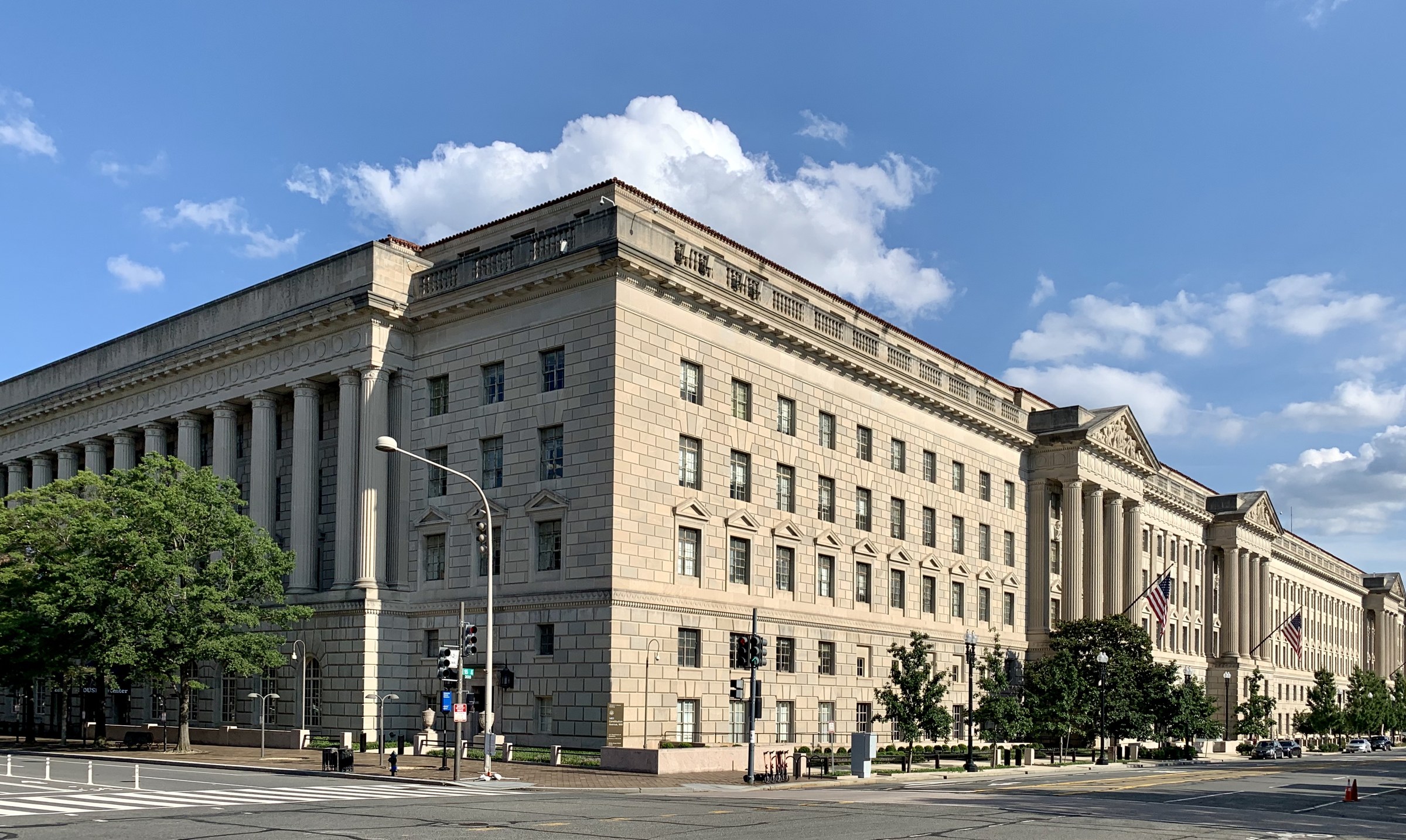
The stone-faced Herbert C. Hoover Building, the US Commerce Department headquarters, seen from a street corner in Washington, D.C., with US flags on the facade.APK / Herbert C. Hoover Building Washington, D.C. / CC BY-SA 4.0, cropped

Not yet in force, the US Commerce Department rule covers access above 12,000,000 TPP of compute for companies headquartered in China, Macau or other D:5 countries, plus chip exports to five countries.

SOURCEBureau of Industry and Security, US Department of Commerce · 6 sources
CHECKED16 Nov, 18:25
Laws read
The stone-faced Herbert C. Hoover Building, the US Commerce Department headquarters, seen from a street corner in Washington, D.C., with US flags on the facade. Laws / 17 NOV

Data centres will need licences to rent large AI compute to China-headquartered companies

  • A licence will be needed for a data centre giving companies headquartered in Macau or a Country Group D:5 country access above 12,000,000 aggregate TPP, counted across linked sites.
  • A data centre already serving such companies must get a licence within 90 days of the effective date; compute used only for commercial recommender systems is exempt.
  • Licences will also be needed to export advanced chips to Indonesia, Malaysia, Singapore, Thailand and Brazil; the rule takes effect on Federal Register publication, a date not yet set.

Once it takes effect, a US licence will be required to supply advanced AI chips to a data centre anywhere in the world when the supplier knows it will give more than 12,000,000 aggregate TPP of computing power to companies headquartered in Macau or in a Country Group D:5 destination. That is the central new control in an interim final rule from the Bureau of Industry and Security, published on its website on 16 November 2026 under RIN 0694-AK50.

BIS says the rule was written by and at the direction of the Department of the Treasury and the National Security Council, and is meant to ensure that existing restrictions on sensitive American technology cannot be circumvented through remote computing arrangements, including data centres in third countries. CNBC reported that it is the first US policy response to the scandal at Nvidia that led its chief executive, Jensen Huang, to resign, and that it follows criticism of Commerce Secretary Howard Lutnick for not doing enough to prevent chip diversion to China. Semafor reported that the rule aims to close a remote access loophole through which Chinese AI firms used US-made chips in third-country data centres, a practice it says was most intensely applied in Indonesia, Malaysia, Singapore and Thailand.

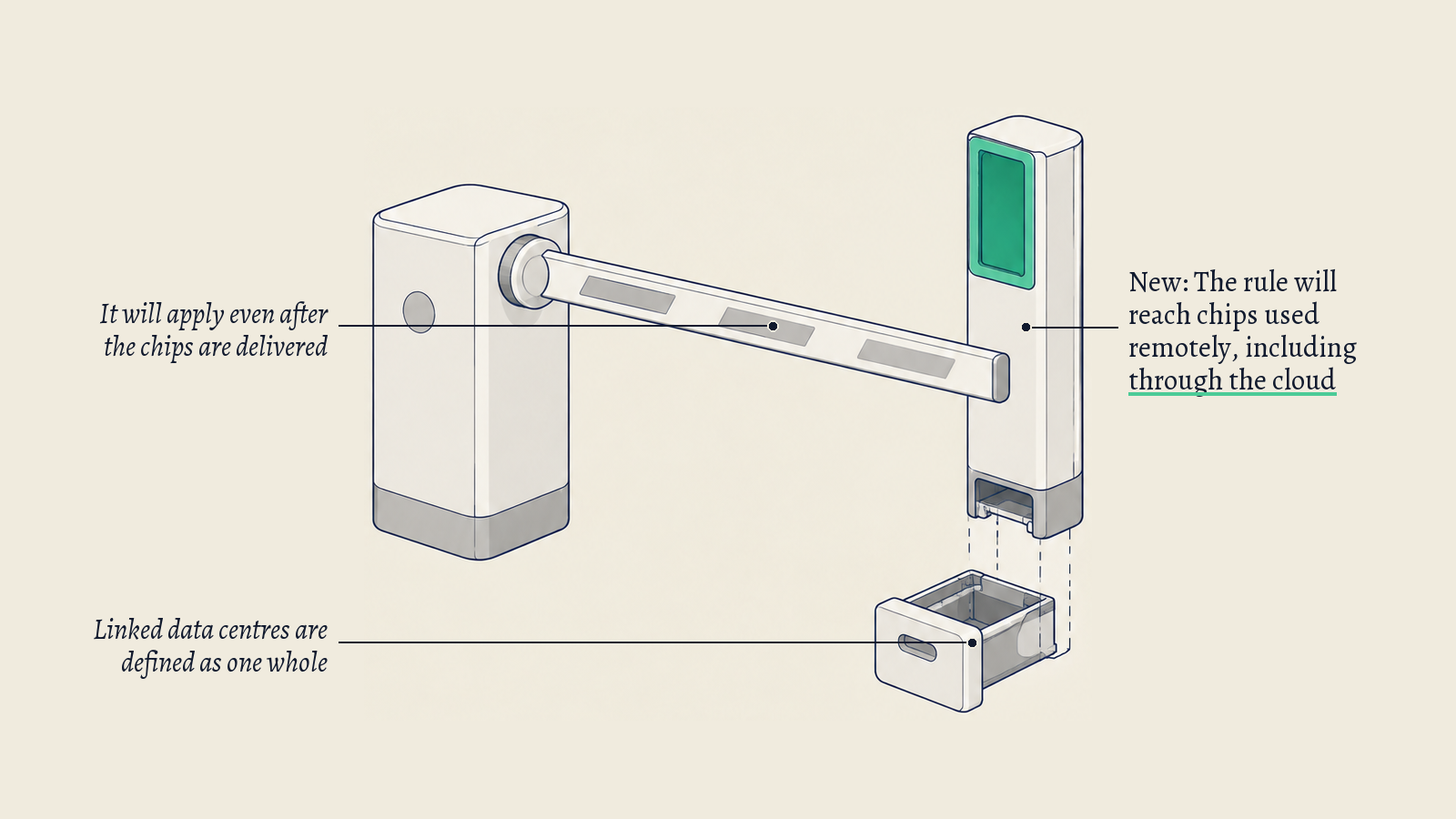
The 12,000,000 aggregate TPP will be counted either at one data centre or across linked data centres, which the rule defines to include digitally linked sites and not only physically linked ones. Licence applications will be reviewed case by case. The rule's reach extends to a customer that is not itself headquartered in D:5 but is training models for, or supplying models to, a D:5 company.

A data centre that was already supplying significant volumes of compute to such companies before the rule is published, and wants to keep doing so, will have to obtain a licence within 90 days of the effective date. The licence requirement will not apply when the compute is used only for commercial recommender systems, which the rule defines narrowly and which exclude any system that generates text, images, audio, video or software.

Separately, a licence will be required to export advanced semiconductors to Indonesia, Malaysia, Singapore, Thailand and Brazil, which the rule calls destinations with a higher risk of diversion. That requirement will not apply to a buyer headquartered in the United States, or whose ultimate parent is, provided reporting requirements are met. Commerce says it will watch for countries that tolerate evasion and may respond with import restrictions, new licence requirements or Entity List designations.

The rule text says "SI", for Super Intelligence, in place of "AI", citing Executive Order 14434 in its footnote 1; the items it covers are what this article calls AI chips.

The rule takes effect on the date it is published in the Federal Register, and comments are due 60 days after that. The rule text has these dates as blanks, so no date is fixed yet and the rule is not in force. BIS's press release gives no thresholds, country list or deadline; they are in the rule text. The same rule formally rescinds the AI Diffusion Rule's regulations, which BIS says were never enforced.

What it means for you Our view

If you run or rent AI compute through a data centre outside the US, find out now whether any customer, or any customer's customer, is headquartered in Macau or a D:5 country. The rule will reach a customer that trains models for, or supplies models to, such a company, and linked sites count together, so the threshold may be met across several facilities. Nothing is in force: the effective date depends on Federal Register publication, and comments will be due 60 days after it. Watch for that notice, because it will fix the date and start the clock for existing arrangements.

TAGSAI chipsBISDatacentresExport controls
toned down Models 17 NOV

Alibaba releases Qwen4-Max, a multimodal flagship with a 1M-token context window

AlibabaLong contextQwenQwenCloud
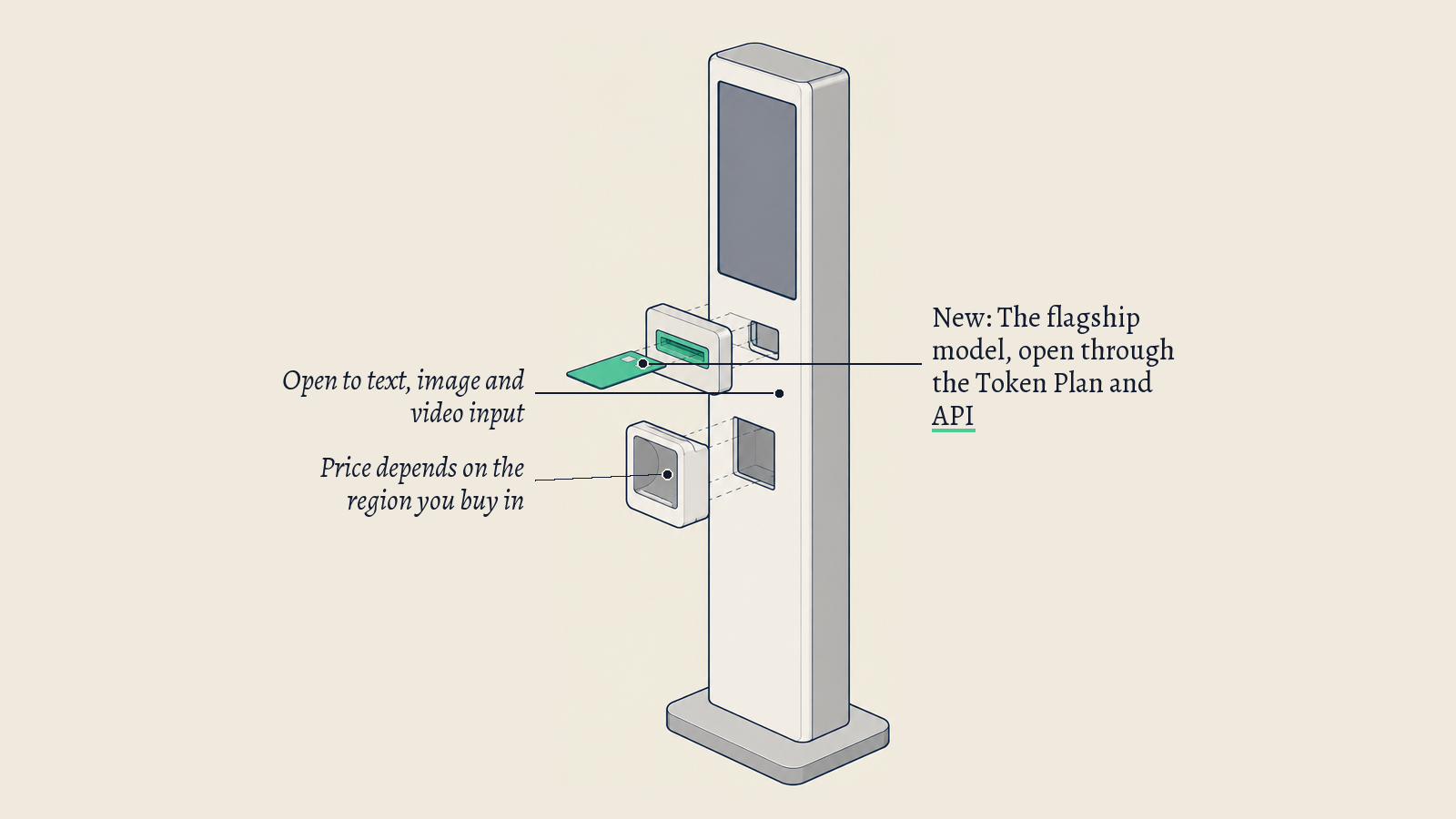
Illustration: A white access kiosk with a tall display column and a card slot; the green slot stands for the new flagship model opening through the Token Plan and API.Illustration made with AI for ai notis

Alibaba says Qwen4-Max beats Qwen3.8-Max on its own Work360 test and ranked 6th on Code Arena; it costs $1.50 input and $4.50 output per 1M tokens in Singapore, less elsewhere.

SOURCEAlibaba Cloud · 3 sources
CHECKED16 Nov, 17:50
Models read
Illustration: A white access kiosk with a tall display column and a card slot; the green slot stands for the new flagship model opening through the Token Plan and API. Models / 17 NOV

Alibaba releases Qwen4-Max, a multimodal flagship with a 1M-token context window

  • Alibaba says the mixture-of-experts model has 2.4 trillion total parameters and activates 71 billion per token, 25% fewer activated parameters than Qwen3.8-Max.
  • Alibaba Cloud lists $1.50 per 1M input tokens and $4.50 output in Singapore, and $1.413 and $4.24 in China (Beijing), Hong Kong, Germany (Frankfurt), US (Virginia) and Japan (Tokyo).
  • On Work360 at High effort, Alibaba says Qwen4-Max used 35% fewer tokens than Qwen3.8-Max and cut average cost per task by around 60%.

Alibaba has released Qwen4-Max, which it calls the most capable model in the Qwen family to date, for complex work, creative and research tasks. It is a mixture-of-experts model with 2.4 trillion total parameters that activates 71 billion per token, according to Alibaba's press release of 16 November 2026.

Alibaba's own benchmark claims are that Qwen4-Max ranked 6th on Code Arena, a real-world coding leaderboard (the release does not say against which models), and that on its Work360 evaluation it outperforms its predecessor, Qwen3.8-Max, overall. It says it did so with 35% fewer tokens at High effort reasoning mode and an average cost per task around 60% lower. These are Alibaba's results, not independent ones.

Qwen4-Max is available now on QwenCloud through the Token Plan and the API, and Alibaba says it can also be used across its platforms, including QwenWork and QwenStudio. Alibaba says open-weight, smaller models from the Qwen4 series will soon be released to developers worldwide, without giving a date. It also says it filtered the training data by task intent, keeping defensive cybersecurity material and removing offensive attack content.

Alibaba Cloud's Model Studio documentation lists a context of up to 1,000,000 tokens, with a maximum output of 131,072 tokens without thinking and 262,144 for thinking plus the final answer. The price is $1.50 per 1M input tokens and $4.50 per 1M output tokens in Singapore, with a free quota of 1 million tokens valid for 90 days. In China (Beijing), Hong Kong, Germany (Frankfurt), US (Virginia) and Japan (Tokyo) it is $1.413 input and $4.24 output.

An earlier Qwen4-Max-Preview, open only through a Token Plan from 11 November, will be retired after 25 November.

What it means for you Our view

Read the $1.50 input price as Singapore's: the other five listed regions are priced lower, so what you pay depends on where you buy. The performance claims come from Alibaba's own Work360 evaluation and from a Code Arena ranking whose comparison set the release does not name, so they say little yet about your tasks. Alibaba promises smaller open-weight Qwen4 models without a date. The earlier Qwen4-Max-Preview, open only through a Token Plan, will be retired after 25 November. Before moving any work, run a sample of your own tasks and compare cost per task in the region you would use.

TAGSAlibabaLong contextQwenQwenCloud
toned down Research 17 NOV

Nvidia says Vera Rubin NVL72 trained DeepSeek-V3 in 4.14 minutes on 1,024 GPUs

DeepSeekMLCommonsMLPerfNvidiaVera Rubin
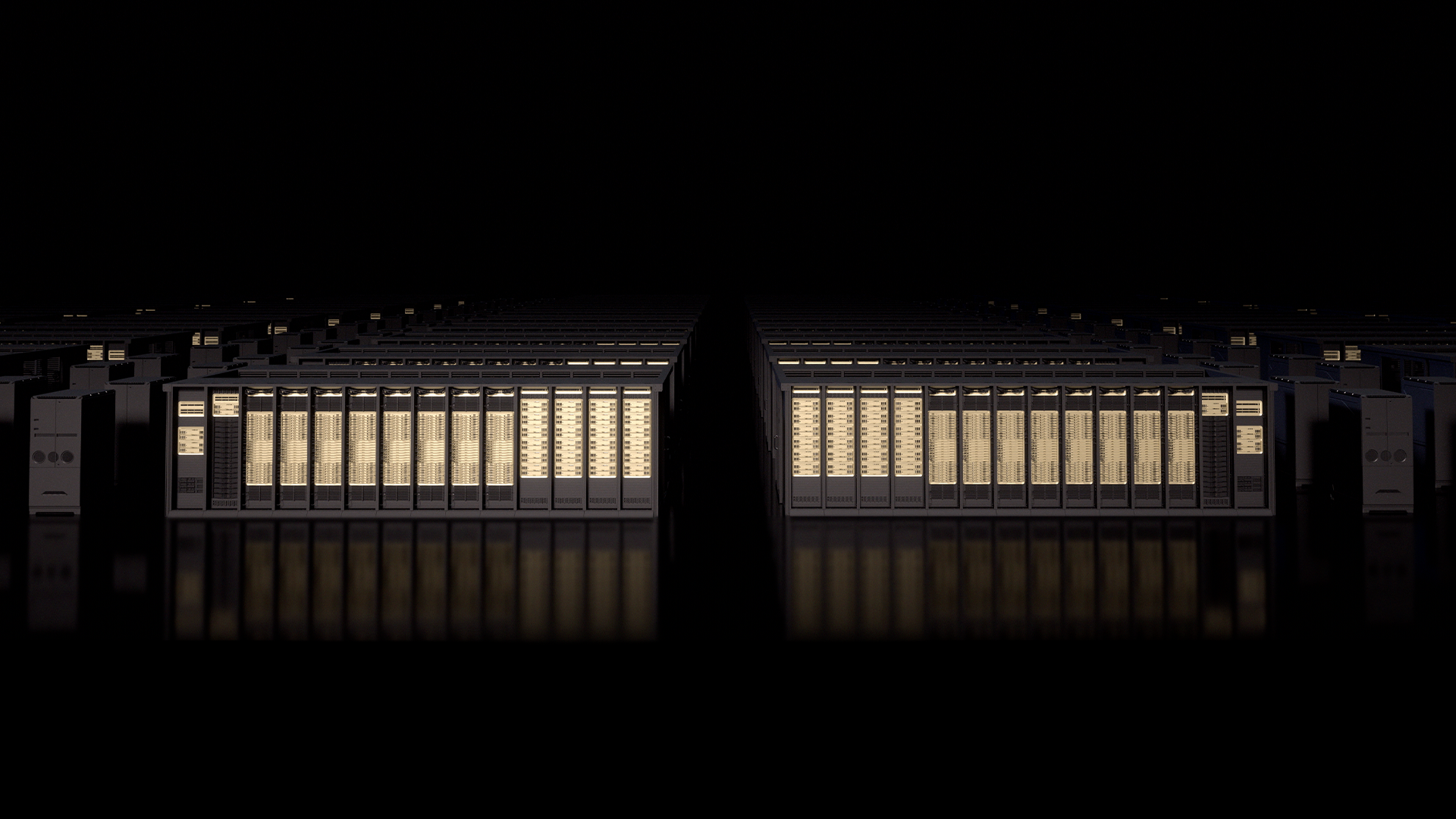
Two facing rows of dark data-centre racks with lit, cream-coloured server trays, reflected in a black floor.Image: NVIDIA

In Nvidia's own MLPerf Training v6.1 account, GB300 NVL72 took 8.03 minutes on the same GPUs; Vera Rubin's drop from 16 minutes on 256 GPUs to about four came from four times the GPUs.

SOURCENVIDIA · 3 sources
CHECKED16 Nov, 17:38
Research read
Two facing rows of dark data-centre racks with lit, cream-coloured server trays, reflected in a black floor. Research / 17 NOV

Nvidia says Vera Rubin NVL72 trained DeepSeek-V3 in 4.14 minutes on 1,024 GPUs

  • On the same 1,024 GPUs, Nvidia's developer blog says Vera Rubin NVL72 took 4.14 minutes to train DeepSeek-V3 671B and GB300 NVL72 took 8.03 minutes.
  • The fastest absolute DeepSeek-V3 time was GB300 NVL72 at 1.38 minutes on 10,240 GPUs, Nvidia says; MLCommons published the round on 16 November, with 153 systems.
  • Nvidia's provisional Kimi K3 claim of more than 10x the throughput per watt of GB300 NVL72 is pending MLCommons verification and subject to change.

Nvidia says Vera Rubin NVL72 made its MLPerf Training debut in Training v6.1 with up to twice the performance per GPU of GB300 NVL72, and calls the results early. MLCommons published the Training v6.1 results on 16 November: 24 submitting organisations, 153 systems and 250 test results, and it says the submissions included NVIDIA Rubin-generation GPUs for the first time.

On DeepSeek-V3, Nvidia says Vera Rubin NVL72 scaled from 256 to 1,024 GPUs at about 97 percent efficiency, and that quadrupling the GPUs cut time to train from 16 minutes to about four. That drop comes from using four times the GPUs, not from a newer chip.

On the same 1,024 GPUs, Nvidia's developer blog says Vera Rubin NVL72 trained DeepSeek-V3 in 4.14 minutes against 8.03 minutes for GB300 NVL72. It says the fastest absolute time was GB300 NVL72 at 1.38 minutes on 10,240 GPUs, and that Microsoft Azure matched that scale with 10,240 GB200 GPUs. The blog says Vera Rubin NVL72 had the fastest time to train on six of the seven benchmarks against an optimized GB300 NVL72 baseline, and cites three MLCommons entries (6.1-0045, 6.1-0030 and 6.1-0116) for its 1,024-GPU comparison without saying which entry is which.

Separately, in the first MLPerf Endpoints submission, a provisional result for the Kimi K3 model, Nvidia claims more than 10 times the throughput per watt of GB300 NVL72 at the same response speed. Its footnote to that result says the GB300 results were verified by MLCommons Association but the provisional Vera Rubin results are pending verification and subject to change. Nvidia describes Vera Rubin NVL72 as generally available through cloud partners. The post compares Nvidia's own systems only.

What it means for you Our view

This is Nvidia's account of its own systems: the post compares only its GB300 and GB200 hardware, so it says nothing about other vendors' chips. The drop from 16 minutes to about four reflects a larger cluster, which makes the like-for-like figure the one on 1,024 GPUs. Nvidia calls the results early, and the Kimi K3 throughput figure is provisional until MLCommons verifies it. If you compare cloud offers for model training, ask each provider for time to train at your own GPU count, not at the largest published scale.

TAGSDeepSeekMLCommonsMLPerfNvidiaVera Rubin
NVIDIA · 3 sources tap to close
NOTHING IN THIS FILTER No story today matches. open the archive →
That's today's news: three stories. ExplainedHow a US export rule will extend from shipped chips to rented compute

The morning email

On the mornings we publish: the three top stories and up to four short ones. Free.

We email you a link to confirm. An issue may include one sponsor, always labelled Sponsored · Advertisement. Our emails count opens and clicks, not who made them. Unsubscribe in one click. What we keep

1 of 3
The stone-faced Herbert C. Hoover Building, the US Commerce Department headquarters, seen from a street corner in Washington, D.C., with US flags on the facade.APK / Herbert C. Hoover Building Washington, D.C. / CC BY-SA 4.0, cropped

Laws · 17 NOV

Data centres will need licences to rent large AI compute to China-headquartered companies

Not yet in force, the US Commerce Department rule covers access above 12,000,000 TPP of compute for companies headquartered in China, Macau or other D:5 countries, plus chip exports to five countries.

  • A licence will be needed for a data centre giving companies headquartered in Macau or a Country Group D:5 country access above 12,000,000 aggregate TPP, counted across linked sites.
  • A data centre already serving such companies must get a licence within 90 days of the effective date; compute used only for commercial recommender systems is exempt.
  • Licences will also be needed to export advanced chips to Indonesia, Malaysia, Singapore, Thailand and Brazil; the rule takes effect on Federal Register publication, a date not yet set.
Checked 16 Nov, 18:25 · Bureau of Industry and Security, US Department of Commerce · 6 sources
Illustration: A white access kiosk with a tall display column and a card slot; the green slot stands for the new flagship model opening through the Token Plan and API.Illustration made with AI for ai notis

Models · 17 NOVnarrowed

Alibaba releases Qwen4-Max, a multimodal flagship with a 1M-token context window

Alibaba says Qwen4-Max beats Qwen3.8-Max on its own Work360 test and ranked 6th on Code Arena; it costs $1.50 input and $4.50 output per 1M tokens in Singapore, less elsewhere.

  • Alibaba says the mixture-of-experts model has 2.4 trillion total parameters and activates 71 billion per token, 25% fewer activated parameters than Qwen3.8-Max.
  • Alibaba Cloud lists $1.50 per 1M input tokens and $4.50 output in Singapore, and $1.413 and $4.24 in China (Beijing), Hong Kong, Germany (Frankfurt), US (Virginia) and Japan (Tokyo).
  • On Work360 at High effort, Alibaba says Qwen4-Max used 35% fewer tokens than Qwen3.8-Max and cut average cost per task by around 60%.
Checked 16 Nov, 17:50 · Alibaba Cloud · 3 sources
Two facing rows of dark data-centre racks with lit, cream-coloured server trays, reflected in a black floor.Image: NVIDIA

Research · 17 NOVnarrowed

Nvidia says Vera Rubin NVL72 trained DeepSeek-V3 in 4.14 minutes on 1,024 GPUs

In Nvidia's own MLPerf Training v6.1 account, GB300 NVL72 took 8.03 minutes on the same GPUs; Vera Rubin's drop from 16 minutes on 256 GPUs to about four came from four times the GPUs.

  • On the same 1,024 GPUs, Nvidia's developer blog says Vera Rubin NVL72 took 4.14 minutes to train DeepSeek-V3 671B and GB300 NVL72 took 8.03 minutes.
  • The fastest absolute DeepSeek-V3 time was GB300 NVL72 at 1.38 minutes on 10,240 GPUs, Nvidia says; MLCommons published the round on 16 November, with 153 systems.
  • Nvidia's provisional Kimi K3 claim of more than 10x the throughput per watt of GB300 NVL72 is pending MLCommons verification and subject to change.
Checked 16 Nov, 17:38 · NVIDIA · 3 sources

You're all caught up

That's today's news: three stories.

ExplainedHow a US export rule will extend from shipped chips to rented compute

You can join ai notis soon, to follow cases and keep stories on every device.

Follow us on Instagram and Threads

The morning email

On the mornings we publish: the three top stories and up to four short ones. Free.

We email you a link to confirm. An issue may include one sponsor, always labelled Sponsored · Advertisement. Our emails count opens and clicks, not who made them. Unsubscribe in one click. What we keep

No story today matches. Open the archive
Today's stories 3 STORIES

Today's stories

Tue 17 Nov · 3 STORIES
  1. Laws · 17 NOV

    Data centres will need licences to rent large AI compute to China-headquartered companies

    The stone-faced Herbert C. Hoover Building, the US Commerce Department headquarters, seen from a street corner in Washington, D.C., with US flags on the facade.APK / Herbert C. Hoover Building Washington, D.C. / CC BY-SA 4.0, cropped

    Not yet in force, the US Commerce Department rule covers access above 12,000,000 TPP of compute for companies headquartered in China, Macau or other D:5 countries, plus chip exports to five countries.

    Checked 16 Nov, 18:25 · Bureau of Industry and Security, US Department of Commerce · 6 sourcesRead

  2. Models · 17 NOV · narrowed

    Alibaba releases Qwen4-Max, a multimodal flagship with a 1M-token context window

    Illustration: A white access kiosk with a tall display column and a card slot; the green slot stands for the new flagship model opening through the Token Plan and API.Illustration made with AI for ai notis

    Alibaba says Qwen4-Max beats Qwen3.8-Max on its own Work360 test and ranked 6th on Code Arena; it costs $1.50 input and $4.50 output per 1M tokens in Singapore, less elsewhere.

    Checked 16 Nov, 17:50 · Alibaba Cloud · 3 sourcesRead

  3. Research · 17 NOV · narrowed

    Nvidia says Vera Rubin NVL72 trained DeepSeek-V3 in 4.14 minutes on 1,024 GPUs

    Two facing rows of dark data-centre racks with lit, cream-coloured server trays, reflected in a black floor.Image: NVIDIA

    In Nvidia's own MLPerf Training v6.1 account, GB300 NVL72 took 8.03 minutes on the same GPUs; Vera Rubin's drop from 16 minutes on 256 GPUs to about four came from four times the GPUs.

    Checked 16 Nov, 17:38 · NVIDIA · 3 sourcesRead

Laws 17 NOV

Data centres will need licences to rent large AI compute to China-headquartered companies

Not yet in force, the US Commerce Department rule covers access above 12,000,000 TPP of compute for companies headquartered in China, Macau or other D:5 countries, plus chip exports to five countries.

Bureau of Industry and Security, US Department of Commerce · 6 sources·checked 16 Nov, 18:25
AI chipsBISDatacentresExport controls
The stone-faced Herbert C. Hoover Building, the US Commerce Department headquarters, seen from a street corner in Washington, D.C., with US flags on the facade.APK / Herbert C. Hoover Building Washington, D.C. / CC BY-SA 4.0, cropped
toned down Models

Alibaba releases Qwen4-Max, a multimodal flagship with a 1M-token context window

Alibaba says Qwen4-Max beats Qwen3.8-Max on its own Work360 test and ranked 6th on Code Arena; it costs $1.50 input and $4.50 output per 1M tokens in Singapore, less elsewhere.

17 NOV · Alibaba Cloud · 3 sources
toned down Research

Nvidia says Vera Rubin NVL72 trained DeepSeek-V3 in 4.14 minutes on 1,024 GPUs

In Nvidia's own MLPerf Training v6.1 account, GB300 NVL72 took 8.03 minutes on the same GPUs; Vera Rubin's drop from 16 minutes on 256 GPUs to about four came from four times the GPUs.

17 NOV · NVIDIA · 3 sources

Explained

One idea behind the news
Laws How a US export rule will extend from shipped chips to rented compute A rule BIS released on 16 November will extend US chip shipping controls to remote access; this explains how it reaches a data centre that rents out AI chips.
In brief 2 more today
0 of 3 read
Drag a card to start Drag left or right · tap to read more Hover to lift a card · tap to bring it forward Tap again to put it back Tap a card to open it Tap again to close it Tap a headline to read it as a card