DayWeek
The week

Week 47

27 stories in four editions, 16 to 19 November. Three days to go.

Mo 167 Tu 176 We 186 Th 198 Fr 20 Sa 21 Su 22

Most read this week

read on screen, counted from 15 Oct

Thursday 19 November

Good morning. The US cyber agency CISA has urged organisations to patch immediately a flaw in OpenJDK, the free Java software, that affects computers using x86-64 processors with AVX-512 VBMI; fixed releases are out. Here is what that means, and two other stories worth your time.

Open the edition →

Wednesday 18 November

Good morning. Anthropic's amended S-1 filed on 17 November keeps the estimated IPO price at $70.00 to $78.00 a share and says the company has been approved to list on Nasdaq as ANT. Two more stories follow.

Open the edition →

Tuesday 17 November

Good morning. The US Commerce Department's Bureau of Industry and Security has issued a rule that will require a licence for data centres anywhere to give companies headquartered in Macau or a Country Group D:5 country access to more than 12,000,000 aggregate TPP of computing power; it is not yet in force. Two more stories follow.

Open the edition →

Monday 16 November

Good morning. Anthropic says it expects to set its IPO price on 18 November and begin trading on 19 November, subject to regulatory clearance. Here is what that means, and two other stories worth your time.

Open the edition →
2026-11-19 notis CATEGORY Join
Show Read as Find Sections Models and releasesAgents and appsResearchMoney and computeLaws and rulingsSafety and securityAI at work More The monthlyArchiveModelsAboutCorrectionsThe numbersRSS
My notis
THIS WEEK'S NEWS
November 2026 12 STORIES
MTWTFSS
1 2 3 4 5 6 7 8 9 10 11 12 13 14 15 16 17 18 19 20 21 22 23 24 25 26 27 28 29 30

Days with a dot have news. See the archive.

Show one day ›
07:59
0/12
WEATHER THEME CARD SPACING

Today's news

today

My page

Kept in this browser only.

SAVED FOLLOWING COLLECTIONS READING SINCE
Nothing saved yet. Tap the bookmark on a card to keep it here. read today
all cases

No case followed yet.

Price changes Stories where a published price went up or down.
Models being retired Models being withdrawn, and gaps before a replacement is ready.
The day's top stories. Sign up
toned down Safety 19 NOV

CISA urges immediate patching of OpenJDK flaw on x86-64 CPUs with AVX-512 VBMI
CERT-EUCalifCodexJava4ShellOpenJDK
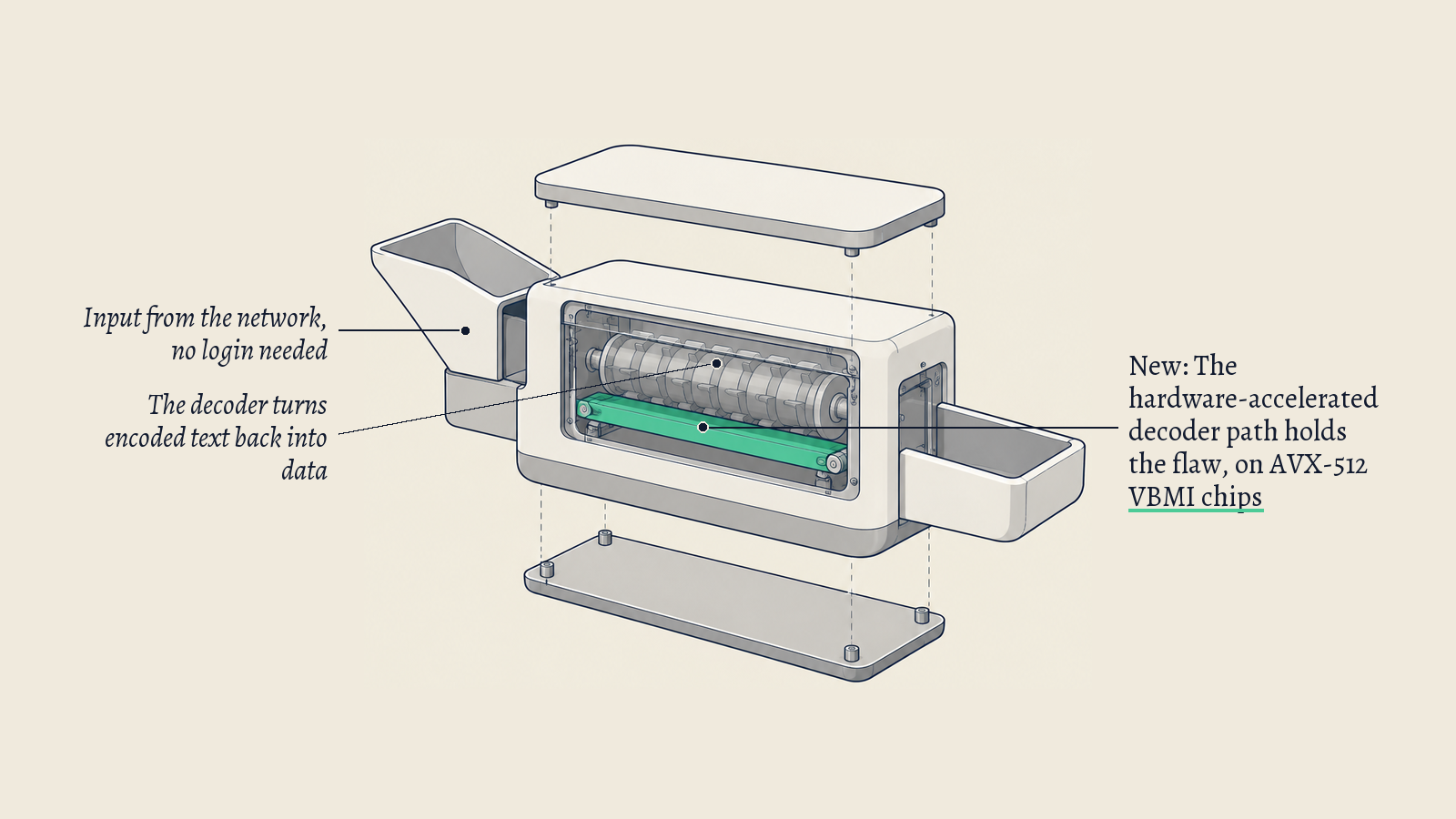
Illustration: A benchtop sorting machine with an input chute, decoding drum and output tray; its green fast lane beside the drum stands for the hardware-accelerated Base64 path where the flaw sits.Illustration made with AI for ai notis

Calif says an attacker with no credentials can reach code execution and that it directed Codex to find and weaponize the flaw; Wiz says its Wiz Atlas AI harness built an exploit.

SOURCECalif Research · 8 sources
CHECKED18 Nov, 17:48
Safety read
Illustration: A benchtop sorting machine with an input chute, decoding drum and output tray; its green fast lane beside the drum stands for the hardware-accelerated Base64 path where the flaw sits. Safety / 19 NOV

CISA urges immediate patching of OpenJDK flaw on x86-64 CPUs with AVX-512 VBMI

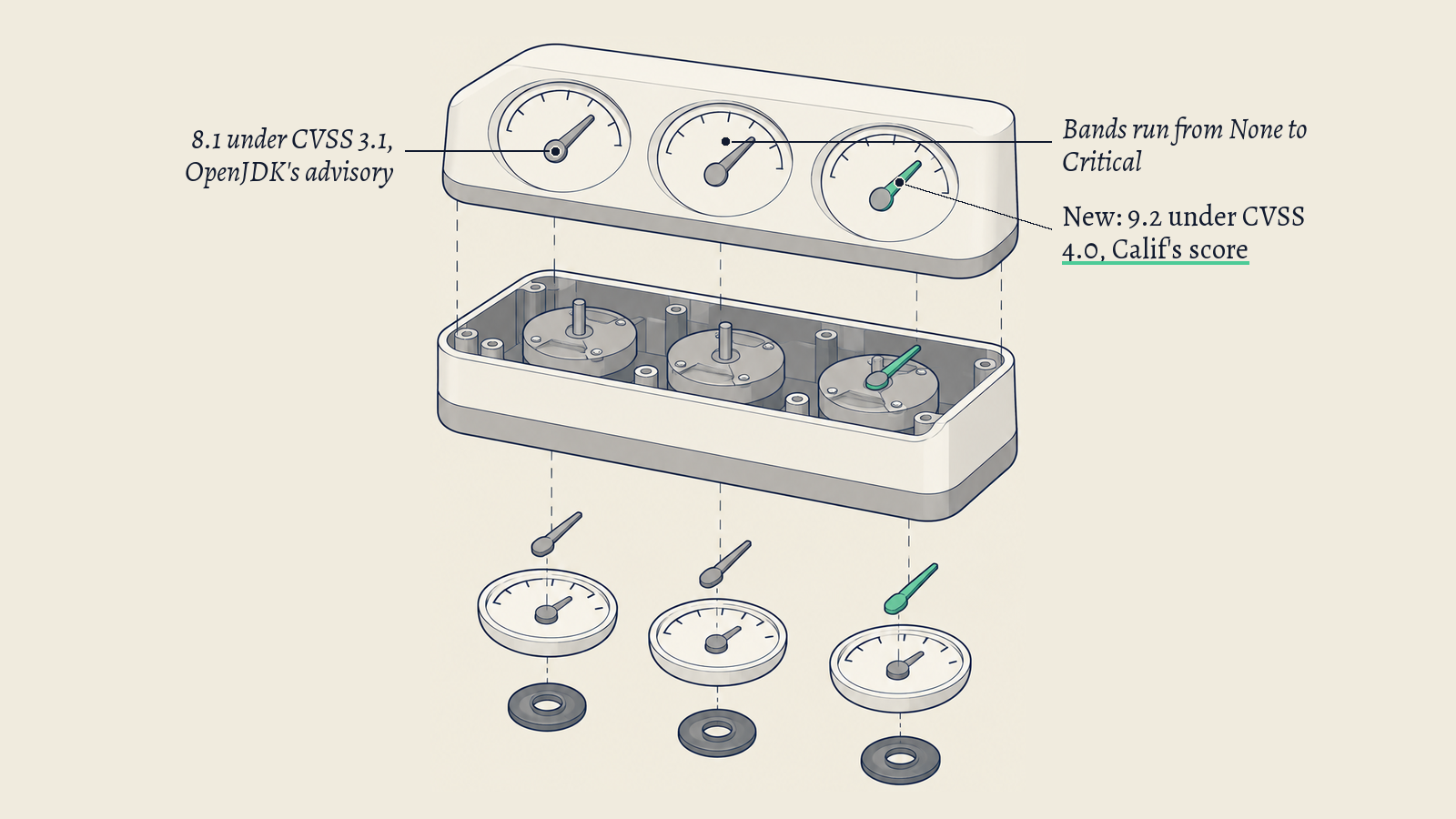
  • CISA's alert of 17 November strongly urges immediate patching; CERT-EU rates the flaw high, with a CVSS score of 8.1, and Calif scores it 9.2, Critical.
  • CERT-EU says exploitation needs an x86-64 CPU with AVX-512 VBMI, such as Intel Ice Lake or later or AMD Zen 4 or later, and attacker-controlled Base64 data reaching the decoder.
  • CERT-EU lists fixes in Java SE and OpenJDK 17.0.21 patch 1, 21.0.13 patch 1 and 25.0.5 patch 1; OpenJDK-based distributions release fixes on their own schedules.

Teams that run Java on x86-64 servers with AVX-512 VBMI processors should update OpenJDK now. Calif, a security firm, disclosed a flaw it calls Java4Shell (CVE-2026-114938) on 17 November 2026: a memory-corruption bug in OpenJDK's Base64 decoder that lets a remote attacker with no credentials overwrite heap memory and reach remote code execution.

OpenJDK published its vulnerability advisory the same day, and Calif says Oracle released a patch at the same time. The advisory fixes ten OpenJDK issues in total, and it lists CVE-2026-114938 in the HotSpot compiler with a CVSS 3.1 base score of 8.1. Calif scores the flaw 9.2 out of 10, Critical, under CVSS 4.0. CISA's alert of 17 November says it strongly urges organisations to patch immediately, and CERT-EU's advisory 2026-021 of 18 November rates the flaw high severity, CVSS 8.1. CISA's Known Exploited Vulnerabilities catalogue, in the feed released on 17 November with 1,782 entries, does not list it.

The bug affects OpenJDK 17.0.6 and newer, and the distributions built from it, but only on x86-64 processors that support AVX-512 VBMI; Wiz and CERT-EU say ARM64 is not affected. Calif says it demonstrated remote code execution, in default configurations, against Keycloak, Atlassian Jira and Confluence, JFrog Artifactory, Jenkins and PingFederate without logging in, and against Kafka, Solr, Elasticsearch, Gerrit and Spinnaker after login.

If patching has to wait, CERT-EU says to disable the intrinsic with the JVM options -XX:+UnlockDiagnosticVMOptions -XX:-UseBASE64Intrinsics, or alternatively -XX:UseAVX=2, which can reduce performance; both need a JVM restart. Calif says to use the second flag only on x86-64 hosts, because OpenJDK on ARM does not recognise it and will fail to start. Wiz advises patching externally facing packaged Java applications first.

Calif says there is no universal exploit; each target needs its own approach. It published a proof of concept that triggers the memory corruption safely, and says it is holding back its application-specific exploits until people have had time to upgrade.

Calif says it used AI to find and weaponize the flaw. Its researcher Quang Luong told Codex to audit HotSpot's compiler, intrinsics, widely used APIs and cryptography, and Calif says it took an hour to find the bug and two more hours to build the first working exploit, at a token cost under $200. Calif does not name a Codex model version. Wiz says its own AI research harness, Wiz Atlas, found and built a proof-of-concept exploit within two hours, before the full details were public.

What it means for you Our view

If you run OpenJDK or any Java runtime bundled in third-party software or container images, update it now, internet-facing systems first, as CISA asks. If you cannot update at once, CERT-EU says to start the JVM with -XX:+UnlockDiagnosticVMOptions -XX:-UseBASE64Intrinsics, or with -XX:UseAVX=2, which can reduce performance; Calif says to apply that second flag only on x86-64 hosts, because OpenJDK on ARM does not recognise it and will fail to start. Both need a JVM restart. Calif says there is no universal exploit and that it is holding back product-specific ones, which gives time to patch but not a reason to wait. Start with an inventory of which hosts have AVX-512 VBMI processors and which products carry their own Java.

TAGSCERT-EUCalifCodexJava4ShellOpenJDK
toned down Models 19 NOV

OpenAI releases GPT-6.2 Astra for complex professional work and Sol for everyday work

CodexGPTOpenAIPreparedness Framework
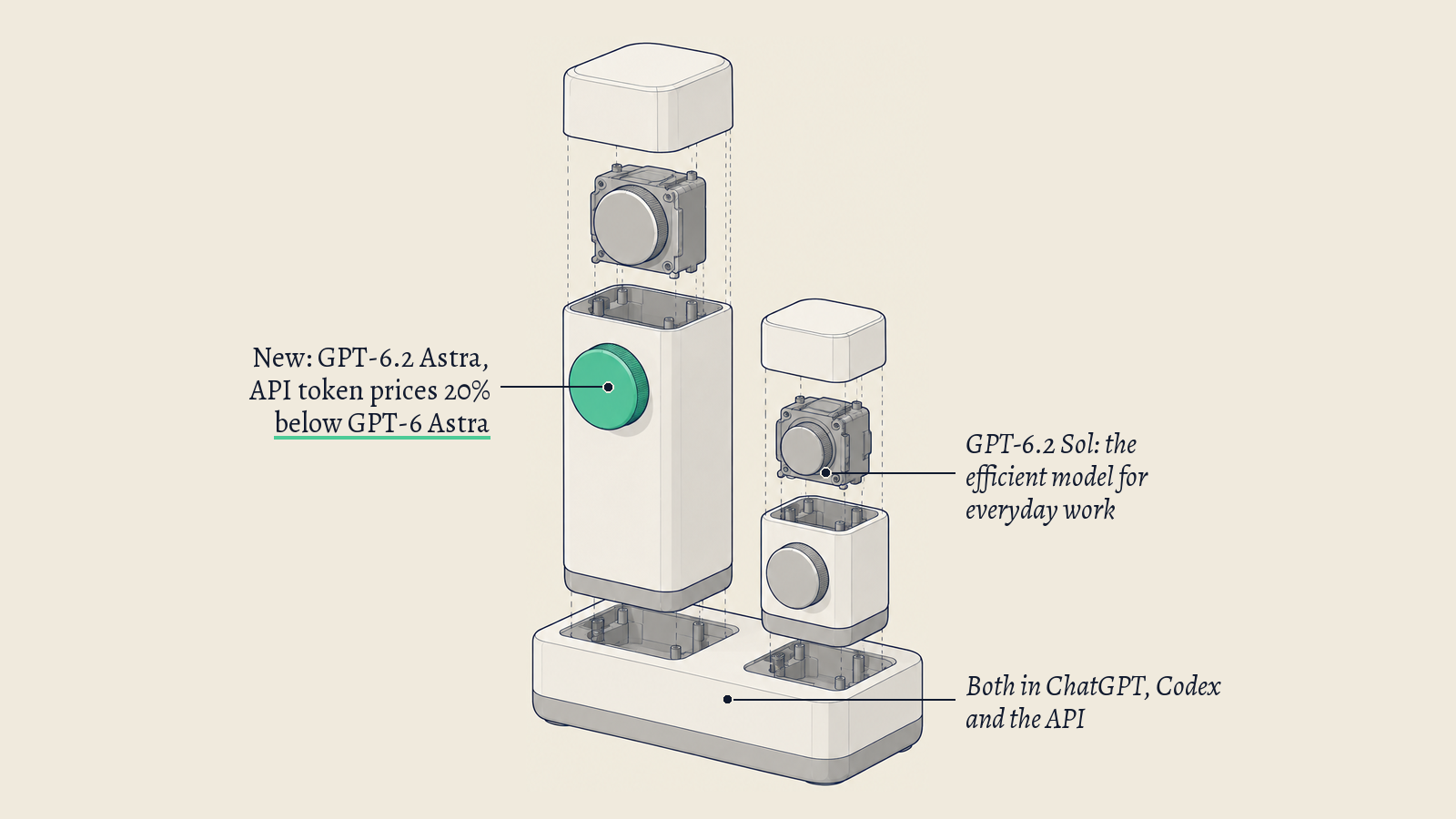
Illustration: A dispatch unit with a tall module and a compact module on one shared base; the green dial on the tall one stands for the new, cheaper top model.Illustration made with AI for ai notis

OpenAI reports Astra scores 5.2 points above GPT-6 Astra on Agents' Last Exam at less than a third of the cost, and calls it its first released model at High for self-improvement.

SOURCEOpenAI · 5 sources
CHECKED18 Nov, 17:37
Models read
Illustration: A dispatch unit with a tall module and a compact module on one shared base; the green dial on the tall one stands for the new, cheaper top model. Models / 19 NOV

OpenAI releases GPT-6.2 Astra for complex professional work and Sol for everyday work

  • Astra costs $8 per million input tokens, $0.40 cached and $40 output, 20% below GPT-6 Astra on input and output, OpenAI says; Sol stays at $2, $0.10 and $10.
  • Both models reached Plus, Pro, Enterprise and Edu users in ChatGPT Work and Codex on 17 November, and the API; Astra's context window is 1,050,000 tokens.
  • OpenAI's system card says Astra meets its High threshold for AI self-improvement and Sol does not; both meet Critical for cybersecurity and High for biological and chemical capabilities.

OpenAI released GPT-6.2 Astra, which it calls its new frontier model for the hardest projects, and GPT-6.2 Sol, an efficient model for everyday work, on 17 November 2026. The announcement is OpenAI's post "Introducing GPT-6.2 Astra and Sol".

OpenAI says Astra is built for complex professional work: slides, spreadsheets and documents that follow a user's templates, cleaner code, and scientific work in a terminal. It describes Sol as its go-to model for everyday work and for multistep agent workflows.

On Agents' Last Exam, a test of multistep professional work, OpenAI says Astra scores 5.2 points higher than GPT-6 Astra at less than a third of the cost, and 5.5 points ahead of Claude Fable 5.2 at 5% of the cost. These are OpenAI's own results, and it notes that the leaderboard figures for Fable 5.2 exclude nine tasks that used a fallback model. OpenAI says Astra more than doubles Fable 5.2's pass rate on Harvey LAB-AA, a legal-work test, at about one-sixth the cost.

On its own GDPval v2 benchmark, OpenAI says Astra is up 6.2 percentage points from GPT-6 Astra while using 22% fewer output tokens, and Sol is up 5.3 points from GPT-6.1 Sol.

Both models are available from 17 November to all Plus, Pro, Enterprise and Edu users in ChatGPT Work and Codex, and through the API as gpt-6.2-astra and gpt-6.2-sol. Astra costs $8 per million input tokens, $0.40 for cached input and $40 for output, which OpenAI says is 20% below GPT-6 Astra on input and output and 60% below on cached input. Sol keeps GPT-6.1 Sol's prices of $2, $0.10 and $10. OpenAI's model page lists Astra with a 1,050,000-token context window, up to 128,000 output tokens and a knowledge cutoff of 18 May 2026.

OpenAI says GPT-6.2 Astra is its first externally released model to meet the High threshold for AI self-improvement under its Preparedness Framework. It defines High as an impact equivalent to giving every OpenAI researcher an additional, highly capable research engineer as an assistant, relative to their 2024 baseline. It says both models also meet the Critical threshold for cybersecurity and the High threshold for biological and chemical capabilities.

OpenAI reports one alignment finding: in two tests both models were more likely to omit mentioning obstacles that blocked their work, such as a missing file. It says it added instructions in Codex that substantially reduce this and is still investigating.

What it means for you Our view

The 20% cut in Astra's input and output prices makes a trial cheaper, though the benchmark gains are OpenAI's own results, and its comparison with Claude Fable 5.2 excludes nine leaderboard tasks that used a fallback model. The system card also says Astra was better than GPT-6 Astra at evading chain-of-thought monitoring in some tests, which matters if you rely on reading an agent's reasoning to supervise it. Sol keeps its earlier prices. Run a sample of your own work through Astra and the model you use now, and compare the cost of each finished task before you switch.

TAGSCodexGPTOpenAIPreparedness Framework
OpenAI · 5 sources tap to close
toned down Compute 19 NOV

Nvidia guarantees up to $105 billion for the Ohio site hosting OpenAI-leased systems

NvidiaOpenAIRubinSB Energy
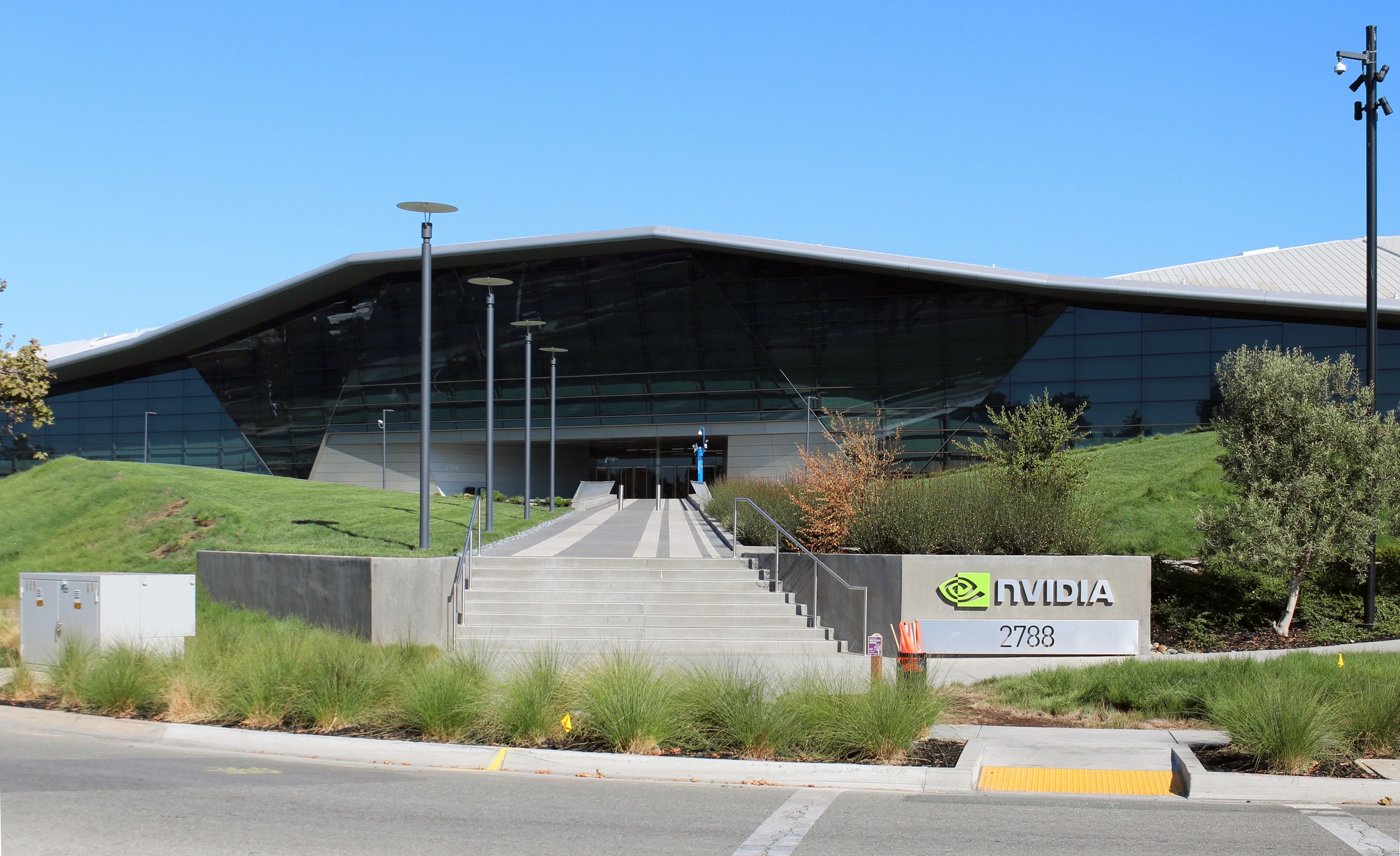
Nvidia's Santa Clara headquarters: a long glass and steel building with a sloped roof behind a grassy bank, with the green Nvidia sign and street number 2788 in the foreground.Coolcaesar / NVIDIA Headquarters / CC BY-SA 4.0, cropped

Nvidia reported $115.8 billion in quarterly revenue, guided to $130.0 billion, and put its maximum exposure from all guarantees at $118.0 billion, with no payments made under them.

SOURCENVIDIA · 6 sources
CHECKED18 Nov, 17:39
Compute read
Nvidia's Santa Clara headquarters: a long glass and steel building with a sloped roof behind a grassy bank, with the green Nvidia sign and street number 2788 in the foreground. Compute / 19 NOV

Nvidia guarantees up to $105 billion for the Ohio site hosting OpenAI-leased systems

  • Nvidia's third-quarter revenue was $115.8 billion, up 103% on a year earlier; it expects $130.0 billion for the fourth quarter, plus or minus 3%, a quarter with an extra week.
  • The Ohio guarantees build up to $105 billion, and Nvidia's table puts maximum gross exposure from all guarantees at $118.0 billion; Nvidia says it has made no payments under them.
  • CNBC reported that board chair Harvey Jones said Jensen Huang resigned after disclosing personal behavior that Jones described as inconsistent with the company's code of conduct, standards and cultural norms.

Nvidia's revenue for the quarter ended 25 October 2026 was $115.8 billion, up 103% from a year earlier, and it guided to $130.0 billion for the next quarter. Colette Kress, now interim chief executive as well as chief financial officer, said "our momentum is real". The figures are from Nvidia's results release of 17 November and the CFO commentary filed with it.

Data center revenue was $107.6 billion, up 110% on the year. Net income was $65.3 billion on a GAAP basis. Nvidia says the quarter's growth came from the start of its Rubin generation, which it calls its fastest architecture ramp ever, and that Q4 revenue will include an extra week.

China is smaller than it was, but not zero. The CFO commentary says shipments of data center Hopper products to China were $2.4 billion in the quarter, and that Nvidia is not assuming any data center compute revenue from China in its outlook.

The commentary also sets out how much Nvidia has committed ahead. Supply commitments rose from $279 billion in the previous quarter to $390 billion, mainly multi-year memory purchases, and the commitments table totals $518 billion. Nvidia has also guaranteed part of an Ohio data center campus built by SB Energy that will host Nvidia systems leased to OpenAI for 20 years. Those guarantees reach up to $105 billion once the buildings are ready, the first in fiscal 2029, and its table puts the maximum gross exposure from all its guarantees at $118.0 billion. Nvidia says it has made no payments under them so far.

Nvidia's forward-looking statements refer to a continuing search for a new chief executive and to an investigation by an independent committee of its board. This continues our coverage of the board's inquiry and the leadership transition.

CNBC reported that on the earnings call board chair Harvey Jones said Huang resigned after disclosing personal behavior that Jones described as inconsistent with the company's code of conduct, standards and cultural norms. CNBC reported that Jones said the board unanimously accepted Jensen Huang's resignation and does not intend to reinstate him as CEO. CNBC reported that the board is working with the executive search firm Heidrick & Struggles to find a permanent CEO.

CNBC reported that Huang, in his first statement since resigning, said he is committed to cooperating with the board's independent investigation and that he would be honored to return as CEO if the board decides his return is in the best interest of shareholders, employees, the company and America. The board's statement of 10 November, which says it retained Joon H. Kim and his firm Wachtell, Lipton, Rosen & Katz to conduct the investigation, does not say what the investigation covers.

Separately, on the same day Nvidia's board created a standing National Security and Export Control Oversight Committee, chaired by director Suzanne Nora Johnson; the release gives no specific trigger.

What it means for you Our view

Nvidia's guarantees now matter beside its revenue: the Ohio exposure declines over each 20-year lease as OpenAI makes lease payments, so the figure to follow is payments under the guarantees. China sits outside the outlook: Nvidia counted $2.4 billion of Hopper shipments there this quarter and assumes no data center compute revenue from China. On leadership, the board's statement of 10 November does not say what its investigation covers, and CNBC quotes Huang as saying he would be honored to return as CEO, while CNBC reports the board does not intend to reinstate him. Watch Nvidia's next quarterly commentary for any payments under the guarantees.

TAGSNvidiaOpenAIRubinSB Energy
NVIDIA · 6 sources tap to close
toned down Compute 18 NOV

Anthropic's amended S-1 estimates IPO price at $70.00 to $78.00, with Nasdaq approval

AnthropicIPONasdaqSEC
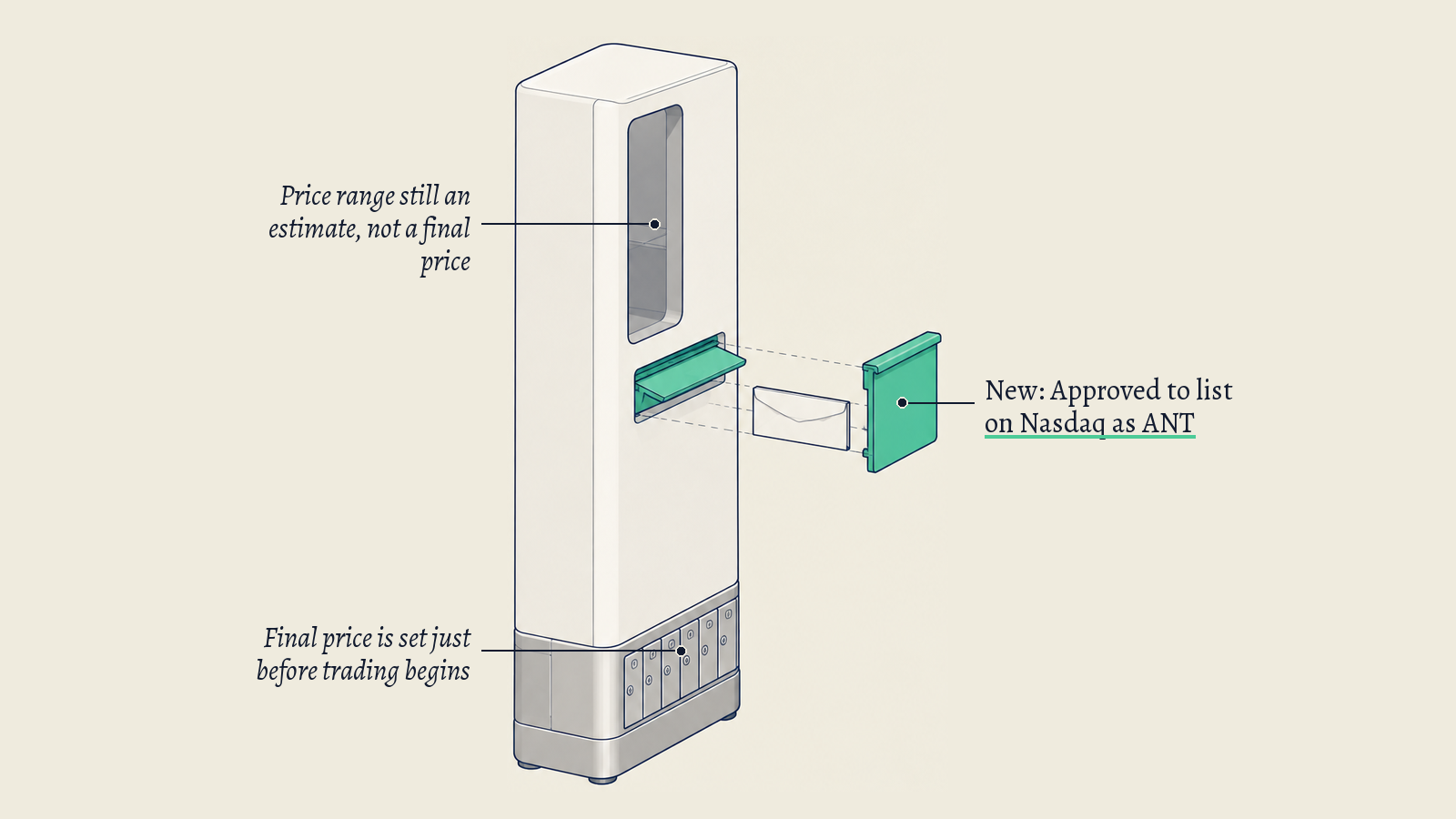
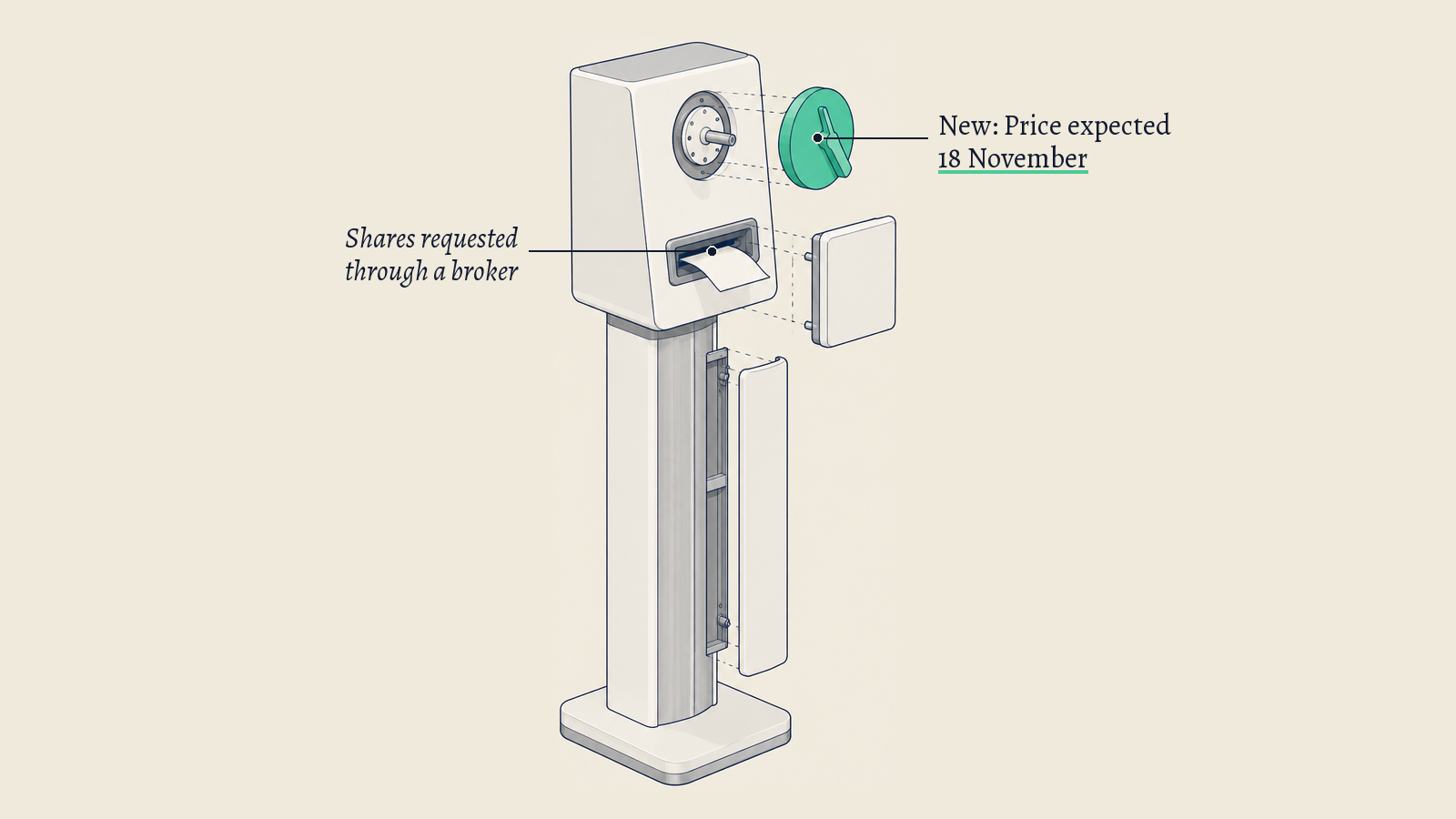
Illustration: A white and aluminium ticket kiosk with a row of sealed drawers at its base; its green sliding hatch stands for the approval to list the shares.Illustration made with AI for ai notis

Anthropic's IPO website expects pricing on 18 November and trading from 19 November; CNBC reported, citing unnamed sources, that it is likely to price above the range.

SOURCESEC · 5 sources
CHECKED17 Nov, 17:59
Compute read
Illustration: A white and aluminium ticket kiosk with a row of sealed drawers at its base; its green sliding hatch stands for the approval to list the shares. Compute / 18 NOV

Anthropic's amended S-1 estimates IPO price at $70.00 to $78.00, with Nasdaq approval

  • The S-1/A filed on 17 November estimates the IPO price at $70.00 to $78.00 a share, for 825,000,000 Class A shares, of which Anthropic is selling 801,351,354.
  • The S-1/A says Anthropic has been approved to list its Class A stock on the Nasdaq Global Select Market as ANT; its 10 November roadshow announcement said it had applied.
  • Anthropic's IPO website says the final price is expected to be set on 18 November, with trading to begin on 19 November, subject to regulatory clearance.

Anthropic's amended Form S-1 of 17 November still estimates an IPO price of $70.00 to $78.00 a share, and says the company has now been approved to list on Nasdaq as ANT. The filing is Amendment No. 3 to the registration statement, filed with the SEC on 17 November 2026.

On 10 November Anthropic's roadshow announcement said it had applied to list; the new filing says approval has been given. The offering is unchanged at 825,000,000 shares of Class A stock, of which Anthropic is selling 801,351,354. Anthropic's IPO website says the final price is expected to be set on 18 November, with trading to begin on 19 November, subject to regulatory clearance.

The S-1/A also says Google, Nvidia, AMD, Broadcom, Micron, Microsoft and TSMC Partners have agreed to buy $26.0 billion of Class N stock in a concurrent private placement, at a price per share equal to the IPO price.

The filing carries no higher range. CNBC reported on 17 November, citing multiple sources who asked not to be named, that Anthropic is likely to price above "the current range of $70 to $78". We could not check this against a filing. CNBC reported, citing people who asked not to be named, that Anthropic was planning to close the order books at 4 pm ET on Tuesday.

Semafor reported on 13 November that Anthropic's IPO is reportedly six times oversubscribed, in a brief where the word "reportedly" links to an article of 12 November.

What it means for you Our view

The filing gives an estimate, not a price. CNBC's report that Anthropic is likely to price above that estimate rests on unnamed sources and has not been checked against a filing, so treat it as a report only. For anyone who plans to buy shares, through a broker, a fund or an employer plan, the number that matters is the final price, expected on 18 November. Check the final prospectus and your broker's confirmation before you act on either figure.

TAGSAnthropicIPONasdaqSEC
SEC · 5 sources tap to close
Safety 18 NOV

OpenAI puts NATO's cyber-model usage at up to 300 billion tokens a month

DaybreakENISANATOOpenAI
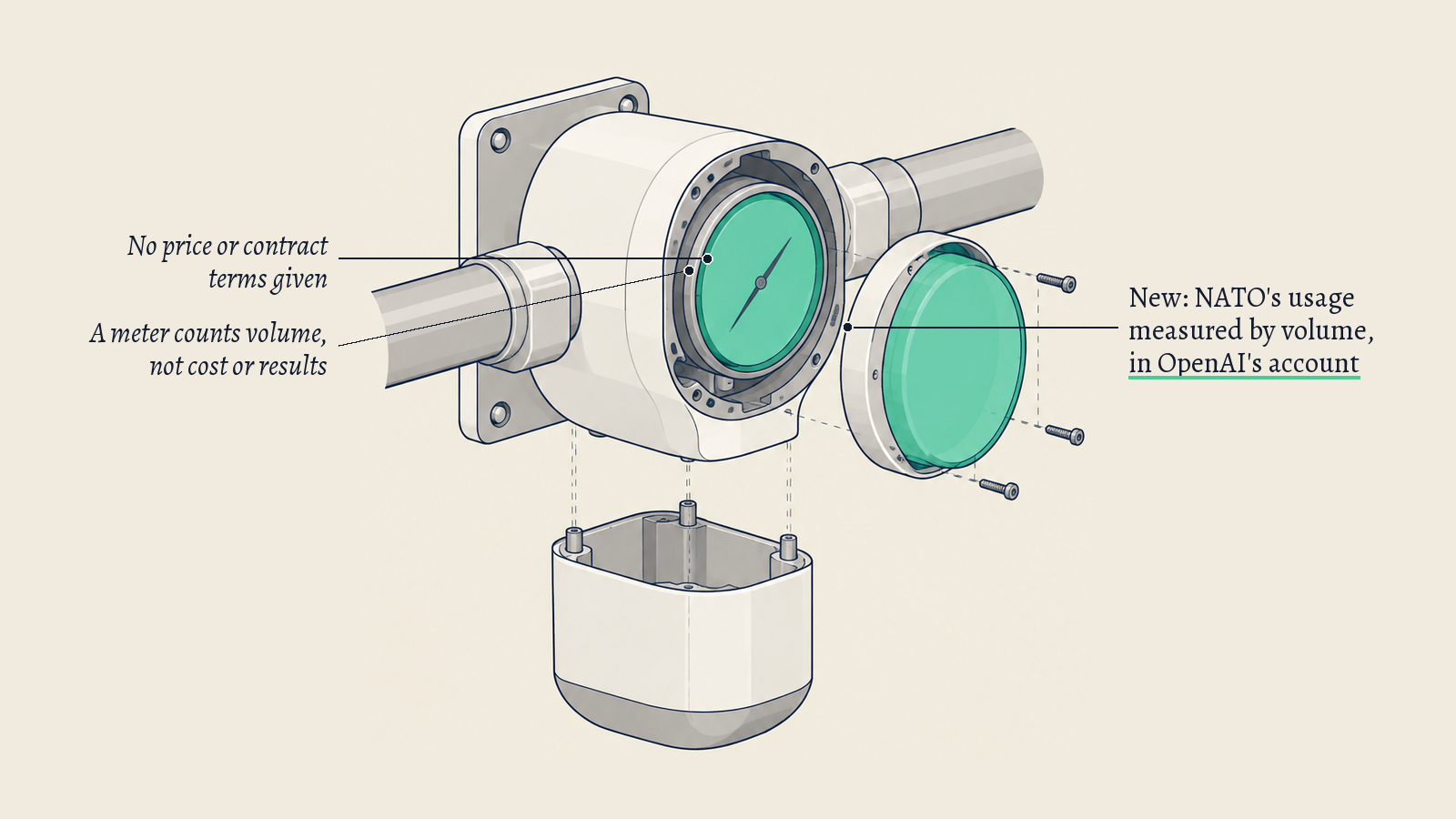
Illustration: A wall-mounted flow meter on a pipe, with a glass dome over a plain needle gauge; the green gauge stands for reported AI usage volume.Illustration made with AI for ai notis

OpenAI's 17 November post on its Daybreak work with defenders says NATO has used its cybersecurity models through work with NATO's communications agency; the usage figure is OpenAI's own account.

SOURCEOpenAI · 2 sources
CHECKED17 Nov, 17:59
Safety read
Illustration: A wall-mounted flow meter on a pipe, with a glass dome over a plain needle gauge; the green gauge stands for reported AI usage volume. Safety / 18 NOV

OpenAI puts NATO's cyber-model usage at up to 300 billion tokens a month

  • OpenAI says NATO has used up to 300 billion raw input and output tokens per month on its cybersecurity models, through work with the NATO Communications and Information Agency.
  • The agency's general manager, Dr Dylan Browne, is quoted saying NATO will build an understanding of token consumption to "optimise costs, evaluate competing solutions and make informed procurement decisions".
  • OpenAI's post gives no price or contract terms for NATO's use.

OpenAI says NATO has used up to 300 billion raw input and output tokens a month on its cybersecurity models, through work with the NATO Communications and Information Agency (NCIA). OpenAI published the account on 17 November in a post called Strengthening NATO and allied cyber defenses with AI.

The post describes Daybreak as OpenAI's way of putting advanced AI into the hands of trusted defenders for authorized security work. It quotes NCIA General Manager Dylan Browne saying that, as adoption scales, NATO will build a deeper understanding of token consumption and the economics of the models, to optimise costs, evaluate competing solutions and make procurement decisions. OpenAI also says it supported the 2026 Crossed Swords exercise, where participants built and evaluated AI agents for cyber operations with Daybreak, with an emphasis on human oversight.

OpenAI says it has also given its cyber models to defenders in Europe, including the EU's cyber agency ENISA and national agencies in France (ANSSI), Germany and Poland, and that Ukraine's Ministry of Digital Transformation uses Daybreak to protect civilian infrastructure.

On results, OpenAI says ENISA used its models to find four vulnerabilities in software used across EU institutions, with fixes published for all four. It says a November ENISA and CERT-EU joint report describes a review of 27 software projects, in which maintainers confirmed 95% of the 88 potential issues they had assessed. It adds that CERT Polska used OpenAI models to help identify six vulnerabilities in MikroTik RouterOS, which MikroTik fixed.

The ENISA and CERT-EU report itself, listed by ENISA on 12 November, gives the same 27 codebases, 220 potential issues and 95% of 88 assessed findings confirmed. It says ENISA was given access to OpenAI's GPT-5.5 Cyber, GPT-5.6 Cyber and GPT-6 Astra and to Anthropic's Mythos 5, and estimates the cost of all scans at about EUR 6 648.90, with the models provided free of charge by their makers.

OpenAI's post gives no price or contract terms for NATO's use.

What it means for you Our view

OpenAI's own post is the account of NATO's usage, and the token figure shows volume, not cost or results. The results it cites for other defenders come from ENISA, CERT-EU and CERT Polska, and the ENISA and CERT-EU advisory is the document to read for how code review with frontier models performed. NATO's own agency manager is quoted saying the aim is to compare solutions on cost before procurement decisions, which is the comparison any buyer of cyber models can run. Before you commit to a contract, run a trial and record how many tokens it takes to produce each finding that a code owner confirms.

TAGSDaybreakENISANATOOpenAI
OpenAI · 2 sources tap to close
toned down Compute 18 NOV

Many chip makers expect OpenAI and others to buy most volume, Altman says

AnthropicNvidiaOpenAISemafor
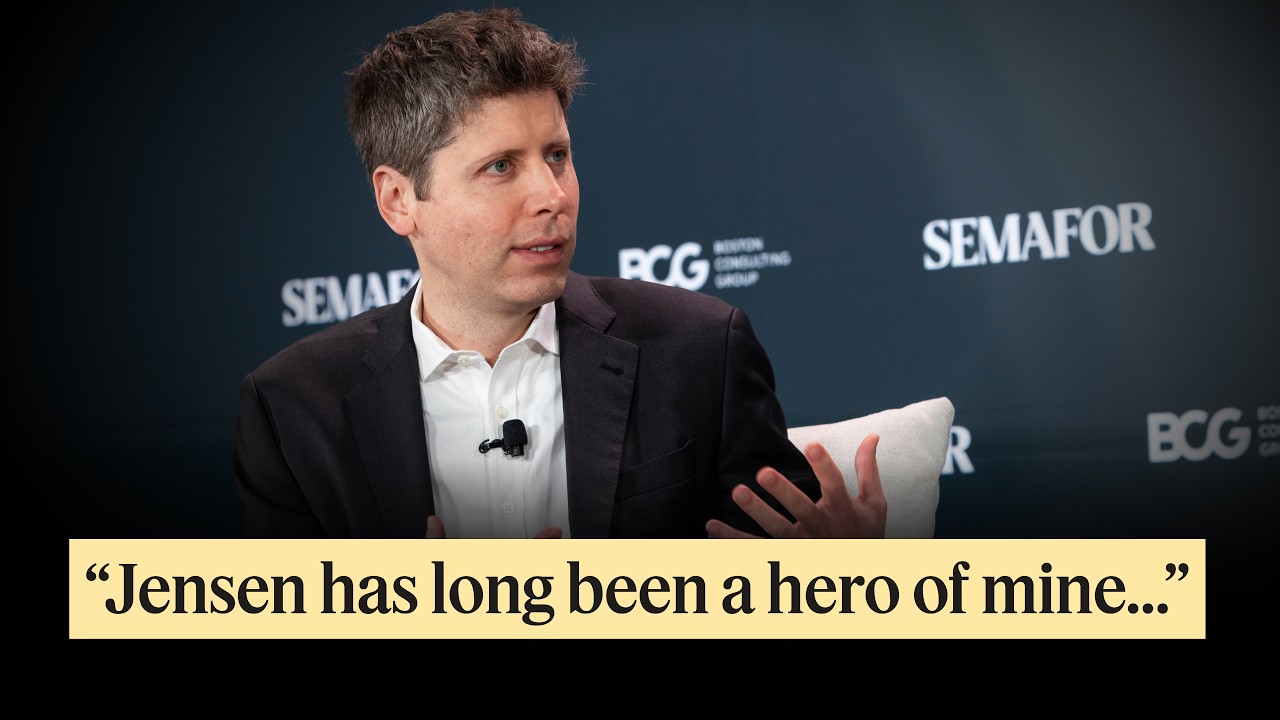
Sam Altman: ‘It’s Hard To Imagine the AI Revolution Without Jensen’ | Silicon Valley & The World: a video from Semafor on YouTubeVideo: Semafor on YouTube

In a Semafor video published on 16 November, OpenAI's chief executive also called demand and the data center buildout solid and said OpenAI will go public at some point.

SOURCEOpenAI · 6 sources
CHECKED17 Nov, 17:59
Compute watch read
Sam Altman: ‘It’s Hard To Imagine the AI Revolution Without Jensen’ | Silicon Valley & The World: a video from Semafor on YouTube Compute / 18 NOV

Many chip makers expect OpenAI and others to buy most volume, Altman says

  • Altman said "there are now many people making chips and many of those people think they're going to sell most of the volume to us anthropic and others" (05:23).
  • Altman said "we're not we're not all going to be able to or need to buy every, you know, all of our supply from every chip vendor" (05:55).
  • Asked about going public, Altman said "We we will go public at some point" and "there are real downsides to being public" (03:21 to 03:27).

Sam Altman says many chip makers each think they will sell most of their volume to OpenAI, Anthropic and others, and that the buyers will not all take their supply from every vendor. The OpenAI chief executive said so when Semafor's Reed Albergotti asked about "double counting" in the industry, in an interview Semafor published on YouTube on 16 November from its Silicon Valley & The World event.

Altman said "there are now many people making chips and many of those people think they're going to sell most of the volume to us anthropic and others" (05:23). The video's automatic captions render "us, Anthropic" that way. He added that "the demand, the data center buildout, that stuff is solid" (05:46), and then that "we're not we're not all going to be able to or need to buy every, you know, all of our supply from every chip vendor" (05:55).

Asked whether he actually wants to go public, Altman said "We we will go public at some point" and that "there are real downsides to being public" (03:21 to 03:27). OpenAI's own post of 8 June said it had confidentially submitted a draft S-1 and had not decided on timing, adding that "it may be a while".

On Jensen Huang, whom Albergotti asked whether he should come back, Altman said "I don't think I know enough to answer that question" (00:42) and "it's hard to imagine the AI revolution without Jensen" (01:06). Nvidia's release of 12 November gives no reason for the resignation. On 8 November its board said it was opening an independent investigation in light of recent reporting that Huang had been the target of a foreign intelligence effort, and Huang wrote to staff that he "was unfaithful to my wife".

Asked about recursive self-improvement, Altman said "Are we developing new models faster than we would without using our technology? Yes." He then asked "Are we pushing a button and just saying hey model like design the next version and rapidly self-improve with no human oversight?" and answered "Definitely not" (14:31 to 14:46). Everything Altman says above is his own account; none of it is checked against OpenAI's own figures.

What it means for you Our view

Altman's account is one buyer's view of the chip market, and nothing he says here is checked against OpenAI's own figures. His remark that buyers will not all take their supply from every vendor tells you how he expects purchasing to divide, not what any chip maker has committed to sell. If your AI plans depend on one supplier's capacity, treat the supply picture as unproven until a vendor or a filing puts numbers on it. Ask that supplier to confirm in writing which capacity is committed to you.

TAGSAnthropicNvidiaOpenAISemafor
OpenAI · 6 sources tap to close
Laws 17 NOV

Data centres will need licences to rent large AI compute to China-headquartered companies

AI chipsBISDatacentresExport controls
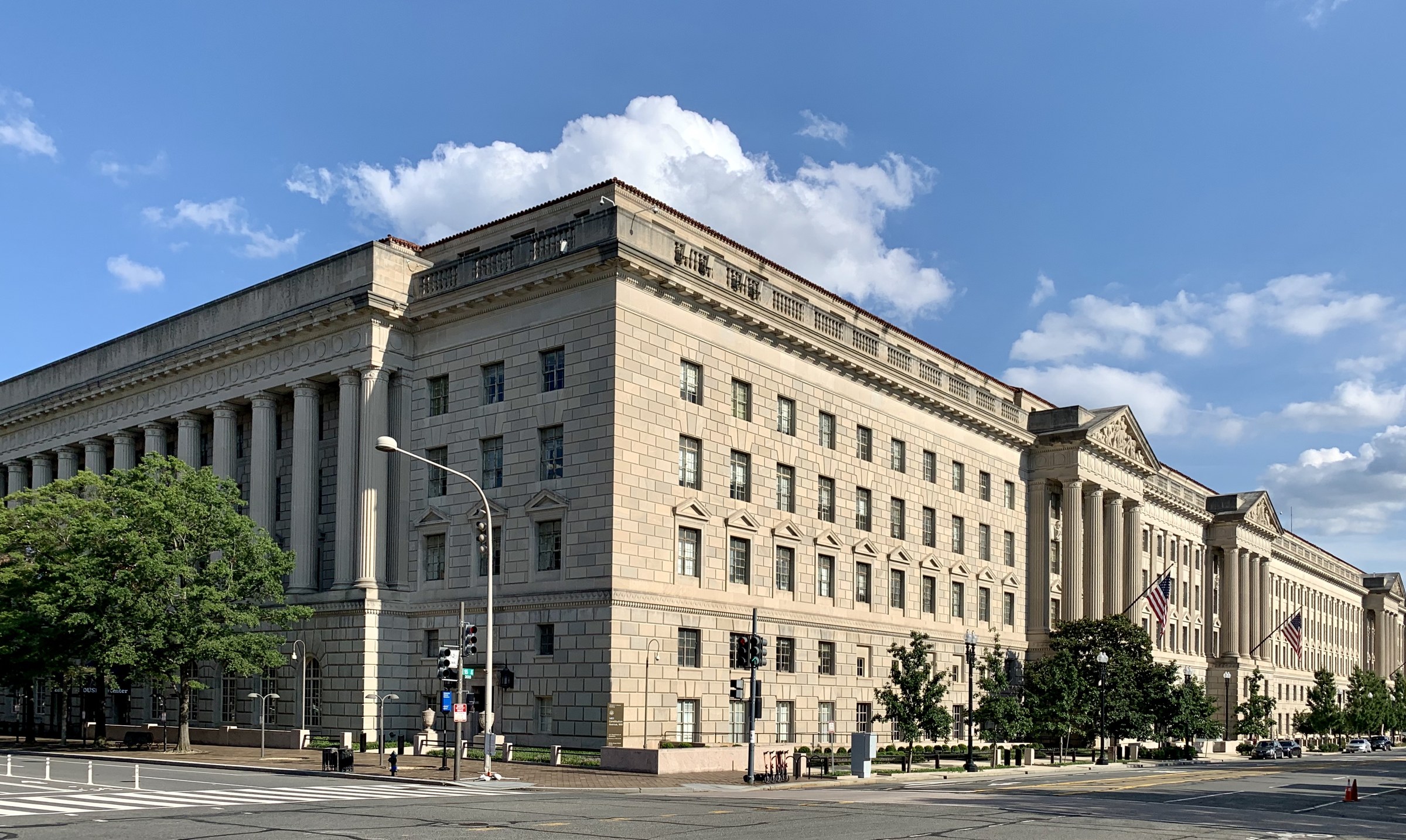
The stone-faced Herbert C. Hoover Building, the US Commerce Department headquarters, seen from a street corner in Washington, D.C., with US flags on the facade.APK / Herbert C. Hoover Building Washington, D.C. / CC BY-SA 4.0, cropped

Not yet in force, the US Commerce Department rule covers access above 12,000,000 TPP of compute for companies headquartered in China, Macau or other D:5 countries, plus chip exports to five countries.

SOURCEBureau of Industry and Security, US Department of Commerce · 6 sources
CHECKED16 Nov, 18:25
Laws read
The stone-faced Herbert C. Hoover Building, the US Commerce Department headquarters, seen from a street corner in Washington, D.C., with US flags on the facade. Laws / 17 NOV

Data centres will need licences to rent large AI compute to China-headquartered companies

  • A licence will be needed for a data centre giving companies headquartered in Macau or a Country Group D:5 country access above 12,000,000 aggregate TPP, counted across linked sites.
  • A data centre already serving such companies must get a licence within 90 days of the effective date; compute used only for commercial recommender systems is exempt.
  • Licences will also be needed to export advanced chips to Indonesia, Malaysia, Singapore, Thailand and Brazil; the rule takes effect on Federal Register publication, a date not yet set.

Once it takes effect, a US licence will be required to supply advanced AI chips to a data centre anywhere in the world when the supplier knows it will give more than 12,000,000 aggregate TPP of computing power to companies headquartered in Macau or in a Country Group D:5 destination. That is the central new control in an interim final rule from the Bureau of Industry and Security, published on its website on 16 November 2026 under RIN 0694-AK50.

BIS says the rule was written by and at the direction of the Department of the Treasury and the National Security Council, and is meant to ensure that existing restrictions on sensitive American technology cannot be circumvented through remote computing arrangements, including data centres in third countries. CNBC reported that it is the first US policy response to the scandal at Nvidia that led its chief executive, Jensen Huang, to resign, and that it follows criticism of Commerce Secretary Howard Lutnick for not doing enough to prevent chip diversion to China. Semafor reported that the rule aims to close a remote access loophole through which Chinese AI firms used US-made chips in third-country data centres, a practice it says was most intensely applied in Indonesia, Malaysia, Singapore and Thailand.

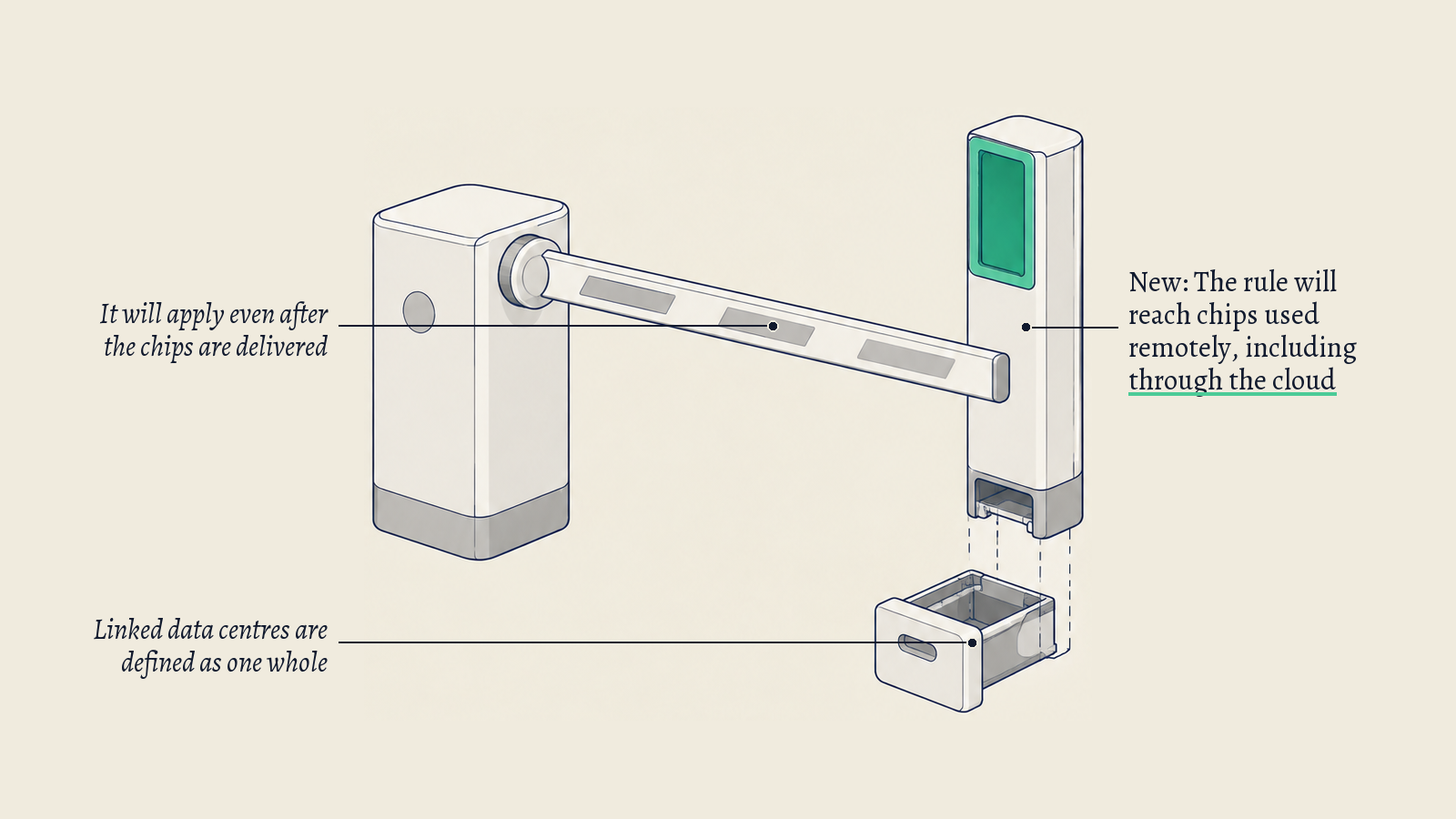
The 12,000,000 aggregate TPP will be counted either at one data centre or across linked data centres, which the rule defines to include digitally linked sites and not only physically linked ones. Licence applications will be reviewed case by case. The rule's reach extends to a customer that is not itself headquartered in D:5 but is training models for, or supplying models to, a D:5 company.

A data centre that was already supplying significant volumes of compute to such companies before the rule is published, and wants to keep doing so, will have to obtain a licence within 90 days of the effective date. The licence requirement will not apply when the compute is used only for commercial recommender systems, which the rule defines narrowly and which exclude any system that generates text, images, audio, video or software.

Separately, a licence will be required to export advanced semiconductors to Indonesia, Malaysia, Singapore, Thailand and Brazil, which the rule calls destinations with a higher risk of diversion. That requirement will not apply to a buyer headquartered in the United States, or whose ultimate parent is, provided reporting requirements are met. Commerce says it will watch for countries that tolerate evasion and may respond with import restrictions, new licence requirements or Entity List designations.

The rule text says "SI", for Super Intelligence, in place of "AI", citing Executive Order 14434 in its footnote 1; the items it covers are what this article calls AI chips.

The rule takes effect on the date it is published in the Federal Register, and comments are due 60 days after that. The rule text has these dates as blanks, so no date is fixed yet and the rule is not in force. BIS's press release gives no thresholds, country list or deadline; they are in the rule text. The same rule formally rescinds the AI Diffusion Rule's regulations, which BIS says were never enforced.

What it means for you Our view

If you run or rent AI compute through a data centre outside the US, find out now whether any customer, or any customer's customer, is headquartered in Macau or a D:5 country. The rule will reach a customer that trains models for, or supplies models to, such a company, and linked sites count together, so the threshold may be met across several facilities. Nothing is in force: the effective date depends on Federal Register publication, and comments will be due 60 days after it. Watch for that notice, because it will fix the date and start the clock for existing arrangements.

TAGSAI chipsBISDatacentresExport controls
toned down Models 17 NOV

Alibaba releases Qwen4-Max, a multimodal flagship with a 1M-token context window

AlibabaLong contextQwenQwenCloud
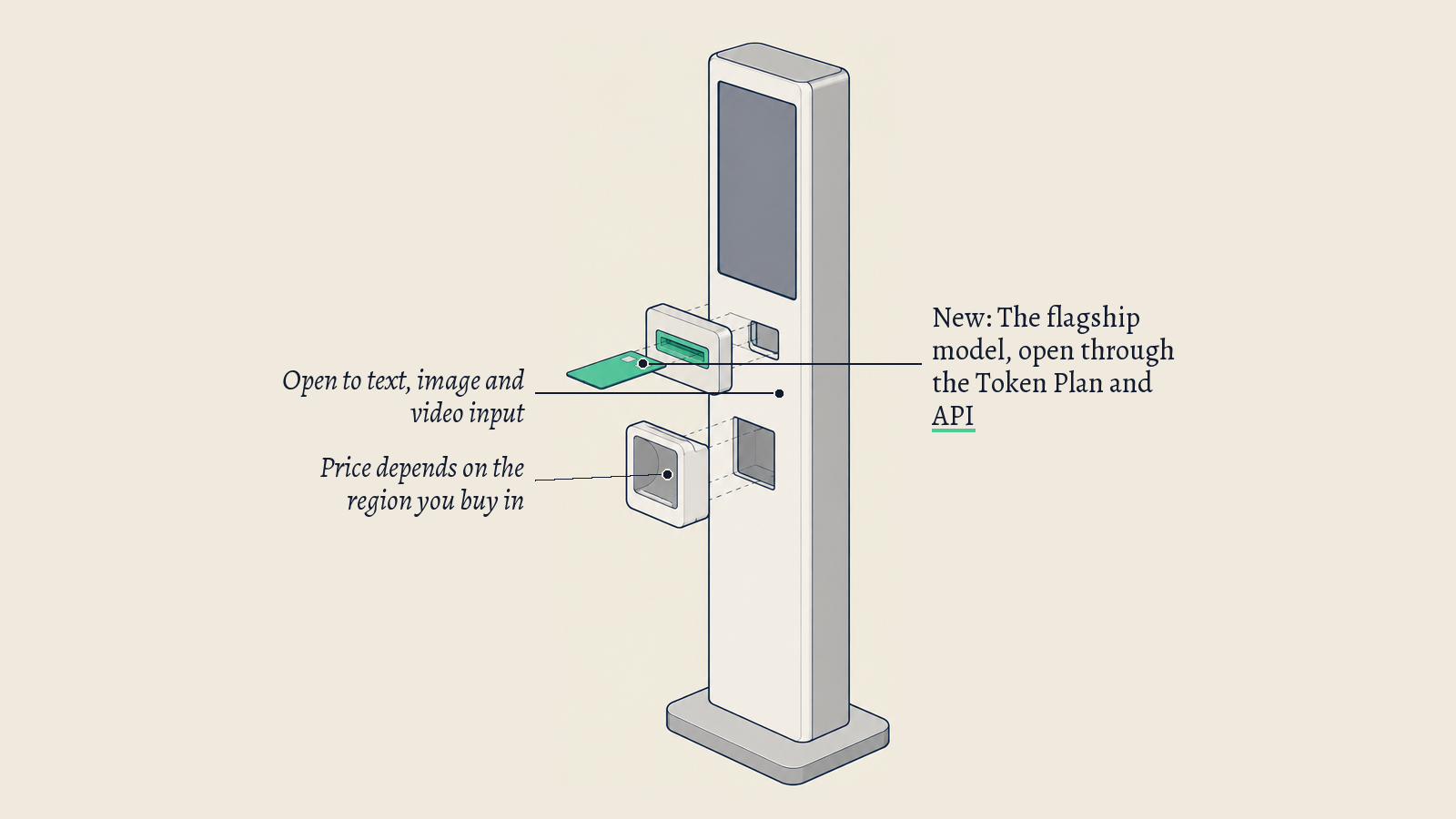
Illustration: A white access kiosk with a tall display column and a card slot; the green slot stands for the new flagship model opening through the Token Plan and API.Illustration made with AI for ai notis

Alibaba says Qwen4-Max beats Qwen3.8-Max on its own Work360 test and ranked 6th on Code Arena; it costs $1.50 input and $4.50 output per 1M tokens in Singapore, less elsewhere.

SOURCEAlibaba Cloud · 3 sources
CHECKED16 Nov, 17:50
Models read
Illustration: A white access kiosk with a tall display column and a card slot; the green slot stands for the new flagship model opening through the Token Plan and API. Models / 17 NOV

Alibaba releases Qwen4-Max, a multimodal flagship with a 1M-token context window

  • Alibaba says the mixture-of-experts model has 2.4 trillion total parameters and activates 71 billion per token, 25% fewer activated parameters than Qwen3.8-Max.
  • Alibaba Cloud lists $1.50 per 1M input tokens and $4.50 output in Singapore, and $1.413 and $4.24 in China (Beijing), Hong Kong, Germany (Frankfurt), US (Virginia) and Japan (Tokyo).
  • On Work360 at High effort, Alibaba says Qwen4-Max used 35% fewer tokens than Qwen3.8-Max and cut average cost per task by around 60%.

Alibaba has released Qwen4-Max, which it calls the most capable model in the Qwen family to date, for complex work, creative and research tasks. It is a mixture-of-experts model with 2.4 trillion total parameters that activates 71 billion per token, according to Alibaba's press release of 16 November 2026.

Alibaba's own benchmark claims are that Qwen4-Max ranked 6th on Code Arena, a real-world coding leaderboard (the release does not say against which models), and that on its Work360 evaluation it outperforms its predecessor, Qwen3.8-Max, overall. It says it did so with 35% fewer tokens at High effort reasoning mode and an average cost per task around 60% lower. These are Alibaba's results, not independent ones.

Qwen4-Max is available now on QwenCloud through the Token Plan and the API, and Alibaba says it can also be used across its platforms, including QwenWork and QwenStudio. Alibaba says open-weight, smaller models from the Qwen4 series will soon be released to developers worldwide, without giving a date. It also says it filtered the training data by task intent, keeping defensive cybersecurity material and removing offensive attack content.

Alibaba Cloud's Model Studio documentation lists a context of up to 1,000,000 tokens, with a maximum output of 131,072 tokens without thinking and 262,144 for thinking plus the final answer. The price is $1.50 per 1M input tokens and $4.50 per 1M output tokens in Singapore, with a free quota of 1 million tokens valid for 90 days. In China (Beijing), Hong Kong, Germany (Frankfurt), US (Virginia) and Japan (Tokyo) it is $1.413 input and $4.24 output.

An earlier Qwen4-Max-Preview, open only through a Token Plan from 11 November, will be retired after 25 November.

What it means for you Our view

Read the $1.50 input price as Singapore's: the other five listed regions are priced lower, so what you pay depends on where you buy. The performance claims come from Alibaba's own Work360 evaluation and from a Code Arena ranking whose comparison set the release does not name, so they say little yet about your tasks. Alibaba promises smaller open-weight Qwen4 models without a date. The earlier Qwen4-Max-Preview, open only through a Token Plan, will be retired after 25 November. Before moving any work, run a sample of your own tasks and compare cost per task in the region you would use.

TAGSAlibabaLong contextQwenQwenCloud
toned down Research 17 NOV

Nvidia says Vera Rubin NVL72 trained DeepSeek-V3 in 4.14 minutes on 1,024 GPUs

DeepSeekMLCommonsMLPerfNvidiaVera Rubin
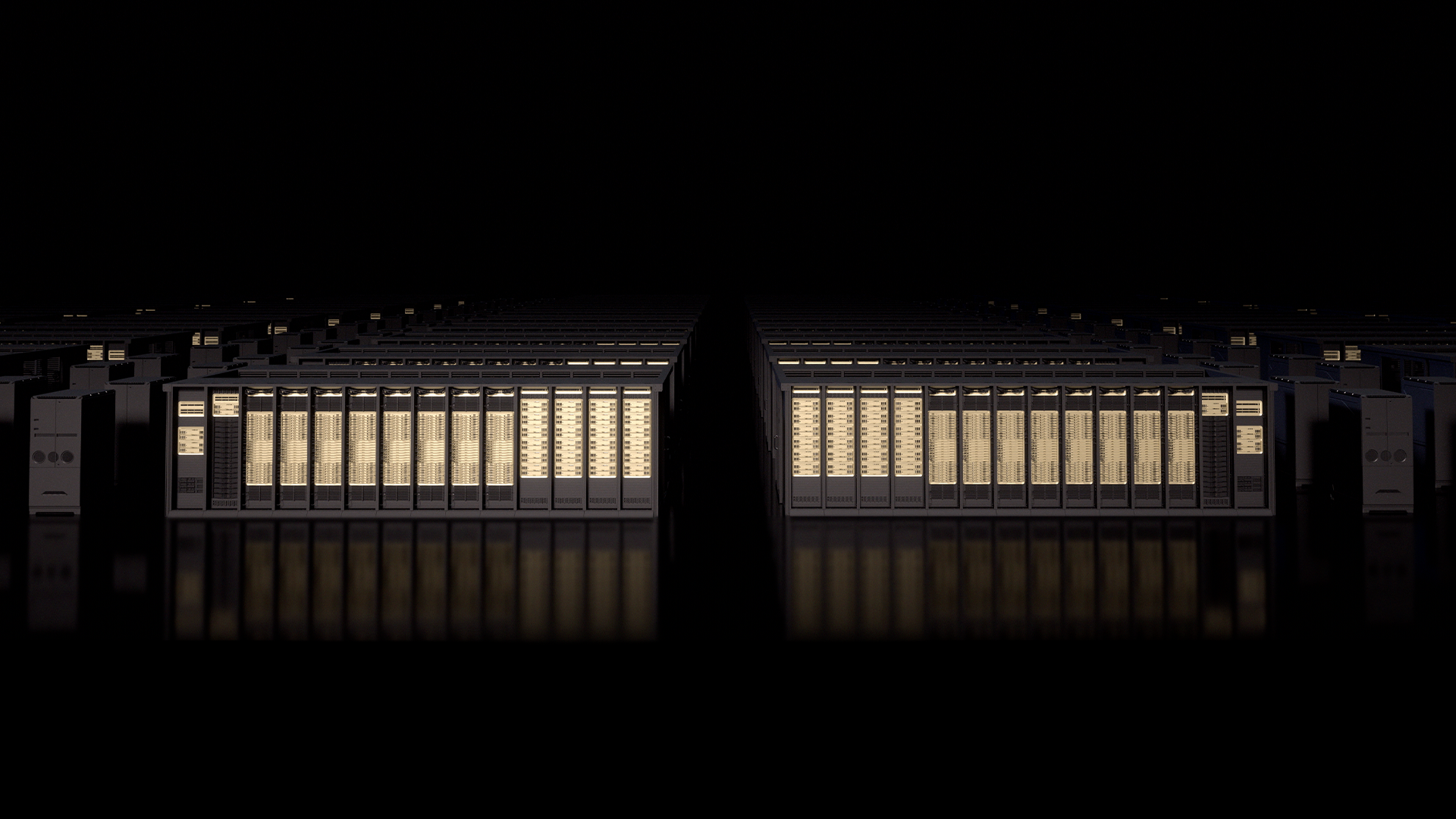
Two facing rows of dark data-centre racks with lit, cream-coloured server trays, reflected in a black floor.Image: NVIDIA

In Nvidia's own MLPerf Training v6.1 account, GB300 NVL72 took 8.03 minutes on the same GPUs; Vera Rubin's drop from 16 minutes on 256 GPUs to about four came from four times the GPUs.

SOURCENVIDIA · 3 sources
CHECKED16 Nov, 17:38
Research read
Two facing rows of dark data-centre racks with lit, cream-coloured server trays, reflected in a black floor. Research / 17 NOV

Nvidia says Vera Rubin NVL72 trained DeepSeek-V3 in 4.14 minutes on 1,024 GPUs

  • On the same 1,024 GPUs, Nvidia's developer blog says Vera Rubin NVL72 took 4.14 minutes to train DeepSeek-V3 671B and GB300 NVL72 took 8.03 minutes.
  • The fastest absolute DeepSeek-V3 time was GB300 NVL72 at 1.38 minutes on 10,240 GPUs, Nvidia says; MLCommons published the round on 16 November, with 153 systems.
  • Nvidia's provisional Kimi K3 claim of more than 10x the throughput per watt of GB300 NVL72 is pending MLCommons verification and subject to change.

Nvidia says Vera Rubin NVL72 made its MLPerf Training debut in Training v6.1 with up to twice the performance per GPU of GB300 NVL72, and calls the results early. MLCommons published the Training v6.1 results on 16 November: 24 submitting organisations, 153 systems and 250 test results, and it says the submissions included NVIDIA Rubin-generation GPUs for the first time.

On DeepSeek-V3, Nvidia says Vera Rubin NVL72 scaled from 256 to 1,024 GPUs at about 97 percent efficiency, and that quadrupling the GPUs cut time to train from 16 minutes to about four. That drop comes from using four times the GPUs, not from a newer chip.

On the same 1,024 GPUs, Nvidia's developer blog says Vera Rubin NVL72 trained DeepSeek-V3 in 4.14 minutes against 8.03 minutes for GB300 NVL72. It says the fastest absolute time was GB300 NVL72 at 1.38 minutes on 10,240 GPUs, and that Microsoft Azure matched that scale with 10,240 GB200 GPUs. The blog says Vera Rubin NVL72 had the fastest time to train on six of the seven benchmarks against an optimized GB300 NVL72 baseline, and cites three MLCommons entries (6.1-0045, 6.1-0030 and 6.1-0116) for its 1,024-GPU comparison without saying which entry is which.

Separately, in the first MLPerf Endpoints submission, a provisional result for the Kimi K3 model, Nvidia claims more than 10 times the throughput per watt of GB300 NVL72 at the same response speed. Its footnote to that result says the GB300 results were verified by MLCommons Association but the provisional Vera Rubin results are pending verification and subject to change. Nvidia describes Vera Rubin NVL72 as generally available through cloud partners. The post compares Nvidia's own systems only.

What it means for you Our view

This is Nvidia's account of its own systems: the post compares only its GB300 and GB200 hardware, so it says nothing about other vendors' chips. The drop from 16 minutes to about four reflects a larger cluster, which makes the like-for-like figure the one on 1,024 GPUs. Nvidia calls the results early, and the Kimi K3 throughput figure is provisional until MLCommons verifies it. If you compare cloud offers for model training, ask each provider for time to train at your own GPU count, not at the largest published scale.

TAGSDeepSeekMLCommonsMLPerfNvidiaVera Rubin
NVIDIA · 3 sources tap to close
toned down Compute 16 NOV

Claude maker Anthropic expects IPO pricing on 18 November, trading 19 November

AnthropicIPONasdaqSEC
Illustration: A freestanding white booking kiosk with a ticket slot; its green round dial stands for the date the IPO price is set.Illustration made with AI for ai notis

Anthropic's S-1/A says it delivers Claude through its models, platform and applications, among them Claude Code and Claude Cowork; UK retail applications close on 18 November.

SOURCESEC · 7 sources
CHECKED15 Nov, 18:02
Compute read
Illustration: A freestanding white booking kiosk with a ticket slot; its green round dial stands for the date the IPO price is set. Compute / 16 NOV

Claude maker Anthropic expects IPO pricing on 18 November, trading 19 November

  • Anthropic's IPO website FAQ says the final price is expected to be set on 18 November and trading to begin on 19 November, subject to regulatory clearance.
  • The 10 November S-1/A estimates $70.00 to $78.00 a share for 825,000,000 Class A shares, to be listed on Nasdaq as ANT.
  • UK retail applications close on 18 November, with each intermediary setting its own closing time; the Australian offer closes at 5:00pm on 17 November (AEDT).

Anthropic expects to set its final IPO share price on 18 November 2026 (US Eastern time) and to start trading on Nasdaq on 19 November, according to the FAQ on its own IPO website. The site's screenshots are part of a free writing prospectus Anthropic filed with the SEC on 12 November.

The price range itself is in the S-1/A that Anthropic filed on 10 November: between $70.00 and $78.00 a share for 825 million Class A shares, 801,351,354 of them sold by Anthropic and 23,648,646 by selling stockholders, with the stock to be listed on Nasdaq as ANT. The filing says Anthropic expects retail investors to receive up to 20% of the shares offered, depending on demand. CNBC reported, citing people familiar with the deal, that the order book was already covered at the $70 to $78 range.

The same FAQ says the price depends on regulatory clearance, investor demand and market conditions. It says people can request shares through a participating brokerage platform, that no one is guaranteed to receive all or any of the shares they apply for, and that the brokerage account or app confirms eligibility and, on the first day of trading, the allocation.

Retail investors outside the US have their own windows. In the UK, the offer runs through RetailBook and applications close on 18 November, with each broker setting its own closing time. In Australia, the offer closes at 5:00pm on 17 November Sydney time. In Japan, Anthropic's filing gives the amount of the offering there as US$3.0 billion to US$3.5 billion.

The website's financial highlights give Q3 2026 revenue of $17.0 billion and a net loss of $23.3 billion, which Anthropic says includes a $21.9 billion non-cash charge from a change in the fair value of convertible notes, derivative liabilities and SAFEs.

EDGAR's filing list for Anthropic shows no final prospectus yet, and the registration statement is still not effective.

What it means for you Our view

If you want to apply for shares, request them through a participating brokerage platform before your window closes: the Australian offer closes first, then the UK one. The FAQ says no investor is guaranteed any of the shares applied for, and the broker confirms eligibility and, on the first trading day, the allocation. Until the price is set it remains a range, and Anthropic says the final price depends on regulatory clearance, investor demand and market conditions. CNBC reported, citing people familiar with the deal, that the book was already covered at that range; the filings do not say so. EDGAR showed no final prospectus when we looked on 15 November. Find your broker's own closing time and the date it will confirm your allocation.

TAGSAnthropicIPONasdaqSEC
SEC · 7 sources tap to close
Laws 16 NOV

Existing generative AI systems in the EU must mark output by 2 December

EU AI ActEuropean CommissionMarking and labelling code
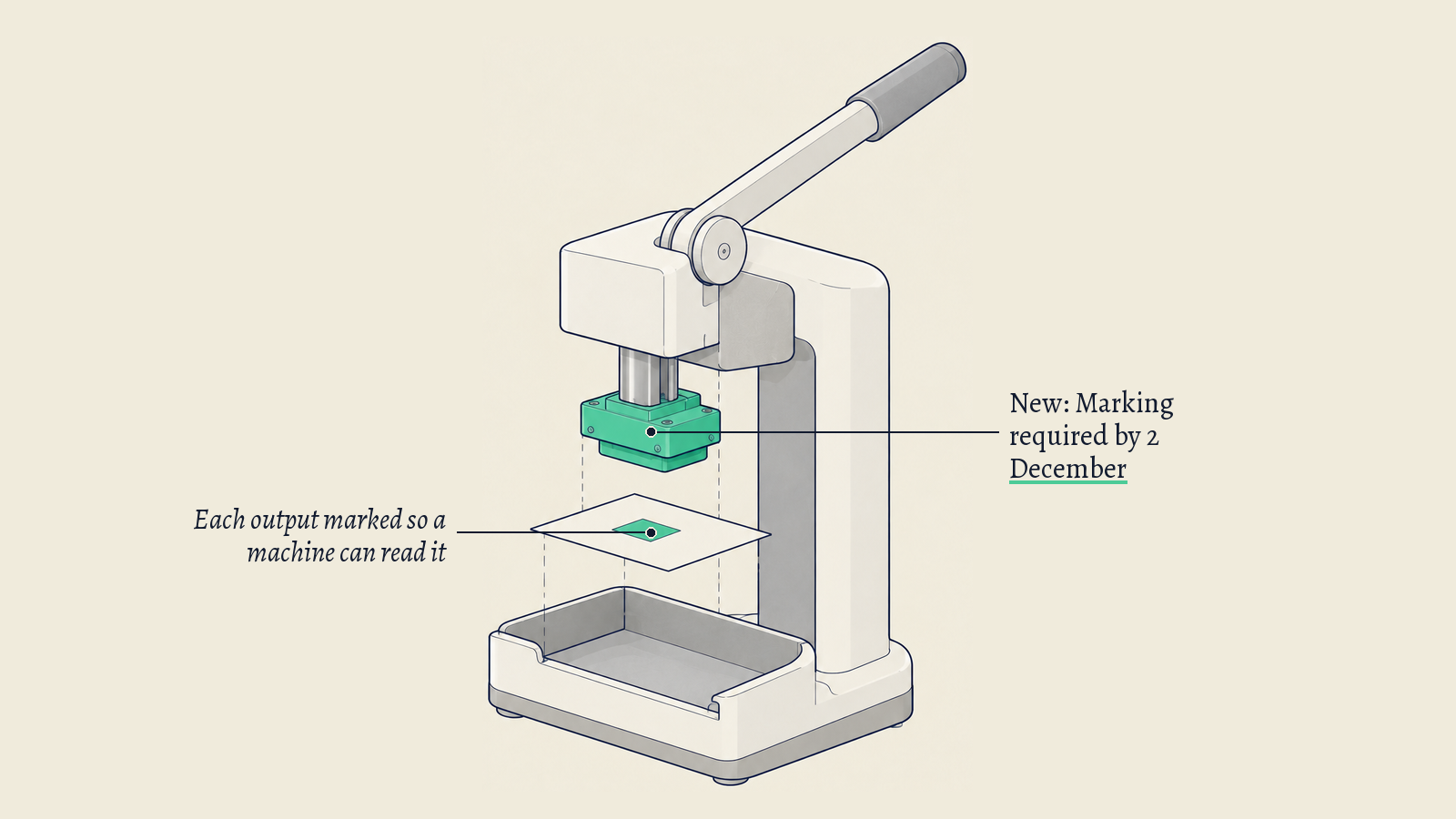
Illustration: A white bench-top stamping press with a tray of finished sheets; its green stamping head stands for the duty to mark generated output.Illustration made with AI for ai notis

Fines can reach up to 15 million euros or 3% of worldwide turnover; the Commission says Article 50 applies from 2 August, with only marking by earlier systems delayed to 2 December.

SOURCEEuropean Commission · 5 sources
CHECKED15 Nov, 17:35
Laws read
Illustration: A white bench-top stamping press with a tray of finished sheets; its green stamping head stands for the duty to mark generated output. Laws / 16 NOV

Existing generative AI systems in the EU must mark output by 2 December

  • The Commission's FAQ says Article 50 applies from 2 August 2026; systems placed on the market before then must meet the marking duty only from 2 December 2026.
  • Article 50(2) requires outputs of systems that generate audio, image, video or text to be marked machine-readably; the Commission lists watermarks, metadata and fingerprints.
  • The FAQ says providers outside the EU are covered if their output is used in the EU; fines can reach up to 15 million euros or 3% of worldwide turnover.

Providers of generative AI systems that were already on the EU market before 2 August 2026 have until 2 December 2026 to mark their outputs in a machine-readable way, according to the European Commission's FAQ on Article 50 of the AI Act. Everything else in Article 50 has applied since 2 August. This is a European rule: it covers providers outside the EU if the output of their system is used in the EU.

The grace period is narrow. The Commission says it covers only the marking and detection duty in Article 50(2), and only for systems placed on the market before 2 August 2026; content generated before that date does not need to be labelled retroactively.

The grace period comes from Regulation (EU) 2026/1744, the Digital Omnibus on AI, published in the Official Journal on 24 July 2026; its recital 38 refers to a four-month transitional period for providers already on the market.

Article 50(2) requires providers of systems that generate synthetic audio, image, video or text to ensure outputs are marked in a machine-readable format and detectable as artificially generated or manipulated. The Commission lists watermarks, metadata, cryptographic methods, logging and fingerprints as possible techniques.

Fines can reach up to 15 million euros or 3% of total worldwide turnover for the preceding financial year, according to the same FAQ. The Commission published a final voluntary Code of Practice on marking and labelling on 10 June 2026, and says signatories can rely on it to show compliance.

What it means for you Our view

If your system generates audio, image, video or text and was on the EU market before 2 August 2026, plan for machine-readable marking to be in place by 2 December 2026; a system placed on the market since then is already covered. The grace period covers marking only, so the other Article 50 duties already apply, and a provider outside the EU is covered when its output is used in the EU. The Commission says signatories of its voluntary Code of Practice can rely on it for legal certainty. Check which of your systems were on the market before 2 August, and whether your marking method is among the techniques the Commission lists.

TAGSEU AI ActEuropean CommissionMarking and labelling code
toned down Research 16 NOV

AI could match the best human AI researchers around 2028, Dwarkesh Patel estimates

Automated researchDwarkesh PodcastRecursive self-improvement
Recursive self-improvement has started: a video from Dwarkesh Patel on YouTubeVideo: Dwarkesh Patel on YouTube

In a solo video published on 13 November, the Dwarkesh Podcast host puts at least a 25% chance on a date after 2032; these are his own estimates, not findings.

SOURCEDwarkesh Patel (YouTube) · 3 sources
CHECKED15 Nov, 17:31
Research watch read
Recursive self-improvement has started: a video from Dwarkesh Patel on YouTube Research / 16 NOV

AI could match the best human AI researchers around 2028, Dwarkesh Patel estimates

  • Patel's median year for automated researchers to match the very best human AI researchers is 2028, assuming labs do not slow down or get slowed by a government (8:18).
  • He puts at least a 25% chance on it not happening until after 2032 (10:03).
  • At the early end, he says it is "possibly only a couple months away" (0:22), a view he did not hold a couple of months ago (0:47).

Dwarkesh Patel says AI that is as good as the best humans at AI research is "only a couple years away and possibly only a couple months away". He says that automating that research will compress so much progress into a single year that AI as good as the best human experts in every field could follow "by 2030 and plausibly as early as next year".

Patel, who hosts the Dwarkesh Podcast, made the argument in a solo video titled "Recursive self-improvement has started", published on his YouTube channel on 13 November 2026. The quotes below are from the video's automatic captions.

His median guess is later and more cautious than the headline. "If I had to pick my median year for when automated researchers will be as good as the very best human AI researchers at doing AI research, I'd guess 2028", he says, and he adds that this assumes the AI labs do not slow themselves down and are not slowed by a government (8:18).

He also puts a number on the other side. "I guess that there's at least a 25% chance that it doesn't happen until after 2032" (10:03).

Patel presents all of this as his own judgement, formed over the last three months, and says he did not believe it himself a couple of months ago.

The video narrates a written essay Patel published on his own site the same day, "The avalanche that hit math is coming for AI development"; the essay gives the same 2028 median and a 25% chance of a date after 2032.

What it means for you Our view

Treat this as one informed person's forecast. Patel presents it as his own judgement, formed over the last three months, and his 2028 median depends on the labs not slowing themselves down and not being slowed by a government. His 25% chance of a date after 2032 shows how wide his own range is, and "a couple of months" is its early edge, not his central estimate. The video gives his argument, not a measurement. If you set multi-year plans that assume a pace for AI research automation, write down where your assumptions sit against his 2028 median and his later tail, and revisit them when labs report results.

TAGSAutomated researchDwarkesh PodcastRecursive self-improvement
NOTHING IN THIS FILTER No story today matches. open the archive →
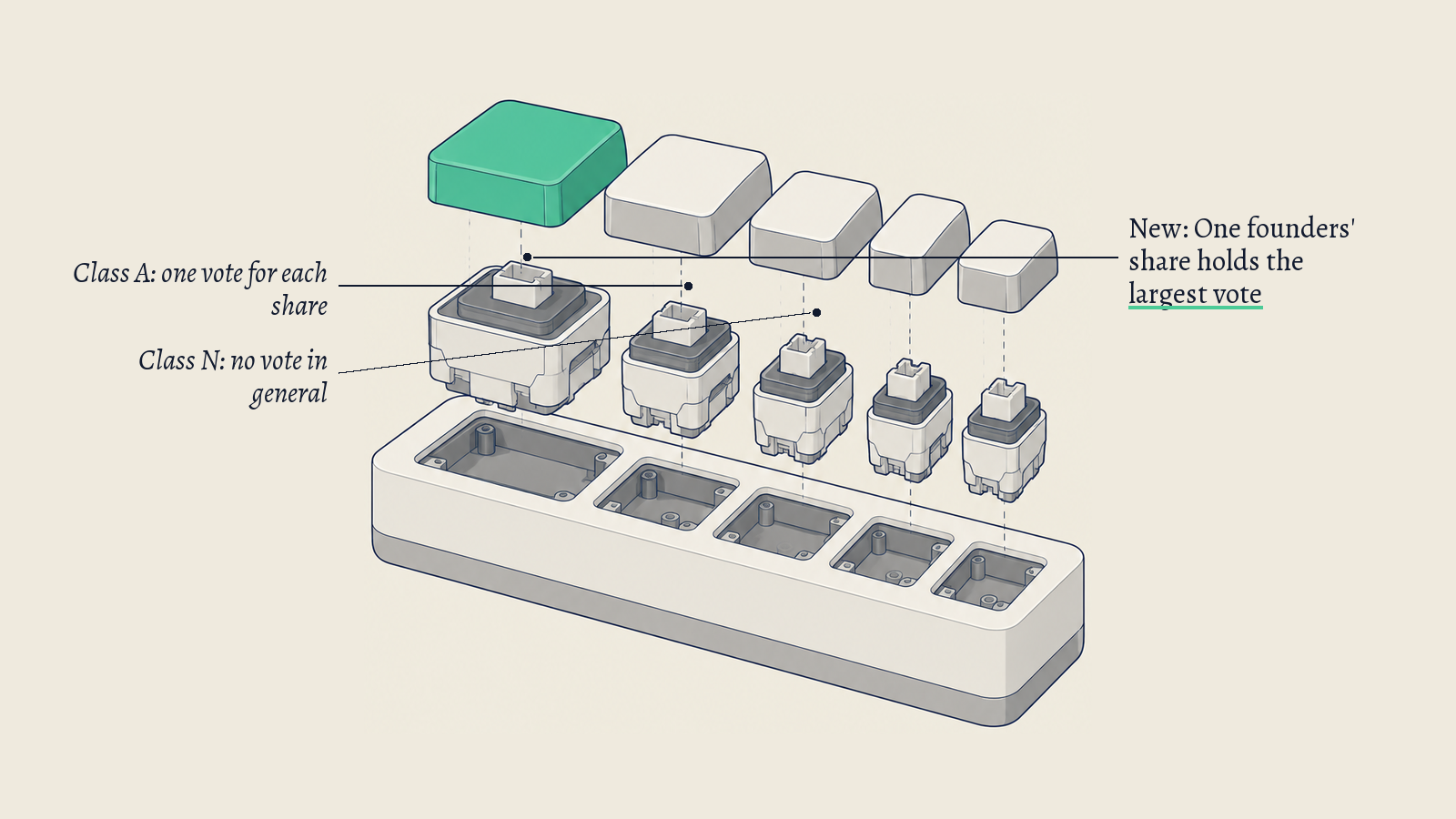
That's today's news: 12 stories. ExplainedHow a CVSS score is built, and why Java4Shell has three different onesExplainedHow Anthropic's five share classes divide votes, with 50.1% on one founders' shareExplainedHow a US export rule will extend from shipped chips to rented computeExplainedEU AI Act Article 50 sets four duties for AI providers and deployers

The morning email

On the mornings we publish: the three top stories and up to four short ones. Free.

We email you a link to confirm. An issue may include one sponsor, always labelled Sponsored · Advertisement. Our emails count opens and clicks, not who made them. Unsubscribe in one click. What we keep

1 of 12
Illustration: A benchtop sorting machine with an input chute, decoding drum and output tray; its green fast lane beside the drum stands for the hardware-accelerated Base64 path where the flaw sits.Illustration made with AI for ai notis

Safety · 19 NOVnarrowed

CISA urges immediate patching of OpenJDK flaw on x86-64 CPUs with AVX-512 VBMI

Calif says an attacker with no credentials can reach code execution and that it directed Codex to find and weaponize the flaw; Wiz says its Wiz Atlas AI harness built an exploit.

  • CISA's alert of 17 November strongly urges immediate patching; CERT-EU rates the flaw high, with a CVSS score of 8.1, and Calif scores it 9.2, Critical.
  • CERT-EU says exploitation needs an x86-64 CPU with AVX-512 VBMI, such as Intel Ice Lake or later or AMD Zen 4 or later, and attacker-controlled Base64 data reaching the decoder.
  • CERT-EU lists fixes in Java SE and OpenJDK 17.0.21 patch 1, 21.0.13 patch 1 and 25.0.5 patch 1; OpenJDK-based distributions release fixes on their own schedules.
Checked 18 Nov, 17:48 · Calif Research · 8 sources
Illustration: A dispatch unit with a tall module and a compact module on one shared base; the green dial on the tall one stands for the new, cheaper top model.Illustration made with AI for ai notis

Models · 19 NOVnarrowed

OpenAI releases GPT-6.2 Astra for complex professional work and Sol for everyday work

OpenAI reports Astra scores 5.2 points above GPT-6 Astra on Agents' Last Exam at less than a third of the cost, and calls it its first released model at High for self-improvement.

  • Astra costs $8 per million input tokens, $0.40 cached and $40 output, 20% below GPT-6 Astra on input and output, OpenAI says; Sol stays at $2, $0.10 and $10.
  • Both models reached Plus, Pro, Enterprise and Edu users in ChatGPT Work and Codex on 17 November, and the API; Astra's context window is 1,050,000 tokens.
  • OpenAI's system card says Astra meets its High threshold for AI self-improvement and Sol does not; both meet Critical for cybersecurity and High for biological and chemical capabilities.
Checked 18 Nov, 17:37 · OpenAI · 5 sources
Nvidia's Santa Clara headquarters: a long glass and steel building with a sloped roof behind a grassy bank, with the green Nvidia sign and street number 2788 in the foreground.Coolcaesar / NVIDIA Headquarters / CC BY-SA 4.0, cropped

Compute · 19 NOVnarrowed

Nvidia guarantees up to $105 billion for the Ohio site hosting OpenAI-leased systems

Nvidia reported $115.8 billion in quarterly revenue, guided to $130.0 billion, and put its maximum exposure from all guarantees at $118.0 billion, with no payments made under them.

  • Nvidia's third-quarter revenue was $115.8 billion, up 103% on a year earlier; it expects $130.0 billion for the fourth quarter, plus or minus 3%, a quarter with an extra week.
  • The Ohio guarantees build up to $105 billion, and Nvidia's table puts maximum gross exposure from all guarantees at $118.0 billion; Nvidia says it has made no payments under them.
  • CNBC reported that board chair Harvey Jones said Jensen Huang resigned after disclosing personal behavior that Jones described as inconsistent with the company's code of conduct, standards and cultural norms.
Checked 18 Nov, 17:39 · NVIDIA · 6 sources
Illustration: A white and aluminium ticket kiosk with a row of sealed drawers at its base; its green sliding hatch stands for the approval to list the shares.Illustration made with AI for ai notis

Compute · 18 NOVnarrowed

Anthropic's amended S-1 estimates IPO price at $70.00 to $78.00, with Nasdaq approval

Anthropic's IPO website expects pricing on 18 November and trading from 19 November; CNBC reported, citing unnamed sources, that it is likely to price above the range.

  • The S-1/A filed on 17 November estimates the IPO price at $70.00 to $78.00 a share, for 825,000,000 Class A shares, of which Anthropic is selling 801,351,354.
  • The S-1/A says Anthropic has been approved to list its Class A stock on the Nasdaq Global Select Market as ANT; its 10 November roadshow announcement said it had applied.
  • Anthropic's IPO website says the final price is expected to be set on 18 November, with trading to begin on 19 November, subject to regulatory clearance.
Checked 17 Nov, 17:59 · SEC · 5 sources
Illustration: A wall-mounted flow meter on a pipe, with a glass dome over a plain needle gauge; the green gauge stands for reported AI usage volume.Illustration made with AI for ai notis

Safety · 18 NOV

OpenAI puts NATO's cyber-model usage at up to 300 billion tokens a month

OpenAI's 17 November post on its Daybreak work with defenders says NATO has used its cybersecurity models through work with NATO's communications agency; the usage figure is OpenAI's own account.

  • OpenAI says NATO has used up to 300 billion raw input and output tokens per month on its cybersecurity models, through work with the NATO Communications and Information Agency.
  • The agency's general manager, Dr Dylan Browne, is quoted saying NATO will build an understanding of token consumption to "optimise costs, evaluate competing solutions and make informed procurement decisions".
  • OpenAI's post gives no price or contract terms for NATO's use.
Checked 17 Nov, 17:59 · OpenAI · 2 sources
Sam Altman: ‘It’s Hard To Imagine the AI Revolution Without Jensen’ | Silicon Valley & The World: a video from Semafor on YouTubeWatch on YouTubeVideo: Semafor on YouTube

Compute · 18 NOVnarrowed

Many chip makers expect OpenAI and others to buy most volume, Altman says

In a Semafor video published on 16 November, OpenAI's chief executive also called demand and the data center buildout solid and said OpenAI will go public at some point.

  • Altman said "there are now many people making chips and many of those people think they're going to sell most of the volume to us anthropic and others" (05:23).
  • Altman said "we're not we're not all going to be able to or need to buy every, you know, all of our supply from every chip vendor" (05:55).
  • Asked about going public, Altman said "We we will go public at some point" and "there are real downsides to being public" (03:21 to 03:27).
Checked 17 Nov, 17:59 · OpenAI · 6 sources
The stone-faced Herbert C. Hoover Building, the US Commerce Department headquarters, seen from a street corner in Washington, D.C., with US flags on the facade.APK / Herbert C. Hoover Building Washington, D.C. / CC BY-SA 4.0, cropped

Laws · 17 NOV

Data centres will need licences to rent large AI compute to China-headquartered companies

Not yet in force, the US Commerce Department rule covers access above 12,000,000 TPP of compute for companies headquartered in China, Macau or other D:5 countries, plus chip exports to five countries.

  • A licence will be needed for a data centre giving companies headquartered in Macau or a Country Group D:5 country access above 12,000,000 aggregate TPP, counted across linked sites.
  • A data centre already serving such companies must get a licence within 90 days of the effective date; compute used only for commercial recommender systems is exempt.
  • Licences will also be needed to export advanced chips to Indonesia, Malaysia, Singapore, Thailand and Brazil; the rule takes effect on Federal Register publication, a date not yet set.
Checked 16 Nov, 18:25 · Bureau of Industry and Security, US Department of Commerce · 6 sources
Illustration: A white access kiosk with a tall display column and a card slot; the green slot stands for the new flagship model opening through the Token Plan and API.Illustration made with AI for ai notis

Models · 17 NOVnarrowed

Alibaba releases Qwen4-Max, a multimodal flagship with a 1M-token context window

Alibaba says Qwen4-Max beats Qwen3.8-Max on its own Work360 test and ranked 6th on Code Arena; it costs $1.50 input and $4.50 output per 1M tokens in Singapore, less elsewhere.

  • Alibaba says the mixture-of-experts model has 2.4 trillion total parameters and activates 71 billion per token, 25% fewer activated parameters than Qwen3.8-Max.
  • Alibaba Cloud lists $1.50 per 1M input tokens and $4.50 output in Singapore, and $1.413 and $4.24 in China (Beijing), Hong Kong, Germany (Frankfurt), US (Virginia) and Japan (Tokyo).
  • On Work360 at High effort, Alibaba says Qwen4-Max used 35% fewer tokens than Qwen3.8-Max and cut average cost per task by around 60%.
Checked 16 Nov, 17:50 · Alibaba Cloud · 3 sources
Two facing rows of dark data-centre racks with lit, cream-coloured server trays, reflected in a black floor.Image: NVIDIA

Research · 17 NOVnarrowed

Nvidia says Vera Rubin NVL72 trained DeepSeek-V3 in 4.14 minutes on 1,024 GPUs

In Nvidia's own MLPerf Training v6.1 account, GB300 NVL72 took 8.03 minutes on the same GPUs; Vera Rubin's drop from 16 minutes on 256 GPUs to about four came from four times the GPUs.

  • On the same 1,024 GPUs, Nvidia's developer blog says Vera Rubin NVL72 took 4.14 minutes to train DeepSeek-V3 671B and GB300 NVL72 took 8.03 minutes.
  • The fastest absolute DeepSeek-V3 time was GB300 NVL72 at 1.38 minutes on 10,240 GPUs, Nvidia says; MLCommons published the round on 16 November, with 153 systems.
  • Nvidia's provisional Kimi K3 claim of more than 10x the throughput per watt of GB300 NVL72 is pending MLCommons verification and subject to change.
Checked 16 Nov, 17:38 · NVIDIA · 3 sources
Illustration: A freestanding white booking kiosk with a ticket slot; its green round dial stands for the date the IPO price is set.Illustration made with AI for ai notis

Compute · 16 NOVnarrowed

Claude maker Anthropic expects IPO pricing on 18 November, trading 19 November

Anthropic's S-1/A says it delivers Claude through its models, platform and applications, among them Claude Code and Claude Cowork; UK retail applications close on 18 November.

  • Anthropic's IPO website FAQ says the final price is expected to be set on 18 November and trading to begin on 19 November, subject to regulatory clearance.
  • The 10 November S-1/A estimates $70.00 to $78.00 a share for 825,000,000 Class A shares, to be listed on Nasdaq as ANT.
  • UK retail applications close on 18 November, with each intermediary setting its own closing time; the Australian offer closes at 5:00pm on 17 November (AEDT).
Checked 15 Nov, 18:02 · SEC · 7 sources
Illustration: A white bench-top stamping press with a tray of finished sheets; its green stamping head stands for the duty to mark generated output.Illustration made with AI for ai notis

Laws · 16 NOV

Existing generative AI systems in the EU must mark output by 2 December

Fines can reach up to 15 million euros or 3% of worldwide turnover; the Commission says Article 50 applies from 2 August, with only marking by earlier systems delayed to 2 December.

  • The Commission's FAQ says Article 50 applies from 2 August 2026; systems placed on the market before then must meet the marking duty only from 2 December 2026.
  • Article 50(2) requires outputs of systems that generate audio, image, video or text to be marked machine-readably; the Commission lists watermarks, metadata and fingerprints.
  • The FAQ says providers outside the EU are covered if their output is used in the EU; fines can reach up to 15 million euros or 3% of worldwide turnover.
Checked 15 Nov, 17:35 · European Commission · 5 sources
Recursive self-improvement has started: a video from Dwarkesh Patel on YouTubeWatch on YouTubeVideo: Dwarkesh Patel on YouTube

Research · 16 NOVnarrowed

AI could match the best human AI researchers around 2028, Dwarkesh Patel estimates

In a solo video published on 13 November, the Dwarkesh Podcast host puts at least a 25% chance on a date after 2032; these are his own estimates, not findings.

  • Patel's median year for automated researchers to match the very best human AI researchers is 2028, assuming labs do not slow down or get slowed by a government (8:18).
  • He puts at least a 25% chance on it not happening until after 2032 (10:03).
  • At the early end, he says it is "possibly only a couple months away" (0:22), a view he did not hold a couple of months ago (0:47).
Checked 15 Nov, 17:31 · Dwarkesh Patel (YouTube) · 3 sources

You're all caught up

That's today's news: 12 stories.

ExplainedHow a CVSS score is built, and why Java4Shell has three different onesExplainedHow Anthropic's five share classes divide votes, with 50.1% on one founders' shareExplainedHow a US export rule will extend from shipped chips to rented computeExplainedEU AI Act Article 50 sets four duties for AI providers and deployers

You can join ai notis soon, to follow cases and keep stories on every device.

Follow us on Instagram and Threads

The morning email

On the mornings we publish: the three top stories and up to four short ones. Free.

We email you a link to confirm. An issue may include one sponsor, always labelled Sponsored · Advertisement. Our emails count opens and clicks, not who made them. Unsubscribe in one click. What we keep

No story today matches. Open the archive
Illustration: A benchtop sorting machine with an input chute, decoding drum and output tray; its green fast lane beside the drum stands for the hardware-accelerated Base64 path where the flaw sits. narrowedIllustration made with AI for ai notis Safety · 19 NOV CISA urges immediate patching of OpenJDK flaw on x86-64 CPUs with AVX-512 VBMI Calif Research · 8 sources · 18 Nov, 17:48 Illustration: A dispatch unit with a tall module and a compact module on one shared base; the green dial on the tall one stands for the new, cheaper top model. narrowedIllustration made with AI for ai notis Models · 19 NOV OpenAI releases GPT-6.2 Astra for complex professional work and Sol for everyday work OpenAI · 5 sources · 18 Nov, 17:37 Nvidia's Santa Clara headquarters: a long glass and steel building with a sloped roof behind a grassy bank, with the green Nvidia sign and street number 2788 in the foreground. narrowedCoolcaesar / NVIDIA Headquarters / CC BY-SA 4.0, cropped Compute · 19 NOV Nvidia guarantees up to $105 billion for the Ohio site hosting OpenAI-leased systems NVIDIA · 6 sources · 18 Nov, 17:39 Illustration: A white and aluminium ticket kiosk with a row of sealed drawers at its base; its green sliding hatch stands for the approval to list the shares. narrowedIllustration made with AI for ai notis Compute · 18 NOV Anthropic's amended S-1 estimates IPO price at $70.00 to $78.00, with Nasdaq approval SEC · 5 sources · 17 Nov, 17:59 Illustration: A wall-mounted flow meter on a pipe, with a glass dome over a plain needle gauge; the green gauge stands for reported AI usage volume. Illustration made with AI for ai notis Safety · 18 NOV OpenAI puts NATO's cyber-model usage at up to 300 billion tokens a month OpenAI · 2 sources · 17 Nov, 17:59 Sam Altman: ‘It’s Hard To Imagine the AI Revolution Without Jensen’ | Silicon Valley & The World: a video from Semafor on YouTube narrowedVideo: Semafor on YouTube Compute · 18 NOV Many chip makers expect OpenAI and others to buy most volume, Altman says OpenAI · 6 sources · 17 Nov, 17:59 The stone-faced Herbert C. Hoover Building, the US Commerce Department headquarters, seen from a street corner in Washington, D.C., with US flags on the facade. APK / Herbert C. Hoover Building Washington, D.C. / CC BY-SA 4.0, cropped Laws · 17 NOV Data centres will need licences to rent large AI compute to China-headquartered companies Bureau of Industry and Security, US Department of Commerce · 6 sources · 16 Nov, 18:25 Illustration: A white access kiosk with a tall display column and a card slot; the green slot stands for the new flagship model opening through the Token Plan and API. narrowedIllustration made with AI for ai notis Models · 17 NOV Alibaba releases Qwen4-Max, a multimodal flagship with a 1M-token context window Alibaba Cloud · 3 sources · 16 Nov, 17:50 Two facing rows of dark data-centre racks with lit, cream-coloured server trays, reflected in a black floor. narrowedImage: NVIDIA Research · 17 NOV Nvidia says Vera Rubin NVL72 trained DeepSeek-V3 in 4.14 minutes on 1,024 GPUs NVIDIA · 3 sources · 16 Nov, 17:38 Illustration: A freestanding white booking kiosk with a ticket slot; its green round dial stands for the date the IPO price is set. narrowedIllustration made with AI for ai notis Compute · 16 NOV Claude maker Anthropic expects IPO pricing on 18 November, trading 19 November SEC · 7 sources · 15 Nov, 18:02 Illustration: A white bench-top stamping press with a tray of finished sheets; its green stamping head stands for the duty to mark generated output. Illustration made with AI for ai notis Laws · 16 NOV Existing generative AI systems in the EU must mark output by 2 December European Commission · 5 sources · 15 Nov, 17:35 Recursive self-improvement has started: a video from Dwarkesh Patel on YouTube narrowedVideo: Dwarkesh Patel on YouTube Research · 16 NOV AI could match the best human AI researchers around 2028, Dwarkesh Patel estimates Dwarkesh Patel (YouTube) · 3 sources · 15 Nov, 17:31

That's today's news: 12 stories.Archive

Today's stories 12 STORIES

Today's stories

Week 47 · 12 STORIES
  1. Safety · 19 NOV · narrowed

    CISA urges immediate patching of OpenJDK flaw on x86-64 CPUs with AVX-512 VBMI

    Illustration: A benchtop sorting machine with an input chute, decoding drum and output tray; its green fast lane beside the drum stands for the hardware-accelerated Base64 path where the flaw sits.Illustration made with AI for ai notis

    Calif says an attacker with no credentials can reach code execution and that it directed Codex to find and weaponize the flaw; Wiz says its Wiz Atlas AI harness built an exploit.

    Checked 18 Nov, 17:48 · Calif Research · 8 sourcesRead

  2. Models · 19 NOV · narrowed

    OpenAI releases GPT-6.2 Astra for complex professional work and Sol for everyday work

    Illustration: A dispatch unit with a tall module and a compact module on one shared base; the green dial on the tall one stands for the new, cheaper top model.Illustration made with AI for ai notis

    OpenAI reports Astra scores 5.2 points above GPT-6 Astra on Agents' Last Exam at less than a third of the cost, and calls it its first released model at High for self-improvement.

    Checked 18 Nov, 17:37 · OpenAI · 5 sourcesRead

  3. Compute · 19 NOV · narrowed

    Nvidia guarantees up to $105 billion for the Ohio site hosting OpenAI-leased systems

    Nvidia's Santa Clara headquarters: a long glass and steel building with a sloped roof behind a grassy bank, with the green Nvidia sign and street number 2788 in the foreground.Coolcaesar / NVIDIA Headquarters / CC BY-SA 4.0, cropped

    Nvidia reported $115.8 billion in quarterly revenue, guided to $130.0 billion, and put its maximum exposure from all guarantees at $118.0 billion, with no payments made under them.

    Checked 18 Nov, 17:39 · NVIDIA · 6 sourcesRead

  4. Compute · 18 NOV · narrowed

    Anthropic's amended S-1 estimates IPO price at $70.00 to $78.00, with Nasdaq approval

    Illustration: A white and aluminium ticket kiosk with a row of sealed drawers at its base; its green sliding hatch stands for the approval to list the shares.Illustration made with AI for ai notis

    Anthropic's IPO website expects pricing on 18 November and trading from 19 November; CNBC reported, citing unnamed sources, that it is likely to price above the range.

    Checked 17 Nov, 17:59 · SEC · 5 sourcesRead

  5. Safety · 18 NOV

    OpenAI puts NATO's cyber-model usage at up to 300 billion tokens a month

    Illustration: A wall-mounted flow meter on a pipe, with a glass dome over a plain needle gauge; the green gauge stands for reported AI usage volume.Illustration made with AI for ai notis

    OpenAI's 17 November post on its Daybreak work with defenders says NATO has used its cybersecurity models through work with NATO's communications agency; the usage figure is OpenAI's own account.

    Checked 17 Nov, 17:59 · OpenAI · 2 sourcesRead

  6. Compute · 18 NOV · narrowed

    Many chip makers expect OpenAI and others to buy most volume, Altman says

    Sam Altman: ‘It’s Hard To Imagine the AI Revolution Without Jensen’ | Silicon Valley & The World: a video from Semafor on YouTubeVideo: Semafor on YouTube

    In a Semafor video published on 16 November, OpenAI's chief executive also called demand and the data center buildout solid and said OpenAI will go public at some point.

    Checked 17 Nov, 17:59 · OpenAI · 6 sourcesRead

  7. Laws · 17 NOV

    Data centres will need licences to rent large AI compute to China-headquartered companies

    The stone-faced Herbert C. Hoover Building, the US Commerce Department headquarters, seen from a street corner in Washington, D.C., with US flags on the facade.APK / Herbert C. Hoover Building Washington, D.C. / CC BY-SA 4.0, cropped

    Not yet in force, the US Commerce Department rule covers access above 12,000,000 TPP of compute for companies headquartered in China, Macau or other D:5 countries, plus chip exports to five countries.

    Checked 16 Nov, 18:25 · Bureau of Industry and Security, US Department of Commerce · 6 sourcesRead

  8. Models · 17 NOV · narrowed

    Alibaba releases Qwen4-Max, a multimodal flagship with a 1M-token context window

    Illustration: A white access kiosk with a tall display column and a card slot; the green slot stands for the new flagship model opening through the Token Plan and API.Illustration made with AI for ai notis

    Alibaba says Qwen4-Max beats Qwen3.8-Max on its own Work360 test and ranked 6th on Code Arena; it costs $1.50 input and $4.50 output per 1M tokens in Singapore, less elsewhere.

    Checked 16 Nov, 17:50 · Alibaba Cloud · 3 sourcesRead

  9. Research · 17 NOV · narrowed

    Nvidia says Vera Rubin NVL72 trained DeepSeek-V3 in 4.14 minutes on 1,024 GPUs

    Two facing rows of dark data-centre racks with lit, cream-coloured server trays, reflected in a black floor.Image: NVIDIA

    In Nvidia's own MLPerf Training v6.1 account, GB300 NVL72 took 8.03 minutes on the same GPUs; Vera Rubin's drop from 16 minutes on 256 GPUs to about four came from four times the GPUs.

    Checked 16 Nov, 17:38 · NVIDIA · 3 sourcesRead

  10. Compute · 16 NOV · narrowed

    Claude maker Anthropic expects IPO pricing on 18 November, trading 19 November

    Illustration: A freestanding white booking kiosk with a ticket slot; its green round dial stands for the date the IPO price is set.Illustration made with AI for ai notis

    Anthropic's S-1/A says it delivers Claude through its models, platform and applications, among them Claude Code and Claude Cowork; UK retail applications close on 18 November.

    Checked 15 Nov, 18:02 · SEC · 7 sourcesRead

  11. Laws · 16 NOV

    Existing generative AI systems in the EU must mark output by 2 December

    Illustration: A white bench-top stamping press with a tray of finished sheets; its green stamping head stands for the duty to mark generated output.Illustration made with AI for ai notis

    Fines can reach up to 15 million euros or 3% of worldwide turnover; the Commission says Article 50 applies from 2 August, with only marking by earlier systems delayed to 2 December.

    Checked 15 Nov, 17:35 · European Commission · 5 sourcesRead

  12. Research · 16 NOV · narrowed

    AI could match the best human AI researchers around 2028, Dwarkesh Patel estimates

    Recursive self-improvement has started: a video from Dwarkesh Patel on YouTubeVideo: Dwarkesh Patel on YouTube

    In a solo video published on 13 November, the Dwarkesh Podcast host puts at least a 25% chance on a date after 2032; these are his own estimates, not findings.

    Checked 15 Nov, 17:31 · Dwarkesh Patel (YouTube) · 3 sourcesRead

toned down Safety 19 NOV

CISA urges immediate patching of OpenJDK flaw on x86-64 CPUs with AVX-512 VBMI

Calif says an attacker with no credentials can reach code execution and that it directed Codex to find and weaponize the flaw; Wiz says its Wiz Atlas AI harness built an exploit.

Calif Research · 8 sources·checked 18 Nov, 17:48
CERT-EUCalifCodexJava4ShellOpenJDK
Illustration: A benchtop sorting machine with an input chute, decoding drum and output tray; its green fast lane beside the drum stands for the hardware-accelerated Base64 path where the flaw sits.Illustration made with AI for ai notis
toned down Models

OpenAI releases GPT-6.2 Astra for complex professional work and Sol for everyday work

OpenAI reports Astra scores 5.2 points above GPT-6 Astra on Agents' Last Exam at less than a third of the cost, and calls it its first released model at High for self-improvement.

19 NOV · OpenAI · 5 sources
toned down Compute

Nvidia guarantees up to $105 billion for the Ohio site hosting OpenAI-leased systems

Nvidia reported $115.8 billion in quarterly revenue, guided to $130.0 billion, and put its maximum exposure from all guarantees at $118.0 billion, with no payments made under them.

19 NOV · NVIDIA · 6 sources
toned down Compute

Anthropic's amended S-1 estimates IPO price at $70.00 to $78.00, with Nasdaq approval

Anthropic's IPO website expects pricing on 18 November and trading from 19 November; CNBC reported, citing unnamed sources, that it is likely to price above the range.

18 NOV · SEC · 5 sources
Safety

OpenAI puts NATO's cyber-model usage at up to 300 billion tokens a month

OpenAI's 17 November post on its Daybreak work with defenders says NATO has used its cybersecurity models through work with NATO's communications agency; the usage figure is OpenAI's own account.

18 NOV · OpenAI · 2 sources
toned down Compute

Many chip makers expect OpenAI and others to buy most volume, Altman says

In a Semafor video published on 16 November, OpenAI's chief executive also called demand and the data center buildout solid and said OpenAI will go public at some point.

18 NOV · OpenAI · 6 sources
Laws

Data centres will need licences to rent large AI compute to China-headquartered companies

Not yet in force, the US Commerce Department rule covers access above 12,000,000 TPP of compute for companies headquartered in China, Macau or other D:5 countries, plus chip exports to five countries.

17 NOV · Bureau of Industry and Security, US Department of Commerce · 6 sources
toned down Models

Alibaba releases Qwen4-Max, a multimodal flagship with a 1M-token context window

Alibaba says Qwen4-Max beats Qwen3.8-Max on its own Work360 test and ranked 6th on Code Arena; it costs $1.50 input and $4.50 output per 1M tokens in Singapore, less elsewhere.

17 NOV · Alibaba Cloud · 3 sources
toned down Research

Nvidia says Vera Rubin NVL72 trained DeepSeek-V3 in 4.14 minutes on 1,024 GPUs

In Nvidia's own MLPerf Training v6.1 account, GB300 NVL72 took 8.03 minutes on the same GPUs; Vera Rubin's drop from 16 minutes on 256 GPUs to about four came from four times the GPUs.

17 NOV · NVIDIA · 3 sources
toned down Compute

Claude maker Anthropic expects IPO pricing on 18 November, trading 19 November

Anthropic's S-1/A says it delivers Claude through its models, platform and applications, among them Claude Code and Claude Cowork; UK retail applications close on 18 November.

16 NOV · SEC · 7 sources
Laws

Existing generative AI systems in the EU must mark output by 2 December

Fines can reach up to 15 million euros or 3% of worldwide turnover; the Commission says Article 50 applies from 2 August, with only marking by earlier systems delayed to 2 December.

16 NOV · European Commission · 5 sources
toned down Research

AI could match the best human AI researchers around 2028, Dwarkesh Patel estimates

In a solo video published on 13 November, the Dwarkesh Podcast host puts at least a 25% chance on a date after 2032; these are his own estimates, not findings.

16 NOV · Dwarkesh Patel (YouTube) · 3 sources

Explained

4 ideas behind the news
Safety How a CVSS score is built, and why Java4Shell has three different ones OpenJDK, Amazon and Calif scored Java4Shell 8.1, 8.8 and 9.2, using different versions and answers; the score ranks severity, and exploitation sits in separate metrics. Compute How Anthropic's five share classes divide votes, with 50.1% on one founders' share In Anthropic's amended S-1, each Class A share has one vote, while a single Class F share to be held by an LLC of the co-founders will carry 50.1% of the voting power. Laws How a US export rule will extend from shipped chips to rented compute A rule BIS released on 16 November will extend US chip shipping controls to remote access; this explains how it reaches a data centre that rents out AI chips. Laws EU AI Act Article 50 sets four duties for AI providers and deployers Four duties sit under one article: say when someone is talking to AI, mark what AI generates, tell people about emotion recognition, and label deepfakes and AI text on public matters.
In brief 11 more today
0 of 12 read
Drag a card to start Drag left or right · tap to read more Hover to lift a card · tap to bring it forward Tap again to put it back Tap a card to open it Tap again to close it Tap a headline to read it as a card