- OpenAI says NATO has used up to 300 billion raw input and output tokens per month on its cybersecurity models, through work with the NATO Communications and Information Agency.
- The agency's general manager, Dr Dylan Browne, is quoted saying NATO will build an understanding of token consumption to "optimise costs, evaluate competing solutions and make informed procurement decisions".
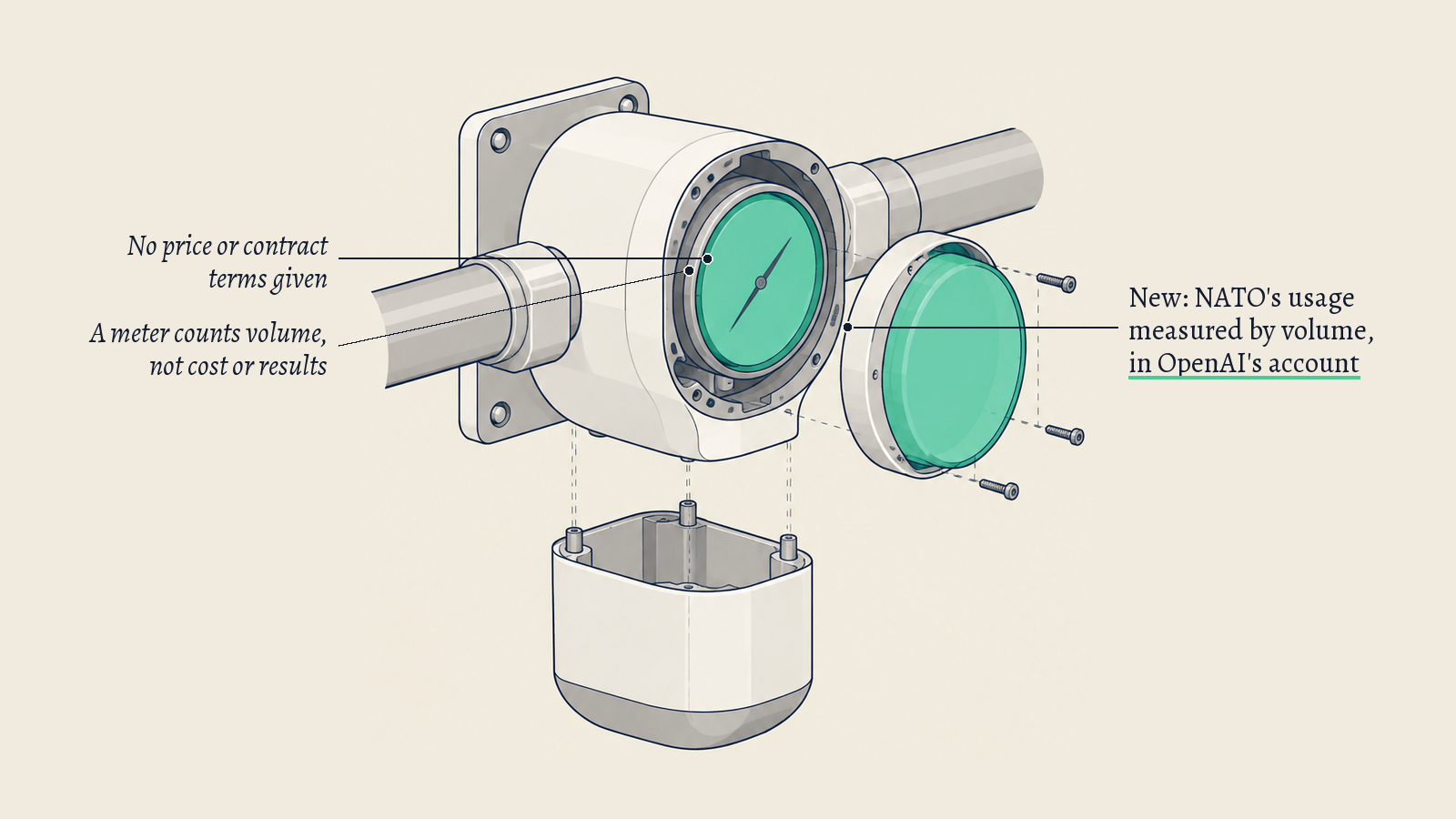
- OpenAI's post gives no price or contract terms for NATO's use.
OpenAI says NATO has used up to 300 billion raw input and output tokens a month on its cybersecurity models, through work with the NATO Communications and Information Agency (NCIA). OpenAI published the account on 17 November in a post called Strengthening NATO and allied cyber defenses with AI.
The post describes Daybreak as OpenAI's way of putting advanced AI into the hands of trusted defenders for authorized security work. It quotes NCIA General Manager Dylan Browne saying that, as adoption scales, NATO will build a deeper understanding of token consumption and the economics of the models, to optimise costs, evaluate competing solutions and make procurement decisions. OpenAI also says it supported the 2026 Crossed Swords exercise, where participants built and evaluated AI agents for cyber operations with Daybreak, with an emphasis on human oversight.
OpenAI says it has also given its cyber models to defenders in Europe, including the EU's cyber agency ENISA and national agencies in France (ANSSI), Germany and Poland, and that Ukraine's Ministry of Digital Transformation uses Daybreak to protect civilian infrastructure.
On results, OpenAI says ENISA used its models to find four vulnerabilities in software used across EU institutions, with fixes published for all four. It says a November ENISA and CERT-EU joint report describes a review of 27 software projects, in which maintainers confirmed 95% of the 88 potential issues they had assessed. It adds that CERT Polska used OpenAI models to help identify six vulnerabilities in MikroTik RouterOS, which MikroTik fixed.
The ENISA and CERT-EU report itself, listed by ENISA on 12 November, gives the same 27 codebases, 220 potential issues and 95% of 88 assessed findings confirmed. It says ENISA was given access to OpenAI's GPT-5.5 Cyber, GPT-5.6 Cyber and GPT-6 Astra and to Anthropic's Mythos 5, and estimates the cost of all scans at about EUR 6 648.90, with the models provided free of charge by their makers.
OpenAI's post gives no price or contract terms for NATO's use.
What it means for you Our view
OpenAI's own post is the account of NATO's usage, and the token figure shows volume, not cost or results. The results it cites for other defenders come from ENISA, CERT-EU and CERT Polska, and the ENISA and CERT-EU advisory is the document to read for how code review with frontier models performed. NATO's own agency manager is quoted saying the aim is to compare solutions on cost before procurement decisions, which is the comparison any buyer of cyber models can run. Before you commit to a contract, run a trial and record how many tokens it takes to produce each finding that a code owner confirms.
TAGSDaybreakENISANATOOpenAI