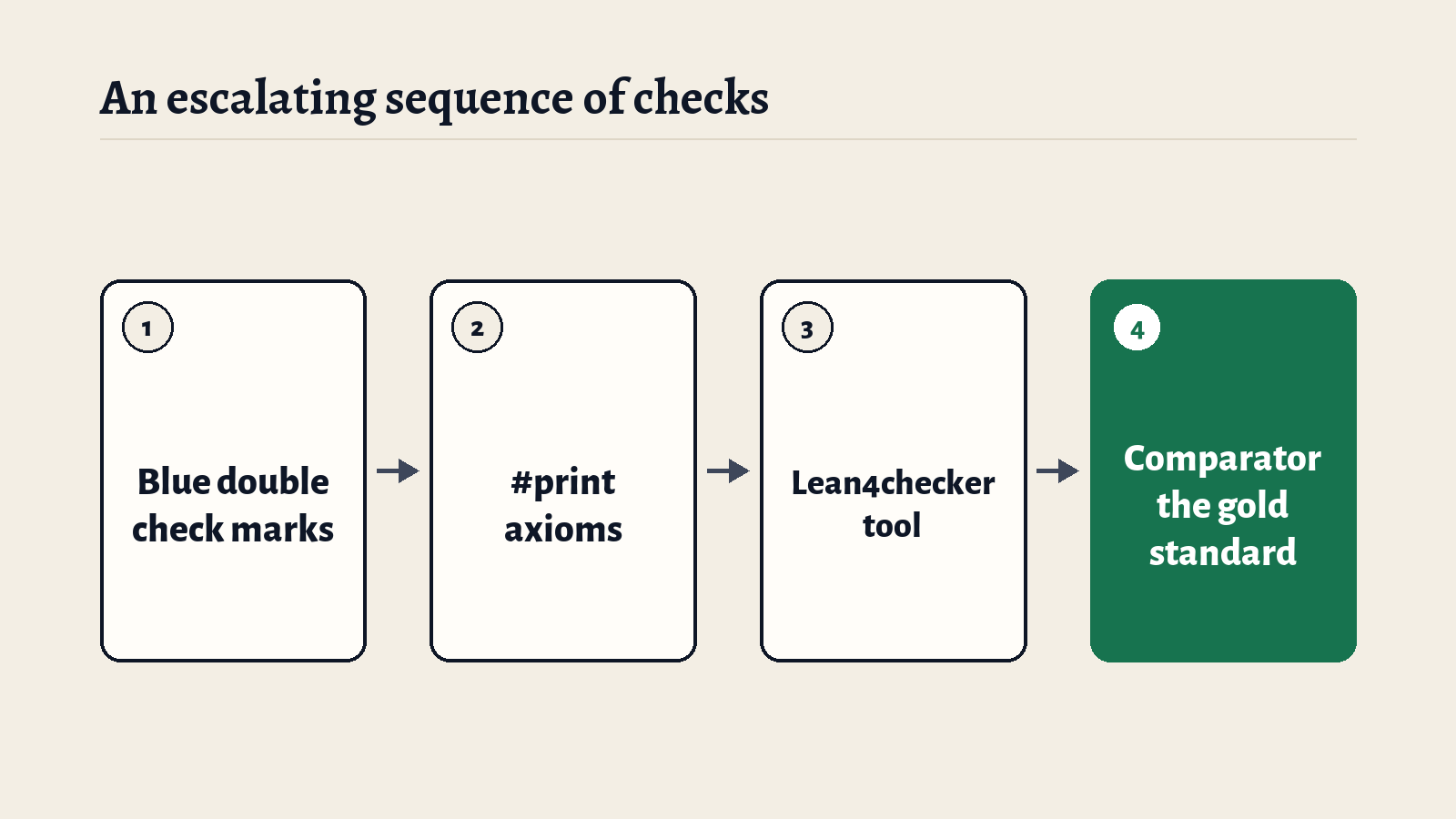
- Lean's reference manual presents an escalating sequence of checks, from blue double check marks in the editor to comparator, which it calls the gold standard.
- Comparator establishes that theorem statements match exactly, and with the --paranoid flag it checks proofs with several independently written kernels instead of only Lean's built-in kernel.
- The manual says: "Lean can establish that a statement has been proven, but not whether it is the intended statement."
Levent Alpöge writes in a PDF remark that he believes he has, working with Claude, discovered a proof of the Riemann hypothesis, and that he decided "to only present Lean".
Lean is an open-source programming language and proof assistant. Its home page says: "Define it, prove it, and let Lean check every step."
Lean checks proofs with a kernel. Its reference manual says the project combines the trust of "a small, independently-implementable logical kernel" with the convenience of automation, and that proof terms are "sufficient evidence of the truth of a theorem and are amenable to independent verification."
The claim a Lean proof makes is a precise statement written in code. Mathlib, Lean's mathematics library, defines the Riemann hypothesis as the statement that every zero of the zeta function, other than the negative even integers and the point 1, has real part 1/2. Its documentation adds that "constructing a term of this type is worth a million dollars." Mathlib has over a million lines of formalized mathematics.
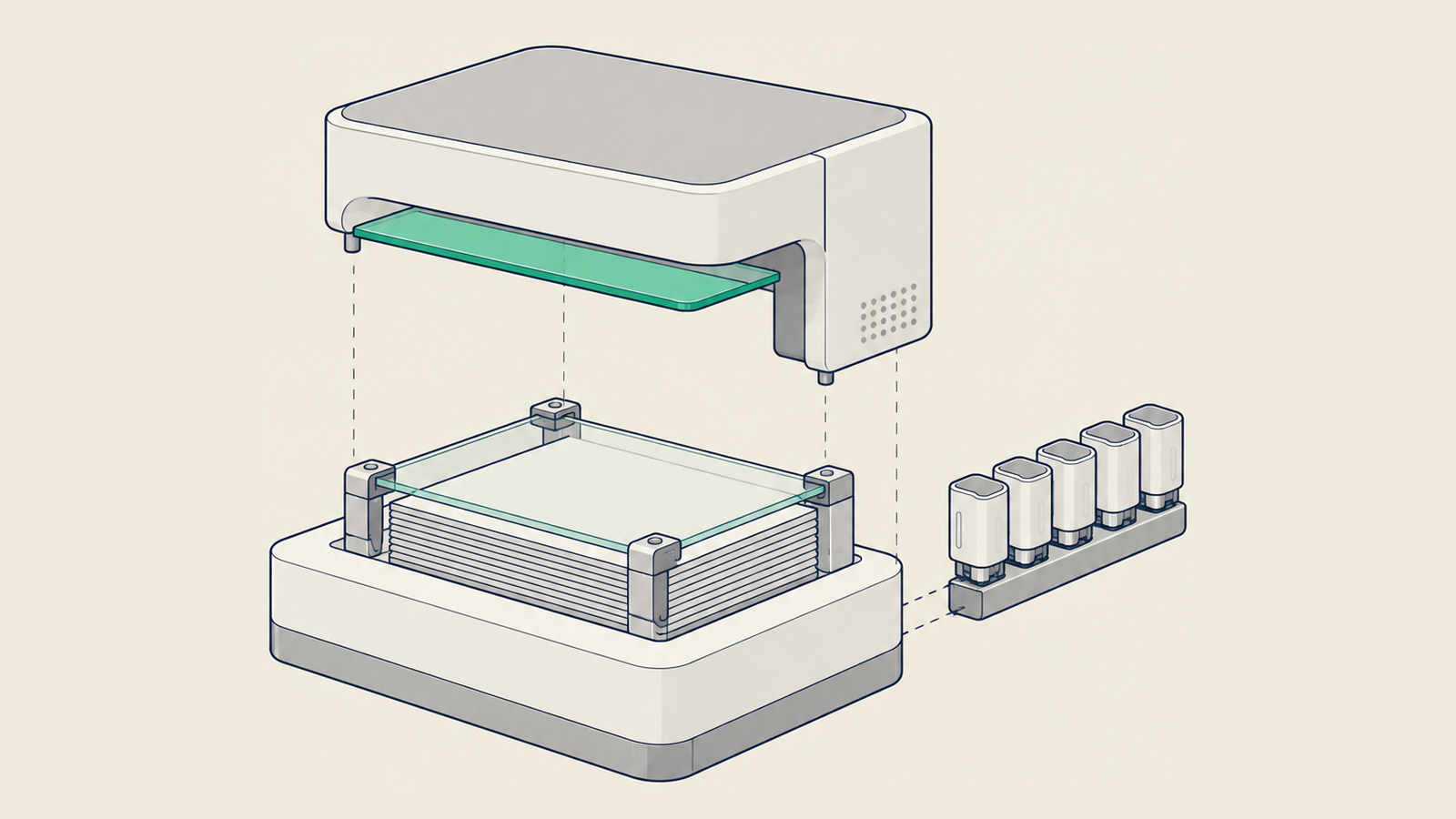
The reference manual lists an escalating sequence of checks. The first is the blue double check marks in the editor, which show that the statement was elaborated and the kernel accepted a proof of it. The second is printing the axioms the proof depends on: only propext, Classical.choice and Quot.sound are standard, `sorryAx` means the proof is incomplete somewhere, and any other axiom means the theorem holds only if that axiom is sound.
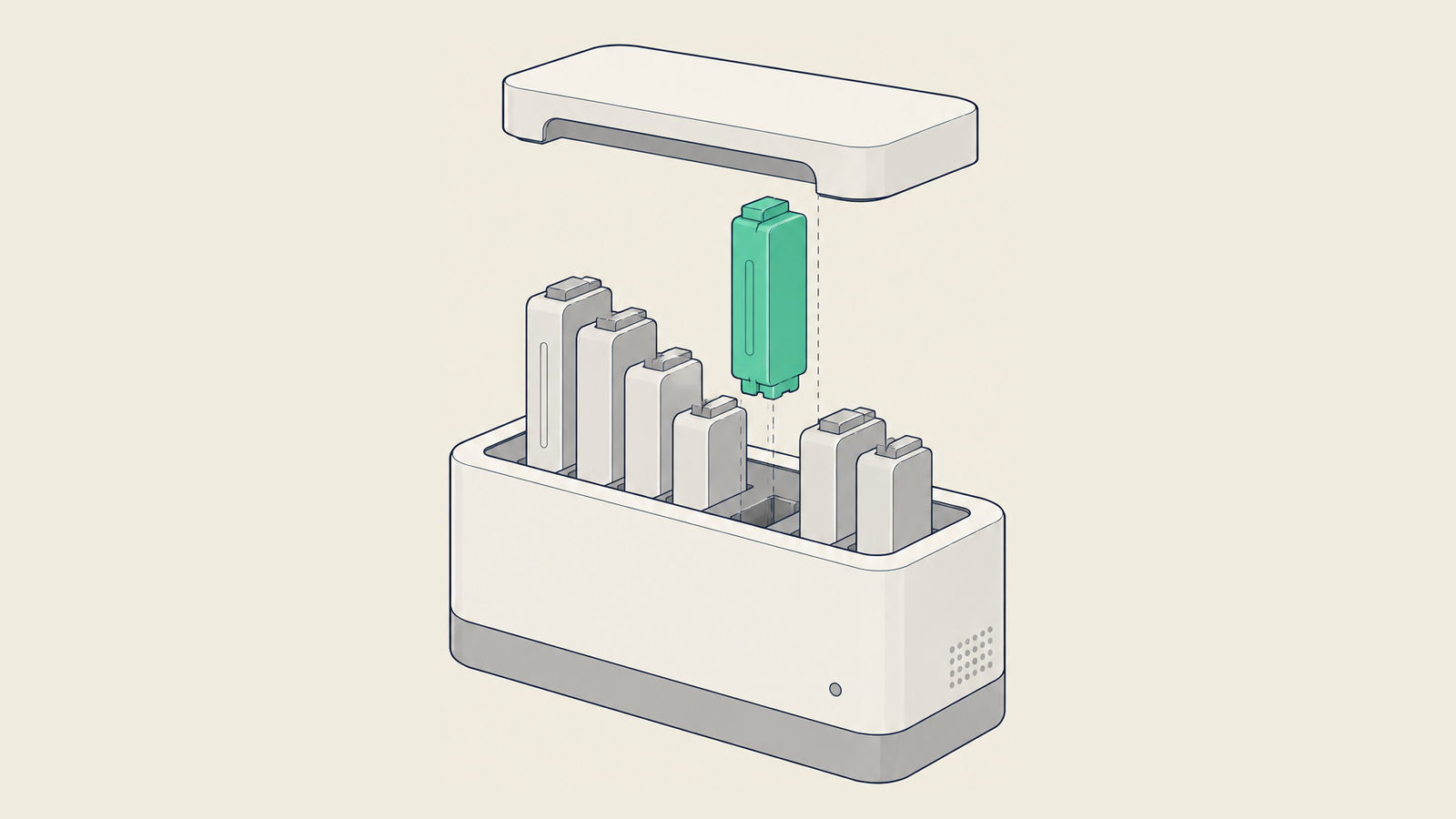
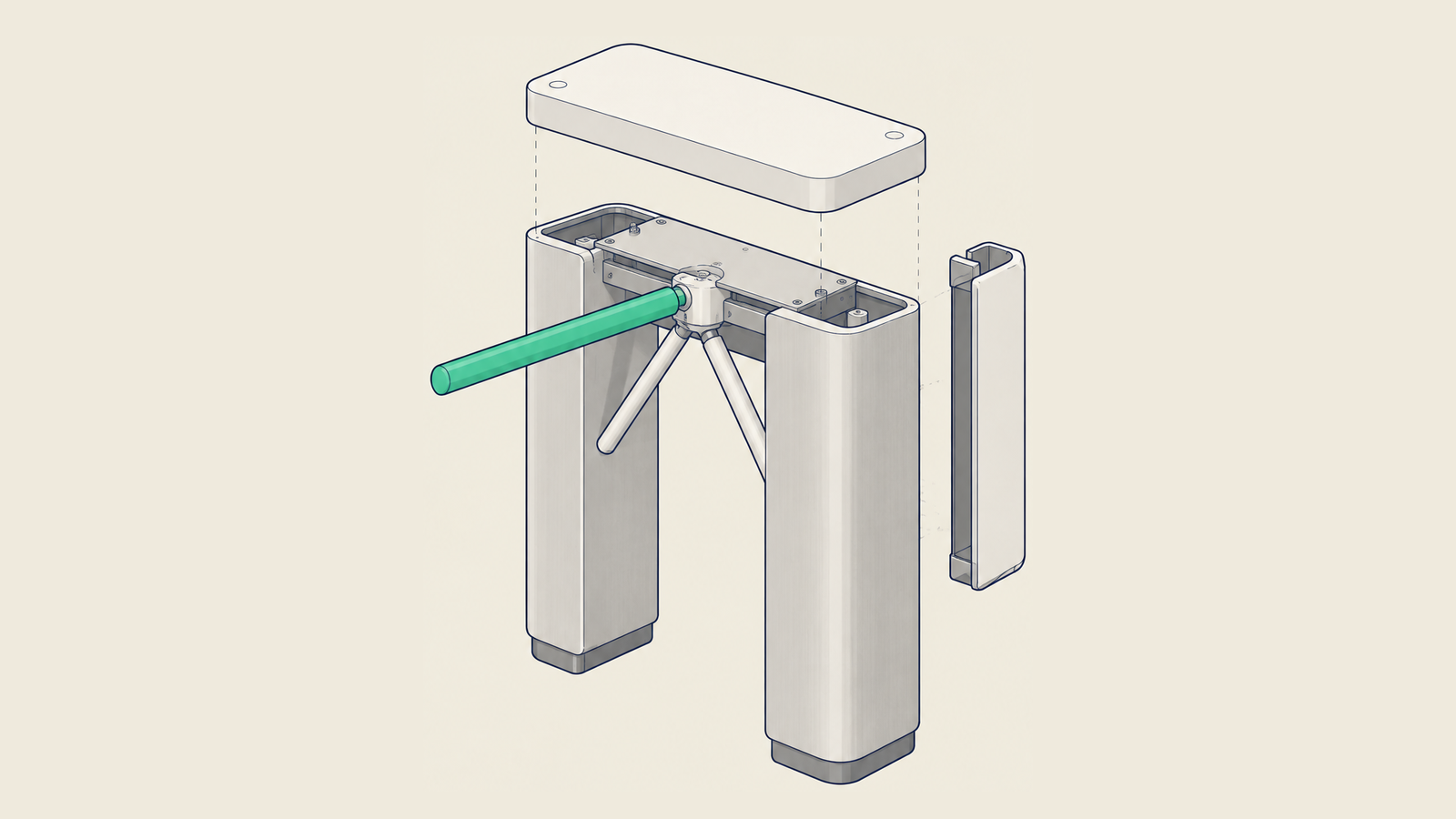
The next check, `lean4checker`, replays the stored proofs through the kernel again. The last, `comparator`, is the one the manual calls the gold standard. A trusted file states the theorem with `sorry` in place of every proof, the submitter supplies the proofs, and the tool checks that the statements match exactly and that several independently written kernels accept the result. The toolchain ships these kernels: Lean's own, `con-leche`, `con-ron`, `lean4lean` and `nanoda`.
The manual says this last level is for high-risk settings such as proof marketplaces, high-reward proof competitions and unaligned AI. It describes a malicious proof as including "un-reviewed AI-generated proofs and programs."
The limits are stated in the same place. "Lean can establish that a statement has been proven, but not whether it is the intended statement." Even after the gold-standard check, the manual lists remaining assumptions, among them the soundness of Lean's logic and "no human error or misleading presentation of the theorem statement in the trusted challenge file."
So when someone says a result is "formalized in Lean", the questions to ask are which statement was proved, which axioms it uses, and which of these checks it has passed.
What it means for you Our view
When someone says a result is formalized in Lean, as Levent Alpöge says of the Riemann hypothesis proof he believes he found with Claude, the manual's levels show how much that phrase can mean. A check mark in the editor and a comparator run with several kernels give different assurance, and the manual reserves the strongest level for high-risk cases, including unaligned AI. None of them settles whether the statement is the intended one. Before you rely on such a claim, find out which statement was proved, which axioms it depends on, and which of the checks it has passed.
TAGSAnthropicClaudeLeanMathlib