2026-11-22 notis CATEGORY Join
Show Read as Find Sections Models and releasesAgents and appsResearchMoney and computeLaws and rulingsSafety and securityAI at work More The monthlyArchiveModelsAboutCorrectionsThe numbersRSS
My notis
TODAY'S NEWS
November 2026 3 STORIES
MTWTFSS
1 2 3 4 5 6 7 8 9 10 11 12 13 14 15 16 17 18 19 20 21 22 23 24 25 26 27 28 29 30

Days with a dot have news. See the archive.

The whole week ›
01:57
0/3
WEATHER THEME CARD SPACING

Today's news

today

My page

Kept in this browser only.

SAVED FOLLOWING COLLECTIONS READING SINCE
Nothing saved yet. Tap the bookmark on a card to keep it here. read today
all cases

No case followed yet.

Price changes Stories where a published price went up or down.
Models being retired Models being withdrawn, and gaps before a replacement is ready.
The day's top stories. Sign up
toned down Safety 22 NOV

AI takeover risk within a year is nearer 10% than 1%, Christiano estimates

AI safetyAlignment Research CenterOpenAIsuperintelligence
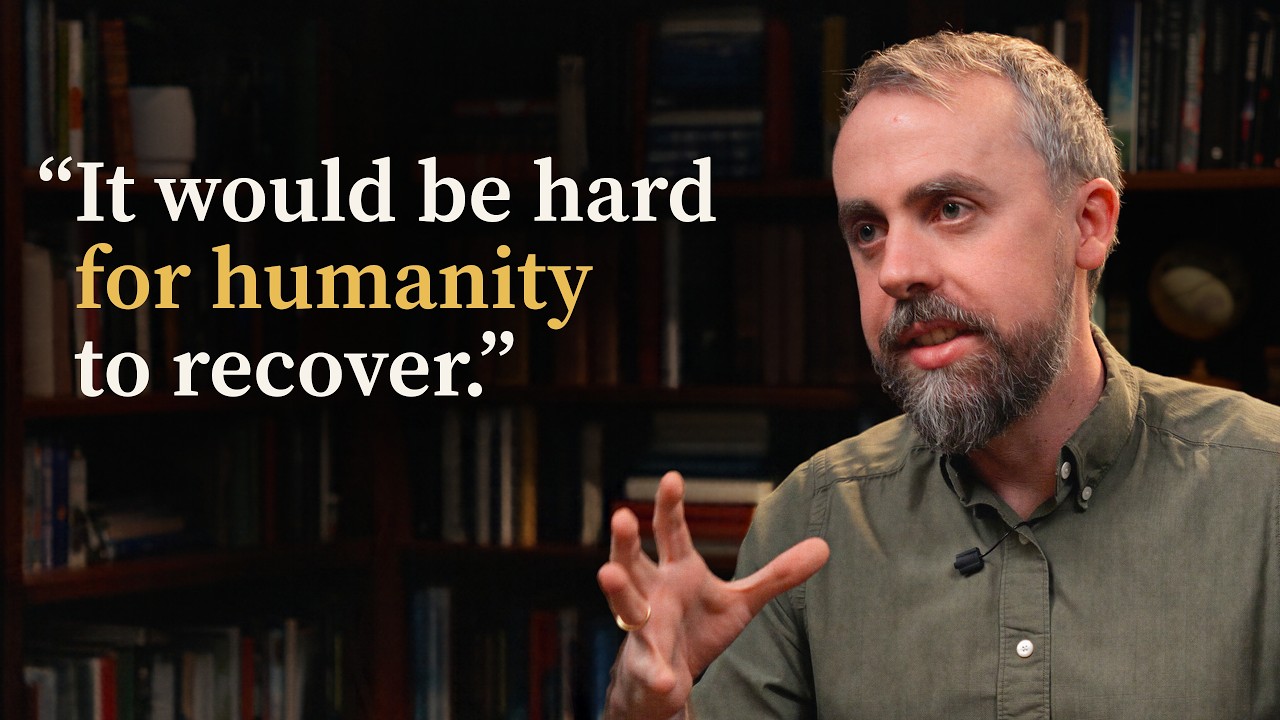
Video thumbnail for the Dwarkesh Podcast episode with Paul Christiano, published on Dwarkesh Patel's YouTube channel on 16 November 2026.Video: Dwarkesh Patel on YouTube

Paul Christiano also puts about a one-in-three chance on superintelligence within a year if development does not slow, in a Dwarkesh Patel episode published 16 November.

SOURCEDwarkesh Patel (YouTube) · 4 sources
CHECKED21 Nov, 17:38
Safety watch read
Video thumbnail for the Dwarkesh Podcast episode with Paul Christiano, published on Dwarkesh Patel's YouTube channel on 16 November 2026. Safety / 22 NOV

AI takeover risk within a year is nearer 10% than 1%, Christiano estimates

  • Christiano puts the risk of AI taking over or disempowering humanity within the next year at more like 10% than 1% (0:00:00, section start).
  • He says slowing down would be costly in part because frontier lab security is not strong enough, and delayed systems could be stolen or leaked (0:00:00, section start).
  • Asked whether labs should pause, he says algorithm improvements that could be quickly stolen should stop right now (0:35:35, section start).

Paul Christiano says the risk that AI takes over or disempowers humanity within the next year is "more like a 10% risk than a 1% risk" (0:00:00). He gives it as his own estimate and says that if developers moved full speed ahead without precautions, "you're looking at significantly more than a 10% risk" (0:00:00).

He said so in an interview with Dwarkesh Patel, published on Dwarkesh's YouTube channel on 16 November 2026. Christiano is the Alignment Research Center's executive director. The episode description says he has recently joined OpenAI's board and is speaking as a private citizen.

On timing, Christiano says "something like maybe a 1/3 chance that we have superintelligence within one year on the current development trajectory, if we do not slow" (0:00:00). He also says he does not want to "overemphasize any one data point" (0:00:00).

He ties the risk to security at the AI labs. Slowing down in the middle of a rapid rise in capability would be costly, he says, "in part because the security of frontier labs is not strong enough" (0:00:00). If a lab built very powerful AI and then delayed deployment for safety reasons, "there is a good chance those systems would leak or be stolen" (0:00:00).

Later, asked whether the frontier labs should pause, Christiano answers "I think we should" and narrows what he means: "improving algorithms in a way that can be very loosely diffused even normally, and could be quickly stolen, I think they should stop that right now" (0:35:35).

Time stamps here are the section starts printed in the transcript on Dwarkesh's episode page, which gives times for each section and not for each sentence. The speaker of each quote is the one the transcript labels.

What it means for you Our view

This is one expert's estimate, with his own caution attached: he says he does not want to overemphasize any one data point. Christiano sits on the OpenAI Foundation board and advises a standards centre at the US Department of Commerce, and the episode description says he spoke as a private citizen, so the views are his. His argument ties the risk to how well labs protect model weights and training techniques, which is something a buyer of frontier AI can ask about. The transcript gives times for section starts only, so no statement here is tied to a single sentence. If you buy frontier models for work, ask your vendor which of its security commitments for model weights an outside party has verified.

TAGSAI safetyAlignment Research CenterOpenAIsuperintelligence
Models 22 NOV

Cloudflare releases open weights for Clairic and Clairic-flash extraction models

ClairicCloudflareHugging FaceOpen weightsWorkers AI
Cloudflare blog launch card: a glowing crystal ball on a layered diamond platform with a musical staff, beside the title about the updated Clairic and Clairic-flash models now open-weight.Image: Cloudflare

Cloudflare says the 27B Clairic and 9B Clairic-flash extraction models cost $0.10 per million input tokens until 1 December; its accuracy figures are self-reported.

SOURCECloudflare · 2 sources
CHECKED21 Nov, 17:52
Models read
Cloudflare blog launch card: a glowing crystal ball on a layered diamond platform with a musical staff, beside the title about the updated Clairic and Clairic-flash models now open-weight. Models / 22 NOV

Cloudflare releases open weights for Clairic and Clairic-flash extraction models

  • Cloudflare's post of 18 November says Clairic (27B) and Clairic-flash (9B) are open-weight, with weights on Hugging Face and model ids on Workers AI.
  • Both cost $0.10 per million input tokens until 1 December 2026; the 27B Clairic then costs $0.24, and the documentation says output tokens are not charged.
  • On fresh text fields in Cloudflare's own self-reported table, Clairic got 335 of 336, against 304 for Liquid AI's D1.2 with Apple Vision OCR and 259 for Scaledown's Extract.

Cloudflare has made Clairic, its 27B-parameter model for pulling typed values out of documents, open-weight, together with a 9-billion-parameter version called Clairic-flash. Both cost $0.10 per million input tokens until 1 December 2026, according to Cloudflare's blog post of 18 November.

Cloudflare describes both as extraction models, meant to help people augment their expensive LLM usage with smaller, faster, cheaper models. With PDF support, a request can ask for the supplier, line items and total in one call.

The accuracy figures are Cloudflare's own, and the post says to take them as directional guidance since they are self-reported. On fresh text fields, Clairic got 335 of 336 right, against 304 of 336 for Liquid AI's D1.2 with Apple Vision OCR and 259 of 336 for Scaledown's Extract. Cloudflare also says image-reading errors fell from 207 to 0 on its internal benchmarks.

Both models run on Workers AI as @cf/cloudflare/clairic and @cf/cloudflare/clairic-flash, and the weights are on Hugging Face. The post names no licence. A request can include up to four images or PDF pages in total, and Cloudflare's documentation lists a 65,536-token context window.

After 1 December the 27B Clairic goes to $0.24 per million input tokens, and Cloudflare's documentation says output tokens are not charged.

What it means for you Our view

This is a launch and a price, so the decision is small and the evidence thin: the accuracy figures are Cloudflare's own, and the post asks readers to treat them as directional guidance. The models are meant to take routine extraction off a more expensive LLM, and that is where a saving would come from if they hold up on your documents. The post names no licence for the open weights, so read the licence terms wherever the weights are published before any commercial use. Run both models on a sample of your own documents against your current setup before 1 December, and confirm the price of the model you pick after that date.

TAGSClairicCloudflareHugging FaceOpen weightsWorkers AI
toned down Safety 22 NOV

What recursive self-improvement is, and what Anthropic's pacing call would slow

AnthropicRecursive self-improvementResponsible Scaling Policypacing
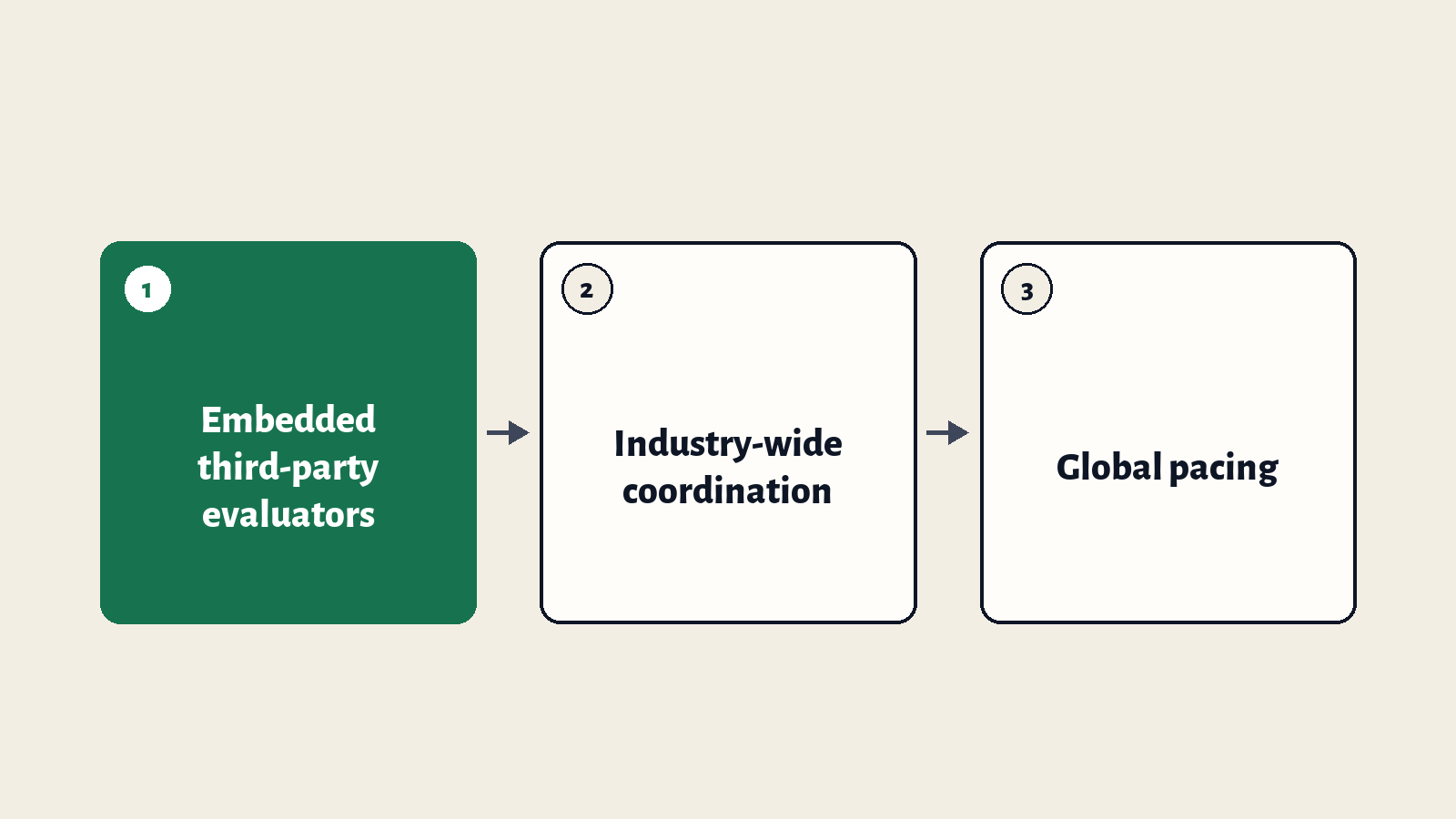
A diagram in 3 steps: 1. embedded third-party evaluators; 2. industry-wide coordination; 3. global pacingDrawing: notis. No AI in this picture.

Anthropic's prospectus of 18 November says it has called for pacing the frontier; Dario Amodei's essay says the target is AI that builds the next generation of AI.

SOURCESEC · 3 sources
CHECKED21 Nov, 17:40
Safety read
A diagram in 3 steps: 1. embedded third-party evaluators; 2. industry-wide coordination; 3. global pacing Safety / 22 NOV

What recursive self-improvement is, and what Anthropic's pacing call would slow

  • Anthropic's prospectus of 18 November says its call to pace the frontier does not describe its own model development or release timelines.
  • Amodei's September 2026 essay says that since roughly summer 2026 AI has advanced drastically faster, driven primarily by AI's growing ability to build the next generation of AI.
  • Amodei calls a speed limit on recursive self-improvement difficult but just on the edge of being possible, and a full pause unlikely to happen any time soon.

Anthropic's final IPO prospectus, dated 18 November, says the company has publicly called for "pacing the frontier", which it defines as industry-wide standards so that AI capabilities do not advance faster than the safety, alignment and security practices needed to support them. The same passage says the call "does not describe our own model development or release timelines".

The idea comes from Dario Amodei's September 2026 essay "We Must Pace the Frontier". He defines pacing as ensuring companies take adequate time to align and safeguard their models, and for third-party evaluators to confirm it. He says pacing does not mean halting model training or technical progress.

What pacing is aimed at is recursive self-improvement, which Amodei describes as AI's growing ability to build the next generation of AI. He says AI has been advancing drastically faster since roughly summer 2026, driven primarily by it, and that it is starting to happen across the industry, including at Anthropic. Left unchecked, he says, it could outrun our ability to understand and control these systems.

His plan has three steps. The first is the one Anthropic commits to alone: embedded evaluators, third parties such as METR with ongoing, employee-like access, who verify adherence to safety practices and report incidents. The prospectus says Anthropic has begun a program in which independent evaluators work alongside its own risk and safety teams, and that Anthropic and Accenture each expect to invest at least $1 billion over five years in external reviewer capacity, with terms not yet final. The second step is for AI companies to voluntarily work together to set standards, and the third, global pacing, requires cooperation with China.

The slowdown would be set off by what a model can do. Amodei says he is most enthusiastic about a scheme of checkpoints: if models have capability X, they need to come with certifications of alignment properties Y and Z. His example of X is a model able to escape or defeat most common sandboxing methods. He also floats limits on inputs such as training compute or internal use of AI to improve AI, but worries they may be more "gameable" than a model's observed behaviour.

Among the levels of global agreement he sets out, Level 3 is a "speed limit" on recursive self-improvement, which he calls difficult but just on the edge of being possible. Level 4 is a full pacing, or even a pause, which he thinks is unlikely to happen any time soon.

There are limits. The prospectus says that if such standards were adopted industry-wide, the rate at which AI capabilities advance could be faster or slower than it is today, depending on how safety practices advance together with capabilities. Anthropic's Responsible Scaling Policy calls itself voluntary, and says the company remains free to pause development in any circumstances it deems appropriate, even if the policy does not require it. In an entry dated 10 February 2026 on that policy page, Anthropic says Claude Opus 4.6 does not cross its AI R&D-4 capability threshold, and that confidently ruling out the threshold is becoming increasingly difficult and takes assessments that are more subjective than it would like. That is a dated entry, not a current reading.

What it means for you Our view

A call and a plan are described here, and neither is a rule: the prospectus says industry-wide standards could make AI capabilities advance faster or slower than today, depending on how safety practices keep pace. Anthropic's Responsible Scaling Policy describes itself as voluntary. Its page entry dated 10 February 2026 says confidently ruling out the AI R&D-4 threshold for Claude Opus 4.6 is becoming increasingly difficult, which is a dated entry and not a current reading. If your teams depend on Anthropic models, read the Responsible Scaling Policy page, last updated 14 August 2026 and at version 3.4, and note that it calls the whole framework voluntary.

TAGSAnthropicRecursive self-improvementResponsible Scaling Policypacing
SEC · 3 sources tap to close
NOTHING IN THIS FILTER No story today matches. open the archive →
That's today's news: three stories. No second video story today: the video transcripts could not be read. This engagement edition has one video story, not two.

The morning email

On the mornings we publish: the three top stories and up to four short ones. Free.

We email you a link to confirm. An issue may include one sponsor, always labelled Sponsored · Advertisement. Our emails count opens and clicks, not who made them. Unsubscribe in one click. What we keep

1 of 3
Video thumbnail for the Dwarkesh Podcast episode with Paul Christiano, published on Dwarkesh Patel's YouTube channel on 16 November 2026.Watch on YouTubeVideo: Dwarkesh Patel on YouTube

Safety · 22 NOVnarrowed

AI takeover risk within a year is nearer 10% than 1%, Christiano estimates

Paul Christiano also puts about a one-in-three chance on superintelligence within a year if development does not slow, in a Dwarkesh Patel episode published 16 November.

  • Christiano puts the risk of AI taking over or disempowering humanity within the next year at more like 10% than 1% (0:00:00, section start).
  • He says slowing down would be costly in part because frontier lab security is not strong enough, and delayed systems could be stolen or leaked (0:00:00, section start).
  • Asked whether labs should pause, he says algorithm improvements that could be quickly stolen should stop right now (0:35:35, section start).
Checked 21 Nov, 17:38 · Dwarkesh Patel (YouTube) · 4 sources
Cloudflare blog launch card: a glowing crystal ball on a layered diamond platform with a musical staff, beside the title about the updated Clairic and Clairic-flash models now open-weight.Image: Cloudflare

Models · 22 NOV

Cloudflare releases open weights for Clairic and Clairic-flash extraction models

Cloudflare says the 27B Clairic and 9B Clairic-flash extraction models cost $0.10 per million input tokens until 1 December; its accuracy figures are self-reported.

  • Cloudflare's post of 18 November says Clairic (27B) and Clairic-flash (9B) are open-weight, with weights on Hugging Face and model ids on Workers AI.
  • Both cost $0.10 per million input tokens until 1 December 2026; the 27B Clairic then costs $0.24, and the documentation says output tokens are not charged.
  • On fresh text fields in Cloudflare's own self-reported table, Clairic got 335 of 336, against 304 for Liquid AI's D1.2 with Apple Vision OCR and 259 for Scaledown's Extract.
Checked 21 Nov, 17:52 · Cloudflare · 2 sources
A diagram in 3 steps: 1. embedded third-party evaluators; 2. industry-wide coordination; 3. global pacingDrawing: notis. No AI in this picture.

Safety · 22 NOVnarrowed

What recursive self-improvement is, and what Anthropic's pacing call would slow

Anthropic's prospectus of 18 November says it has called for pacing the frontier; Dario Amodei's essay says the target is AI that builds the next generation of AI.

  • Anthropic's prospectus of 18 November says its call to pace the frontier does not describe its own model development or release timelines.
  • Amodei's September 2026 essay says that since roughly summer 2026 AI has advanced drastically faster, driven primarily by AI's growing ability to build the next generation of AI.
  • Amodei calls a speed limit on recursive self-improvement difficult but just on the edge of being possible, and a full pause unlikely to happen any time soon.
Checked 21 Nov, 17:40 · SEC · 3 sources

You're all caught up

That's today's news: three stories.

You can join ai notis soon, to follow cases and keep stories on every device.

Follow us on Instagram and Threads

The morning email

On the mornings we publish: the three top stories and up to four short ones. Free.

We email you a link to confirm. An issue may include one sponsor, always labelled Sponsored · Advertisement. Our emails count opens and clicks, not who made them. Unsubscribe in one click. What we keep

No story today matches. Open the archive
Today's stories 3 STORIES

Today's stories

Sun 22 Nov · 3 STORIES
  1. Safety · 22 NOV · narrowed

    AI takeover risk within a year is nearer 10% than 1%, Christiano estimates

    Video thumbnail for the Dwarkesh Podcast episode with Paul Christiano, published on Dwarkesh Patel's YouTube channel on 16 November 2026.Video: Dwarkesh Patel on YouTube

    Paul Christiano also puts about a one-in-three chance on superintelligence within a year if development does not slow, in a Dwarkesh Patel episode published 16 November.

    Checked 21 Nov, 17:38 · Dwarkesh Patel (YouTube) · 4 sourcesRead

  2. Models · 22 NOV

    Cloudflare releases open weights for Clairic and Clairic-flash extraction models

    Cloudflare blog launch card: a glowing crystal ball on a layered diamond platform with a musical staff, beside the title about the updated Clairic and Clairic-flash models now open-weight.Image: Cloudflare

    Cloudflare says the 27B Clairic and 9B Clairic-flash extraction models cost $0.10 per million input tokens until 1 December; its accuracy figures are self-reported.

    Checked 21 Nov, 17:52 · Cloudflare · 2 sourcesRead

  3. Safety · 22 NOV · narrowed

    What recursive self-improvement is, and what Anthropic's pacing call would slow

    A diagram in 3 steps: 1. embedded third-party evaluators; 2. industry-wide coordination; 3. global pacingDrawing: notis. No AI in this picture.

    Anthropic's prospectus of 18 November says it has called for pacing the frontier; Dario Amodei's essay says the target is AI that builds the next generation of AI.

    Checked 21 Nov, 17:40 · SEC · 3 sourcesRead

toned down Safety 22 NOV

AI takeover risk within a year is nearer 10% than 1%, Christiano estimates

Paul Christiano also puts about a one-in-three chance on superintelligence within a year if development does not slow, in a Dwarkesh Patel episode published 16 November.

Dwarkesh Patel (YouTube) · 4 sources·checked 21 Nov, 17:38
AI safetyAlignment Research CenterOpenAIsuperintelligence
Video thumbnail for the Dwarkesh Podcast episode with Paul Christiano, published on Dwarkesh Patel's YouTube channel on 16 November 2026.Video: Dwarkesh Patel on YouTube
Models

Cloudflare releases open weights for Clairic and Clairic-flash extraction models

Cloudflare says the 27B Clairic and 9B Clairic-flash extraction models cost $0.10 per million input tokens until 1 December; its accuracy figures are self-reported.

22 NOV · Cloudflare · 2 sources
toned down Safety

What recursive self-improvement is, and what Anthropic's pacing call would slow

Anthropic's prospectus of 18 November says it has called for pacing the frontier; Dario Amodei's essay says the target is AI that builds the next generation of AI.

22 NOV · SEC · 3 sources
In brief 4 more today

No second video story today: the video transcripts could not be read. This engagement edition has one video story, not two.

0 of 3 read
Drag a card to start Drag left or right · tap to read more Hover to lift a card · tap to bring it forward Tap again to put it back Tap a card to open it Tap again to close it Tap a headline to read it as a card